
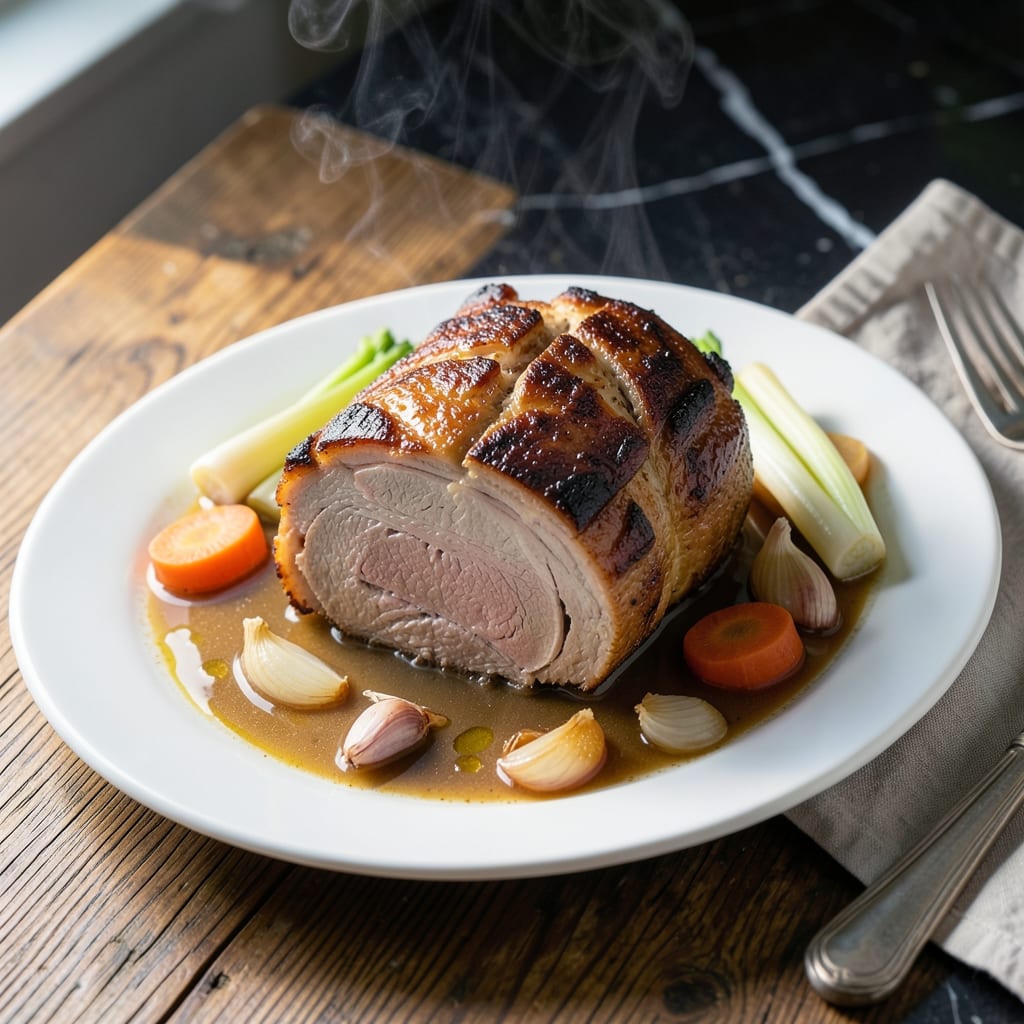
This pork roast transforms into something extraordinary with the addition of rich beef broth. I developed this method after testing countless variations in my small Boston kitchen, always seeking that perfect balance of tenderness and depth.
The secret lies in the slow-simmering process, which allows the pork to absorb the savory beef broth while maintaining its natural juiciness. This technique creates a dish with layers of flavor that simple roasting can’t achieve.
What emerges is fall-apart tender meat bathed in a deeply flavored sauce, perfect for serving over mashed potatoes or with crusty bread. The beef broth adds complexity without overpowering the pork’s natural richness.
This method works every time, even in the most challenging kitchen spaces. The results speak for themselves.
Ingredients for Pork Roast Recipe with Beef Broth
Rich beef broth and aromatic vegetables create this dish’s deep, savory character with minimal effort.
| Ingredient | Amount | Notes |
|---|---|---|
| Pork Shoulder Roast 🥩 | 3 lb | Bone-in preferred for flavor |
| Beef Broth 🥣 | 4 cups | Low-sodium for controlled seasoning |
| Yellow Onion 🧅 | 1 whole | Large, quartered for depth |
| Garlic Cloves 🧄 | 6 cloves | Smashed, peeled for infusion |
| Carrots 🥕 | 3 whole | Peeled, cut into chunks |
| Celery Stalks 🌿 | 3 pieces | Cut into large pieces |
| Dried Thyme 🍃 | 2 tsp | Or 2 tbsp fresh thyme |
| Dried Rosemary 🍃 | 2 tsp | Crushed between fingers |
| Bay Leaves 🍃 | 2 pieces | Whole, removed before serving |
| Kosher Salt 🧂 | 2 tsp | Diamond Crystal preferred |
| Black Pepper 🌶️ | 1 tsp | Freshly ground for best flavor |
| Olive Oil 🫒 | 2 tbsp | For searing pork roast |
| Apple Cider Vinegar 🍏 | 2 tbsp | For balancing richness |
| Tomato Paste 🍅 | 2 tbsp | For depth of flavor |
The pork shoulder is non-negotiable here. Bone-in yields the most flavorful results, though boneless works in a pinch. Source from a trusted butcher or Whole Foods for consistent marbling. The beef broth should be low-sodium—you control the salt. I prefer Swanson or Better Than Bouillon for depth. Fresh herbs are ideal, but dried work beautifully if stored properly (airtight, away from light).
No pork shoulder? Pork butt is identical—just a different cut name. Beef broth can be substituted with mushroom broth for a vegetarian twist, though the flavor profile shifts. Apple cider vinegar can be replaced with red wine vinegar at half the amount. For the tomato paste, those Trader Joe’s squeeze tubes eliminate waste. The carrots and celery can be swapped for parsnips or fennel if preferred.
The pork roast can be prepped a day ahead—just sear and refrigerate before slow-simmering. Leftovers keep for 4-5 days in the fridge or freeze for 3 months. The sauce thickens beautifully upon reheating, making it perfect for sandwiches or over polenta.
Why You’ll Love This Recipe
- One Pan Wonder: I toss the pork, onions, garlic, and carrots in with the beef broth, and the oven does the rest.
- Rich, Deep Flavor: The beef broth and garlic turn the pork so tender it falls apart, with a savory depth that’s hard to beat.
- Feeds a Crowd: I’ve served this for Sunday dinner and packed the leftovers for lunch all week—no waste, no fuss.
- Budget Stretcher: Pork shoulder is cheap, and with a few veggies and broth, it turns into a meal that feels way fancier than it cost.
Step-by-Step Instructions for Pork Roast With Beef Broth
This method transforms the pork shoulder into fall-apart tender meat with rich, savory depth.
Step 1: Sear the Pork Shoulder for Maximum Flavor
Pat the 3 lb Pork Shoulder Roast dry with paper towels and season generously with the 2 tsp Kosher Salt and 1 tsp Black Pepper on all sides. I press the seasoning into the meat to ensure it adheres well and penetrates the surface.
Heat the 2 tbsp Olive Oil in a large Dutch oven over medium-high heat until shimmering. Add the pork shoulder and sear for 4-5 minutes per side until deeply browned. You’ll know it’s ready to flip when the meat releases easily from the pot. This sear creates the foundation for the rich flavor in your final dish.
Step 2: Build the Aromatic Base
Remove the pork and set it aside. In the same pot, add the 1 whole Yellow Onion (quartered), 6 cloves Garlic Cloves (smashed), 3 whole Carrots (in chunks), and 3 pieces Celery Stalks (in large pieces). Sauté for 5-6 minutes until the vegetables begin to soften and develop color.
Stir in the 2 tbsp Tomato Paste and cook for 1-2 minutes until it darkens slightly and coats the vegetables. This step intensifies the tomato flavor and prevents a raw taste in the finished dish. Add the 2 tsp Dried Thyme, 2 tsp Dried Rosemary, and 2 pieces Bay Leaves, stirring to bloom the spices in the hot oil.
Step 3: Braise in Beef Broth for Tenderness
Return the pork shoulder to the pot and pour in the 4 cups Beef Broth. Add the 2 tbsp Apple Cider Vinegar, which balances the richness of the pork and broth with a touch of acidity. The liquid should come about halfway up the side of the pork—add water if needed to reach this level.
Bring the mixture to a simmer, then reduce the heat to low. Cover and braise for 2.5 to 3 hours, turning the pork occasionally, until it’s fork-tender and easily pulls apart. You’ll know it’s done when a fork slides in with no resistance. The beef broth will infuse the pork with deep, savory flavor as it cooks.
Step 4: Rest and Serve
Once the pork is tender, remove it from the pot and let it rest on a cutting board for 15 minutes. This allows the juices to redistribute, ensuring every bite is moist. Skim any excess fat from the surface of the braising liquid and discard the Bay Leaves.
Shred or slice the pork against the grain and serve it with the braising liquid spooned over the top. The sauce will be rich and flavorful, perfect for soaking into mashed potatoes or crusty bread.
Pro Tips For Making Pork Roast Recipe With Beef Broth
- Sear the Pork First: I learned this the hard way—always sear the pork shoulder in a hot pan with a little oil until it’s deeply browned on all sides before adding the beef broth. It builds a flavor base that simmering alone just can’t match.
- Use Cold Broth: After burning a few batches, I finally figured out that adding cold beef broth to the hot pan after searing helps deglaze properly and prevents the fond from burning.
- Don’t Skip the Rest: Sounds weird, but it works: let the pork rest in the broth for 10-15 minutes after cooking—it soaks up extra moisture and stays juicier when sliced.
- Cut Carrots Evenly: My grandmother swore by this, and she was right: cut the carrots into uniform chunks so they cook at the same rate as the pork and don’t turn to mush.
Troubleshooting Great pork roast recipe with beef broth
Pork Not Tender
If your pork isn’t falling apart after braising, it likely needs more time. I’ve found that 3 lb Pork Shoulder Roast often requires the full 3 hours at a gentle simmer. Check that your liquid is barely bubbling—too vigorous a boil can toughen the meat. 🌡️
Dry Meat Issue
Dry pork usually means the braising liquid evaporated too much. Ensure your 4 cups Beef Broth covers at least halfway up the meat. If it reduces too quickly, add 1 cup water and lower the heat. I always check at the 2-hour mark.
Sauce Too Thin
For a thicker sauce, remove the pork and reduce the liquid uncovered over medium heat for 10-15 minutes. Stir occasionally to prevent burning. A cornstarch slurry (1 tbsp cornstarch + 1 tbsp water) works too but reduces the natural depth.
Bitter or Harsh Flavor
If the sauce tastes bitter, the 2 tbsp Tomato Paste may have burned during sautéing. Next time, cook it for just 1 minute until it darkens slightly. A pinch of brown sugar (½ tsp) can balance bitterness in the finished dish.
Lacking Depth
If the flavor seems flat, try adding 1 tbsp soy sauce or 1 tsp fish sauce to amplify umami. I also recommend browning the Yellow Onion and Garlic Cloves more aggressively in Step 2. 💡
Vegetables Mushy
Overcooked veggies mean they were cut too small or added too early. Keep Carrots and Celery Stalks in large chunks and add them only after searing the pork. They’ll soften perfectly during the 2.5 to 3 hours braise.
Nutrition Facts
Frequently Asked Questions
Can I use chicken broth instead of beef?
Yes, but the flavor profile will be milder. Beef broth adds a deeper, richer taste that complements pork beautifully. If using chicken broth, consider adding 1 tbsp soy sauce for extra umami.
How do I know when the pork is done?
It’s ready when it reaches an internal temperature of 195-200°F and easily pulls apart with a fork. This ensures the collagen has fully broken down for that perfect tenderness.
Can I make this in a slow cooker?
Sear the pork first, then transfer everything to the slow cooker. Cook on low for 8-10 hours or high for 5-6 hours. The result will be just as tender.
Why does the recipe call for apple cider vinegar?
The vinegar balances the richness of the pork and broth. It brightens the flavors without adding noticeable sourness. 2 tbsp is the perfect amount for harmony.

- Potato Patty Recipe No Egg: Crispy Edges Without the Binder - October 30, 2026
- Paula Deen’s Potato Chip Cookies Recipe: Salty-Sweet Crunch in Every Bite - October 30, 2026
- Potato Gnocchi Recipe Ideas: Pillowy Soft Dumplings With Rustic Charm - October 30, 2026