
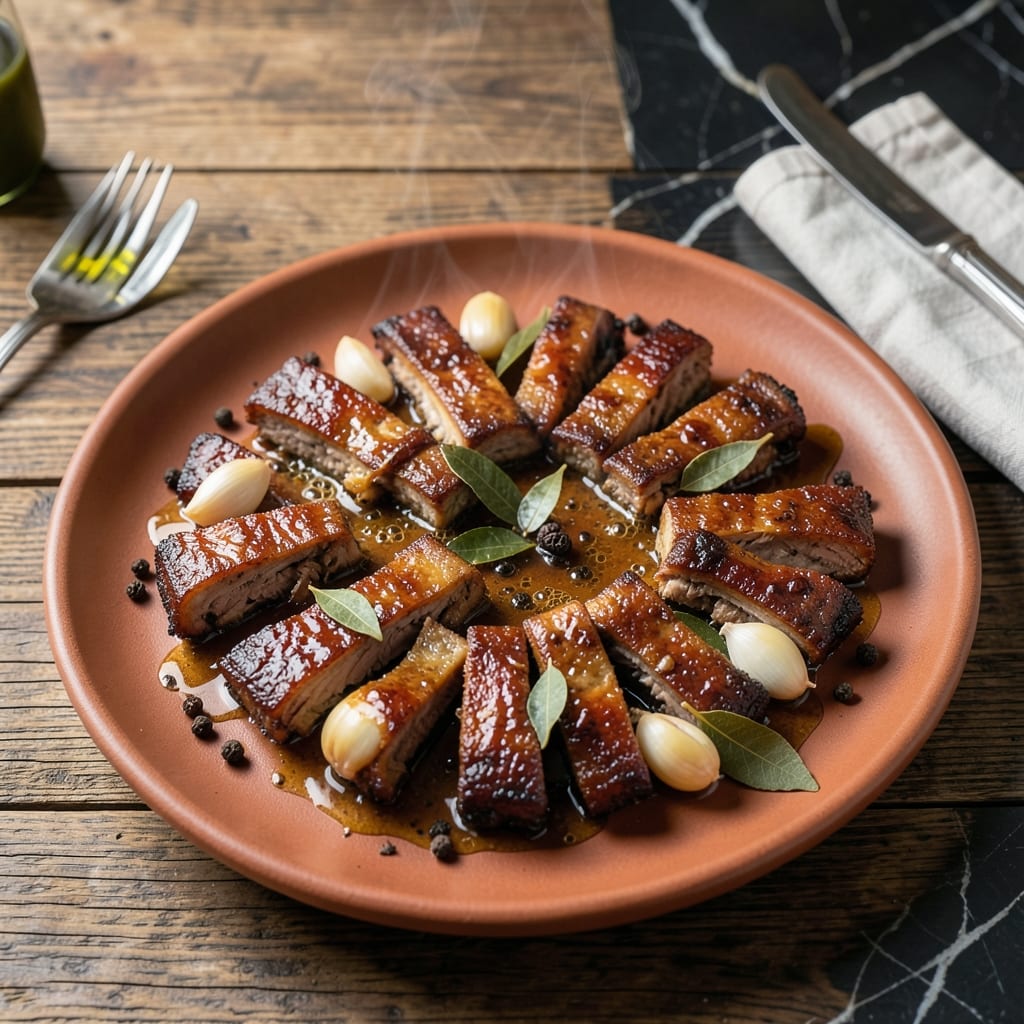
Filipino adobo transforms humble pork spare ribs into something extraordinary through its perfect balance of tangy vinegar and rich garlic. This traditional braising method yields fall-off-the-bone tender meat with a deeply flavorful sauce that’s both bright and savory.
I developed this version after studying authentic Filipino techniques, focusing on the proper vinegar-to-soy ratio that defines true adobo. The ribs soak up every bit of the marinade during cooking, creating layers of flavor that can’t be rushed.
The result is meat so tender it nearly dissolves, coated in a glossy, tangy sauce that’s perfect over steamed rice. The garlic mellows into the dish, adding depth without overpowering the natural pork flavor.
Serve this with rice to soak up every last drop of the incredible sauce. The longer it sits, the better it tastes.
Ingredients for Pork Spare Ribs Adobo Recipe Filipino
These humble ingredients create a Filipino adobo that’s tangy, rich, and unforgettable over rice.
| Ingredient | Amount | Notes |
|---|---|---|
| Pork Spare Ribs 🐖 | 2 lb | Cut into serving pieces |
| White Vinegar 💧 | 1 cup | Cane vinegar preferred |
| Soy Sauce 🥣 | ¾ cup | Regular or low-sodium |
| Garlic Cloves 🧄 | 12 cloves | Peeled, smashed or minced |
| Bay Leaves 🍃 | 3 pieces | Dried, whole leaves |
| Black Peppercorns 🌶️ | 1 tsp | Whole, lightly crushed |
| Brown Sugar 🍚 | 2 tbsp | Optional, for balance |
| Water 💧 | ½ cup | To cover ribs |
| Vegetable Oil 🫒 | 2 tbsp | For searing ribs |
| Onion 🧅 | 1 whole | Medium, sliced into rings |
| Green Onions 🌱 | 4 pieces | Chopped, for garnish |
| Salt 🧂 | 1 tsp | To taste |
The ribs are everything here. Pork spare ribs give you that fall-off-the-bone texture you want—baby back ribs stay too firm. Look for meaty pieces with some fat marbling at Costco or your local butcher. The vinegar matters too—Datu Puti cane vinegar is the gold standard, but any white vinegar works (just avoid apple cider, it’s too sweet).
No cane vinegar? White vinegar plus a splash of rice vinegar gets you close. Short on soy sauce? Tamari or coconut aminos work at a 1:1 ratio. The brown sugar is optional but cuts the acidity beautifully—skip it if you prefer a sharper tang. Bay leaves are traditional, but a pinch of dried thyme in a bind won’t ruin the dish.
This tastes better the next day—24 hours is ideal. Keeps in the fridge for 4-5 days, freezes for 3 months. Portion with sauce for easy reheating (the sauce soaks into the rice perfectly).
Why You’ll Love This Recipe
- Set It & Forget: I just sear the ribs, dump everything in one pot, and let the vinegar and soy work their magic while I do laundry.
- That Tangy Bite: The garlic and vinegar give it that signature Filipino adobo punch that makes my mouth water every time.
- Weeknight Hero: Honestly, it’s my go-to for busy evenings—ready in under an hour and tastes like I slaved over it.
- Stretches Far: One batch feeds my family of four with leftovers that taste even better the next day.
Step-by-Step Instructions for Pork Spare Ribs Adobo
This method delivers that perfect balance of tangy, savory, and garlicky goodness you crave.
Step 1: Sear the Ribs for Deep Flavor
Heat the 2 tbsp vegetable oil in a large pot or Dutch oven over medium-high heat. Pat the 2 lb pork spare ribs dry with paper towels—this ensures a good sear. Season them with the 1 tsp salt and add to the pot in batches, being careful not to overcrowd.
Sear the ribs for 3-4 minutes per side until they develop a rich, deep brown crust. This step builds a flavor foundation that makes all the difference. Remove the ribs and set aside, leaving the flavorful oil in the pot.
Step 2: Build the Adobo Base with Aromatics
In the same pot, add the sliced 1 whole onion and cook for 2-3 minutes until softened and slightly caramelized. Then add the 12 cloves garlic cloves, 3 pieces bay leaves, and 1 tsp black peppercorns. Stir for 1 minute until the garlic is fragrant—this is where the magic starts.
Pour in the 1 cup white vinegar and 0.75 cup soy sauce, scraping the bottom of the pot to release all the browned bits. Let this mixture simmer for 2 minutes to meld the flavors together. The vinegar’s sharpness will mellow as it cooks, creating that signature adobo tang.
Step 3: Braise the Ribs to Tenderness
Return the seared ribs to the pot, nestling them into the sauce. Add the 2 tbsp brown sugar and 0.5 cup water, stirring until the sugar dissolves. Bring the mixture to a gentle boil, then reduce the heat to low. Cover and let it simmer for 1 to 1.5 hours, or until the ribs are fork-tender.
Check occasionally and add a splash of water if the sauce reduces too quickly. The ribs are done when the meat easily pulls away from the bone. The sauce should be thick enough to coat the back of a spoon, with a glossy, rich consistency.
Step 4: Reduce the Sauce and Finish
Once the ribs are tender, remove the lid and increase the heat to medium. Let the sauce reduce for an additional 10-15 minutes, stirring occasionally to prevent sticking. This step intensifies the flavors and thickens the sauce to the perfect consistency.
Taste and adjust the seasoning if needed, though the soy sauce and vinegar usually provide enough salt and tang. The sauce should be a deep, caramelized color, clinging beautifully to the ribs.
Step 5: Garnish and Serve
Transfer the ribs to a serving dish and spoon the thick, glossy sauce over the top. Garnish with the 4 pieces green onions, chopped, for a fresh, vibrant finish. Serve hot with steamed rice to soak up every last bit of that incredible adobo sauce.
Each bite should deliver tender, fall-off-the-bone ribs coated in a rich, tangy sauce that’s bursting with garlic and umami depth.
Pro Tips For Making Pork Spare Ribs Adobo Recipe Filipino
- Parboil the Ribs: Simmer the ribs in water for 10-15 minutes first to remove impurities and excess fat—this keeps your adobo sauce clean and rich, not greasy.
- Balance the Vinegar: Use equal parts white vinegar and soy sauce, but taste before adding all—some brands are sharper than others, and you can always adjust.
- Don’t Rush the Simmer: Let the ribs cook low and slow for at least 45 minutes in the sauce so the flavors sink deep into the meat and the connective tissue breaks down.
- Crush the Garlic: Smash the garlic cloves with the side of your knife before mincing—it releases more flavor into the adobo and makes every bite taste bolder.
Storing and Reheating This Recipe
Refrigerator Storage
Let your adobo cool completely (about 2 hours), then transfer ribs and sauce to an airtight container. I use glass containers—they won’t absorb odors. Store in the fridge at 40°F or below for up to 4-5 days. The flavors deepen overnight. ❄️
Freezer Storage
For longer storage, portion the ribs with sauce into freezer-safe containers or heavy-duty zip-top bags. Leave 1 inch headspace for expansion. It freezes beautifully for up to 3 months without losing quality. I label mine with the date using masking tape.
Stovetop Reheating
This is my preferred method. Transfer ribs and sauce to a pot, add ¼ cup water, and heat over medium-low heat for 10-15 minutes. Stir occasionally and add a splash of water if it thickens too much. Taste and adjust seasoning if needed. 🔥
Microwave Reheating
Place ribs and sauce in a microwave-safe dish, cover with a damp paper towel, and heat on 70% power for 2-3 minutes. Stir, then continue in 1-minute intervals until reaching 165°F. Add a little water if the sauce looks dry.
Nutrition Facts
Frequently Asked Questions
Can I use a different type of vinegar?
White vinegar works best, but rice vinegar adds a milder tang. Avoid balsamic or apple cider as they alter the flavor profile too much.
How do I know when the ribs are done?
The meat should pull away from the bone easily. Test with a fork—if it slides in without resistance, they’re ready after 1-1.5 hours of simmering.
Can I make this ahead of time?
The flavors deepen after 24 hours in the fridge. Store in an airtight container for up to 5 days or freeze for 3 months.
Why did my sauce turn out too sour?
Balance the acidity by adding 1-2 tbsp brown sugar or a splash of water. Simmer for 5-10 minutes to mellow the flavors.

- Potato Patty Recipe No Egg: Crispy Edges Without the Binder - October 30, 2026
- Paula Deen’s Potato Chip Cookies Recipe: Salty-Sweet Crunch in Every Bite - October 30, 2026
- Potato Gnocchi Recipe Ideas: Pillowy Soft Dumplings With Rustic Charm - October 30, 2026