
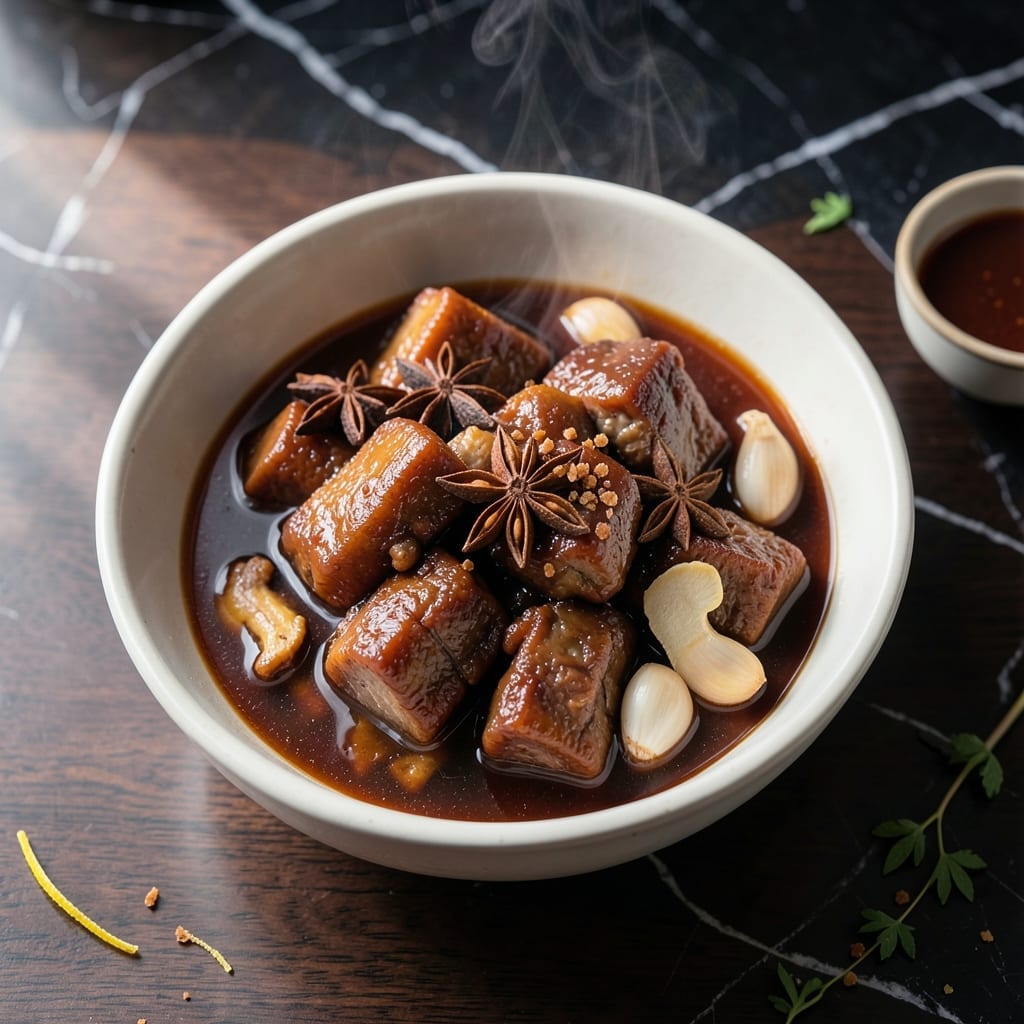
This stew brings the warmth of traditional Chinese cooking to your kitchen. Slow-simmered pork absorbs the deep, aromatic flavors of star anise and soy, creating a dish that feels like home.
I learned the value of patience with pork while training under Master Chef Chen. The low, steady heat transforms tough cuts into melt-in-your-mouth tenderness, while the spices infuse every bite.
What emerges after hours of gentle cooking is a rich, fragrant broth with pork so tender it falls apart at the touch of a spoon. The balance of sweet, savory, and umami makes this stew truly comforting.
Serve with steamed rice to soak up every drop of the aromatic sauce. This is the kind of dish that rewards your time and attention.
Ingredients for Pork Stew Recipe Chinese Style
Pantry staples and a few Asian market finds bring this aromatic dish to life.
| Ingredient | Amount | Notes |
|---|---|---|
| Pork Shoulder 🥩 | 2 lb | Cut into 2-inch chunks, bone-in preferred |
| Soy Sauce 🫒 | ½ cup | Low-sodium for better control |
| Star Anise Pods ⭐ | 4 whole | Whole for infusion, remove before serving |
| Brown Sugar 🧈 | 2 tbsp | Light or dark, for sweetness |
| Fresh Ginger 🌿 | 1 whole | Peeled, sliced thick |
| Garlic Cloves 🧄 | 6 cloves | Smashed for bold flavor |
| Scallions 🧅 | 4 whole | Cut into 2-inch pieces |
| Dried Shiitake Mushrooms 🍄 | ½ oz | Rehydrated, sliced |
| Shaoxing Wine 🍶 | ¼ cup | Or dry sherry as substitute |
| Chicken Stock 🥣 | 4 cups | Low-sodium preferred |
| Cinnamon Stick 🌰 | 1 whole | For warm spice depth |
| Sichuan Peppercorns 🌶️ | 1 tsp | Lightly crushed for aroma |
| Vegetable Oil 🫒 | 2 tbsp | Neutral flavor for browning |
The pork is the star here. Pork shoulder (sometimes called Boston butt) has the right fat-to-meat ratio for that fall-apart texture. Look for bone-in cuts at your butcher or Whole Foods—they add depth to the broth. If buying pre-cut, ask for chunks at least 2 inches thick so they hold up to the long simmer. And yes, the fat cap? That’s flavor (don’t trim it off).
No Shaoxing wine? Dry sherry works in a pinch, or even mirin with a splash of rice vinegar (1:1 ratio). Star anise is non-negotiable for that authentic flavor, but fennel seeds at half the amount can sub if you’re desperate. Can’t find dried shiitakes? Fresh creminis work—just add them later. The mushrooms soak up the broth like little flavor sponges.
This tastes even better the next day once the flavors meld. Keeps in the fridge for 4-5 days, freezes beautifully for 3 months. I always make a double batch—leftovers make killer noodles or dumpling filling.
Why You’ll Love This Recipe
- One Pot Meal: I just toss everything in and let the pork shoulder soak up all that soy sauce and star anise magic.
- Sweet and Savory: The brown sugar caramelizes with the ginger, giving it that deep, sticky-sweet flavor with every bite.
- Feeds a Crowd: Honestly, it’s my go-to for Sunday dinner—leftovers taste even better the next day.
- Budget Stretcher: Pork shoulder is cheap, and a little goes a long way with bold flavors like this.
Step-by-Step Instructions for Chinese Style Pork Stew
This method delivers rich, aromatic comfort with every tender bite of pork.
Step 1: Sear the Pork Shoulder
Heat the 2 tbsp vegetable oil in a large, heavy pot over medium-high heat. When the oil shimmers, add the 2 lb pork shoulder chunks in a single layer, working in batches if needed to avoid crowding.
Sear the pork for 3-4 minutes per side until deep golden brown on all surfaces. This step builds the flavor foundation for your stew. Don’t rush it—proper browning creates the fond that will deepen your sauce later.
Step 2: Build the Aromatic Base
Remove the pork and set aside. In the same pot, add the sliced fresh ginger, smashed garlic cloves, scallions, 4 whole star anise pods, 1 whole cinnamon stick, and lightly crushed sichuan peppercorns.
Cook for 2-3 minutes, stirring constantly, until the aromatics release their fragrance and the garlic begins to soften. Add the rehydrated and sliced dried shiitake mushrooms and cook for another 2 minutes.
Step 3: Deglaze and Season
Pour in the 0.25 cup shaoxing wine and scrape up all the browned bits from the bottom of the pot. Let it simmer for 2 minutes to cook off the alcohol.
Add the 0.5 cup soy sauce, 2 tbsp brown sugar, and 4 cups chicken stock. Stir until the sugar dissolves. Return the pork to the pot, ensuring it’s mostly submerged in the liquid.
Step 4: Simmer to Tender Perfection
Bring the mixture to a boil, then reduce the heat to low. Cover and let it simmer gently for 2 to 2.5 hours, stirring occasionally. You’ll know it’s done when the pork falls apart easily with a fork.
If the liquid reduces too much before the pork is tender, add a little hot water to maintain the level. The stew should have a rich, saucy consistency when finished.
Step 5: Finish and Serve
Remove the star anise pods and cinnamon stick before serving. Taste and adjust seasoning if needed—the flavors should be balanced between savory, sweet, and aromatic.
Ladle the stew into bowls, making sure each serving has plenty of the tender pork and flavorful broth. This dish tastes even better the next day as the flavors continue to meld together.
Pro Tips For Making Pork Stew Recipe Chinese Style
- Sear the Pork First: Brown the pork shoulder in batches over medium-high heat until deeply caramelized—I learned this the hard way after my first stew tasted flat without that rich, meaty base.
- Toast the Star Anise: Lightly toast the star anise pods in a dry pan for 30 seconds before adding liquids; it wakes up the spice and prevents that harsh, raw flavor.
- Skip the Pre-Salting: Resist the urge to salt the pork before searing; the soy sauce will do the heavy lifting, and you’ll avoid an over-salted stew.
- Use Fresh Ginger: Grate the ginger just before adding—pre-grated or old ginger loses its punch, and this dish needs that bright, sharp kick to balance the brown sugar.
Dietary Considerations for This Dish
Gluten-Free Adaptations
Soy sauce is the main gluten concern here. I recommend tamari as a direct 1:1 substitute—it has a deeper, richer flavor that works beautifully. Coconut aminos also work in a pinch, though it’s slightly sweeter. Always check labels for hidden gluten in chicken stock. 💡
Lower Sodium Options
Use low-sodium soy sauce and homemade chicken stock to control salt content. You can boost umami with 1 tsp fish sauce or 1 tbsp oyster sauce instead. I find this keeps the depth without overwhelming saltiness.
Pork Substitutions
For a leaner version, swap pork shoulder for pork tenderloin, reducing simmer time to 1.5 hours. Chicken thighs work too—add them with 30 minutes of cooking left to prevent dryness. The bone-in cuts still give the best flavor, though.
Vegetarian Variation
Replace pork with extra-firm tofu (pressed and cubed) or jackfruit. Add 1 tbsp soy sauce to the tofu before searing. Simmer for 45 minutes instead of hours. The star anise and spices still create that signature aromatic profile.
Spice Sensitivity
Omit Sichuan peppercorns if avoiding heat or numbing spices. For milder flavor, reduce star anise to 2 pods. The cinnamon stick adds warmth without spice, so it’s safe for sensitive palates.
Dairy-Free Note
This stew is naturally dairy-free, but watch for cross-contamination if using store-bought stock. I always make my own stock at The Smoky Pig—it’s cleaner and more flavorful. No substitutions needed here. ✨
Nutrition Facts
Frequently Asked Questions
What cut of pork works best?
Pork shoulder is ideal for its fat-to-meat ratio and bone-in richness. It becomes fork-tender after 2-2.5 hours of simmering. Avoid lean cuts like tenderloin as they can dry out.
Can I make this in a slow cooker?
Yes! Brown the pork first, then transfer everything to the slow cooker. Cook on low for 6-8 hours or high for 4-5 hours. The flavors deepen beautifully with the longer cooking time.
How do I store leftovers?
Store in an airtight container in the fridge for 4-5 days or freeze for 3 months. Reheat gently on the stove with a splash of water to restore the sauce consistency.
What if I don’t have Shaoxing wine?
Dry sherry is the best substitute in a 1:1 ratio. For a non-alcoholic option, use 1 tbsp rice vinegar mixed with 3 tbsp water for each 0.25 cup needed.

- Potato Patty Recipe No Egg: Crispy Edges Without the Binder - October 30, 2026
- Paula Deen’s Potato Chip Cookies Recipe: Salty-Sweet Crunch in Every Bite - October 30, 2026
- Potato Gnocchi Recipe Ideas: Pillowy Soft Dumplings With Rustic Charm - October 30, 2026