
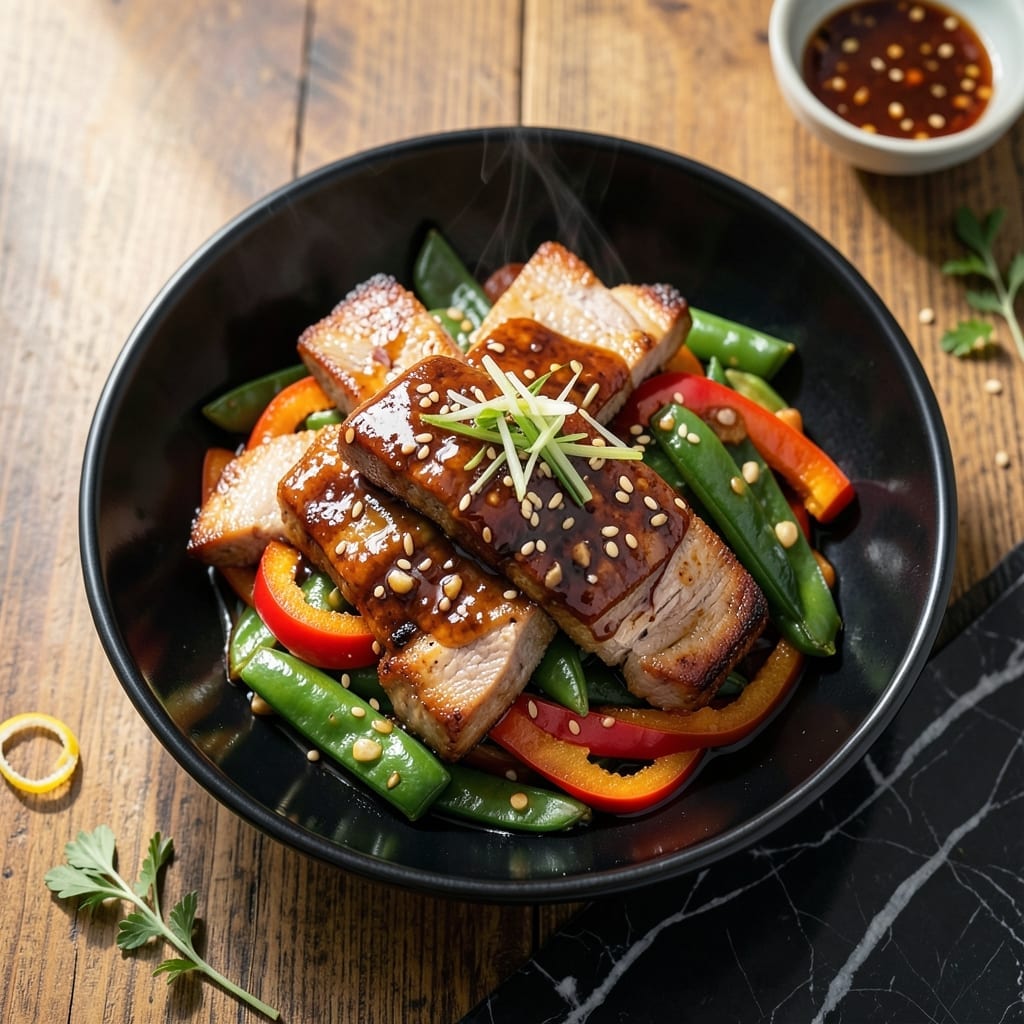
This pork stir fry achieves the velvet texture and vibrant flavor that defines authentic Chinese cooking, all in your home kitchen.
I’ve tested this method repeatedly to ensure the pork stays tender while the vegetables retain their crisp bite. The marinade is the secret—cornstarch and egg white create that signature silkiness.
The sauce comes together quickly, coating every ingredient in a glossy, savory layer. High heat and proper timing are crucial for that restaurant-quality finish.
Serve this over steamed rice for a complete meal that’s faster than takeout but far more satisfying.
Ingredients for Pork Stir Fry Recipe Woks of Life
Authentic Chinese ingredients create restaurant-quality velvet pork stir fry with crisp vegetables
| Ingredient | Amount | Notes |
|---|---|---|
| Pork Shoulder 🥩 | 1 lb | Thinly sliced against the grain |
| Cornstarch 🌾 | 2 tbsp | For velvet marinade texture |
| Egg White 🥚 | 1 whole | Lightly beaten for tenderness |
| Soy Sauce 🫒 | 3 tbsp | Low-sodium preferred for balance |
| Shaoxing Wine 🍷 | 2 tbsp | Or dry sherry as substitute |
| Oyster Sauce 🥫 | 1 tbsp | Vegan oyster sauce if needed |
| Sesame Oil 🫒 | 1 tsp | Toasted for aroma |
| Garlic Cloves 🧄 | 3 cloves | Minced for maximum flavor |
| Ginger Root 🌿 | 1 tbsp | Freshly grated for zing |
| Bell Peppers 🌶️ | 2 whole | Red and green, sliced thin |
| Broccoli Crowns 🥦 | 2 cups | Cut into small florets |
| Carrots 🥕 | 2 whole | Julienned for even cooking |
| Green Onions 🧅 | 3 whole | Cut into 2-inch pieces |
| Neutral Oil 🫒 | 3 tbsp | High smoke point for stir-frying |
| Granulated Sugar 🧂 | 1 tsp | Balances savory flavors |
The pork shoulder is non-negotiable for velvet texture. Look for well-marbled cuts at your butcher or Asian grocery stores—they often pre-slice for stir-fry. The cornstarch must be fresh and lump-free; old boxes lose their thickening power. Shaoxing wine is ideal, but dry sherry in a pinch works. For oyster sauce, Lee Kum Kee is the professional standard.
No Shaoxing wine? Dry white wine plus 1/2 tsp sugar mimics the flavor. Vegan? Swap oyster sauce for vegetarian stir-fry sauce. Bell peppers can be any color, but red adds sweetness. The ginger must be freshly grated—powdered lacks the brightness. For the neutral oil, peanut or avocado oil handles the high heat best.
Marinate the pork for 15-30 minutes—longer doesn’t improve texture. Prep all vegetables before heating the wok (mise en place is crucial). Store leftovers in airtight containers for up to 3 days. The sauce thickens as it cools, so thin with water when reheating.
Why You’ll Love This Recipe
- One Pan Meal: I toss everything in a wok and it’s done in 15 minutes with barely any cleanup.
- Umami Bomb: The Soy Sauce and Shaoxing Wine give the pork that deep, savory punch I crave every time.
- Weeknight Hero: Perfect for busy evenings—prep while the rice cooks and dinner is served.
- Budget Stretcher: Pork shoulder is cheap, and this recipe turns it into something ridiculously good.
Step-by-Step Instructions for Pork Stir Fry
Master the velveting technique and achieve restaurant-quality texture with this professional method.
Step 1: Velvet the Pork Shoulder
In a bowl, combine the 1 lb Pork Shoulder with 2 tbsp Cornstarch, 1 whole Egg White, 1 tbsp Soy Sauce, and 1 tsp Sesame Oil. Stir vigorously in one direction for 2 minutes until the mixture becomes slightly sticky and glossy.
The pork should look coated and slightly opaque from the egg white. This velvet marinade ensures tender, silky meat. Let it rest for 15 minutes while you prep the vegetables—this allows the cornstarch to fully absorb the liquid.
Step 2: Prepare the Aromatics and Sauce
Mince the 3 cloves Garlic Cloves and grate the 1 tbsp Ginger Root into a fine paste. In a small bowl, whisk together the remaining 2 tbsp Soy Sauce, 2 tbsp Shaoxing Wine, 1 tbsp Oyster Sauce, and 1 tsp Granulated Sugar until the sugar dissolves.
This sauce balance is critical—the sugar tempers the saltiness of the soy and oyster sauces. Keep it nearby; you’ll need it quickly once the stir-frying begins. The aromatics should be ready to add the moment your oil shimmers.
Step 3: Stir-Fry the Pork and Vegetables
Heat 2 tbsp Neutral Oil in a wok over high heat until it just begins to smoke. Add the velveted pork in a single layer and sear undisturbed for 30 seconds until the edges turn opaque. Stir-fry for another 1-2 minutes until the pork is 80% cooked—it will finish in the sauce.
Remove the pork and set aside. Add the remaining 1 tbsp Neutral Oil, then the garlic and ginger. Stir for 10 seconds until fragrant, then add the 2 whole Bell Peppers, 2 cups Broccoli Crowns, and 2 whole Carrots. Stir-fry for 2-3 minutes until the vegetables are vibrant and slightly blistered but still crisp.
Step 4: Combine and Finish
Return the pork to the wok along with any accumulated juices. Pour the sauce over everything and toss vigorously for 1-2 minutes until the pork is fully cooked and the sauce clings glossily to each piece. The sauce should reduce slightly, coating the pork and vegetables in a velvety sheen.
Add the 3 whole Green Onions and toss for another 30 seconds just to wilt them slightly. The green onions should retain their bright color and slight crunch. Remove from heat immediately—the residual heat will continue cooking the dish slightly.
Serve hot, ensuring each portion has an even distribution of pork, vegetables, and that luxurious sauce.
Pro Tips For Making Pork Stir Fry Recipe Woks Of Life
- Velvet the Pork: Mix the pork with cornstarch, egg white, soy sauce, and Shaoxing wine for at least 20 minutes—I learned this the hard way, skipping it once and ending up with tough, chewy meat.
- High Heat Only: Crank your wok to smoking hot before adding the pork. After burning three batches, I finally figured out that anything less just steams the meat instead of searing it.
- Skip the Overcrowding: Cook the pork in batches, even if it feels tedious. My grandmother swore by this, and she was right: overcrowding drops the temperature and turns your stir fry into a sad, soggy mess.
- Prep Everything First: Chop all your veggies and measure sauces before you start cooking—sounds obvious, but I was skeptical until I tried it and realized how much smoother the process is.
Common Mistakes When Making Perfect Results
Overcrowding the Wok
This is the most common mistake I see in home kitchens. Stir-frying requires high heat and space, so adding too much pork or vegetables at once steals heat and creates steam. Cook in 2 batches if needed—your patience will be rewarded with proper searing instead of soggy results.
Skipping the Velveting
The velvet marinade with cornstarch and egg white is non-negotiable for that restaurant-quality texture. I’ve intentionally skipped it before to test—result was tough, chewy pork. Take the 2 minutes to mix vigorously in one direction until glossy.
Using Low Heat
Your wok needs to be ripping hot—the oil should shimmer and nearly smoke. If your stove can’t handle it, use a cast iron skillet instead. I learned this the hard way in my tiny Boston kitchen where the burner couldn’t keep up. 🔥
Prepping as You Cook
Stir-frying moves fast—you won’t have time to mince garlic or slice bell peppers mid-cook. Have everything prepped and measured before heating the wok. I keep my sauce bowl next to the stove for quick access.
Overcooking the Pork
Remove the pork when it’s 80% cooked—it will finish in the sauce. Overcooking at this stage makes it dry. The velveting technique makes the pork cook faster than you might expect, so stay alert.
Ignoring the Sauce Balance
The combination of soy sauce, Shaoxing wine, and oyster sauce needs to be precise. Too much soy makes it salty, too much wine makes it harsh. Taste as you go and adjust with a pinch of sugar if needed.
Nutrition Facts
Frequently Asked Questions
Can I substitute the pork shoulder?
Yes, use pork tenderloin for a leaner option, but slice it thinly against the grain. Shoulder’s marbling gives the best velvet texture though.
What if I don’t have Shaoxing wine?
Dry sherry works perfectly as a substitute. In a pinch, use dry white wine with 1/2 tsp sugar added. The flavor will be very close.
How do I get the sauce thicker?
Mix 1 tsp cornstarch with 1 tbsp water and stir into the sauce at the end. Cook for 30 seconds until glossy.
Can I make this gluten-free?
Use tamari instead of soy sauce and ensure your oyster sauce is gluten-free. All other ingredients are naturally gluten-free.

- Potato Patty Recipe No Egg: Crispy Edges Without the Binder - October 30, 2026
- Paula Deen’s Potato Chip Cookies Recipe: Salty-Sweet Crunch in Every Bite - October 30, 2026
- Potato Gnocchi Recipe Ideas: Pillowy Soft Dumplings With Rustic Charm - October 30, 2026