
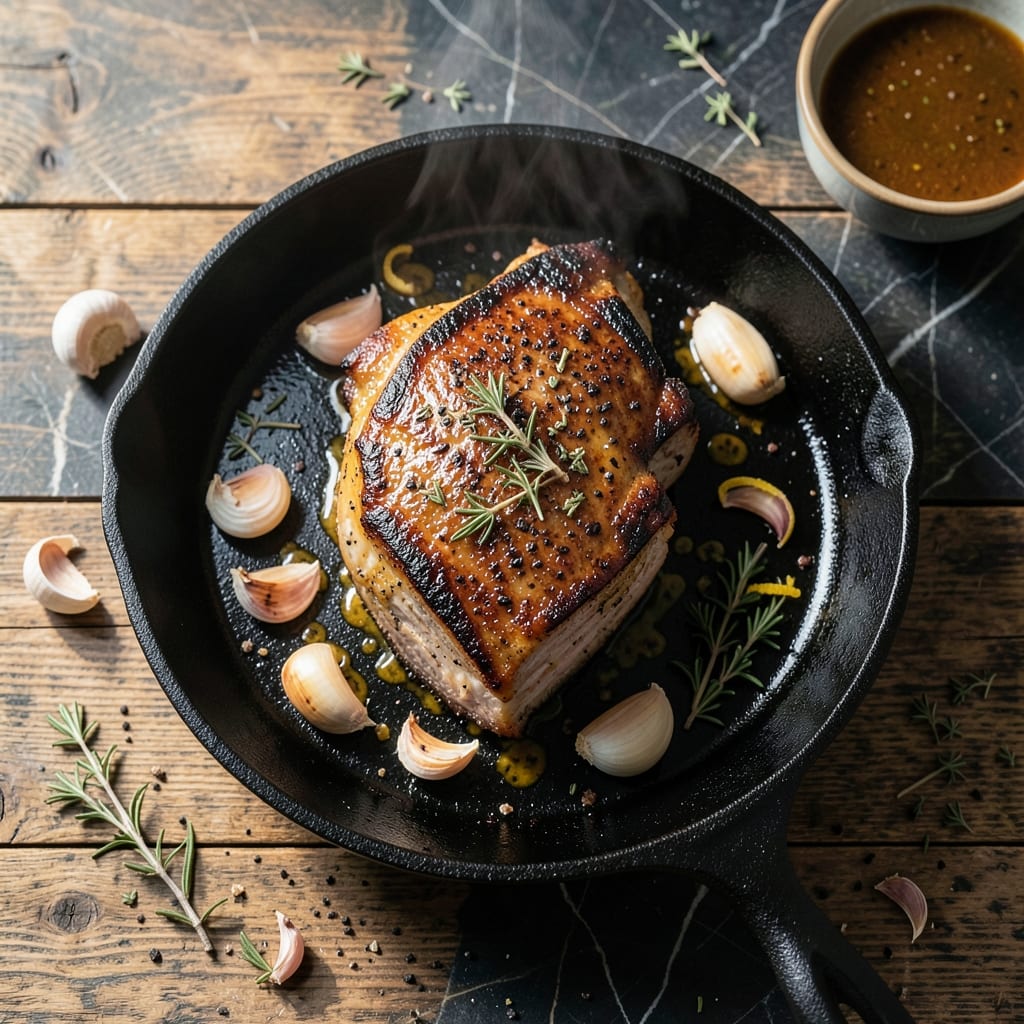
This cast iron method transforms pork tenderloin into a tender, juicy centerpiece with minimal effort. The skillet creates a perfect sear while the oven finishes the cooking evenly.
I developed this technique to maximize flavor and moisture, using a simple herb crust that forms a fragrant, golden exterior. The process requires just 20 minutes of active cooking time.
What emerges is meat so succulent it nearly melts, with a crust that adds texture and depth to every bite. The pan juices become the base for a quick, flavorful sauce.
Serve this with roasted vegetables or mashed potatoes for a complete meal that feels special yet remains approachable. The results speak for themselves.
Ingredients for Pork Tenderloin Recipe Cast Iron
A cast iron skillet, pork tenderloin, and aromatic herbs create this elegant dish with minimal ingredients.
| Ingredient | Amount | Notes |
|---|---|---|
| Pork Tenderloin 🥩 | 1 ½ lb | Trimmed of silver skin |
| Kosher Salt 🧂 | 1 ½ tsp | Diamond Crystal preferred |
| Black Pepper 🌶️ | 1 tsp | Freshly cracked for best results |
| Fresh Rosemary 🌿 | 2 tbsp | Finely chopped, stems discarded |
| Fresh Thyme 🍃 | 2 tbsp | Leaves stripped from stems |
| Garlic Cloves 🧄 | 4 cloves | Minced finely for herb crust |
| Olive Oil 🫒 | 3 tbsp | Divided for searing and crust |
| Dijon Mustard 🟡 | 1 tbsp | For binding herb crust |
| Unsalted Butter 🧈 | 2 tbsp | For basting during searing |
| Chicken Stock 🥣 | ½ cup | Low-sodium preferred for sauce |
| Red Wine 🍷 | ¼ cup | Dry variety for deglazing |
| Shallot 🧅 | 1 whole | Finely minced for sauce |
The pork tenderloin is the star—choose well-marbled pieces from a trusted butcher or Whole Foods for optimal tenderness. The herb crust demands fresh rosemary and thyme; dried versions lack the vibrant aroma needed. For the Dijon, Maille or Grey Poupon deliver the right sharpness. Always pat the pork dry before seasoning to ensure a proper sear.
No fresh herbs? Dried at one-third the quantity, but fresh is strongly recommended. Out of red wine? Substitute with additional chicken stock and a teaspoon of balsamic vinegar. Shallots can be replaced with red onion, though the flavor will be slightly more pungent. For a non-alcoholic option, use apple cider vinegar with a pinch of sugar.
Store pork tenderloin in the coldest part of your fridge for up to 3 days before cooking. Fresh herbs wrapped in damp paper towels last 5-7 days. Leftover sauce can be refrigerated in an airtight container for up to 4 days or frozen for 3 months.
Why You’ll Love This Recipe
- One Pan Wonder: I sear the tenderloin in cast iron, then pop it in the oven—only one dish to wash.
- Herb Crust Perfection: The rosemary and thyme create a fragrant crust that’s crispy outside, juicy inside.
- Weeknight Hero: Honestly, it’s ready faster than takeout but feels fancy enough for guests.
- Budget Friendly: A single pork tenderloin feeds four with leftovers for sandwiches the next day.
Step-by-Step Instructions for Pork Tenderloin in Cast Iron
Master the sear-roast technique for succulent pork with a fragrant herb crust every time.
Step 1: Prepare the Herb Crust and Season the Tenderloin
In a small bowl, combine the 2 tbsp fresh rosemary, 2 tbsp fresh thyme, 4 cloves garlic cloves, 1 tbsp Dijon mustard, and 1 tbsp olive oil. The mustard acts as a binder for the herb mixture, ensuring it adheres to the meat during cooking.
Pat the 1.5 lb pork tenderloin dry with paper towels—this is non-negotiable for achieving a proper sear. Season all over with 1.5 tsp kosher salt and 1 tsp black pepper, then rub the herb mixture over the entire surface, pressing firmly to create an even crust. Let it sit at room temperature for 15-20 minutes to allow the flavors to penetrate.
Step 2: Sear the Tenderloin in Cast Iron
Place a cast iron skillet in the oven and preheat to 400°F. Once hot, carefully remove the skillet and add 2 tbsp olive oil. When the oil shimmers, add the pork tenderloin and sear undisturbed for 3-4 minutes per side until deep golden brown.
Add the 2 tbsp unsalted butter to the pan and tilt slightly, using a spoon to baste the pork with the foaming butter continuously. This basting step enhances the crust and adds richness to the meat. The tenderloin should release easily from the pan when properly seared—if it sticks, give it more time.
Step 3: Finish in the Oven
Transfer the skillet with the pork tenderloin to the preheated oven. Roast for 10-15 minutes until the internal temperature reaches 145°F in the thickest part. The herb crust will be fragrant and slightly crisp, while the meat remains juicy and tender.
Remove the skillet from the oven and transfer the pork to a cutting board. Tent loosely with foil and let it rest for 10 minutes—this allows the juices to redistribute, ensuring each slice stays moist. The internal temperature will rise slightly during resting, which is normal.
Step 4: Create the Pan Sauce
Place the skillet over medium heat and add the 1 whole shallot, minced. Sauté for 1-2 minutes until softened and just beginning to brown. Pour in the 0.25 cup red wine and scrape up all the browned bits from the bottom of the pan with a wooden spoon.
Let the wine reduce by half, then add the 0.5 cup chicken stock. Simmer for 3-4 minutes until the sauce thickens slightly and coats the back of a spoon. Taste and adjust seasoning with a pinch of kosher salt if needed. Pour the sauce over the sliced pork just before serving.
Pro Tips For Making Pork Tenderloin Recipe Cast Iron
- Pat It Dry: I learned this the hard way—skip this and your pork won’t sear properly. Use paper towels to remove every bit of moisture from the tenderloin before seasoning.
- Sear Then Bake: Start with a screaming hot cast iron to get a deep crust, then transfer the whole pan to a 400°F oven to finish cooking evenly.
- Use Fresh Herbs: Sounds obvious, but dried rosemary and thyme just don’t cut it here. Crush the fresh sprigs between your fingers before pressing them into the meat to release their oils.
- Rest Before Slicing: Give it a solid 5-10 minutes under foil after cooking—this keeps the juices from running all over your cutting board. I skip this when I’m lazy, but the tenderloin is noticeably drier when I do.
Best Sauces and Condiments for This pork tenderloin recipe cast iron
Classic Pan Sauce
The built-in sauce from this recipe is already perfect—I always use the red wine and chicken stock deglazing liquid to create a rich, savory pan sauce. Just reduce it until it coats the back of a spoon, about 3-4 minutes. 💫
Apple Chutney
A sweet-tart apple chutney balances the savory herb crust beautifully. I love Stonewall Kitchen’s version, but homemade with diced apples, 1 tbsp apple cider vinegar, and 1 tsp brown sugar works too. Simmer for 10 minutes until thickened.
Whole Grain Mustard
For extra tang, serve with whole grain mustard on the side. The coarse texture and sharp flavor cut through the richness. Maille Old Style is my go-to brand. Just a 1 tsp dollop per slice adds the perfect contrast.
Garlic Aioli
Mix ½ cup mayonnaise with 2 minced garlic cloves and 1 tbsp lemon juice for a creamy, garlicky dip. Use Duke’s or Hellmann’s for best texture. This pairs especially well with the crispy herb crust.
Spicy Pepper Jelly
A dollop of pepper jelly adds sweet heat that complements the pork’s natural sweetness. I recommend Bonne Maman’s red pepper jelly. Spread 1 tbsp on each serving for a surprising flavor twist. 🔥
Nutrition Facts
Frequently Asked Questions
What’s the best internal temperature for pork tenderloin?
Remove it from heat when it hits 145°F in the thickest part. The temperature will rise to 150-155°F while resting, ensuring perfect doneness. Use a meat thermometer for accuracy.
Can I use a different pan if I don’t have cast iron?
Yes, but cast iron provides superior heat retention. A heavy stainless steel skillet works, though you may need to adjust cooking times slightly. Avoid non-stick for high-heat searing.
How do I prevent the herb crust from burning?
Press the herb mixture firmly onto the pork before searing. If the crust darkens too quickly, reduce oven temperature to 375°F and tent with foil.
Is resting the meat really necessary?
Letting it rest for 10 minutes allows juices to redistribute. Slicing too soon causes dry meat and lost flavor on the cutting board.

- Potato Patty Recipe No Egg: Crispy Edges Without the Binder - October 30, 2026
- Paula Deen’s Potato Chip Cookies Recipe: Salty-Sweet Crunch in Every Bite - October 30, 2026
- Potato Gnocchi Recipe Ideas: Pillowy Soft Dumplings With Rustic Charm - October 30, 2026