
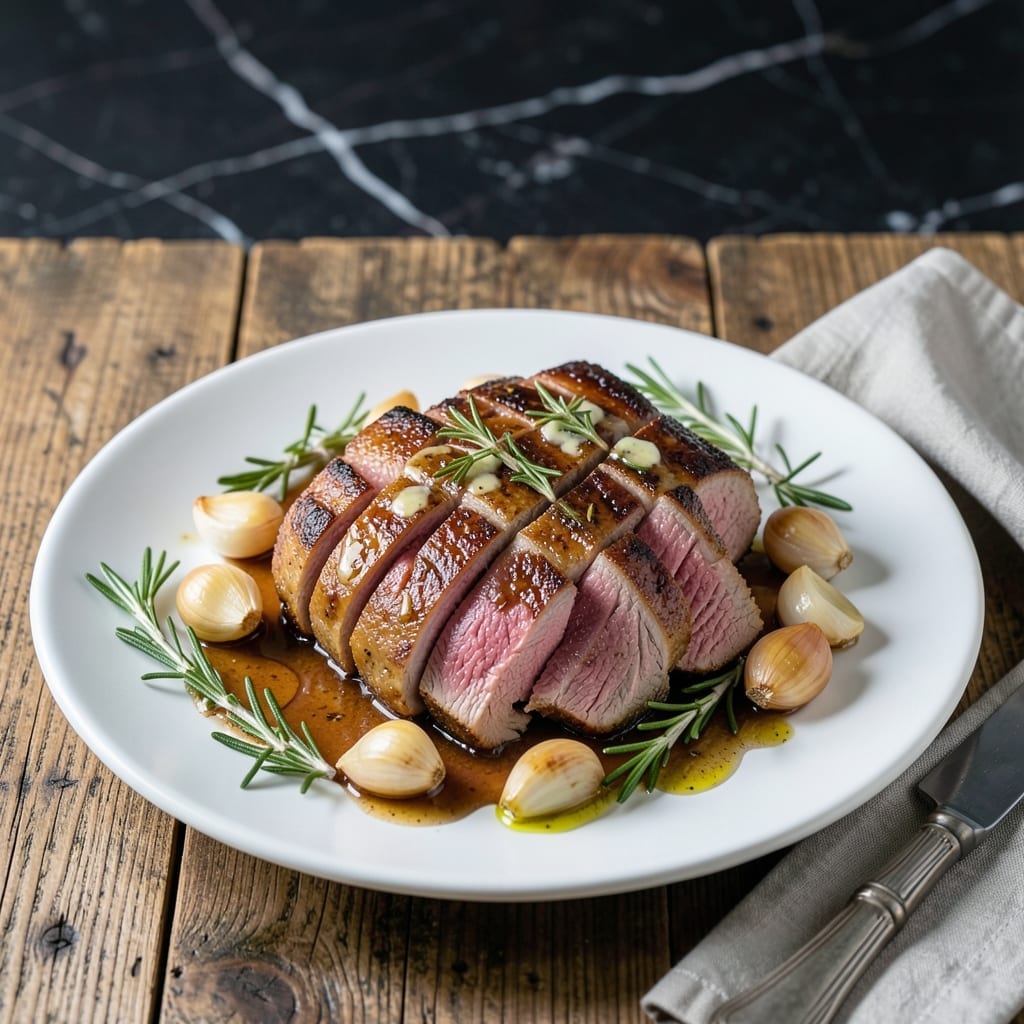
This pork tenderloin recipe delivers tender, juicy results with a simple garlic butter baste that elevates every bite. I developed this method after testing countless variations to achieve restaurant-quality meat at home.
The secret lies in searing the pork first to lock in moisture, then finishing it in the oven while basting with melted garlic butter. This creates a golden crust outside while keeping the inside perfectly moist and flavorful.
What you get is succulent pork with a rich, aromatic crust that slices beautifully. The garlic butter soaks into the meat, adding depth without overpowering the natural pork flavor.
Serve with roasted vegetables or mashed potatoes for a complete meal. This technique never fails to impress.
Ingredients for Pork Tenderloin Recipe Ree Drummond
Quality pork and aromatic herbs create restaurant-worthy results at home with minimal effort.
| Ingredient | Amount | Notes |
|---|---|---|
| Pork Tenderloin 🥩 | 1 ½ lb | Trimmed of silver skin |
| Unsalted Butter 🧈 | ½ cup | Cut into cubes for basting |
| Garlic Cloves 🧄 | 6 cloves | Minced finely for even distribution |
| Kosher Salt 🧂 | 1 ½ tsp | Diamond Crystal preferred |
| Freshly Ground Black Pepper 🌶️ | 1 tsp | Coarse grind recommended |
| Fresh Rosemary 🌿 | 2 tbsp | Chopped, stems removed |
| Fresh Thyme 🍃 | 2 tbsp | Chopped, stems removed |
| Olive Oil 🫒 | 2 tbsp | For searing pork |
| Dijon Mustard 🟡 | 1 tbsp | For crust enhancement |
| Dry White Wine 🍷 | ¼ cup | For deglazing pan |
| Chicken Stock 🥣 | ½ cup | Low-sodium preferred |
| Shallot 🧅 | 1 whole | Minced for aromatic base |
The pork tenderloin is the foundation—sourcing from reputable butchers like Whole Foods or local farms ensures optimal tenderness. Look for pieces with consistent diameter (about 2-3 inches) for even cooking. The butter should be European-style if available, as its higher fat content resists burning during basting. Fresh herbs from the farmers market provide superior aroma, but grocery store varieties work if absolutely necessary.
No white wine? Substitute with additional chicken stock plus a splash of lemon juice. Dried herbs can replace fresh at one-third the amount, though fresh is strongly preferred. If you lack Dijon, whole-grain mustard adds pleasant texture. The shallot can be replaced with half a small onion, finely minced. For a deeper crust, some cooks add a pinch of smoked paprika to the seasoning.
Pork tenderloin keeps well in the fridge for 2-3 days before cooking. Store fresh herbs wrapped in damp paper towels in sealed containers for up to 5 days. Once cooked, the dish holds beautifully for 3-4 days refrigerated or can be frozen for up to 2 months.
Why You’ll Love This Recipe
- Set It and Forget: I sear the pork, pop it in the oven, and walk away—no babysitting required.
- Buttery Garlic Magic: The butter and garlic melt into every bite, making it ridiculously good without fancy ingredients.
- Weeknight Hero: Honestly, it’s my go-to for busy Tuesdays when I need dinner on the table fast.
- Leftovers? Yes Please: The slices reheat beautifully for sandwiches or salads the next day.
Step-by-Step Instructions for Pork Tenderloin
This method guarantees tender, juicy pork with a rich garlic-herb crust every time.
Step 1: Prepare and Season the Pork Tenderloin
Pat the 1.5 lb Pork Tenderloin completely dry with paper towels to ensure a good sear. Trim any remaining silver skin for even cooking.
Rub the tenderloin all over with 1 tbsp Dijon Mustard, then season evenly with 1.5 tsp Kosher Salt and 1 tsp Freshly Ground Black Pepper. This creates a flavorful base that helps the crust adhere.
Let the seasoned pork sit at room temperature for 15-20 minutes while you prep the remaining ingredients. This step ensures even cooking from edge to center.
Step 2: Sear the Pork to Develop Flavor
Heat 2 tbsp Olive Oil in a large oven-safe skillet over medium-high heat until shimmering. Add the pork tenderloin and sear for 3-4 minutes per side until golden brown on all surfaces.
During the final minute of searing, add 1 whole Shallot (minced) to the pan. The shallot will soften quickly in the hot oil and add aromatic depth to the finished dish.
Remove the pan from heat once the pork is browned and the shallot is fragrant. The internal temperature should reach about 120°F at this stage.
Step 3: Baste with Garlic-Herb Butter in the Oven
Reduce oven temperature to 400°F. Add 0.5 cup Unsalted Butter (cut into cubes), 6 cloves Garlic Cloves (minced), 2 tbsp Fresh Rosemary, and 2 tbsp Fresh Thyme to the skillet.
Transfer the skillet to the oven and roast for 10-12 minutes, basting the pork with the melted butter and herbs every 3-4 minutes. This basting process infuses the meat with flavor and promotes even browning.
The pork is done when an instant-read thermometer inserted into the thickest part registers 145°F. The butter will foam and the garlic will turn light golden brown when ready.
Step 4: Create the Pan Sauce and Rest
Transfer the pork to a cutting board and tent loosely with foil. Place the skillet on the stovetop over medium heat and add 0.25 cup Dry White Wine to deglaze, scraping up all browned bits.
Simmer for 2-3 minutes until the wine reduces by half, then add 0.5 cup Chicken Stock. Continue simmering for another 3-4 minutes until the sauce thickens slightly and coats the back of a spoon.
Let the pork rest for 10 minutes before slicing into 1-inch thick pieces. This resting period allows the juices to redistribute, ensuring each slice remains moist and flavorful.
Step 5: Serve with Pan Sauce
Strain the pan sauce through a fine-mesh sieve to remove solids, if desired, or leave the herbs and shallots for a rustic presentation. Pour the sauce over the sliced pork or serve it on the side.
The sauce should have a glossy sheen and a rich aroma from the garlic, herbs, and wine. Each bite of pork will be infused with the flavors from the basting process, while the sauce adds an extra layer of moisture.
Pro Tips For Making Pork Tenderloin Recipe Ree Drummond
- Sear Hot, Finish Low: Start with a screaming hot pan to get that golden crust on the tenderloin, then drop the heat to medium-low to cook it through without burning the butter and garlic.
- Pat It Dry: I learned this the hard way—blot the pork tenderloin with paper towels before seasoning, or the salt won’t stick and you’ll end up with a soggy sear instead of a crisp one.
- Don’t Overcrowd: If your pan isn’t big enough for the whole tenderloin in one layer, use two burners or cook it in batches; crowding steams the meat instead of browning it.
- Rest Before Slicing: Give it a solid 8-10 minutes under foil after cooking—this keeps all the juices inside where they belong, not on your cutting board.
Troubleshooting Great pork tenderloin recipe ree drummond
Overcooked Pork
If your pork comes out dry, it likely exceeded 145°F internal temperature. Pull it from the oven at 140°F—it will coast to perfect doneness while resting. I learned this the hard way when my first tenderloin hit 160°F and turned tough. 🌡️
Weak Crust
For a golden crust, ensure your skillet is ripping hot before searing. Use medium-high heat and don’t move the pork for 3-4 minutes per side. If the crust isn’t forming, your oil may not be hot enough or you’re moving it too soon.
Bland Flavor
If the pork lacks depth, your baste may need more time. Baste every 3-4 minutes during roasting and ensure the garlic butter mixture is well-distributed. I also add a pinch of kosher salt to the baste for extra flavor.
Sauce Too Thin
A thin sauce usually needs more reduction time. After adding 0.5 cup Chicken Stock, let it simmer for 5-6 minutes instead of 3-4. If it’s still too thin, mix in 1 tsp cornstarch slurry to thicken it quickly. 💡
Uneven Cooking
If parts of the pork are undercooked while others are overdone, it may be due to uneven thickness. Tuck the thin end under and secure it with kitchen twine before searing. This ensures even cooking throughout.
Burnt Butter
If your butter burns during basting, it’s likely because the oven temp is too high. Reduce it to 375°F and use European-style butter—it has a higher smoke point. I also add a splash of Dry White Wine to the pan to prevent scorching.
Nutrition Facts
Frequently Asked Questions
Can I use dried herbs instead of fresh?
Yes, substitute dried herbs at 1/3 the amount. Use 2 tsp dried rosemary and 2 tsp dried thyme for this recipe. Fresh is preferred for brighter flavor, but dried works in a pinch.
What if I don’t have an oven-safe skillet?
Transfer the seared pork to a baking dish after searing. Pour the garlic butter mixture over the pork before roasting at 400°F for 10-12 minutes. You’ll still get great results.
How do I prevent the butter from burning?
Use European-style butter and reduce oven temp to 375°F. Add a splash of white wine to the pan to lower the heat. Baste frequently to distribute the heat evenly.
Can I make this ahead of time?
Season the pork and refrigerate for up to 24 hours before cooking. Cook just before serving for best results. The pan sauce can be made 1 day ahead and reheated gently.

- Potato Patty Recipe No Egg: Crispy Edges Without the Binder - October 30, 2026
- Paula Deen’s Potato Chip Cookies Recipe: Salty-Sweet Crunch in Every Bite - October 30, 2026
- Potato Gnocchi Recipe Ideas: Pillowy Soft Dumplings With Rustic Charm - October 30, 2026