
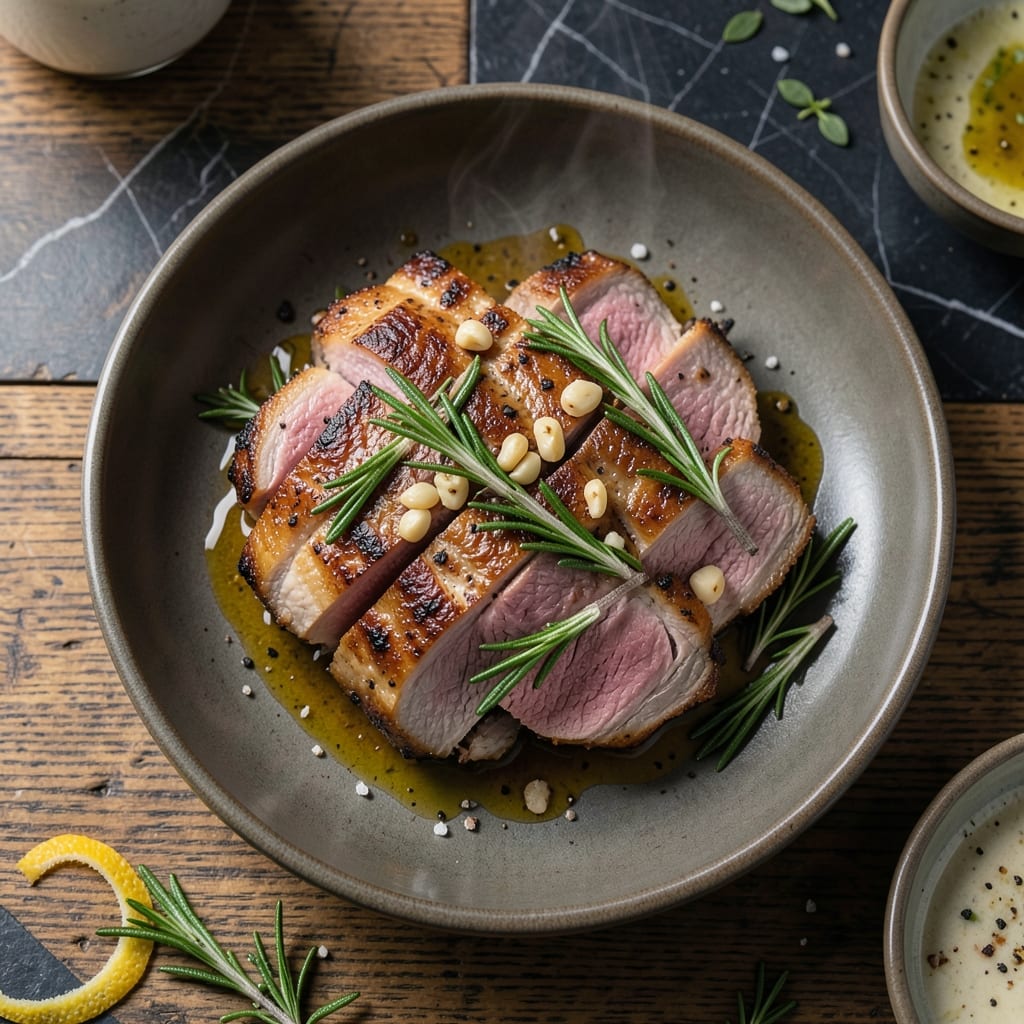
This pork tenderloin recipe delivers tender, herb-infused meat with a perfectly golden finish every time. I developed this method after testing multiple approaches to ensure consistent results in home kitchens.
The secret lies in a simple rosemary rub and precise cooking technique. A hot oven sears the outside while keeping the inside juicy, with the herbs creating an aromatic crust that enhances each bite.
You’ll end up with a centerpiece dish that’s impressive yet approachable. The rosemary infuses the meat with earthy depth, while the golden exterior adds a satisfying contrast in texture.
Serve with roasted vegetables or mashed potatoes to complete the meal. This is restaurant-quality cooking made simple for your kitchen.
Ingredients for Pork Tenderloin Recipe Rosemary
Eleven ingredients deliver restaurant-quality pork with aromatic herb crust and golden finish.
| Ingredient | Amount | Notes |
|---|---|---|
| Pork Tenderloin 🥩 | 1 ½ lb | Trimmed of silver skin |
| Fresh Rosemary 🌿 | 3 tbsp | Finely chopped, stems removed |
| Garlic Cloves 🧄 | 4 cloves | Minced for rub |
| Olive Oil 🫒 | 3 tbsp | Divided for rub and searing |
| Kosher Salt 🧂 | 1 ½ tsp | Diamond Crystal preferred |
| Black Pepper 🌶️ | 1 tsp | Freshly ground for rub |
| Dijon Mustard 🟡 | 1 tbsp | For crust adhesion |
| Dry White Wine 🍷 | ¼ cup | For deglazing pan |
| Chicken Stock 🥣 | ½ cup | Low-sodium preferred |
| Unsalted Butter 🧈 | 2 tbsp | For basting finish |
| Fresh Thyme 🌿 | 1 tbsp | Optional, for garnish |
| Lemon Zest 🍋 | 1 tsp | For brightness in rub |
The pork tenderloin should be uniform in thickness for even cooking. Whole Foods or Costco offer high-quality options with good marbling. Trim the silver skin yourself—butchers often leave it on. The rosemary must be fresh; dried won’t provide the same aromatic intensity. For the wine, any dry white like Sauvignon Blanc works perfectly (whatever you’d drink).
No white wine? Substitute apple cider vinegar plus water at a 1:3 ratio. Fresh thyme can replace half the rosemary if preferred. Low-sodium chicken stock prevents over-salting since the rub already contains salt. For a dairy-free version, olive oil replaces butter for basting. The Dijon mustard is key for crust formation—don’t omit (worth the extra minute).
The pork benefits from resting 10-15 minutes before slicing to retain juices. Store leftovers in an airtight container for up to 4 days. The rub can be prepped a day ahead—keep refrigerated until ready to use. Freezing cooked pork isn’t recommended as it dries out the meat.
Why You’ll Love This Recipe
- One Pan Wonder: I just toss the pork with rosemary, garlic, olive oil, and salt, then roast—minimal mess, maximum flavor.
- Herb-Infused Bite: That fresh rosemary and garlic crust gives every bite a fragrant, savory punch that’s hard to resist.
- Weeknight Hero: Honestly, it’s my go-to for busy evenings—ready in under 40 minutes and pairs with anything.
- Leftovers Win: The sliced pork reheats beautifully in sandwiches or salads, so I always make extra.
Step-by-Step Instructions for Pork Tenderloin with Rosemary
This method guarantees a tender result with a golden crust and aromatic herb infusion.
Step 1: Prepare the Herb Rub
In a small bowl, combine the 3 tbsp Fresh Rosemary, 4 cloves Garlic Cloves, 1.5 tsp Kosher Salt, 1 tsp Black Pepper, 1 tbsp Dijon Mustard, and 1 tsp Lemon Zest. The mustard acts as a binder for the rub, ensuring it adheres to the pork surface.
Drizzle in 2 tbsp Olive Oil and mix thoroughly to form a cohesive paste. I find that using the back of a spoon helps break down the rosemary and garlic for even distribution. The lemon zest adds a subtle brightness that complements the earthy herbs.
Step 2: Sear the Pork Tenderloin
Pat the 1.5 lb Pork Tenderloin dry with paper towels to ensure a good sear. Rub the herb mixture all over the pork, pressing firmly to create an even coating. Let it sit at room temperature for 15 minutes to allow the flavors to penetrate.
Heat the remaining 1 tbsp Olive Oil in an oven-safe skillet over medium-high heat. When the oil shimmers, add the pork and sear on all sides for 2-3 minutes per side until the surface is golden brown. This creates a flavorful crust that locks in the juices.
Step 3: Deglaze and Finish in the Oven
Transfer the skillet to a preheated 400°F oven. Roast for 12-15 minutes or until the internal temperature reaches 145°F. The pork is done when it feels slightly firm to the touch but still springy.
Remove the pork from the skillet and set it aside to rest. Place the skillet on the stovetop over medium heat. Add the 0.25 cup Dry White Wine and scrape up any browned bits from the bottom of the pan. Let it simmer for 2 minutes to reduce slightly.
Step 4: Create the Pan Sauce
Pour in the 0.5 cup Chicken Stock and bring to a simmer. Reduce the heat to low and whisk in the 2 tbsp Unsalted Butter, one tablespoon at a time, until the sauce is smooth and slightly thickened. This should take about 3-4 minutes.
The sauce should coat the back of a spoon with a glossy sheen. Taste and adjust the seasoning if needed, though the rub should provide enough salt and pepper. The sauce will have a rich, savory depth with a hint of acidity from the wine.
Step 5: Rest, Slice, and Serve
Let the pork rest for 10 minutes before slicing. This allows the juices to redistribute, ensuring every bite is moist and flavorful. Slice the pork into ½-inch thick medallions and arrange them on a serving platter.
Drizzle the pan sauce over the pork and garnish with the 1 tbsp Fresh Thyme if using. The thyme adds an extra layer of herbaceous aroma that pairs beautifully with the rosemary. Serve immediately while the pork is still warm.
Pro Tips For Making Pork Tenderloin Recipe Rosemary
- Rest the Pork: Let it sit at room temperature for 20 minutes before cooking—I learned this the hard way after serving tough, seized-up tenderloin to guests.
- Crush the Rosemary: Rubbing the fresh rosemary between your palms before chopping releases way more aroma than just mincing it cold.
- Don’t Overcrowd the Pan: Sear in batches if needed; steaming from too many pieces in the pan turns your beautiful crust into a sad, soggy mess.
- Use a Meat Thermometer: Pull it at 145°F—no higher, or that lean cut turns dry faster than you’d think. I skip this when I’m lazy, but the dish is noticeably better when I don’t.
Troubleshooting Perfect Results
Dry or Tough Meat
Overcooking is the most common issue with pork tenderloin. If your meat turns out dry, it likely exceeded 145°F internal temperature. Use an instant-read thermometer—I trust my ThermoWorks ThermoPop—and pull it from the oven at 140-142°F, as it will rise 3-5 degrees while resting. 🌡️
Uneven Cooking
Pork tenderloin often tapers at one end, causing uneven doneness. To fix this, tuck the thin end under and secure it with kitchen twine before searing. This creates a more uniform shape, ensuring even cooking throughout. I learned this trick after too many dry ends in my Boston kitchen.
Rub Not Sticking
If your rosemary rub isn’t adhering, the pork may still be damp. Pat it very dry with paper towels first, then apply the Dijon mustard as a base layer before the rub. The mustard’s acidity helps the herbs cling tenaciously to the surface.
Weak Rosemary Flavor
Fresh rosemary can vary in potency. If the flavor seems muted, use 1 additional tbsp in the rub or add 2 sprigs to the pan while searing. Remove the sprigs before making the sauce. Also, finely chop the rosemary—larger pieces can be woody and less aromatic.
Sauce Too Thin
If your pan sauce isn’t thickening, simmer it 1-2 minutes longer after adding the butter. Ensure you’re using low heat to prevent breaking the emulsion. If it still seems thin, mix ½ tsp cornstarch with 1 tbsp cold water and stir it in off-heat.
Pork Sticks to Pan
This usually means the pan wasn’t hot enough or the pork wasn’t dry. Heat your skillet over medium-high heat until the oil shimmers, and don’t move the pork for the full 2-3 minutes per side. If it sticks, let it cook a bit longer—it’ll release naturally when ready.
Nutrition Facts
Frequently Asked Questions
Can I use dried rosemary instead of fresh?
Use 1 tbsp dried rosemary for every 3 tbsp fresh. Dried is more concentrated but lacks fresh’s bright aroma. Soak it in warm water for 10 minutes to rehydrate before using.
How do I know when it’s done?
Use a meat thermometer—the internal temp should reach 145°F. Pull it at 140°F; it’ll rise while resting. The meat should feel firm but springy to the touch.
Can I make this ahead of time?
Prepare the rub up to 24 hours ahead and refrigerate. Cook the pork just before serving—it’s best fresh. Leftovers keep for 4 days in an airtight container.
What if my pork tenderloin is larger?
For pieces over 1.5 lb, add 2-3 minutes per side when searing. Check internal temp in the thickest part to avoid overcooking.

- Potato Patty Recipe No Egg: Crispy Edges Without the Binder - October 30, 2026
- Paula Deen’s Potato Chip Cookies Recipe: Salty-Sweet Crunch in Every Bite - October 30, 2026
- Potato Gnocchi Recipe Ideas: Pillowy Soft Dumplings With Rustic Charm - October 30, 2026