
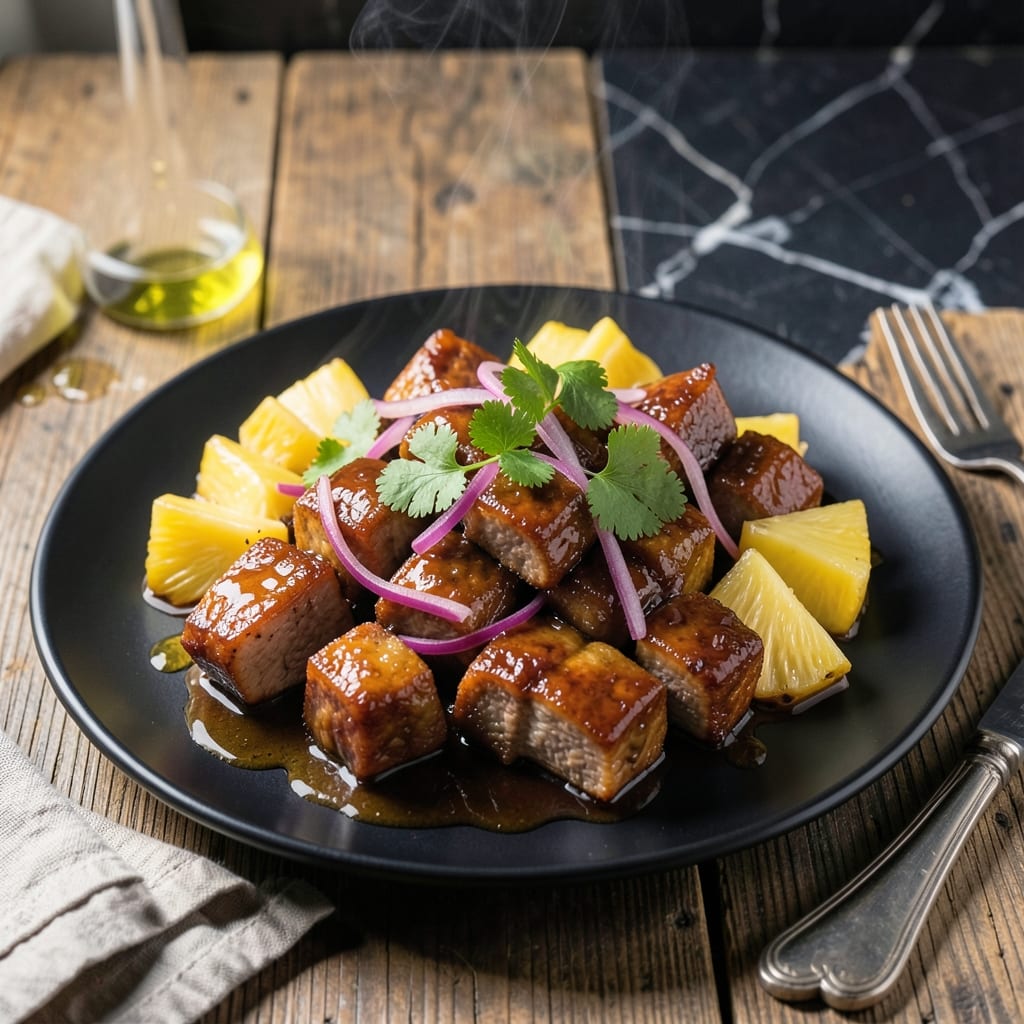
This Filipino classic transforms humble pork belly into a dish with melt-in-your-mouth tenderness and a rich, sweet-tangy glaze. The pineapple adds a bright contrast that balances the deep, savory flavors perfectly.
The secret lies in the slow braising process, which allows the meat to absorb the complex blend of soy sauce, vinegar, and spices. I’ve tested this method repeatedly to ensure the pork becomes fall-apart tender every time.
What emerges is a glistening, caramelized pork dish with a sauce so flavorful you’ll want to soak it up with rice. The pineapple not only sweetens but also tenderizes the meat, making each bite unforgettable.
Serve this at your next gathering, and watch it disappear. This is comfort food at its most satisfying.
Ingredients for Pork Humba Recipe with Pineapple
Rich, tender pork belly meets sweet pineapple in this classic Filipino braise.
| Ingredient | Amount | Notes |
|---|---|---|
| Pork Belly 🥩 | 2 lb | Cut into 2-inch cubes |
| Pineapple Chunks 🍍 | 1 cup | Fresh or canned, drained |
| Pineapple Juice 🍹 | ½ cup | Reserved from can or fresh |
| Soy Sauce 🫙 | ½ cup | Use dark soy for depth |
| White Vinegar 💧 | ¼ cup | Balances sweetness |
| Brown Sugar 🍚 | ¼ cup | Packed for caramelization |
| Garlic Cloves 🧄 | 6 cloves | Minced for aromatic base |
| Yellow Onion 🧅 | 1 whole | Sliced thinly |
| Bay Leaves 🌿 | 2 pieces | For earthy depth |
| Black Peppercorns 🌶️ | 1 tsp | Lightly crushed |
| Star Anise ✨ | 2 pieces | Whole pods for aroma |
| Dried Thyme 🍃 | ½ tsp | optional for complexity |
| Cooking Oil 🫒 | 2 tbsp | Neutral oil for searing |
| Water 💧 | 1 cup | For braising liquid |
The pork belly is non-negotiable here—look for skin-on pieces with even fat marbling at your butcher or Asian grocery. I get mine from H Mart when I can—they always have fresh cuts. The pineapple should be ripe but firm (can use canned in a pinch). Dark soy sauce adds that deep color and complexity; Pearl River Bridge is my go-to brand for this dish.
No pineapple juice? Orange juice with a splash of vinegar mimics the tang. Swap white vinegar for apple cider if that’s what you’ve got. If you’re missing star anise, a pinch of five-spice powder works surprisingly well. For the brown sugar, light or dark both work—dark adds a molasses note. The bay leaves can be fresh or dried, but don’t skip them.
This tastes even better the next day once the flavors meld. Keeps in the fridge for 4-5 days or freeze for up to 3 months. Reheat gently on the stove with a splash of water to thin the sauce (worth the extra minute).
Why You’ll Love This Recipe
- One Pot Magic: The pork belly, pineapple juice, and vinegar all simmer together—minimal cleanup, maximum flavor.
- Sweet-Savory Harmony: The pineapple chunks and soy sauce create this incredible balance that’s both tangy and rich.
- Crowd Pleaser: I’ve served this at potlucks and weeknight dinners, and it’s always the first to disappear.
- Budget Stretcher: Pork belly and canned pineapple keep costs low, and it tastes even better the next day.
Step-by-Step Instructions for Pork Humba With Pineapple
Here’s the method to build layers of flavor and achieve that perfect sweet-tangy glaze.
Step 1: Sear the Pork Belly for Deep Flavor
Heat the 2 tbsp cooking oil in a large, heavy pot over medium-high heat. Pat the 2 lb pork belly dry with paper towels to ensure a good sear. Working in batches if needed, add the pork belly cubes and cook undisturbed for 3-4 minutes per side until deeply browned on all sides.
This caramelization step is crucial—it builds a rich, savory foundation that will deepen as the pork braises. Don’t rush it; you want each cube to develop a dark, golden crust. Transfer the seared pork to a plate and set aside while you build the braising liquid.
Step 2: Sauté Aromatics and Toast Spices
In the same pot, add the sliced yellow onion and cook for 2-3 minutes until softened and just starting to caramelize. Stir in the minced 6 cloves garlic cloves and cook for 30 seconds until fragrant—be careful not to let it burn.
Now add the 2 pieces star anise, 2 pieces bay leaves, 1 tsp black peppercorns, and 0.5 tsp dried thyme. Toast for 1 minute until the spices release their aroma. This step wakes up the whole spices and ensures their flavors infuse the dish.
Step 3: Build the Braising Liquid
Pour in the 0.5 cup soy sauce, 0.25 cup white vinegar, 0.5 cup pineapple juice, and 0.25 cup brown sugar. Stir well, scraping up any browned bits from the bottom of the pot. These bits, or fond, are packed with flavor and will dissolve into the liquid.
Add the 1 cup water and bring the mixture to a gentle simmer. The liquid should smell balanced—sweet from the pineapple and sugar, tangy from the vinegar, and deeply savory from the soy sauce. Taste and adjust if needed, though the flavors will concentrate as it braises.
Step 4: Braise Until Tender
Return the seared pork belly to the pot, along with any accumulated juices. Add the 1 cup pineapple chunks and stir to combine. The liquid should just cover the pork—if it doesn’t, add a bit more water. Bring to a boil, then reduce the heat to low, cover, and let it simmer for 1.5 to 2 hours.
Check the pork after 1.5 hours—it should be fork-tender and the liquid slightly reduced. If it’s not quite there, continue cooking in 15-minute increments until the pork yields easily to a fork. The pineapple chunks will soften and absorb the rich, braising liquid, adding bursts of sweetness to each bite.
Step 5: Reduce to Glazed Perfection
Once the pork is tender, uncover the pot and increase the heat to medium-high. Let the liquid simmer for 10-15 minutes until it thickens into a glossy, syrupy glaze that coats the back of a spoon. Stir occasionally to prevent sticking.
The sauce should cling to the pork, creating a beautiful, lacquered finish. At this point, the pork will be incredibly tender, the pineapple softened but still intact, and the sauce reduced to a perfect balance of sweet, tangy, and umami. Serve hot over steamed rice to soak up every last drop of the glaze.
Pro Tips For Making Pork Humba Recipe With Pineapple
- Brown the Belly: Sear the pork belly in batches over medium-high heat until golden—about 4-5 minutes per side. I learned this the hard way: skipping this step leaves the meat pale and the sauce watery.
- Use Fresh Pineapple: Canned pineapple works, but fresh chunks add a brighter, more vibrant sweetness that balances the soy sauce and vinegar. The texture holds up better too.
- Simmer Low and Slow: Once the liquid is in, keep it at a gentle simmer, not a boil. After burning a batch, I realized high heat toughens the pork and makes the sauce reduce too fast.
- Add Vinegar Last: Stir in the white vinegar during the last 10 minutes of cooking. Adding it earlier can make the pork tough, and the acidity mellows out nicely at the end.
Serving Suggestions for This Recipe
Traditional Pairing
Serve this over steamed jasmine rice to soak up that incredible glaze. I use my rice cooker with a 1:1 ratio of rice to water for perfect results every time. The rice’s mild flavor lets the pork and pineapple shine.
Fresh Contrast
A simple cucumber and tomato salad cuts through the richness beautifully. Toss 2 cups sliced cucumbers with 1 cup cherry tomatoes, 1 tbsp rice vinegar, and a pinch of salt. It’s refreshing against the deep flavors. 🥗
Pickled Addition
Filipino meals often include atchara (pickled green papaya). The tangy crunch complements the pork’s sweetness perfectly. Look for it at Asian grocery stores or make your own with shredded green papaya, carrots, and vinegar.
Warm Bread
For a heartier meal, serve with pandesal—Filipino bread rolls. Split them open and use to mop up the sauce. I get mine from our local Portland bakery that specializes in Filipino treats.
Vegetable Side
Steamed bok choy or Chinese broccoli adds a green element to the plate. Just 5 minutes in a steamer basket with a drizzle of oyster sauce after cooking enhances their natural sweetness. 💪
Beverage Pairing
An ice-cold San Miguel beer or calamansi juice balances the richness. The beer’s crispness cuts through the fat, while the calamansi’s citrus notes echo the pineapple in the dish.
Nutrition Facts
Frequently Asked Questions
Can I use pork shoulder instead of belly?
Yes, pork shoulder works well, though it’s leaner. Add 1 extra hour of braising to achieve the same tenderness. The flavor will be slightly different but still delicious.
Why does the sauce need reducing?
Reducing concentrates the flavors and creates that signature glossy glaze. Simmer uncovered for 10-15 minutes until it coats the pork beautifully.
Can I make this in a slow cooker?
Sear the pork first, then cook on low for 6-8 hours. Transfer to a pot to reduce the sauce before serving.

- Potato Patty Recipe No Egg: Crispy Edges Without the Binder - October 30, 2026
- Paula Deen’s Potato Chip Cookies Recipe: Salty-Sweet Crunch in Every Bite - October 30, 2026
- Potato Gnocchi Recipe Ideas: Pillowy Soft Dumplings With Rustic Charm - October 30, 2026