
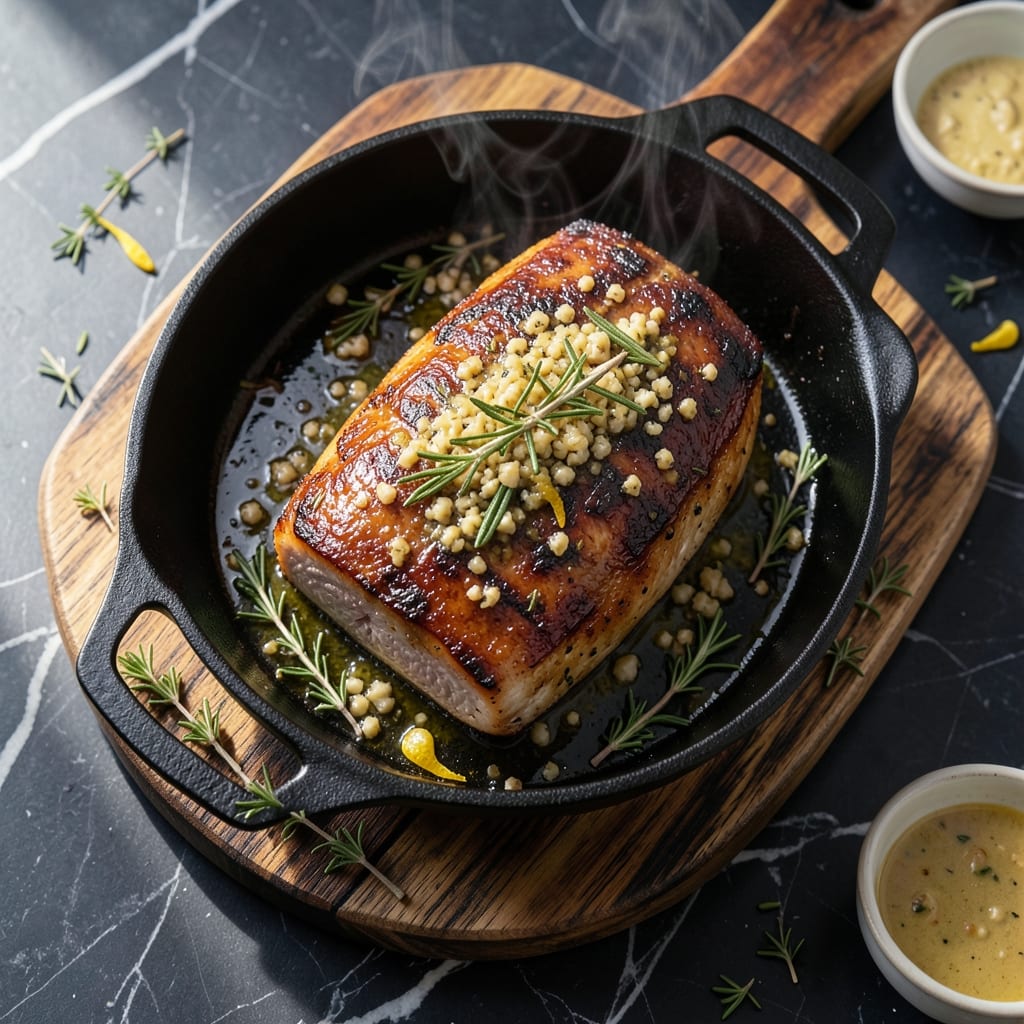
This Dutch oven method transforms pork tenderloin into succulent, herb-crusted medallions with minimal effort. The key lies in a proper sear followed by gentle roasting, locking in juices while building deep flavor.
I developed this technique to ensure tender results every time, using a simple herb rub and precise temperature control. The Dutch oven’s even heat distribution makes it ideal for both searing and finishing in the oven.
You’ll achieve perfectly cooked pork with a golden crust, ready to slice into elegant medallions. The aromatics infuse the meat as it roasts, creating a dish that’s impressive yet approachable.
Serve with your favorite sides for a restaurant-quality meal at home. Here’s how to make it happen.
Ingredients for Pork Tenderloin Recipe Dutch Oven
Pantry raid plus fresh herbs. Nothing exotic, just good stuff for perfect medallions.
| Ingredient | Amount | Notes |
|---|---|---|
| Pork Tenderloin 🥩 | 1 ½ lb | Trimmed of excess fat |
| Olive Oil 🫒 | 2 tbsp | Divided for searing and rubbing |
| Kosher Salt 🧂 | 1 tsp | Diamond Crystal preferred |
| Black Pepper 🌶️ | ½ tsp | Freshly ground |
| Garlic Cloves 🧄 | 4 cloves | Minced for herb rub |
| Fresh Rosemary 🌿 | 2 tbsp | Finely chopped, stems removed |
| Fresh Thyme 🍃 | 2 tbsp | Leaves stripped from stems |
| Dijon Mustard 🟡 | 1 tbsp | For herb crust adhesion |
| Dry White Wine 🍷 | ½ cup | For deglazing pan |
| Chicken Stock 🥄 | ½ cup | Low-sodium preferred |
| Unsalted Butter 🧈 | 1 tbsp | For finishing sauce |
| Shallot 🧅 | 1 whole | Finely diced |
The pork tenderloin should be pale pink and firm—avoid anything gray or with a strong odor. Whole Foods or Costco have reliable options. Trim any silver skin yourself (it’s tough and doesn’t soften). The herbs matter here: fresh rosemary and thyme make all the difference, so grab a bunch from the produce section (or your garden if you’re lucky). Don’t skip the Dijon—it’s what makes the crust cling.
No white wine? Apple cider vinegar mixed with water (half and half) works in a pinch. Dried herbs can substitute at one-third the amount, but fresh is worth the effort. Out of shallots? Yellow onion is fine, just use half the quantity. The chicken stock can be swapped for vegetable stock if that’s what you’ve got open.
Store the pork in its original packaging for up to 2 days in the fridge, or freeze for 6-12 months. Fresh herbs last about 1 week wrapped in damp paper towels. Leftover medallions reheat beautifully—just warm them gently in the oven to keep them juicy.
Why You’ll Love This Recipe
- I’ll be real: the slices reheat beautifully for sandwiches or salads the next day.
- One Pan Wonder: I toss the pork tenderloin in the Dutch oven with olive oil, garlic, salt, and pepper—no extra bowls, no mess.
- Garlic Lovers Dream: The whole garlic cloves roast alongside the pork, infusing every bite with rich, mellow flavor.
- Weeknight Rescue: Honestly, it’s my go-to when I need a solid dinner on the table fast.
Step-by-Step Instructions for Pork Tenderloin Dutch Oven
Here’s the method that turns this lean cut into melt-in-your-mouth perfection.
Step 1: Prepare the Herb Crust and Sear the Pork
Pat the 1.5 lb pork tenderloin dry with paper towels—this is non-negotiable for a good sear. Season all over with the 1 tsp kosher salt and 0.5 tsp black pepper. In a small bowl, mix the 4 cloves minced garlic cloves, 2 tbsp fresh rosemary, 2 tbsp fresh thyme, and 1 tbsp Dijon mustard into a paste.
Rub this mixture evenly over the pork. Heat 1 tbsp olive oil in your Dutch oven over medium-high heat until shimmering. Sear the pork on all sides until deep golden brown, about 2-3 minutes per side. This builds the flavor foundation for your sauce later.
Step 2: Deglaze and Build the Braising Liquid
Transfer the pork to a plate and reduce heat to medium. Add the remaining 1 tbsp olive oil to the Dutch oven, then sauté the 1 whole finely diced shallot for 2-3 minutes until translucent and just beginning to caramelize at the edges.
Pour in the 0.5 cup dry white wine and scrape up all those beautiful browned bits from the bottom of the pan with a wooden spoon. Let it simmer for 2 minutes until reduced by half. This step is where the magic happens—all those fond bits dissolve into the liquid, creating incredible depth of flavor.
Step 3: Braise to Tender Perfection
Return the pork to the Dutch oven and add the 0.5 cup chicken stock. The liquid should come about halfway up the pork. Cover and transfer to a preheated 350°F oven. Braise for 20-25 minutes until the pork reaches an internal temperature of 145°F.
You’ll know it’s done when a meat thermometer inserted into the thickest part reads 145°F and the pork feels slightly springy when pressed. The braising liquid will have reduced slightly and taken on a beautiful golden hue from the pork and herbs.
Step 4: Finish with a Glossy Pan Sauce
Transfer the pork to a cutting board and tent loosely with foil. Place the Dutch oven on the stovetop over medium heat and simmer the braising liquid for 3-4 minutes until it reduces to a saucy consistency that coats the back of a spoon.
Remove from heat and whisk in the 1 tbsp unsalted butter until melted and fully incorporated. This final touch adds a silky richness to the sauce. Slice the pork into 1-inch thick medallions and serve immediately, spooning the sauce over the top. The pork should be tender enough to cut with a fork but still hold its shape beautifully.
Pro Tips For Making Pork Tenderloin Recipe Dutch Oven
- Sear High and Fast: Crank the heat to medium-high when searing the pork—this builds a deep crust in under 2 minutes per side. I learned this the hard way after ending up with pale, sad tenderloin from a timid flame.
- Pat It Dry: Blot the pork tenderloin with paper towels before seasoning; even a little moisture prevents that perfect brown sear. Sounds tedious, but it’s the thing that matters most for texture.
- Skip the Overcrowding: If your Dutch oven is too small, sear the pork in batches—steam from crowding turns the crust soggy. After ruining one too many batches, I finally started using a second pan.
- Rest Before Slicing: Let the pork rest under foil for 10 minutes after cooking—it redistributes the juices so they don’t all spill onto the cutting board. My grandmother swore by this, and she was right.
Wine and Beer Pairings for These Flavors
White Wine Pairings
A crisp Sauvignon Blanc from New Zealand complements the herb crust beautifully with its bright citrus and grassy notes. I love Kim Crawford or Oyster Bay for this pairing. The acidity cuts through the richness while enhancing the rosemary and thyme. 🍷
Red Wine Options
For red lovers, a light Pinot Noir from Oregon works wonderfully. Try Domaine Serene or Eyrie Vineyards – their earthy notes harmonize with the pork’s savory depth without overpowering the dish. Serve slightly chilled for best results.
Craft Beer Selections
A Belgian-style saison like Saison Dupont offers peppery notes that echo the herb crust. For something local, Allagash Saison provides similar complexity. The effervescence cleanses your palate between bites of the tender medallions.
Light Beer Alternatives
A crisp pilsner such as Stella Artois or Warsteiner offers refreshing contrast. The mild bitterness balances the dish’s richness while the light body doesn’t compete with the delicate pork flavors.
Non-Alcoholic Pairings
For alcohol-free options, try a sparkling apple cider like Martinelli’s. The bubbles and sweet-tart flavor work surprisingly well. I also enjoy hibiscus iced tea – its floral notes complement the herbs in the crust. 💡
Nutrition Facts
Frequently Asked Questions
What temperature should the oven be for this method?
Preheat your oven to 350°F for the braising step. This moderate temperature ensures even cooking without drying out the lean pork.
Can I use dried herbs instead of fresh?
Yes, but reduce the amount to 2 tsp total (rather than 4 tbsp fresh). Dried herbs are more concentrated, so less is needed to achieve the same flavor impact.
How do I know when the pork is done?
Use a meat thermometer—the internal temperature should reach 145°F. The pork will feel slightly springy when pressed and the juices will run clear.
What if I don’t have a Dutch oven?
An oven-safe skillet with a tight lid works as a substitute. A heavy-bottomed stainless steel pan or cast iron skillet will mimic the Dutch oven’s heat retention.

- Potato Patty Recipe No Egg: Crispy Edges Without the Binder - October 30, 2026
- Paula Deen’s Potato Chip Cookies Recipe: Salty-Sweet Crunch in Every Bite - October 30, 2026
- Potato Gnocchi Recipe Ideas: Pillowy Soft Dumplings With Rustic Charm - October 30, 2026