
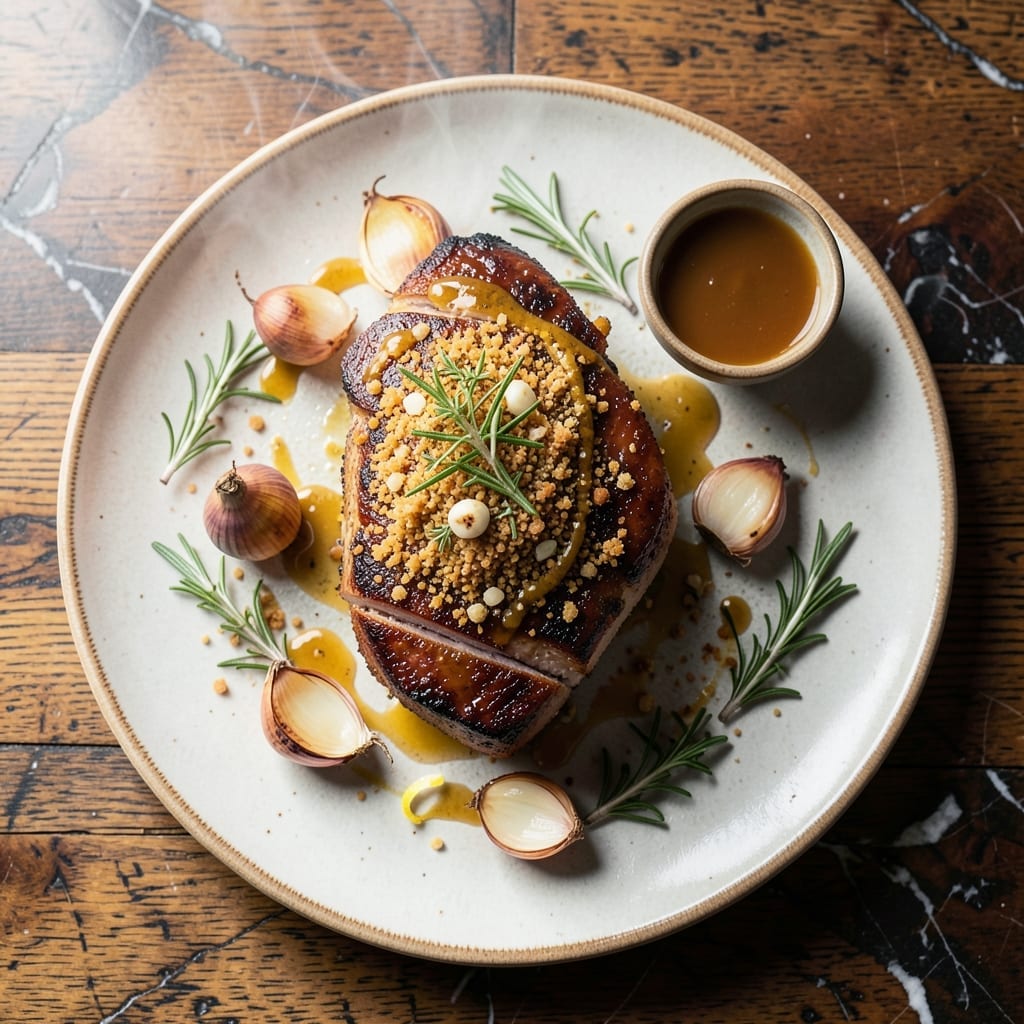
This herb-crusted pork tenderloin delivers tender results with minimal effort. I developed this method after testing dozens of variations in my small Boston kitchen, focusing on a foolproof technique that works every time.
The secret lies in a simple herb crust that forms a flavorful seal, locking in juices while the outside develops a golden brown finish. With just 30 minutes from start to finish, it’s ideal for busy weeknights or last-minute dinner parties.
You’ll enjoy perfectly cooked pork that’s juicy inside with a fragrant crust outside. The herb blend adds depth without overpowering the natural flavor of the meat.
Serve with roasted vegetables or mashed potatoes for a complete meal. This recipe proves that elegant dishes don’t require complicated steps.
Ingredients for Pork Tenderloin Recipe the Kitchen
Herb-crusted perfection starts with these simple, flavorful ingredients.
| Ingredient | Amount | Notes |
|---|---|---|
| Pork Tenderloin 🥩 | 1 ½ lb | Trimmed of excess fat |
| Dijon Mustard 🟡 | 2 tbsp | Smooth, not grainy |
| Fresh Rosemary 🌿 | 2 tbsp | Finely chopped, stems discarded |
| Fresh Thyme 🍃 | 2 tbsp | Leaves only, stems removed |
| Garlic Cloves 🧄 | 4 cloves | Minced to fine paste |
| Breadcrumbs 🍞 | ¾ cup | Panko for extra crunch |
| Olive Oil 🫒 | 3 tbsp | Extra-virgin, divided use |
| Kosher Salt 🧂 | 1 ½ tsp | Diamond Crystal preferred |
| Black Pepper 🌶️ | 1 tsp | Freshly cracked preferred |
| Dried Oregano 🌿 | 1 tsp | Mediterranean variety ideal |
| Butter 🧈 | 2 tbsp | Unsalted, softened slightly |
| Shallots 🧅 | 2 whole | Finely minced for crust |
The pork tenderloin is the star—look for 1.5 lb pieces at Whole Foods or your local butcher. Avoid anything larger or it’ll dry out. The fresh herbs matter here (rosemary and thyme), so grab them from the produce section, not the sad little jars in the spice aisle. Trader Joe’s has great quality at a fair price. If your butcher offers to trim the silver skin for you, say yes—saves 5 minutes.
No fresh herbs? Dried at one-third the amount works, but toast them in the pan first to wake up the flavors. Panko not in the pantry? Regular breadcrumbs are fine, but the crust won’t be as crisp. Dijon mustard is key for that tangy kick—Grey Poupon is the gold standard, but any good brand will do. Shallots can be swapped for red onion if that’s what you’ve got.
Pork tenderloin keeps well in the fridge for 2-3 days before cooking, or freeze for up to 6 months. Fresh herbs? Wrap in damp paper towels and they’ll last 5 days. The herb crust mix can be prepped ahead—store in a jar for up to 1 week.
Why You’ll Love This Recipe
- I’ll be real: the sliced cold pork in sandwiches the next day tastes even better than the first serving.
- One Pan Wonder: I toss the pork with Dijon, rosemary, and garlic on a single sheet pan—minimal mess, maximum flavor.
- Herb-Crusted Perfection: That crispy mustard-herb crust with juicy pork inside? I make it every time I want to impress without trying too hard.
- Weeknight Rescue: Honestly, it’s my 30-minute lifesaver when I need something fancy enough for guests but simple enough for Tuesday.
Step-by-Step Instructions for Herb-Crusted Pork Tenderloin
Here’s how to achieve that perfect golden crust and tender center in record time.
Step 1: Prepare the Herb Crust Mixture
In a medium bowl, combine the 0.75 cup breadcrumbs, 2 tbsp fresh rosemary, 2 tbsp fresh thyme, 4 cloves garlic cloves, 1.5 tsp kosher salt, 1 tsp black pepper, and 1 tsp dried oregano. Stir until the herbs are evenly distributed throughout the breadcrumbs.
The garlic should be minced to a fine paste so it incorporates seamlessly into the crust. I use my fingers to break up any herb clumps—this ensures every bite of pork gets that herby punch. The mixture should look like vibrant green-flecked breadcrumbs.
Step 2: Sear the Pork Tenderloin
Pat the 1.5 lb pork tenderloin dry with paper towels—this is crucial for getting that beautiful sear. Heat 1 tbsp olive oil and 2 tbsp butter in a large oven-safe skillet over medium-high heat until the butter stops foaming.
Add the 2 whole shallots and cook for 2-3 minutes until softened and fragrant. Push them to the edges of the pan, then add the pork tenderloin. Sear for 3-4 minutes per side until golden brown all over. The pork should release easily from the pan when it’s ready to turn.
Step 3: Apply the Mustard and Herb Crust
Remove the pork from the skillet and let it cool slightly for 2 minutes. Brush the entire surface with 2 tbsp Dijon mustard—this acts as the glue for your crust. I find a pastry brush works best for even coverage without tearing the meat.
Press the herb-breadcrumb mixture onto the pork, coating it completely on all sides. Don’t be shy—you want a thick, even layer that will form that beautiful crust. Use your hands for this part; the pressure helps the crust adhere better.
Step 4: Roast to Perfection
Return the pork to the skillet (with the shallots) and transfer to a preheated 400°F oven. Roast for 12-15 minutes until the internal temperature reaches 145°F in the thickest part. The crust should be deep golden brown and crisp to the touch.
Drizzle the remaining 2 tbsp olive oil over the pork before roasting—this helps crisp the crust. If the shallots start to darken too quickly, spoon a little of the pan juices over them to prevent burning.
Step 5: Rest and Serve
Transfer the pork to a cutting board and let it rest for 10 minutes before slicing. This allows the juices to redistribute, ensuring every slice is juicy and tender. Tent loosely with foil to keep it warm.
Slice the pork into ½-inch thick medallions and serve with the crispy shallots and any pan juices spooned over the top. The pork should be barely pink in the center, incredibly tender, and topped with that irresistible herb crust. The shallots add a sweet, caramelized contrast to the savory pork.
Pro Tips For Making Pork Tenderloin Recipe The Kitchen
- Sear Hot, Finish Low: Start with a screaming hot pan to get that golden crust on the tenderloin, then drop the heat to medium-low to cook through without drying it out—I learned this the hard way after burning the outside while the inside stayed raw.
- Pound Even Thickness: Use the flat side of your knife to gently pound the tenderloin to an even 1.5-inch thickness so it cooks uniformly; sounds tedious, but it prevents the thin end from overcooking while the thick part finishes.
- Fresh Herbs Only: Skip the dried rosemary and thyme here—they just don’t have the bright, punchy flavor that fresh sprigs release when they hit the hot pan with the garlic and mustard.
- Rest Before Slicing: Tent the cooked pork with foil and let it rest for 8-10 minutes before slicing, or all those juices you worked for will end up on the cutting board instead of in the meat.
Wine and Beer Pairings for These Flavors
White Wine Picks
A crisp Sauvignon Blanc from New Zealand cuts through the herb crust beautifully. I love Kim Crawford—its citrus notes complement the rosemary and thyme. Serve chilled at 45-50°F for best results. 🍷
Red Wine Options
For red lovers, try a light Pinot Noir from Oregon. Eyrie Vineyards offers earthy flavors that pair perfectly with pork. Avoid heavy Cabernets—they’ll overpower the dish.
Beer Pairings
A wheat beer like Blue Moon enhances the herb crust with its citrusy profile. The slight sweetness balances the savory pork. Serve in a chilled glass at 40-45°F. 🍺
Local Boston Favorites
From my Boston roots, I recommend Harpoon IPA—its hoppy bitterness contrasts nicely with the rich crust. For wine, Westport Rivers Pinot Noir (from nearby MA) is a local gem.
Non-Alcoholic Choices
Sparkling apple cider from Martinelli’s offers the same effervescence as wine. Chill for 2 hours before serving. The sweetness complements the Dijon mustard in the crust.
Nutrition Facts
Frequently Asked Questions
Can I use dried herbs instead of fresh?
Yes, use 1/3 the amount of dried herbs. Toast them in a dry pan for 1-2 minutes first to wake up the flavors. Fresh herbs give the best results, but dried work in a pinch.
How do I know when it’s done?
Use a meat thermometer—the internal temp should reach 145°F. The pork will be slightly pink in the center but perfectly safe and juicy. Overcooking dries it out, so check early.
Can I make this ahead of time?
Prepare the herb crust mixture up to 1 week ahead. Store the uncooked pork with crust applied in the fridge for 24 hours max. Bake just before serving for best texture.
Why rest the pork before slicing?
Resting for 10 minutes lets juices redistribute. Slicing too soon causes them to spill out, leaving the meat dry. The temperature will rise 5-10°F during resting too.

- Potato Patty Recipe No Egg: Crispy Edges Without the Binder - October 30, 2026
- Paula Deen’s Potato Chip Cookies Recipe: Salty-Sweet Crunch in Every Bite - October 30, 2026
- Potato Gnocchi Recipe Ideas: Pillowy Soft Dumplings With Rustic Charm - October 30, 2026