
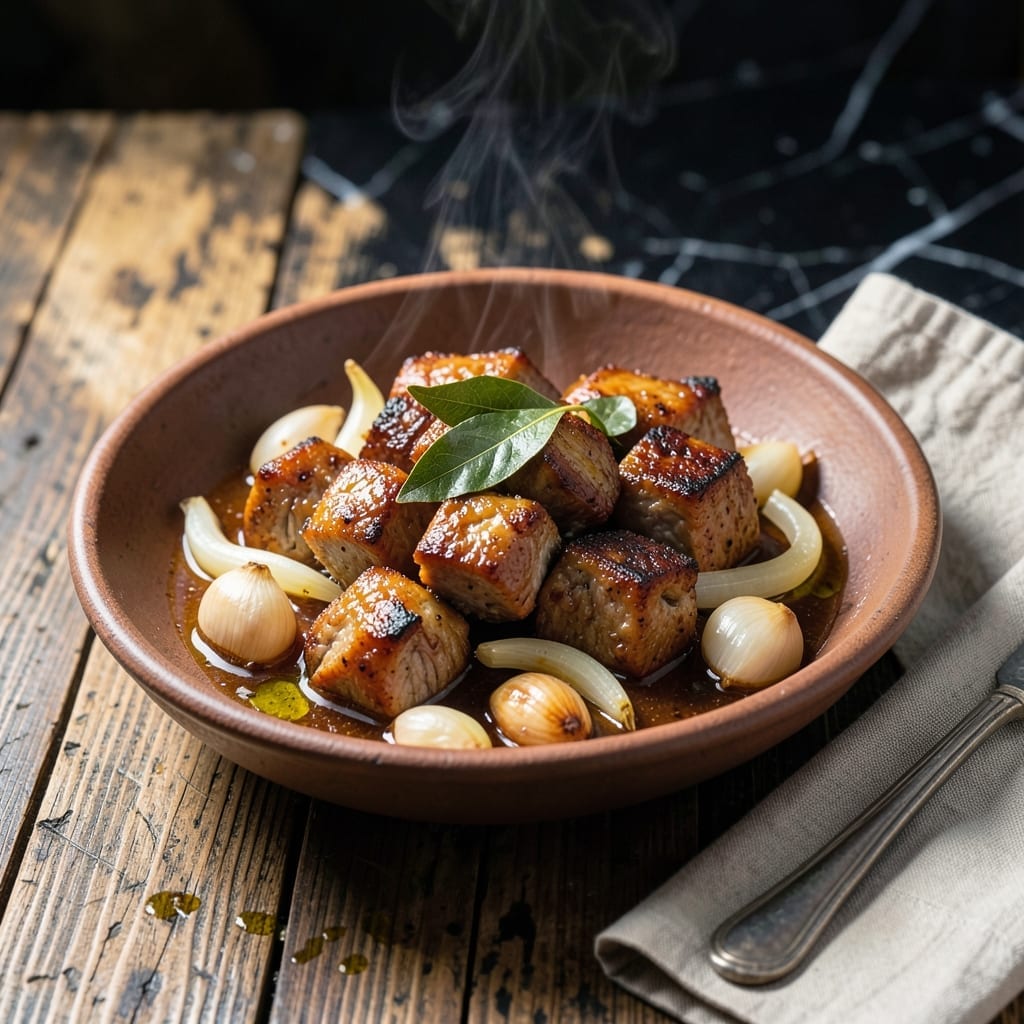
This Filipino-style pork stew brings bold, tangy flavors to your dinner table with a simple yet authentic approach.
I developed this version after testing multiple methods to achieve the perfect balance of sour, savory, and slightly sweet notes. The key lies in the vinegar and soy sauce combination, which tenderizes the pork while creating a rich, deeply flavorful sauce.
What emerges is a hearty, comforting dish with fork-tender pork pieces swimming in a tangy, aromatic broth. It’s the kind of meal that fills your kitchen with irresistible scents while staying true to traditional Pinoy cooking.
Serve with steamed rice to soak up every drop of the sauce. Here’s how to make it.
Ingredients for Pork Ulam Recipe Pinoy
Pantry staples and a few fresh additions create this flavorful Filipino pork dish.
| Ingredient | Amount | Notes |
|---|---|---|
| Pork Shoulder 🥩 | 1 ½ lb | Cut into 2-inch cubes, fat trimmed |
| Cane Vinegar 🍶 | ½ cup | Filipino white vinegar preferred |
| Soy Sauce 🫒 | ⅓ cup | Regular or all-purpose variety |
| Garlic Cloves 🧄 | 6 cloves | Peeled and minced |
| Yellow Onion 🧅 | 1 whole | Large, sliced into rings |
| Bay Leaves 🍃 | 3 pieces | Dried, whole leaves |
| Black Peppercorns 🌶️ | 1 tsp | Lightly crushed for aroma |
| Brown Sugar 🥤 | 2 tbsp | Balances the tanginess |
| Potatoes 🥔 | 2 whole | Medium, peeled and quartered |
| Carrots 🥕 | 2 whole | Peeled and sliced into chunks |
| Green Bell Pepper 🌶️ | 1 whole | Sliced into strips |
| Water 💧 | 2 cups | For the stew base |
| Salt 🧂 | 1 tsp | Adjust to taste |
The pork shoulder is non-negotiable here—look for well-marbled pieces at your local Filipino market or butcher (most major grocery stores carry it too). Cane vinegar is traditional, but white vinegar works in a pinch. Datu Puti is my go-to brand for the vinegar and soy sauce combo. Don’t skip the bay leaves; they add that subtle depth to the broth (dried is fine, but fresh is even better).
No pork shoulder? Pork belly or picnic ham can substitute, but expect a richer, fattier result. Out of cane vinegar? Apple cider vinegar at the same amount gets you close. Brown sugar can be swapped for coconut sugar if you prefer a deeper caramel note. Frozen veggies (potatoes, carrots) work too—no need to thaw before adding.
This stew tastes even better the next day once the flavors meld. Keeps in the fridge for 4-5 days and freezes beautifully for 3 months. Leftovers reheat well, so make extra—you’ll want seconds (and thirds).
Why You’ll Love This Recipe
- One Pan Wonder: I just toss the pork shoulder with garlic, onion, soy sauce, and vinegar—then let the pot do the work.
- Sour-Savory Magic: The cane vinegar and soy sauce balance is that addictive tangy-salty bite I crave every time.
- Feeds a Crowd: Between us, this stretches easily for family dinners or potlucks without breaking the bank.
- Leftovers Win: Honestly, it tastes even better the next day—pork soaks up all that garlicky sauce overnight.
Step-by-Step Instructions for Filipino-Style Tangy Pork Stew
Here’s how I make this comforting stew with just the right balance of tangy and savory flavors.
Step 1: Sear the Pork and Build the Base
Heat a large pot over medium heat and add the 1.5 lb Pork Shoulder cubes. Sear them for 5-7 minutes, stirring occasionally, until they develop a light golden crust. This step locks in the juices and adds depth to the stew.
Once the pork is lightly browned, add the 6 cloves Garlic Cloves and 1 whole Yellow Onion. Sauté for 2-3 minutes until the onions soften and the garlic turns fragrant—this forms the aromatic foundation of the dish.
Step 2: Add the Tangy-Sweet Marinade
Pour in the 0.5 cup Cane Vinegar, 0.33 cup Soy Sauce, 2 tbsp Brown Sugar, 3 pieces Bay Leaves, and 1 tsp Black Peppercorns. Stir well and let it simmer for 3-4 minutes until the sugar dissolves and the liquid reduces slightly.
I always let the vinegar cook down a bit first—this mellows its sharpness and ensures the stew isn’t overly sour. The soy sauce and brown sugar will start to caramelize, creating a rich, glossy base.
Step 3: Simmer with Vegetables Until Tender
Add the 2 cups Water and 1 tsp Salt, then bring to a gentle boil. Once boiling, reduce the heat to low, cover, and simmer for 25-30 minutes until the pork is nearly tender.
Stir in the 2 whole Potatoes, 2 whole Carrots, and 1 whole Green Bell Pepper. Cover and cook for another 15-20 minutes until the pork is fork-tender and the vegetables are soft. The potatoes should easily pierce with a knife, and the carrots should be just tender.
Step 4: Adjust and Serve
Taste the stew and adjust the seasoning if needed—add a pinch more salt if it tastes flat or a splash of vinegar for extra tang. The sauce should be thick enough to coat the back of a spoon but still pourable.
Discard the bay leaves before serving. I like to let the stew sit for 5-10 minutes off the heat so the flavors meld together. Serve hot over steamed rice, and enjoy the perfect balance of tangy, savory, and slightly sweet in every bite.
Pro Tips For Making Pork Ulam Recipe Pinoy
- Parboil the Pork: Boil the pork shoulder for 10-15 minutes first to remove impurities—this keeps your ulam clean and the sauce clear, not murky. I learned this the hard way after serving a cloudy, bitter stew once.
- Balance the Vinegar: Use 1 part cane vinegar to 2 parts soy sauce for that perfect tangy-salty kick. Sounds weird, but it works: too much vinegar overpowers, and too little makes it flat.
- Don’t Rush the Sauté: Cook the garlic and onion on medium-low until golden, not brown—I used to burn them and wondered why my ulam tasted bitter. Patience gives the base its sweet, deep flavor.
- Slice Thin for Tenderness: Cut the pork shoulder into ¼-inch slices against the grain. This isn’t the prettiest method, but it’s the tastiest—smaller pieces soak up the sauce and cook faster.
Creative Variations of These Flavors
Spicier Adobo Style
Add 1-2 tbsp chili garlic sauce or 5-6 siling labuyo (bird’s eye chilies) with the vinegar for a fiery kick. I discovered this variation during a trip to Pampanga, where they love their food with extra heat. The capsaicin balances beautifully with the tangy vinegar.
Coconut Milk Twist
Replace 1 cup of water with coconut milk for a creamier, slightly sweet version. This Bicolano-inspired take adds richness while keeping the dish’s signature tang. Stir it in during the simmering stage for best results.
Pineapple Sweetness
Add 1 cup pineapple chunks along with the vegetables for a sweet-tangy contrast. The natural sugars in the fruit caramelize slightly during cooking. This reminds me of my Nonna’s fruit-studded Italian stews, but with a Pinoy twist. 💛
Souring Agent Swap
For a different tang, substitute 0.5 cup calamansi juice or green mango slices for half the vinegar. Calamansi gives a brighter citrus note, while green mango adds texture. I tested both in my tiny Boston kitchen—both work beautifully.
Protein Variations
Swap pork shoulder with chicken thighs (reduce cooking time to 20-25 minutes) or tofu cubes for a vegetarian version. Chicken stays juicy, while tofu soaks up the sauce wonderfully. Both keep the dish’s soul intact.
Extra Umami Boost
Stir in 1 tbsp fish sauce or 1 tsp shrimp paste with the soy sauce for deeper savory notes. This small addition makes a big difference, especially if you love that salty, funky flavor profile typical in many Filipino dishes. 🔥
Nutrition Facts
Frequently Asked Questions
Can I use a different cut of pork?
Yes, pork belly or picnic ham work as substitutes. Expect a richer, fattier result. For a leaner option, try pork tenderloin but reduce cooking time to 20 minutes to prevent dryness.
How do I adjust the sourness level?
Start with less vinegar and add gradually. For milder tang, use 0.25 cup initially. If it’s too sour, balance with a pinch of brown sugar or a splash of water.
Can I make this in a slow cooker?
Brown the pork first, then transfer everything to the slow cooker. Cook on low for 6-7 hours or high for 3-4 hours until pork is tender.
What if my stew is too salty?
Add a peeled, quartered potato and simmer for 10-15 minutes. The potato absorbs excess salt. Alternatively, dilute with a splash of water or coconut milk.

- Potato Patty Recipe No Egg: Crispy Edges Without the Binder - October 30, 2026
- Paula Deen’s Potato Chip Cookies Recipe: Salty-Sweet Crunch in Every Bite - October 30, 2026
- Potato Gnocchi Recipe Ideas: Pillowy Soft Dumplings With Rustic Charm - October 30, 2026