
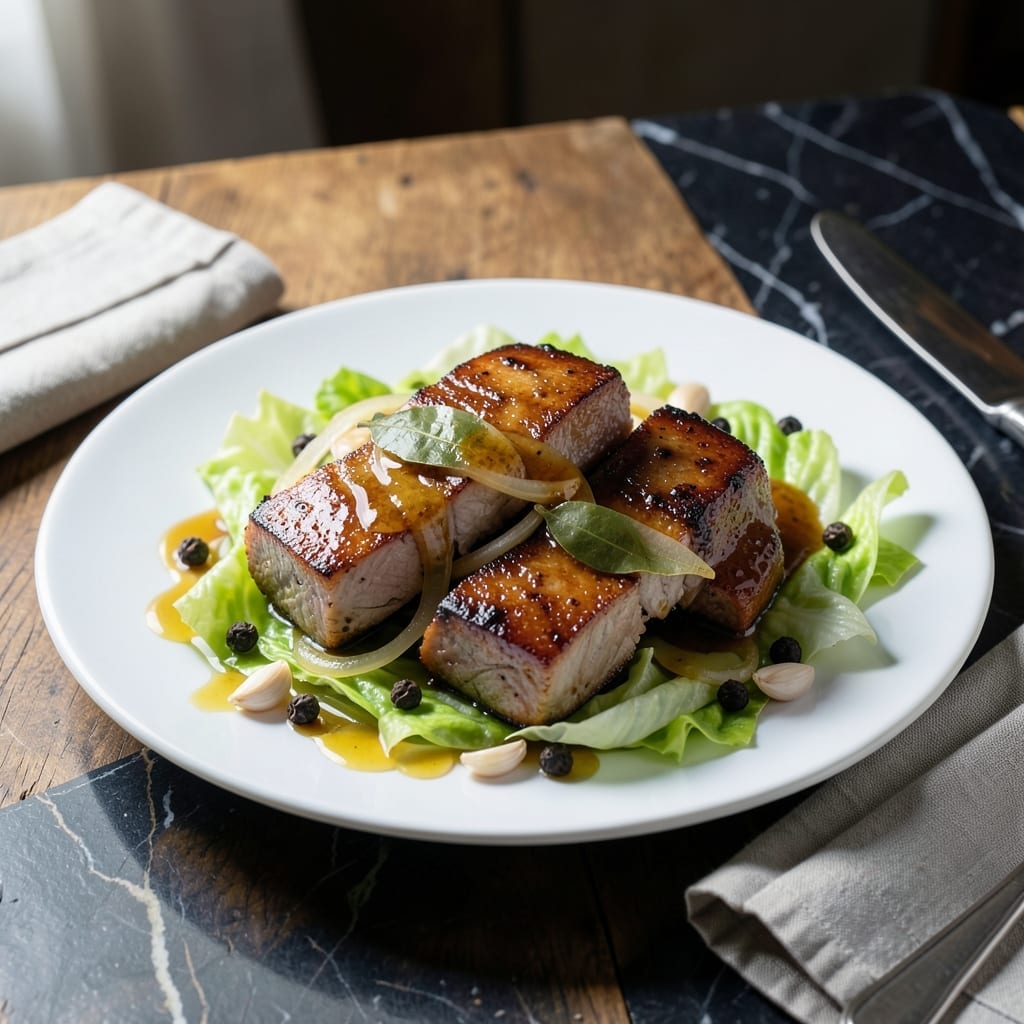
This classic Filipino dish brings tender pork and sweet cabbage together in a simple yet deeply flavorful braise. The slow cooking process allows the meat to become fall-apart tender while the cabbage absorbs the savory sauce.
What makes this recipe special is its balance of salty, sweet, and umami flavors using basic ingredients. The pork is first seared to develop a rich base, then simmered with aromatics until perfectly tender. The cabbage is added last to maintain its texture.
The result is a hearty, comforting meal with juicy pork pieces and wilted cabbage in a light but flavorful broth. It’s the kind of dish that tastes even better the next day as the flavors meld together.
Serve this with steamed rice to soak up every last drop of the delicious sauce. This is home cooking at its most satisfying.
Ingredients for Pork with Cabbage Recipe Pinoy
Simple yet deeply flavorful ingredients create this iconic Filipino braised dish with tender pork and sweet cabbage.
| Ingredient | Amount | Notes |
|---|---|---|
| Pork Shoulder 🐖 | 1 ½ lb | Cut into 2-inch cubes, fat trimmed |
| Green Cabbage 🥬 | 1 whole | Medium head, cored and chopped |
| Soy Sauce 🫙 | ½ cup | Low-sodium preferred for balance |
| Garlic Cloves 🧄 | 8 cloves | Minced for even distribution |
| Whole Black Peppercorns 🌶️ | 2 tsp | Lightly crushed for aroma |
| Bay Leaves 🍃 | 3 whole | Dried, for savory depth |
| Brown Sugar 🍚 | 2 tbsp | Light or dark variety |
| White Vinegar 💧 | 3 tbsp | Or substitute apple cider vinegar |
| Water 💧 | 1 ½ cups | For braising liquid |
| Yellow Onion 🧅 | 1 whole | Medium, thinly sliced |
| Vegetable Oil 🫒 | 2 tbsp | For searing pork |
| Salt 🧂 | 1 tsp | Adjust to taste at end |
The pork shoulder is non-negotiable here—well-marbled cuts from a trusted butcher or Costco yield the best results. Look for pieces with visible fat streaks, as they render down during slow cooking to create that signature unctuous texture. The soy sauce forms the backbone of the dish, so use a quality brand like Silver Swan or Datu Puti for authentic Pinoy flavor. Fresh garlic is essential; avoid pre-minced for the brightest, most aromatic result.
Need to substitute pork? Chicken thighs work in a pinch, though the texture differs. No soy sauce? Tamari or coconut aminos at a 1:1 ratio, but adjust salt accordingly. Brown sugar can be swapped for coconut sugar for a subtle depth. If you lack whole peppercorns, ground black pepper at half the amount suffices, though the freshness of whole spices is preferable for the long braise.
Braise leftovers refrigerated in an airtight container for up to 5 days. The flavors deepen and meld beautifully overnight. Freeze portions for up to 3 months (the cabbage may soften further but retains its sweetness). Reheat gently on the stove with a splash of water to restore the sauce’s consistency.
Why You’ll Love This Recipe
- One Pan Meal: I toss everything in a single pot—pork, cabbage, soy sauce, garlic—and let it simmer while I set the table.
- Savory Garlic Bite: The pork soaks up the soy sauce and garlic, and those peppercorns add just the right kick.
- Feeds a Crowd: I make a big batch for family dinners and it’s always a hit, even with picky eaters.
- Stretches the Budget: Pork shoulder and cabbage are cheap, but this tastes like I spent hours in the kitchen. Honestly, it’s my go-to when I need to save.
Step-by-Step Instructions for Savory Braised Pork and Greens
This method delivers tender pork and perfectly cooked cabbage with minimal effort.
Step 1: Sear the Pork Shoulder Cubes
Heat the 2 tbsp vegetable oil in a large pot over medium-high heat. Add the 1.5 lb pork shoulder cubes in batches, ensuring not to overcrowd the pot. Sear for 4-5 minutes per side until each piece develops a deep golden brown crust.
This browning step builds a flavor foundation for the dish. Remove the pork and set aside temporarily—the meat will finish cooking later in the braising liquid. Leave the rendered fat in the pot for the next step.
Step 2: Sauté Aromatics and Toast Spices
In the same pot, add the thinly sliced yellow onion and cook for 3 minutes until softened and translucent. Stir in the minced 8 cloves garlic cloves and cook for an additional 30 seconds until fragrant.
Add the 2 tsp whole black peppercorns and 3 whole bay leaves, toasting them for 20-30 seconds to release their essential oils. This creates a complex aromatic base that infuses the entire dish with depth.
Step 3: Build the Braising Liquid and Add Pork
Pour in the 0.5 cup soy sauce, 2 tbsp brown sugar, 3 tbsp white vinegar, and 1.5 cups water. Stir well to dissolve the sugar completely. The liquid should come to a gentle simmer within 2-3 minutes.
Return the seared pork to the pot along with any accumulated juices. The liquid should cover about three-quarters of the pork pieces. Reduce heat to low, cover, and let it simmer gently for 45 minutes until the meat becomes fork-tender.
Step 4: Add Cabbage and Finish Cooking
Stir in the cored and chopped green cabbage, pressing it down to submerge partially in the braising liquid. Sprinkle with the 1 tsp salt. Cover and cook for an additional 15-20 minutes until the cabbage wilts and becomes tender.
The cabbage should soften significantly but retain some texture. If the liquid level seems low, add a splash of water. The pork will be fall-apart tender at this stage, and the cabbage will have absorbed the rich, savory flavors of the braising liquid.
Remove the bay leaves before serving. The dish is ready when the cabbage reaches your desired tenderness and the pork pulls apart easily with a fork.
Pro Tips For Making Pork With Cabbage Recipe Pinoy
- Brown the Pork: I learned this the hard way—sear the pork shoulder in batches over medium-high heat until deeply browned, about 4-5 minutes per side. It adds a ton of flavor that simmering alone just can’t.
- Slice Cabbage Thin: Sounds obvious, but 1/4-inch slices cook down perfectly in the sauce without turning mushy. My grandmother swore by this, and she was right.
- Skip Overcrowding: Resist the urge to dump all the cabbage in at once—add it in stages so it wilts evenly and doesn’t steam instead of soak up the soy-garlic sauce.
- Use Fresh Peppercorns: After using pre-ground pepper for years, I finally tried cracking fresh whole black peppercorns for this dish. The aroma and bite are night and day better, especially with the pork’s richness.
Regional Styles of This pork with cabbage recipe pinoy
Visayan Style
In the Visayas region, this dish often includes 1 cup coconut milk added to the braising liquid for a creamier, slightly sweet finish. They also incorporate 1 inch ginger, thinly sliced, which pairs beautifully with the pork’s richness. I love how this version adds a subtle tropical note.
Bicolano Version
Bicolano cooks frequently add 2-3 siling labuyo (bird’s eye chilies) for heat and 1 tbsp shrimp paste (bagoong) for a funky depth. The chilies are often left whole so diners can adjust spice levels. This variation transforms the dish into something more complex and bold. 🌶️
Ilocano Approach
Ilocanos often use bitter melon (ampalaya) alongside or instead of cabbage, creating a striking contrast with the pork’s sweetness. The bitter melon is typically sliced thin and added with the cabbage. This version is particularly popular during summer months.
Tagalog Tradition
The classic Tagalog version sticks closest to the recipe we’ve covered, but often includes 1 large tomato, diced, in the initial sauté with onions. Some families also add 1 tbsp fish sauce (patis) for extra umami. I find the tomato adds a lovely brightness to the dish.
Pampanga Twist
In Pampanga, known as the culinary capital of the Philippines, they might include ½ cup pineapple chunks for sweetness and 1 tsp achuete (annatto) oil for color. The pineapple complements the pork beautifully while the annatto gives the dish a vibrant orange hue. 💛
Nutrition Facts
Frequently Asked Questions
Can I use a different cut of pork?
Pork shoulder works best, but pork belly or pork ribs can be used. Shoulder’s marbling keeps the meat moist during the 45-minute braise. Avoid lean cuts like tenderloin as they can dry out.
What if my sauce turns out too salty?
Balance it with 1 tbsp brown sugar or 1 tbsp vinegar. Adding diced potatoes or more cabbage can also help absorb some saltiness. Always taste before adding final seasoning.
Can I make this in a slow cooker?
Yes! Sear the pork first, then transfer everything to the slow cooker. Cook on low for 6-8 hours or high for 4 hours. Add cabbage during the last 30 minutes.
How do I store leftovers?
Keep in an airtight container in the fridge for up to 5 days. The flavors actually improve overnight. Reheat gently on the stove with a splash of water.

- Potato Patty Recipe No Egg: Crispy Edges Without the Binder - October 30, 2026
- Paula Deen’s Potato Chip Cookies Recipe: Salty-Sweet Crunch in Every Bite - October 30, 2026
- Potato Gnocchi Recipe Ideas: Pillowy Soft Dumplings With Rustic Charm - October 30, 2026