
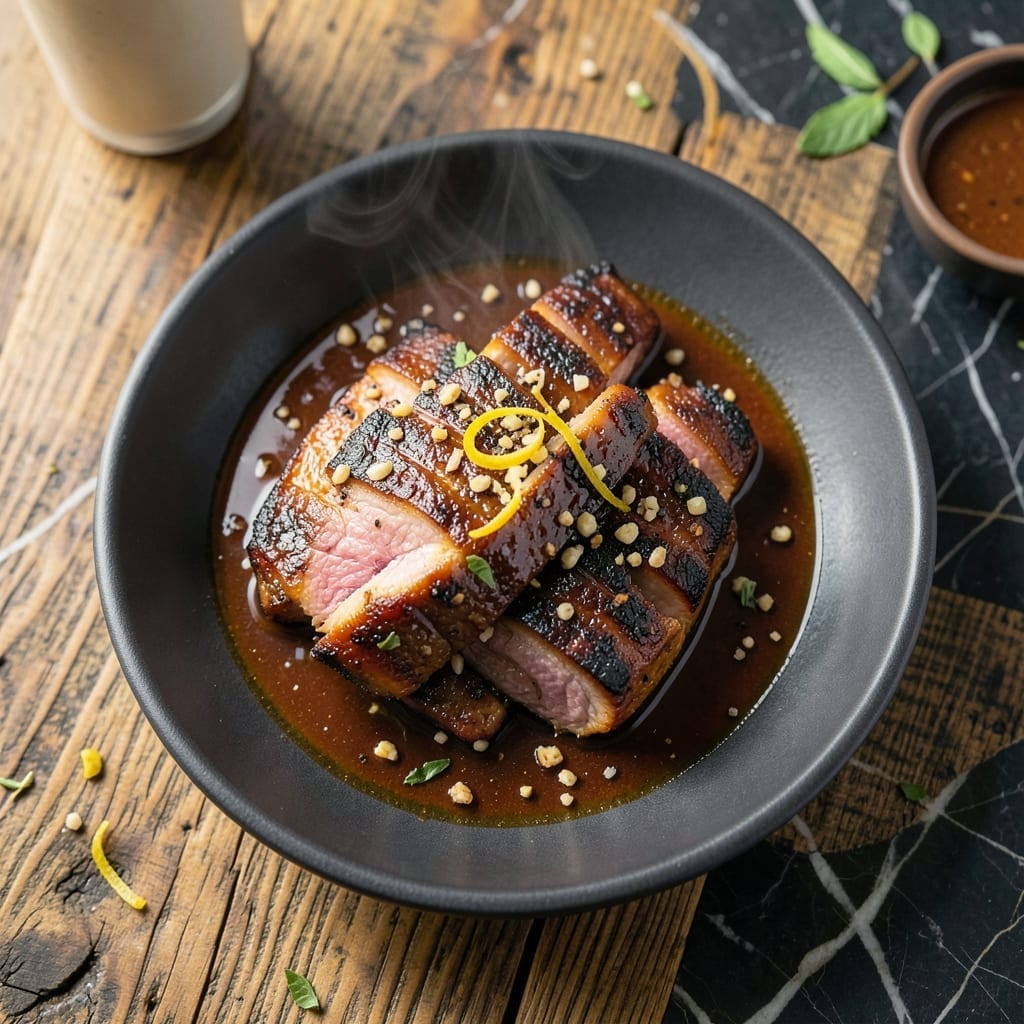
This Filipino-style pork steak delivers tender results with a savory marinade that transforms simple cuts into something special. I tested this method multiple times to ensure it works in any home kitchen, not just professional setups.
The marinade combines soy sauce, calamansi, and garlic for that authentic flavor profile. What sets this apart is the cooking technique—searing first, then simmering in the marinade to lock in juices and create layers of taste.
You’ll end up with pork so tender it nearly falls apart, coated in a rich, flavorful sauce that soaks into every bite. It’s the kind of dish that makes weeknight dinners feel like a celebration.
Serve with steamed rice to soak up every drop of that delicious sauce. Here’s how to make this Filipino favorite at home.
Ingredients for Pork Steak Recipe Kawaling Pinoy
Simple ingredients, bold flavor. Everything you need for that authentic Filipino taste.
| Ingredient | Amount | Notes |
|---|---|---|
| Pork Shoulder 🥩 | 1 ½ lb | Cut into 1-inch thick steaks |
| Soy Sauce 🫕 | ½ cup | Regular or all-purpose variety |
| Calamansi Juice 🍋 | ¼ cup | Or substitute lime juice |
| Garlic Cloves 🧄 | 6 cloves | Minced for marinade |
| Brown Sugar 🍚 | 2 tbsp | Balances the acidity |
| Black Pepper 🌶️ | 1 tsp | Freshly ground preferred |
| Onion 🧅 | 1 whole | Sliced into rings |
| Vegetable Oil 🫒 | 2 tbsp | For searing pork |
| Water 💧 | ½ cup | For simmering sauce |
| Bay Leaf 🍃 | 2 pieces | Dried or fresh |
| Cornstarch 🌾 | 1 tbsp | Optional for thickening sauce |
| Green Onions 🧅 | 3 whole | Chopped for garnish |
The pork shoulder is key here—look for well-marbled cuts at your local butcher or Asian grocery store. It stays tender through the simmering. Calamansi can be tricky to find outside Filipino markets, but lime juice works in a pinch. I always grab extra garlic (the fresh stuff, not the pre-minced kind) since it’s doing double duty in the marinade and sauce. Soy sauce brands vary, but Silver Swan or Datu Puti nail the flavor.
No pork shoulder? Pork loin works too, but it’s leaner—don’t overcook it. Out of calamansi? Lemon juice plus a pinch of vinegar gets close. Brown sugar can be swapped for coconut sugar (same amount). The cornstarch is optional, but if you like a thicker sauce, mix it with 2 tbsp cold water before stirring in. Skip the bay leaf if you must, but it adds depth.
Marinate the pork for at least 1 hour (overnight is better). Leftovers keep 4-5 days in the fridge. Reheat gently to keep the meat tender. Freezes well for 3 months (thaw in the fridge before reheating).
Why You’ll Love This Recipe
- Minimal Chopping Required: I just slice the pork shoulder and crush the garlic—no fancy knife skills needed.
- Sweet-Savory Magic: The calamansi and brown sugar caramelize into this ridiculous glaze I could drink with a straw.
- Feeds a Crowd: Honestly, it’s my go-to for family dinners and even potlucks where everyone asks for the recipe.
- Leftovers? Even Better: The flavors deepen overnight, so I always make extra for next-day lunches.
Step-by-Step Instructions for Filipino-Style Pork Steak
Here’s how I make it tender and flavorful every single time.
Step 1: Marinate the Pork Steaks
Cut the 1.5 lb Pork Shoulder into 1-inch thick steaks and place them in a large bowl. In a separate bowl, whisk together the 0.5 cup Soy Sauce, 0.25 cup Calamansi Juice, 6 cloves minced Garlic Cloves, 2 tbsp Brown Sugar, and 1 tsp Black Pepper until the sugar dissolves.
Pour this marinade over the pork steaks, making sure each piece is well coated. I like to massage the marinade into the meat for better flavor penetration. Cover the bowl and let it marinate in the refrigerator for at least 1 hour, but overnight works even better for maximum tenderness.
Step 2: Sear the Pork Steaks
Heat the 2 tbsp Vegetable Oil in a large skillet over medium-high heat. Remove the pork steaks from the marinade (reserve the marinade) and pat them dry with paper towels—this helps them brown better. Sear the steaks for 3-4 minutes per side until they develop a deep brown crust.
Don’t overcrowd the pan; cook in batches if necessary. The steaks should release easily from the pan when they’re ready to flip. Transfer the seared pork to a plate and set aside while you make the sauce.
Step 3: Simmer in the Marinade
In the same skillet, add the sliced 1 whole Onion and cook for 2-3 minutes until softened. Pour in the reserved marinade along with the 0.5 cup Water and 2 pieces Bay Leaf. Bring the mixture to a boil, then reduce the heat to medium-low.
Return the pork steaks to the skillet along with any accumulated juices. Let them simmer in the sauce for 15-20 minutes, spooning the liquid over the steaks occasionally, until the pork is tender and cooked through.
Step 4: Thicken the Sauce and Serve
If you prefer a thicker sauce, mix the 1 tbsp Cornstarch with 2 tbsp of the cooking liquid in a small bowl until smooth. Stir this slurry into the skillet and simmer for another 2-3 minutes until the sauce thickens slightly.
Remove the skillet from the heat and discard the bay leaves. Garnish the pork steaks with the 3 whole chopped Green Onions and serve hot with steamed rice. The sauce should be rich and glossy, coating each piece of pork perfectly.
Pro Tips For Making Pork Steak Recipe Kawaling Pinoy
- Marinate Overnight: I learned this the hard way—pork shoulder needs at least 4 hours in the soy-calamansi-garlic mix, but overnight makes the flavors sink in deep.
- Pat It Dry: Sounds weird, but it works: drying the pork with paper towels before searing gives that perfect crust without steaming the meat.
- Skip the Overcrowding: After burning three batches, I finally figured out that leaving space between steaks in the pan keeps them from boiling in their own juices.
- Add Sugar Last: My grandmother swore by this, and she was right: stir in the brown sugar only in the last 2-3 minutes to avoid bitter, burned edges.
Essential Equipment for pork steak recipe kawaling pinoy
Essential Skillet
A heavy-bottomed 12-inch skillet is non-negotiable for this dish. I use my Lodge cast iron because it sears beautifully and distributes heat evenly. The deep sides help contain the simmering sauce. Don’t use nonstick—it won’t get hot enough for proper browning.
Mixing Bowls
You’ll need a large mixing bowl for marinating the pork. I prefer glass or stainless steel over plastic because they don’t absorb odors. A 1.5-quart capacity works perfectly for 1.5 lb of pork. 💪
Sharp Knife
A 8-inch chef’s knife makes quick work of slicing the pork and onions. I swear by my Victorinox Fibrox—it’s affordable and stays sharp. Always cut pork against the grain for maximum tenderness.
Measuring Tools
Accurate measurements matter here. Use standard measuring cups for liquids and a 1-tbsp measure for the brown sugar and cornstarch. I keep a pyrex 1-cup measure on my counter for easy pouring.
Wooden Spoon
A sturdy wooden spoon is ideal for stirring the sauce as it reduces. It won’t scratch your skillet and can handle the high heat. I’ve had my bamboo spoon for years—it’s my go-to for all stovetop cooking. 🔥
Thermometer
While not strictly necessary, a meat thermometer ensures perfect doneness. Pork should reach 145°F internal temperature. I use a ThermoWorks instant-read for quick checks.
Nutrition Facts
Frequently Asked Questions
What can I use if I don’t have calamansi juice?
Lime juice works perfectly as a substitute. For even closer flavor, mix lime juice with a splash of vinegar to mimic calamansi’s unique tang.
How do I prevent the pork from becoming tough?
Marinate for at least 1 hour (overnight is best) and simmer gently for 15-20 minutes. Overcooking or high heat will make it tough.
Can I make this ahead of time?
Yes! The flavors deepen if made a day ahead. Store in an airtight container in the fridge for up to 5 days or freeze for 3 months.
Why does my sauce turn out too salty?
Soy sauce brands vary in saltiness. Reduce it by 25% or balance with extra brown sugar or water. Always taste as you go.

- Potato Patty Recipe No Egg: Crispy Edges Without the Binder - October 30, 2026
- Paula Deen’s Potato Chip Cookies Recipe: Salty-Sweet Crunch in Every Bite - October 30, 2026
- Potato Gnocchi Recipe Ideas: Pillowy Soft Dumplings With Rustic Charm - October 30, 2026