
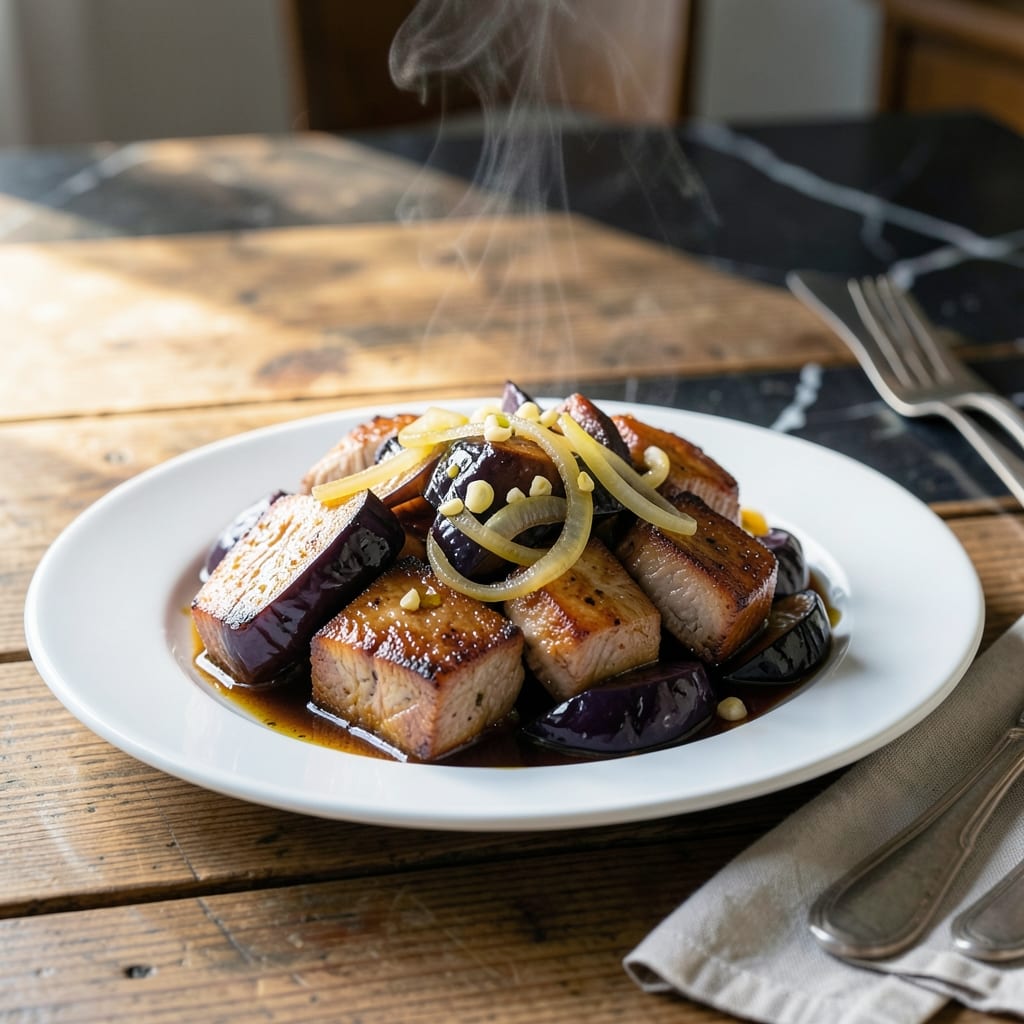
This dish brings the bold, comforting flavors of Filipino cuisine to your kitchen with tender pork and silky eggplant in a rich adobo-inspired sauce. The combination of savory, tangy, and slightly sweet notes creates a deeply satisfying meal.
I developed this version after testing multiple approaches to achieve the perfect balance of textures and flavors. The pork becomes incredibly tender while the eggplant absorbs the sauce, making every bite packed with umami depth.
The sauce reduces to a glossy finish that coats the pork and eggplant beautifully. It’s the kind of dish that feels special enough for guests but simple enough for a weeknight, delivering restaurant-quality comfort at home.
Serve it with steamed rice to soak up every last drop of that flavorful sauce. Here’s how to make this Filipino-inspired creation.
Ingredients for Pork with Eggplant Recipe Filipino Style
Tender pork and silky eggplant swim in a glossy adobo sauce. Pantry staples do the heavy lifting here.
| Ingredient | Amount | Notes |
|---|---|---|
| Pork Shoulder 🥩 | 1 ½ lb | Cut into 1-inch cubes, bone-in preferred |
| Japanese Eggplant 🍆 | 2 whole | Sliced into 1-inch rounds, skin on |
| Soy Sauce 🫒 | ½ cup | Low-sodium preferred for balance |
| White Vinegar 💧 | ½ cup | Distilled for clean tang |
| Garlic Cloves 🧄 | 8 cloves | Minced finely for even distribution |
| Yellow Onion 🧅 | 1 whole | Thinly sliced, sweet variety |
| Bay Leaves 🍃 | 3 pieces | Dried, whole leaves |
| Black Peppercorns 🌶️ | 1 tsp | Freshly cracked for aroma |
| Brown Sugar 🍚 | 2 tbsp | Light or dark, packed |
| Cornstarch 🌾 | 1 tbsp | For sauce thickening, mixed with water |
| Vegetable Oil 🫒 | 2 tbsp | Neutral flavor for searing |
| Water 💧 | 1 cup | For braising liquid |
| Green Onions 🌱 | 4 whole | Thinly sliced for garnish |
Pork shoulder is non-negotiable here—bone-in from a butcher or well-marbled at Whole Foods gives you that melt-in-your-mouth texture. Japanese eggplant (the long, thin kind) soaks up sauce better than globe varieties. Find it at Asian markets or the international aisle. Bay leaves should be dried and whole; fresh ones can overpower. I always grab San Marzano soy sauce when I see it (trust me, it’s worth the splurge).
No Japanese eggplant? Italian eggplant works at a pinch—just salt and drain first to remove bitterness. Swap white vinegar for apple cider vinegar (slightly fruitier) or rice vinegar (milder). Brown sugar can be coconut sugar for depth. Out of cornstarch? Mash a raw potato into the sauce instead (old-school trick). The pork can be shoulder or belly, but avoid lean cuts like tenderloin.
Leftovers taste even better the next day once the flavors meld. Keeps for 4-5 days in the fridge, freezes beautifully for 3 months. Always store in a shallow container so the sauce coats everything evenly. Reheat gently to keep the eggplant intact (it’s delicate once cooked).
Why You’ll Love This Recipe
- One Pan Wonder: I toss everything in together—pork shoulder, eggplant, garlic—and let it simmer while I set the table.
- Savory Tang: The soy sauce and vinegar balance is what makes this dish—rich, tangy, and just right with the tender pork.
- Weeknight Lifesaver: Honestly, it’s my go-to when I need something hearty and ready before the kids start asking for snacks.
- Stretches Far: Leftovers taste even better the next day, and it’s filling enough to feed my family of five without breaking the bank.
Step-by-Step Instructions for Pork With Eggplant Filipino Style
Here’s the method I’ve refined over years—it delivers that nostalgic comfort in every bite.
Step 1: Sear the Pork Shoulder to Lock in Flavor
Heat 2 tbsp vegetable oil in a large pot over medium-high heat. Add the 1.5 lb pork shoulder cubes and sear until browned on all sides, about 5-7 minutes. I press down gently with a spatula to ensure even contact with the pan.
This step creates a fond that will deepen the adobo sauce later. Don’t rush it—you want a deep, rich color on each piece. Once browned, transfer the pork to a plate and set aside.
Step 2: Build the Adobo Base with Aromatics
In the same pot, add the thinly sliced yellow onion and sauté for 2-3 minutes until soft and translucent. Then add the 8 cloves minced garlic and cook for 30 seconds until fragrant—just until it turns light golden.
Pour in the 0.5 cup soy sauce, 0.5 cup white vinegar, 2 tbsp brown sugar, 3 pieces bay leaves, and 1 tsp black peppercorns. Stir to combine, scraping up any browned bits from the bottom of the pot. This is where the magic happens.
Step 3: Braise the Pork and Eggplant Together
Return the pork to the pot along with the 2 whole Japanese eggplant rounds. Add 1 cup water and bring to a boil. Reduce heat to low, cover, and simmer for 45-50 minutes until the pork is fork-tender.
The eggplant will absorb the adobo flavors beautifully as it softens. Stir occasionally to ensure even cooking. You’ll know it’s done when the pork shreds easily with a fork and the eggplant has a silky texture.
Step 4: Thicken the Sauce and Finish
Mix the 1 tbsp cornstarch with 2 tbsp water to create a slurry. Stir this into the pot and simmer uncovered for 3-5 minutes until the sauce thickens to a glossy consistency that coats the back of a spoon.
Taste and adjust the seasoning if needed, though the balance of tangy vinegar, salty soy, and sweet sugar should be perfect. The sauce should be rich but not overly thick—just enough to cling to the pork and eggplant.
Step 5: Garnish and Serve Warm
Discard the bay leaves and transfer everything to a serving dish. Top with 4 whole thinly sliced green onions for a fresh, vibrant finish. I like to let it sit for 5 minutes off the heat to allow the flavors to meld even further.
Serve this dish over steamed rice to soak up that incredible sauce. The pork should be melt-in-your-mouth tender, and the eggplant will have absorbed all the bold, comforting flavors of the adobo.
Pro Tips For Making Pork With Eggplant Recipe Filipino Style
- Sear Pork First: Brown the pork shoulder in batches over medium-high heat until deeply caramelized—this builds flavor before simmering in the soy-vinegar sauce. I learned this the hard way after my first few attempts tasted flat.
- Salt Eggplant Early: Sprinkle sliced Japanese eggplant with salt and let it sit for 10 minutes to draw out bitterness, then pat dry. Sounds weird, but it works—especially with older eggplants that can taste harsh.
- Balance the Vinegar: Add the white vinegar at the end of cooking to preserve its sharpness—boiling it too long dulls the tang. My grandmother swore by this, and she was right.
- Crush the Garlic: Smash the garlic cloves with the side of your knife before mincing to release more oils for a stronger aroma. After burning three batches, I finally figured out that lazy chopping just doesn’t cut it.
Storing and Reheating This Dish
Refrigerator Storage
Let this cool for no more than 2 hours before transferring to shallow airtight containers. I use glass containers from New Seasons Market so the sauce coats everything evenly. This will keep for 4-5 days at 40°F or below. ❄️
Freezer Storage
Portion into quart-sized freezer bags, leaving 1 inch of headspace for expansion. Squeeze out excess air to prevent freezer burn. This freezes beautifully for up to 3 months without losing texture or flavor.
Stovetop Reheating
Transfer to a heavy pot and add ¼ cup water to prevent sticking. Heat over medium-low heat for 8-10 minutes, stirring occasionally. The eggplant is delicate, so gentle heat preserves its silky texture. 🔥
Microwave Reheating
Place a single portion in a microwave-safe dish and cover with a damp paper towel. Heat on 70% power for 2-3 minutes, stir, then continue in 30-second bursts until reaching 165°F.
Oven Method
Transfer to an oven-safe dish, cover with foil, and bake at 350°F for 15-20 minutes. This works well for larger portions and helps the sauce cling beautifully to the pork and eggplant.
Nutrition Facts
Frequently Asked Questions
Can I use regular eggplant instead of Japanese?
Yes, but salt and drain globe eggplant first to remove bitterness. Japanese eggplant has thinner skin and fewer seeds, making it ideal for absorbing the adobo sauce.
How do I make the sauce less tangy?
Reduce the vinegar by half or replace it with rice vinegar. You can also add an extra 1 tbsp brown sugar to balance the acidity without losing the signature adobo flavor.
What if my pork isn’t tender after 45 minutes?
Continue simmering for up to 15 more minutes on low heat. If it’s still tough, check that the liquid covers the pork. Pork shoulder needs time to break down, so patience is key.
Can I prepare this dish ahead of time?
The flavors deepen overnight. Store in the fridge for up to 4-5 days or freeze for 3 months. Reheat gently to preserve the eggplant’s texture.

- Potato Patty Recipe No Egg: Crispy Edges Without the Binder - October 30, 2026
- Paula Deen’s Potato Chip Cookies Recipe: Salty-Sweet Crunch in Every Bite - October 30, 2026
- Potato Gnocchi Recipe Ideas: Pillowy Soft Dumplings With Rustic Charm - October 30, 2026