
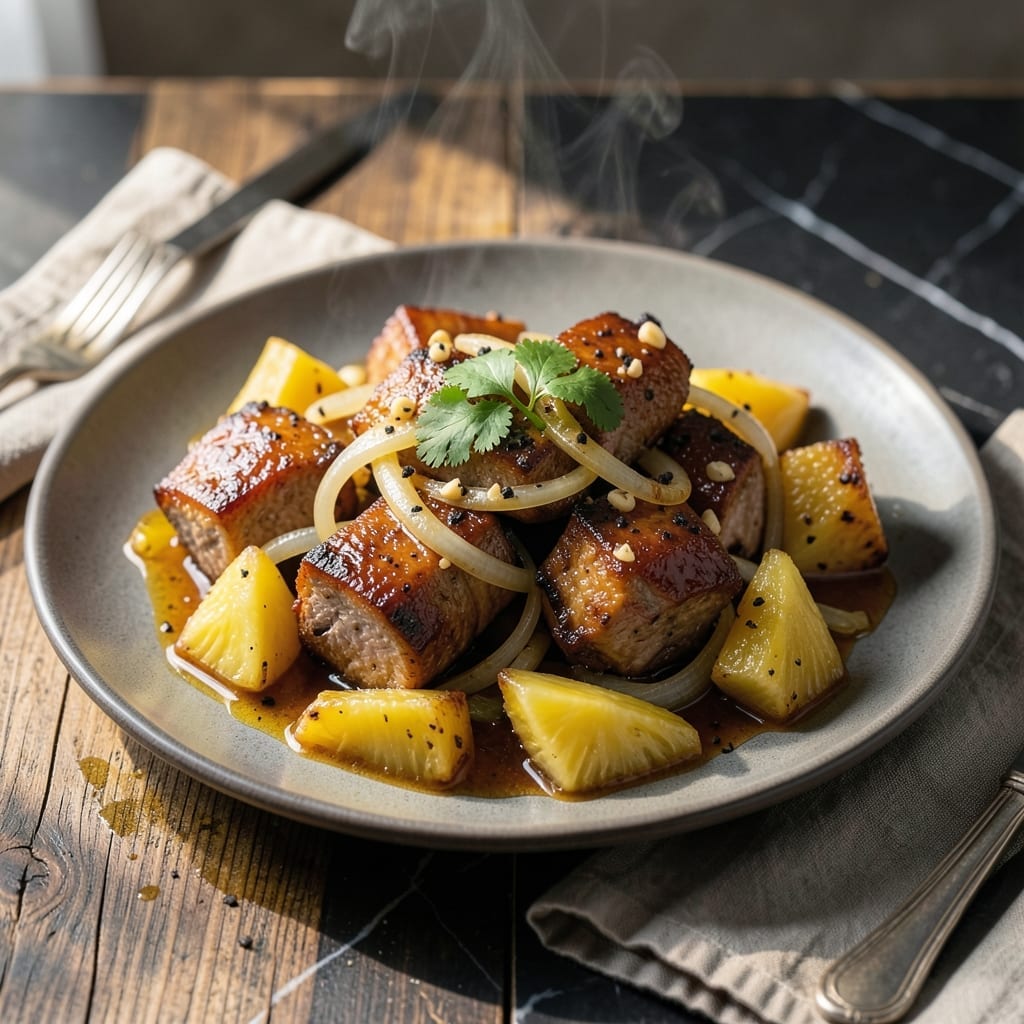
This Filipino-style pork with pineapple delivers a perfect balance of sweet and tangy flavors that transforms a simple dinner into something special. I developed this recipe after discovering how pineapple enhances traditional adobo techniques.
The dish combines tender pork with juicy pineapple chunks, creating a sauce that’s rich yet bright. A splash of vinegar adds the signature Filipino tang, while soy sauce provides deep umami notes that complement the fruit’s natural sweetness.
What emerges is a fusion dish that’s both comforting and exciting. The pork becomes fall-apart tender, soaking up the sweet-savory sauce, while the pineapple maintains its shape and adds bursts of fresh flavor.
Serve with steamed rice to absorb every drop of the delicious sauce.
Ingredients for Pork with Pineapple Recipe Filipino Style
Tender pork, juicy pineapple, and a tangy sauce make this fusion dish unforgettable.
| Ingredient | Amount | Notes |
|---|---|---|
| Pork Shoulder 🥩 | 2 lb | Cut into 1-inch cubes, boneless |
| Fresh Pineapple 🍍 | 2 cups | Cut into bite-sized chunks |
| Soy Sauce 🫒 | ½ cup | Low-sodium preferred |
| White Vinegar 💧 | ¼ cup | Or apple cider vinegar |
| Garlic Cloves 🧄 | 6 cloves | Minced finely |
| Yellow Onion 🧅 | 1 whole | Sliced thinly |
| Brown Sugar 🍚 | 2 tbsp | Packed lightly |
| Bay Leaves 🌿 | 3 pieces | Dried, for aroma |
| Black Peppercorns 🌶️ | 1 tsp | Whole or ground |
| Ground Black Pepper 🌶️ | ½ tsp | For finishing |
| Olive Oil 🫒 | 2 tbsp | For searing pork |
| Water 💧 | 1 cup | For braising liquid |
| Green Onions 🧅 | 4 whole | Sliced, for garnish |
The pork is the foundation here. Pork shoulder gives you that melt-in-your-mouth texture—avoid lean cuts like tenderloin, which dry out. Costco or Sam’s Club have great bulk prices if you’re feeding a crowd. For the pineapple, fresh is ideal (look for vibrant green crowns), but canned in juice works in a pinch—just drain well first. Don’t skip toasting the garlic and onion; it builds the flavor base (worth the extra minute).
No fresh pineapple? Canned pineapple chunks (packed in juice, not syrup) are a solid backup. Out of soy sauce? Coconut aminos add similar umami—use the same amount. White vinegar can be swapped for rice vinegar (slightly milder) or apple cider vinegar. Brown sugar can be replaced with coconut sugar—same quantity. For extra depth, a splash of fish sauce works (even though it’s not traditional).
This actually tastes better the next day. Store in the fridge for up to 4 days, or freeze for 3 months. Reheat gently on the stove—microwaving can make the pork tough. The sauce thickens as it cools, so stir in a splash of water if needed.
Why You’ll Love This Recipe
- One Pot Wonder: I just toss the pork shoulder, pineapple, soy sauce, and vinegar in a pan and let the magic happen—minimal cleanup, maximum flavor.
- Sweet & Tangy Bite: The fresh pineapple caramelizes with the soy and vinegar, while the garlic cloves add that punchy depth I crave.
- Weeknight Hero: Honestly, it’s my go-to for busy evenings when I need something hearty and quick for the family.
- Stretches the Budget: Pork shoulder is affordable, and the pineapple makes it feel special without breaking the bank.
Step-by-Step Instructions for Pork With Pineapple Filipino Style
This method delivers tender pork with a perfect balance of sweet, tangy, and savory flavors.
Step 1: Sear and Brown the Pork
Heat the 2 tbsp olive oil in a large pot over medium-high heat. Add the 2 lb pork shoulder cubes in batches, making sure not to overcrowd the pan. I let each piece sear undisturbed for 2-3 minutes per side until it develops a deep golden-brown crust.
This searing step is crucial—it locks in juices and builds a flavor foundation. Don’t rush it. Once all the pork is browned, I remove it to a plate and set it aside. The pot should have nice browned bits stuck to the bottom—that’s flavor waiting to be unlocked.
Step 2: Sauté Aromatics and Build the Base
In the same pot, add the 1 whole yellow onion (sliced thinly) and cook for 2-3 minutes until it starts to soften. Then add the 6 cloves garlic cloves (minced finely) and cook for another 30 seconds until fragrant. Be careful not to burn the garlic.
Next, pour in the 0.5 cup soy sauce, 0.25 cup white vinegar, 2 tbsp brown sugar, 1 tsp black peppercorns, and 3 pieces bay leaves. Stir well to combine, scraping up those browned bits from the bottom of the pot. This creates a rich, aromatic base for the pork.
Step 3: Simmer the Pork Until Tender
Return the seared pork to the pot along with the 1 cup water and 2 cups fresh pineapple (cut into bite-sized chunks). Bring the mixture to a boil, then reduce the heat to low. Cover and let it simmer for 45-50 minutes.
You’ll know it’s ready when the pork is fork-tender and the sauce has thickened slightly. Stir occasionally to prevent sticking, but resist the urge to peek too often—every time you lift the lid, you lose heat and extend the cooking time. The pineapple will soften and absorb the flavors beautifully.
Step 4: Adjust Seasoning and Finish
Once the pork is tender, I taste the sauce and adjust the seasoning if needed. If it’s too tangy, a pinch more brown sugar balances it out. If it’s not salty enough, a splash of soy sauce does the trick. The flavors should be bold but harmonious.
Finally, sprinkle with the 0.5 tsp ground black pepper for a finishing touch. Remove the 3 pieces bay leaves before serving. Garnish with the 4 whole green onions (sliced) for a fresh, vibrant contrast. Serve hot over steamed rice.
Pro Tips For Making Pork With Pineapple Recipe Filipino Style
- Sear the Pork First: Brown the pork shoulder in batches over medium-high heat before simmering—I learned this the hard way after ending up with gray, boiled-looking meat instead of rich, caramelized pieces.
- Use Ripe Pineapple: Skip the green pineapple; the natural sweetness and acidity of fully ripe fruit balance the soy-vinegar sauce and actually tenderize the pork as it cooks.
- Simmer, Don’t Boil: Keep the heat low enough that the sauce barely bubbles, or the vinegar will evaporate too fast and leave your dish unpleasantly salty.
- Crush the Garlic: Smash the garlic cloves with the side of your knife before mincing—they release way more flavor into the sauce, and it’s the thing that matters most for that authentic Filipino taste.
Dietary Considerations for These Flavors
Gluten-Free Friendly
This dish is naturally gluten-free when using tamari or certified gluten-free soy sauce. I always check labels carefully—some brands contain wheat. The New Seasons Market in Portland carries reliable gluten-free options that work perfectly in this fusion recipe.
Dairy-Free Delight
There’s no dairy in this traditional preparation, making it safe for lactose-intolerant diners. The richness comes from the pork shoulder and pineapple instead. I love that this dish proves flavorful meals don’t need butter or cream to shine. 💪
Lower Sodium Option
To reduce sodium, use low-sodium soy sauce and cut the amount by 25%. You can also add 1 extra cup water to dilute the sauce without losing flavor. I often boost the garlic and vinegar to compensate for the reduced salt.
Sugar Substitutes
For a lower sugar version, replace the 2 tbsp brown sugar with 1 tbsp coconut sugar or a sugar-free sweetener like monk fruit. The pineapple’s natural sweetness will still balance the dish beautifully. Just taste as you go.
Paleo Adaptation
This works well with paleo guidelines if you use coconut aminos instead of soy sauce. The pork shoulder and pineapple are already paleo-friendly. I’ve served this version to paleo friends who couldn’t believe how authentic it tasted.
Allergen Note
The only common allergen here is soy in the sauce. For soy-free versions, coconut aminos or fish sauce can substitute, though the flavor profile will shift slightly. Always disclose soy content when serving guests with allergies. 💡
Nutrition Facts
Frequently Asked Questions
Can I use canned pineapple instead of fresh?
Yes, but choose chunks packed in juice, not syrup. Drain well first to avoid excess sweetness. Fresh pineapple gives the best texture, though.
How do I know when the pork is fully cooked?
The pork should reach 145°F internally and be fork-tender after 45-50 minutes of simmering. The meat will easily pull apart when tested.
What if my sauce is too thin?
Simmer uncovered for 5-10 minutes to reduce it. If it’s still too thin, mix 1 tsp cornstarch with water and stir in.
Can I make this ahead of time?
The flavors deepen overnight. Store in an airtight container for up to 4 days in the fridge. Reheat gently on the stove.

- Potato Patty Recipe No Egg: Crispy Edges Without the Binder - October 30, 2026
- Paula Deen’s Potato Chip Cookies Recipe: Salty-Sweet Crunch in Every Bite - October 30, 2026
- Potato Gnocchi Recipe Ideas: Pillowy Soft Dumplings With Rustic Charm - October 30, 2026