
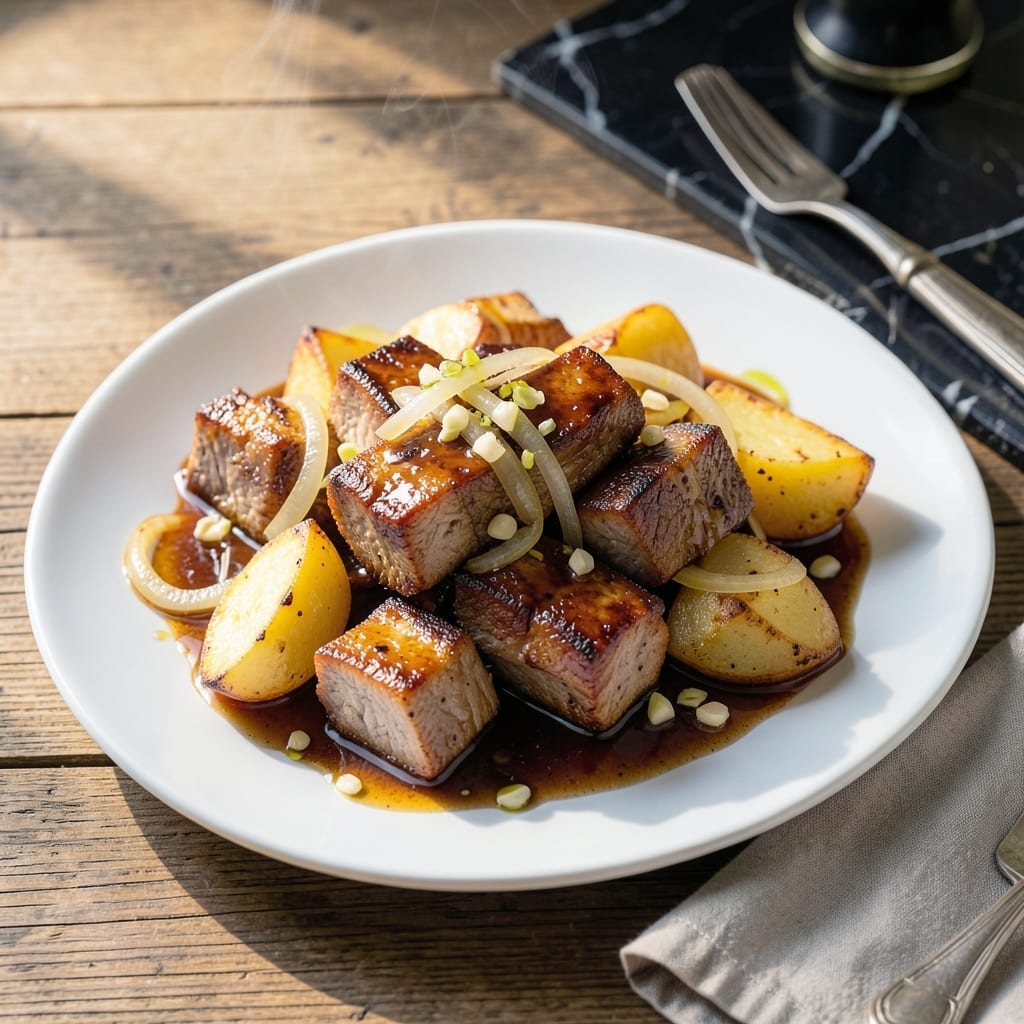
This Filipino-inspired pork and vegetable dish brings bold, tangy flavors to your table with minimal effort. I developed this recipe after studying my grandmother’s vague handwritten notes, translating her intuitive techniques into clear steps anyone can follow.
The vinegar braise transforms tough cuts of pork into tender morsels while infusing the vegetables with bright, complex flavors. One pan is all you need to create this hearty, balanced meal that’s perfect for weeknight dinners.
You’ll end up with a dish that’s rich yet light, with pork so fall-apart tender and vegetables that absorb every bit of the savory, tangy sauce. The aroma alone will have everyone gathering around the table before it’s even ready.
Serve with steamed rice to soak up every drop of the delicious braising liquid. Here’s how to make this traditional Filipino medley at home.
Ingredients for Pork with Vegetable Recipe Panlasang Pinoy
Bold Filipino flavors start with pork, vinegar, and fresh vegetables in one pan.
| Ingredient | Amount | Notes |
|---|---|---|
| Pork Shoulder 🥩 | 1 ½ lb | Cut into 1-inch cubes, bone-in preferred |
| White Vinegar 💧 | 1 cup | Cane vinegar for authenticity |
| Soy Sauce 🫒 | ½ cup | Regular or low-sodium |
| Garlic Cloves 🧄 | 8 cloves | Minced for maximum flavor |
| Yellow Onion 🧅 | 1 whole | Thinly sliced into rings |
| Potatoes 🥔 | 2 whole | Yukon Gold, peeled and cubed |
| Carrots 🥕 | 2 whole | Peeled and sliced into rounds |
| Green Beans 🌿 | 1 lb | Trimmed and cut into 2-inch pieces |
| Bay Leaves 🍃 | 3 pieces | Dried, for aromatic depth |
| Black Peppercorns 🌶️ | 1 tsp | Whole, for braising liquid |
| Brown Sugar 🧈 | 2 tbsp | Balances vinegar’s acidity |
| Water 💧 | 1 cup | For braising liquid |
| Salt 🧂 | 1 tsp | Adjust to taste |
The pork is everything here. Pork shoulder with good marbling (bone-in if possible) stays juicy through the long braise. I grab mine from local Asian markets—they often have pre-cut chunks perfect for this. For the vinegar, cane vinegar is traditional, but white vinegar works if that’s what you’ve got. Just avoid anything fancy like balsamic. Freshness matters most with the garlic and onions (don’t use the pre-minced stuff).
No pork shoulder? Pork belly or country-style ribs work too—just trim excess fat. Short on vinegar? Apple cider vinegar at equal amount adds a fruity note. For vegetables, sweet potatoes or butternut squash can stand in for regular potatoes. Green beans not your thing? Long beans or snap peas absorb the sauce just as well. The bay leaves are key though—don’t skip them.
This tastes even better the next day. Keeps in the fridge for 4-5 days and freezes beautifully for up to 3 months. Leftovers reheat well—just add a splash of water to loosen the sauce. Always serve with steamed rice to soak up that tangy goodness (worth the extra pot).
Why You’ll Love This Recipe
- One Pan Wonder: I toss the pork shoulder, garlic, and onions in a pan with soy sauce and vinegar—minimal cleanup, maximum flavor.
- Savory Tang: The vinegar cuts through the richness of the pork while the soy sauce and garlic deepen every bite.
- Weeknight Hero: Honestly, it’s my go-to when I need something hearty and quick for family dinner.
- Budget Stretcher: A kilo of pork shoulder feeds four with leftovers, and the pantry staples keep costs low.
Step-by-Step Instructions for Tangy Vinegar-Braised Pork With Vegetables
This method delivers perfectly tender meat and vegetables soaked in a rich, tangy vinegar sauce.
Step 1: Sear the Pork Shoulder Until Browned
Heat a large pot or Dutch oven over medium-high heat. Add the 1.5 lb Pork Shoulder cubes and sear until golden brown on all sides, about 5-7 minutes. This step builds a flavorful foundation for your braise.
Don’t overcrowd the pot—work in batches if needed to ensure each cube browns properly. You want a deep, rich color, not just light browning. Transfer the seared pork to a plate and set aside.
Step 2: Sauté Aromatics and Build the Braising Liquid
In the same pot, add the 8 cloves Garlic Cloves, 1 whole Yellow Onion, 1 tsp Black Peppercorns, and 3 pieces Bay Leaves. Sauté for 2-3 minutes until the onion softens and the garlic becomes fragrant.
Pour in the 1 cup White Vinegar, 0.5 cup Soy Sauce, 2 tbsp Brown Sugar, 1 cup Water, and 1 tsp Salt. Stir to combine, scraping up any browned bits from the bottom of the pot. This liquid will infuse with deep, balanced flavors as it simmers.
Step 3: Simmer Pork and Vegetables Until Tender
Return the seared pork to the pot along with the 2 whole Potatoes, 2 whole Carrots, and 1 lb Green Beans. The vegetables should be fully submerged in the braising liquid.
Bring to a boil, then reduce the heat to low. Cover and let it simmer for 45-50 minutes, or until the pork is fork-tender and the potatoes are soft when pierced with a knife. Stir occasionally to ensure even cooking.
Step 4: Adjust Seasoning and Reduce the Sauce
Once the pork and vegetables are tender, uncover the pot and let the sauce simmer for an additional 5-10 minutes to thicken slightly. The sauce should cling to the back of a spoon.
Taste and adjust seasoning if needed. If the sauce is too sharp, a pinch of additional brown sugar can balance the acidity. Discard the bay leaves and peppercorns before serving.
Serve hot, allowing the flavors to meld together in every bite. The pork should be fall-apart tender, and the vegetables perfectly infused with the tangy vinegar sauce.
Pro Tips For Making Pork With Vegetable Recipe Panlasang Pinoy
- Sear the Pork First: Brown the pork shoulder in batches over medium-high heat before adding liquids—this builds a rich, caramelized base that deepens the adobo flavor. I learned this the hard way after making pale, watery versions for years.
- Balance the Vinegar: Use 1 part vinegar to 2 parts soy sauce for the marinade; too much vinegar can overpower the dish and make the pork tough. My grandmother swore by this ratio, and she was right.
- Don’t Rush the Simmer: Let the pork simmer in the sauce for at least 40 minutes, uncovered, so the liquid reduces and the meat absorbs all that garlicky, tangy goodness. Skipping this step leaves you with a weak, watery sauce.
- Slice Against the Grain: Cut the pork shoulder into thin strips against the grain after cooking—it makes the meat noticeably tender. Sounds like a small thing, but it actually changes the outcome.
Regional Styles of These Flavors
Visayan Style
In the Visayas region, they often add 1 cup coconut milk to the braise for a creamier texture. The acidity of the vinegar pairs beautifully with the richness. I learned this trick from a friend whose grandmother cooked in Cebu. 🌴
Tagalog Approach
Around Manila, cooks prefer calamansi juice instead of white vinegar for a more complex citrus note. They also add 1 tbsp fish sauce for umami depth. This version has a brighter, more aromatic profile.
Bicolano Twist
Bicolano cuisine incorporates 2-3 siling labuyo chili peppers for heat. The spice cuts through the richness while maintaining the dish’s tangy character. I add the chilies whole so they infuse without overpowering.
Ilocano Version
In the Ilocos region, they use bagoong isda (fermented fish paste) for an extra savory kick. Just 1 tbsp transforms the flavor profile. It’s an acquired taste but incredibly authentic. 💡
Pampanga Influence
Kapampangan cooks often include 1 cup pineapple chunks for sweetness. The fruit absorbs the braising liquid wonderfully. This variation feels almost festive with its sweet-tangy balance.
Modern Fusion
For a contemporary take, I sometimes add 1 tsp smoked paprika to the searing stage. It gives the pork a subtle smokiness that pairs well with the vinegar. Perfect for when I want to impress dinner guests.
Nutrition Facts
Frequently Asked Questions
Can I use a different cut of pork?
Yes, pork belly or country-style ribs work well. Just trim excess fat and adjust cooking time as needed. Pork belly may need 5-10 minutes less to avoid becoming mushy.
What if my sauce is too sour?
Balance the acidity with 1-2 tsp brown sugar or a pinch of salt. The sweetness will round out the sharpness without overpowering. Taste as you go.
Can I make this ahead of time?
The flavors deepen overnight in the fridge for 4-5 days. Reheat gently on the stove with a splash of water to loosen the sauce.
Which vegetables can I swap in?
Sweet potatoes or butternut squash replace regular potatoes well. For green beans, try long beans or snap peas. Keep sizes similar for even cooking.

- Potato Patty Recipe No Egg: Crispy Edges Without the Binder - October 30, 2026
- Paula Deen’s Potato Chip Cookies Recipe: Salty-Sweet Crunch in Every Bite - October 30, 2026
- Potato Gnocchi Recipe Ideas: Pillowy Soft Dumplings With Rustic Charm - October 30, 2026