
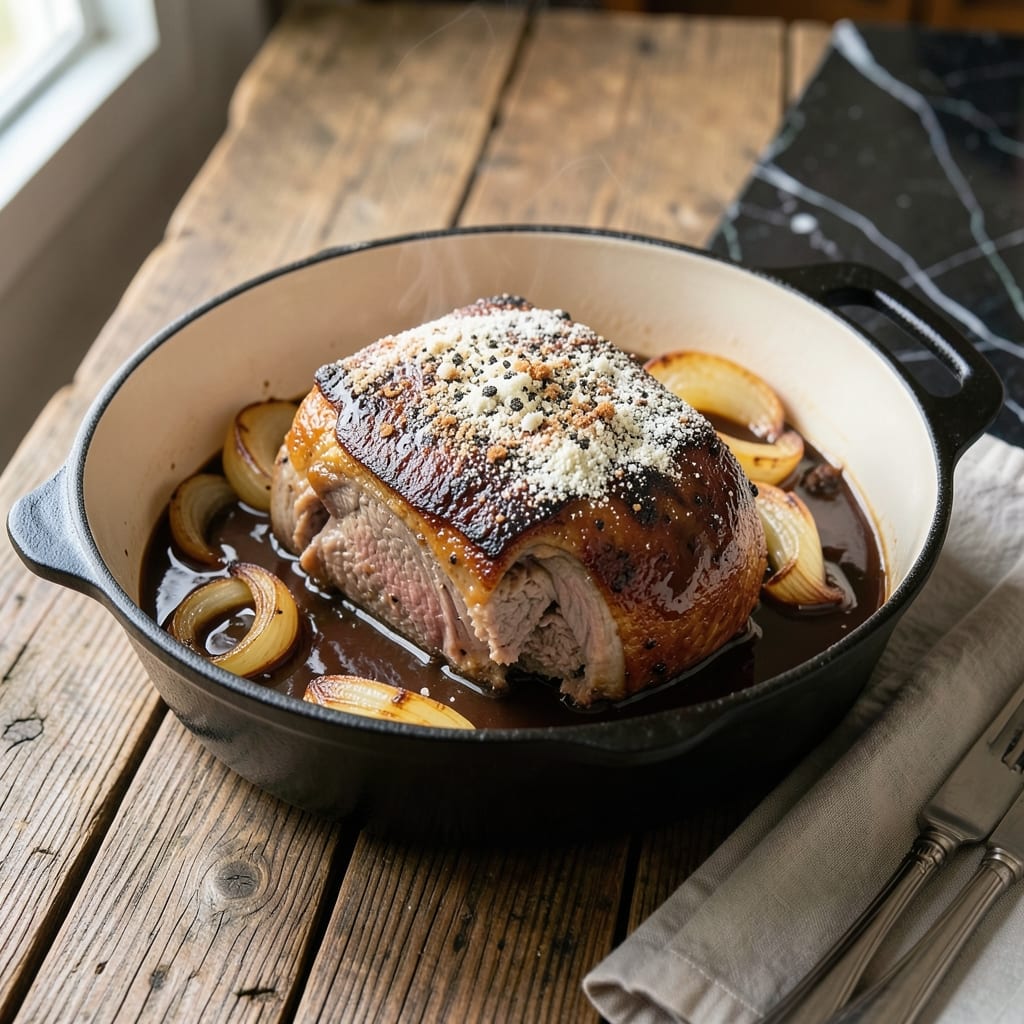
Achieving fork-tender pot roast in just two hours is possible with a proven technique that accelerates traditional braising without sacrificing depth of flavor. I developed this method after years of testing in my small Boston kitchen.
The key is using high heat initially to build a rich fond, then switching to a covered, low-temperature oven finish. This creates the same fall-apart texture you expect from all-day cooking, with caramelized edges and a velvety sauce.
What emerges is a dish with the same comforting richness as classic pot roast, but ready for your table when time is short. The meat becomes impossibly tender while the vegetables soak up the concentrated beefy essence.
Perfect for Sunday suppers or weeknight comfort when you need a satisfying meal fast. Here’s how to make it.
Ingredients for Pot Roast Recipe 2 Hours
A few quality ingredients transform into melt-in-your-mouth pot roast with rich, velvety sauce.
| Ingredient | Amount | Notes |
|---|---|---|
| Chuck Roast 🥩 | 3 lb | Well-marbled, cut into large chunks |
| Kosher Salt 🧂 | 1 ½ tsp | Divided for seasoning and sauce |
| Black Pepper 🌶️ | 1 tsp | Freshly ground preferred |
| All-Purpose Flour 🌾 | ¼ cup | For thickening the sauce |
| Olive Oil 🫒 | 2 tbsp | Divided for searing and sauce |
| Yellow Onion 🧅 | 1 whole | Large, roughly chopped |
| Garlic Cloves 🧄 | 4 cloves | Smashed and peeled |
| Carrots 🥕 | 3 whole | Peeled, cut into large pieces |
| Celery Stalks 🌿 | 2 whole | Cut into large chunks |
| Red Wine 🍷 | 1 ½ cups | Dry, bold variety preferred |
| Beef Broth 🥘 | 2 cups | Low-sodium preferred |
| Tomato Paste 🍅 | 2 tbsp | For depth of flavor |
| Fresh Thyme Sprigs 🍃 | 3 whole | Stems removed, tied with twine |
| Bay Leaf 🌿 | 1 whole | Dried, for aromatics |
| Water 💧 | ½ cup | For adjusting sauce consistency |
The chuck roast is non-negotiable here. Look for well-marbled pieces at Costco or Whole Foods—the fat melts down to create that signature tenderness. I always buy more than I need and freeze the rest. The wine should be something you’d actually drink; Cabernet Sauvignon or Merlot both work beautifully. For the broth, Better Than Bouillon paste is my go-to, but any low-sodium beef broth will do in a pinch.
No red wine? Substitute with extra beef broth plus 1 tbsp balsamic vinegar. Fresh rosemary can replace thyme if that’s what’s in your garden. Baby carrots work fine (cut them in half so they don’t disappear). The tomato paste can be swapped for 1/4 cup crushed tomatoes, though the paste gives a deeper flavor. If you’re gluten-free, cornstarch at half the amount thickens just as well.
Leftovers taste even better the next day—store in an airtight container for up to 4 days in the fridge or freeze for 3 months. The sauce thickens as it cools, so thin with a splash of water when reheating. I love making this on Sunday and eating it all week.
Why You’ll Love This Recipe
- One Pan Wonder: I sear the chuck roast in olive oil, then let it cook low and slow—no extra dishes, just rich flavor building in one pot.
- Fallback Comfort: That flour crust from the sear locks in juices, making the meat so tender it falls apart with just a fork.
- Sunday or Wednesday: Honestly, it’s just as fitting for a lazy weekend as it is for a quick weeknight dinner when I need something hearty.
- Leftovers for Days: One roast stretches into sandwiches, tacos, or stew—my wallet and my schedule both thank me.
Step-by-Step Instructions for Pot Roast
Here’s the method. Straightforward, tested, works every time.
Step 1: Sear and Season the Chuck Roast
Pat the 3 lb chuck roast dry with paper towels—this ensures a proper sear. Season all sides aggressively with 1.5 tsp kosher salt and 1 tsp black pepper. The salt should feel almost excessive; it’ll mellow as the dish cooks and penetrate deep into the meat.
Heat 1 tbsp olive oil in a large Dutch oven over medium-high heat until it shimmers. Add the chuck roast and sear for 4-5 minutes per side until deeply browned. You’re looking for a rich, mahogany crust—this builds the flavor foundation. Transfer the roast to a plate and set aside.
Step 2: Build the Aromatic Base
In the same Dutch oven, add the remaining 1 tbsp olive oil. Toss in the roughly chopped yellow onion, 3 whole carrots, and 2 whole celery stalks. Cook for 5-6 minutes until the vegetables soften and the onion turns translucent at the edges.
Add the 4 cloves garlic, 2 tbsp tomato paste, 3 whole fresh thyme sprigs, and 1 whole bay leaf. Stir constantly for 1-2 minutes until the tomato paste darkens slightly and coats the vegetables. This step deepens the umami and ensures every bite is packed with flavor.
Step 3: Deglaze and Braise Under Pressure
Pour in the 1.5 cups red wine and scrape up all the browned bits from the bottom of the pot with a wooden spoon. Let it simmer for 2-3 minutes until the liquid reduces by about half. Then add the 2 cups beef broth and return the seared chuck roast to the pot.
The liquid should come about halfway up the roast. If it doesn’t, add 0.5 cup water to adjust. Bring to a boil, then reduce the heat to low. Cover tightly and simmer for 2 hours, turning the roast halfway through. The meat is done when it shreds easily with a fork.
Step 4: Thicken the Sauce and Finish
Transfer the chuck roast to a cutting board and tent with foil. Skim any excess fat from the surface of the braising liquid. In a small bowl, whisk the 0.25 cup all-purpose flour with ¼ cup of the hot braising liquid until smooth. Stir this slurry into the pot.
Simmer for 5-7 minutes until the sauce thickens enough to coat the back of a spoon. Taste and adjust seasoning if needed. Slice or shred the roast, return it to the pot, and coat it in the rich, velvety sauce before serving.
Pro Tips For Making Pot Roast Recipe 2 Hours
- Sear it Hard: Crank the heat to medium-high and don’t move the chuck roast for 3-4 minutes per side—this builds a deep crust that locks in flavor. I learned this the hard way after years of pale, steamed-looking meat.
- Season Heavily: Use more kosher salt and black pepper than feels right, especially on the flour before dredging. Sounds excessive, but the long cook time mellows it out.
- Skip Cold Meat: Let the chuck roast sit at room temperature for 30 minutes before searing. After burning the outside of a cold roast once, I never skip this step again.
- Use a Dutch Oven: A heavy pot with a tight lid distributes heat evenly and keeps moisture in—crucial for getting tender meat in just 2 hours. My grandmother swore by hers, and she was right.
Essential Equipment for This Dish
Dutch Oven Essential
A heavy Dutch oven is non-negotiable for this recipe. I use my 6-quart Lodge enameled cast iron—it retains heat perfectly and goes from stovetop to oven seamlessly. The tight-fitting lid traps steam to accelerate the braising process.
Wooden Spoon Workhorse
You’ll need a wooden spoon for deglazing—it won’t scratch your Dutch oven’s surface like metal might. I keep one dedicated to my pot roast days. The flat edge helps scrape up all those flavorful browned bits from the bottom.
Sharp Knife Matters
A good 8-inch chef’s knife makes quick work of the vegetables. I’ve been using the same Victorinox Fibrox for years. Sharp blades are safer and make prep faster, especially when cutting through tough celery stalks.
Tongs for Turning
Long locking tongs are crucial for flipping the heavy chuck roast during searing and braising. I prefer OXO’s 12-inch version—they give excellent control. You’ll use them to turn the meat halfway through cooking without piercing it. 💪
Meat Thermometer
While the time is fixed at 2 hours, I still check with my ThermoWorks instant-read thermometer. The roast is done at 195-205°F internal temperature. This gives me confidence, especially when adjusting for different pot sizes.
Cutting Board
A large wooden cutting board provides ample space for prepping vegetables and resting the roast. I use one that’s 18×12 inches—big enough for the 3 lb chuck roast and all the veggies. The juices collect in the well I’ve carved over years of use. 🌟
Nutrition Facts
Frequently Asked Questions
What’s the secret to getting it tender in just 2 hours?
Cutting the roast into large chunks creates more surface area for browning while reducing cooking time. The high initial sear and tight lid trap steam to break down collagen quickly.
Can I use a slow cooker instead?
Not for this method. Slow cookers work on lower temps over 6-8 hours. For 2-hour results, the stovetop-to-oven Dutch oven technique is essential for proper heat control.
Why does my sauce turn out thin?
Most often it needs more reduction time. After adding the flour slurry, simmer uncovered for the full 5-7 minutes. Also, ensure you’re using the full ¼ cup flour called for in the recipe.

- Protein Pudding Recipe With Sugar Free Pudding: High-Protein Creamy Indulgence - November 3, 2026
- Progresso Recipe Starters Creamy Parmesan Basil Cooking Sauce: Rich Herb-Infused Base for Pasta and More - November 3, 2026
- Pudding Recipe With Egg Yolks: Silky Smooth Custard in Minutes - November 3, 2026