
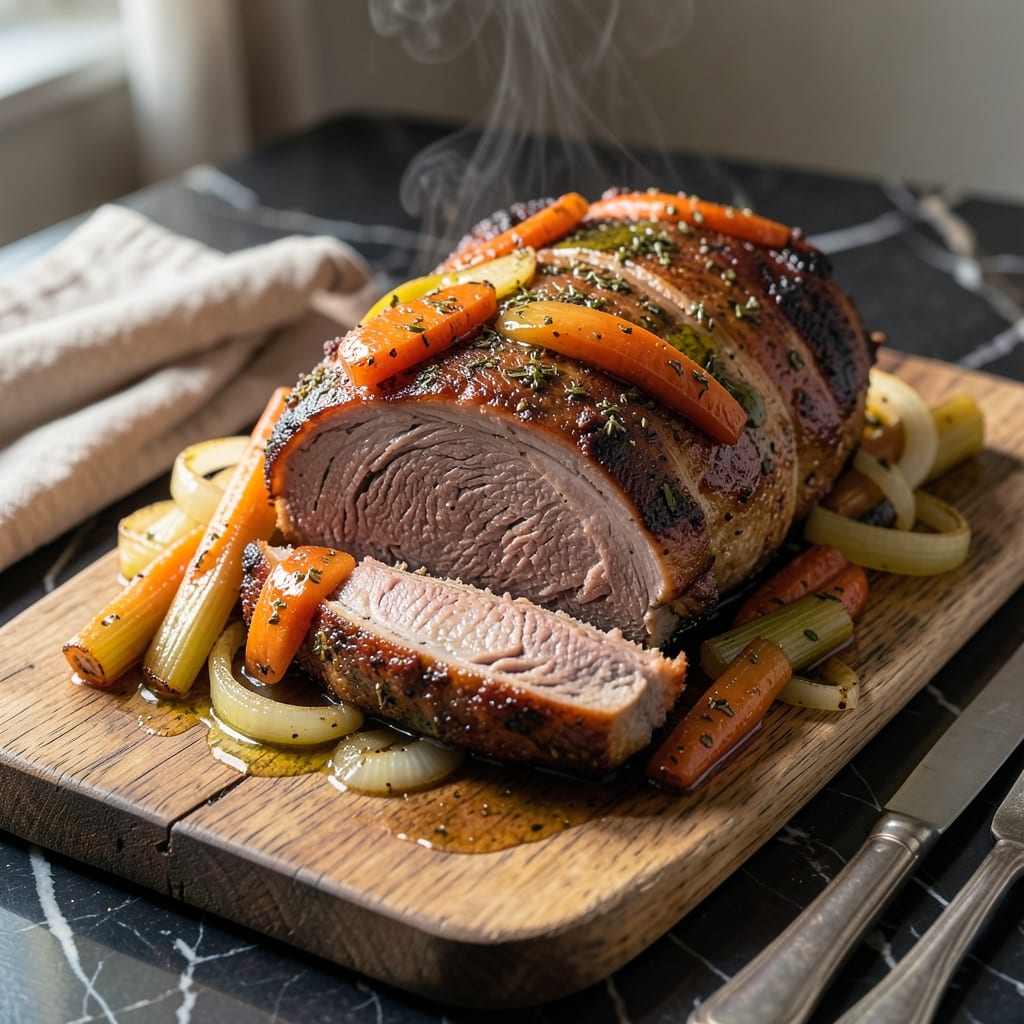
Slow-braised pot roast achieves tender perfection when infused with robust Italian herbs. This method transforms tough cuts into fall-apart beef with deep, aromatic flavors.
The process begins with searing the meat to develop a rich crust, then gently cooking it in a flavorful liquid. Italian seasoning adds a warm, earthy note that complements the beef beautifully.
By the time it finishes, the meat will be tender and juicy, with a sauce so rich you’ll want to soak it up with crusty bread. Every bite delivers comfort and satisfaction.
Perfect for Sunday dinners or special occasions. Here’s how to make this tender masterpiece at home.
Ingredients for Pot Roast Recipe Italian Seasoning
Slow-braised beef meets aromatic herbs for a dish that melts in your mouth.
| Ingredient | Amount | Notes |
|---|---|---|
| Chuck Roast 🥩 | 3 lb | Well-marbled for tenderness |
| Italian Seasoning 🌿 | 2 tbsp | Dried blend of herbs |
| Olive Oil 🫒 | 2 tbsp | Divided for searing and sauce |
| Yellow Onion 🧅 | 1 whole | Large, diced roughly |
| Carrots 🥕 | 3 whole | Peeled, cut into chunks |
| Celery Stalks 🥬 | 3 whole | Cut into large pieces |
| Garlic Cloves 🧄 | 5 cloves | Smashed, skin removed |
| Red Wine 🍷 | 1 ½ cups | Dry, bold variety |
| Beef Broth 🥣 | 2 cups | Low-sodium preferred |
| Tomato Paste 🍅 | 2 tbsp | For depth of flavor |
| Bay Leaves 🍃 | 2 whole | Dried, for aromatic depth |
| Kosher Salt 🧂 | 1 ½ tsp | Diamond Crystal preferred |
| Black Pepper 🌶️ | 1 tsp | Freshly cracked for best results |
| Fresh Rosemary Sprigs 🌿 | 2 whole | Optional, for added aroma |
| All-Purpose Flour 🌾 | 2 tbsp | For thickening sauce |
The chuck roast is non-negotiable here. Look for well-marbled cuts—fat equals flavor and tenderness. Most butchers at Whole Foods or your local grocery can point you to the right piece. The Italian seasoning blend should be fresh; Penzeys offers excellent quality. If buying pre-packaged, check the date—old spices lose their potency quickly.
No red wine? Substitute with additional beef broth and a splash of balsamic vinegar. Fresh herbs can replace dried at a 3:1 ratio, but dried works perfectly fine here. For the tomato paste, those squeeze tubes are convenient and prevent waste. If you’re out of beef broth, vegetable broth in a pinch (though depth of flavor will differ).
This keeps beautifully—actually improves after a day as flavors meld. Store in an airtight container for up to 4 days in the fridge or freeze for 3 months. Reheat gently on the stove to maintain that fall-apart texture.
Why You’ll Love This Recipe
- One Pot Wonder: I toss everything in the Dutch oven—chuck roast, Italian seasoning, onions, carrots—and let the oven do the work.
- Melt-in-Your-Mouth Good: The Italian seasoning turns the beef so tender it falls apart, while the carrots soak up every herby, savory bite.
- Feeds the Family: Honestly, this makes enough for Sunday dinner plus leftovers for sandwiches the next day.
- Budget Stretcher: A chuck roast is cheap, and with just a handful of pantry staples, I serve a meal that feels fancy.
Step-by-Step Instructions for Italian Herb Pot Roast
This method delivers fall-apart tenderness with herbaceous depth in every bite.
Step 1: Sear and Season the Chuck Roast
Pat the 3 lb Chuck Roast thoroughly dry with paper towels. This is non-negotiable—moisture prevents proper browning. Season all sides generously with 1.5 tsp Kosher Salt, 1 tsp Black Pepper, and 2 tbsp Italian Seasoning, pressing the spices into the meat so they adhere during searing.
Heat 1 tbsp Olive Oil in a heavy Dutch oven over medium-high heat until shimmering. Add the chuck roast and sear undisturbed for 4-5 minutes per side until a deep, rich brown crust forms. The fond created here is the flavor foundation for your sauce. Transfer the roast to a plate and set aside.
Step 2: Build the Aromatic Base
In the same pot, add the remaining 1 tbsp Olive Oil if needed. Add 1 whole Yellow Onion (diced), 3 whole Carrots (chunked), and 3 whole Celery Stalks (large pieces). Sauté for 5-6 minutes until the vegetables begin to soften and develop color at the edges.
Stir in 5 cloves Garlic Cloves (smashed) and 2 tbsp Tomato Paste, cooking for 1-2 minutes until the tomato paste darkens slightly. This step deepens its sweetness and eliminates any raw taste. Add 2 tbsp All-Purpose Flour and stir to coat the vegetables, cooking for 1 minute to remove the raw flour taste.
Step 3: Deglaze and Braise
Pour in 1.5 cups Red Wine, scraping the bottom of the pot with a wooden spoon to release all the browned bits. Let the wine reduce by half, about 3-4 minutes, which burns off the alcohol while concentrating flavor. Add 2 cups Beef Broth, 2 whole Bay Leaves, and 2 whole Fresh Rosemary Sprigs.
Return the chuck roast to the pot along with any accumulated juices. The liquid should come about halfway up the meat. Bring to a simmer, then cover and transfer to a 325°F oven. Braise for 2.5-3 hours, turning the roast once halfway through, until the meat yields easily to a fork.
Step 4: Reduce and Serve
Carefully remove the chuck roast and set it on a cutting board. Tent loosely with foil to keep warm. Skim any excess fat from the surface of the braising liquid, then return the pot to the stovetop over medium heat. Simmer uncovered for 8-10 minutes until the sauce thickens slightly and coats the back of a spoon.
Slice or shred the roast against the grain and serve with the reduced sauce spooned over the top. The vegetables will be meltingly tender, saturated with the wine and herb-infused liquid. This dish rewards patience with layers of complex, comforting flavor.
Pro Tips For Making Pot Roast Recipe Italian Seasoning
- Sear the Chuck: I learned this the hard way—brown that chuck roast hard in olive oil before adding liquids, about 3-4 minutes per side. It builds a crust that turns the pot liquor into something rich and deep.
- Bloom the Seasoning: Toast the Italian seasoning in the hot oil for 15-20 seconds before adding the meat. Sounds weird, but it wakes up the herbs and fills your kitchen with that garlicky, oregano scent.
- Don’t Crowd the Pot: After burning two batches, I finally figured out that the onions and carrots need room to caramelize, not steam. Spread them in a single layer around the meat.
- Use a Meat Thermometer: Skip the guesswork—pull the roast at 195°F internal temp. It’ll be fall-apart tender every time, and you won’t overcook it into dry, stringy sadness.
Flavor Customization for These Flavors
Herb Boost Variations
Swap the dried Italian seasoning for 2 tbsp fresh herbs—try equal parts rosemary, thyme, and oregano from my Portland garden. Fresh herbs brighten the dish with more vibrant, aromatic notes. I love the difference fresh makes, especially in summer. 🌿
Spice It Up
Add ½ tsp red pepper flakes with the Italian seasoning for a subtle kick. For more heat, include 1 chopped jalapeño when sautéing the vegetables. The warmth complements the earthy herbs beautifully without overpowering the beef.
Citrus Zing
Stir in 1 tbsp lemon zest and 2 tbsp lemon juice with the tomato paste for a bright, tangy twist. The acidity cuts through the richness and enhances the herb flavors. This works especially well with fresh herbs.
Umami Depth
Boost the savory profile by adding 2 tbsp soy sauce or 1 tbsp fish sauce to the braising liquid. This adds complexity without altering the Italian character. I discovered this trick at a local Portland cooking class. 💡
Mediterranean Touch
Add ½ cup chopped sun-dried tomatoes and ¼ cup chopped kalamata olives when returning the roast to the pot. These ingredients bring a briny, sweet complexity that pairs wonderfully with the Italian herbs.
Sweet Balance
Stir in 1 tbsp balsamic vinegar and 1 tbsp brown sugar with the red wine for a touch of sweetness. This balances the acidity and adds a subtle caramelized depth to the sauce. Perfect for those who prefer a sweeter profile.
Nutrition Facts
Frequently Asked Questions
What cut of beef works best?
Chuck roast is ideal for its marbling and connective tissue. This breaks down during the 2.5-3 hour braise, creating that melt-in-your-mouth texture. Avoid lean cuts like sirloin—they’ll stay tough.
Can I use fresh herbs instead of dried?
Use 3 times the amount of fresh herbs (so 6 tbsp total). Fresh rosemary, thyme, and oregano work beautifully. Add them when building the aromatic base for maximum flavor.
How do I know when it’s done?
The meat should pull apart easily with a fork. For precise results, use a meat thermometer—it’s done at 195-205°F internally. This temperature ensures perfect tenderness every time.

- Potato Patty Recipe No Egg: Crispy Edges Without the Binder - October 30, 2026
- Paula Deen’s Potato Chip Cookies Recipe: Salty-Sweet Crunch in Every Bite - October 30, 2026
- Potato Gnocchi Recipe Ideas: Pillowy Soft Dumplings With Rustic Charm - October 30, 2026