
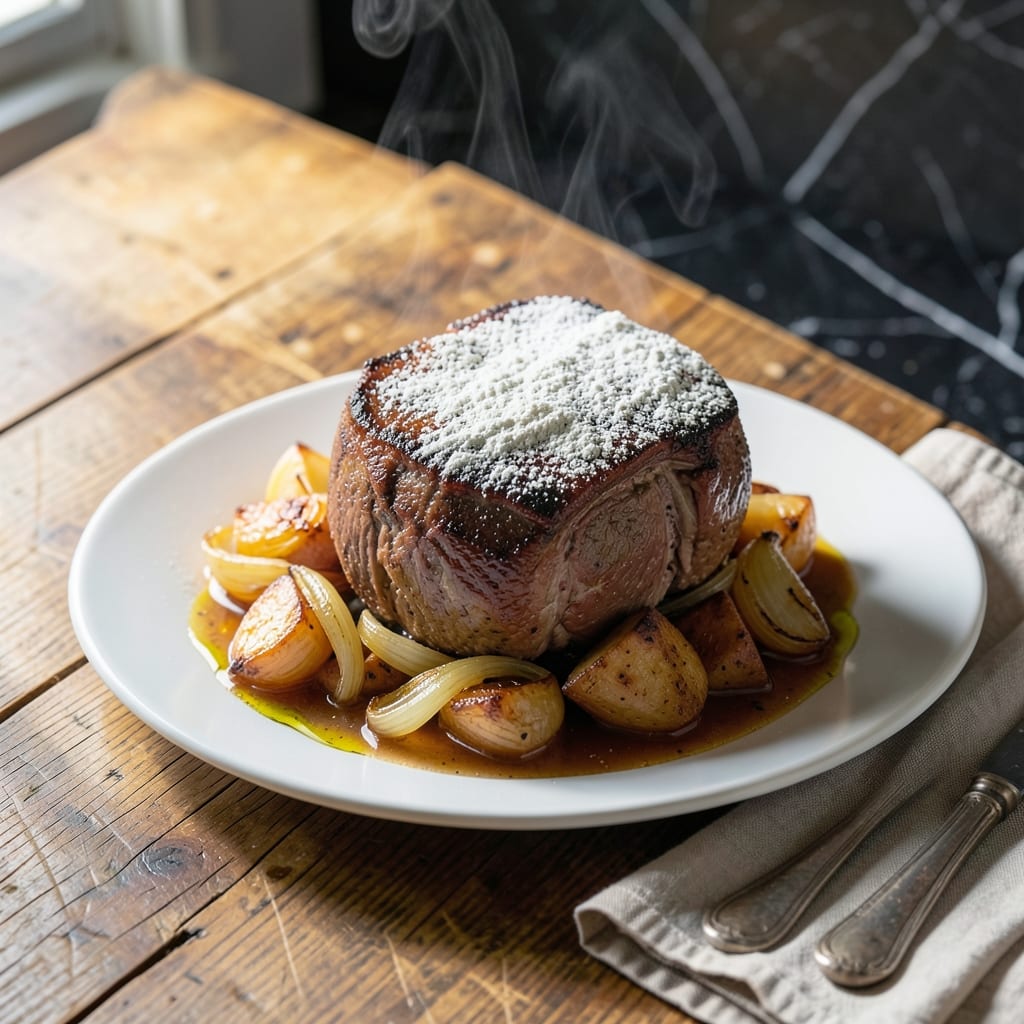
This pot roast recipe transforms tough cuts into meltingly tender perfection through slow braising. The flour isn’t just for thickening—it creates a rich, velvety gravy that clings to every bite of beef and vegetables.
I’ve refined this method over years of Sunday dinners, focusing on the precise moment to add flour for maximum flavor and texture. The technique ensures a gravy that’s silky, not pasty, while the beef becomes fork-tender.
What emerges from the oven is fall-apart beef with carrots and potatoes that soak up every drop of that rich gravy. It’s the kind of dish that fills your home with warmth and your table with satisfaction.
Perfect for feeding a crowd or meal prepping for the week. Here’s how to achieve that tender result every time.
Ingredients for Pot Roast Recipe with Flour
A handful of quality ingredients come together for this classic slow-cooked dish.
| Ingredient | Amount | Notes |
|---|---|---|
| Beef Chuck Roast 🥩 | 3 lb | Boneless, well-marbled preferred |
| All-Purpose Flour 🌾 | ½ cup | For dredging and gravy |
| Kosher Salt 🧂 | 2 tsp | Plus more to taste |
| Black Pepper 🌶️ | 1 tsp | Freshly ground preferred |
| Olive Oil 🫒 | 2 tbsp | Divided for searing and cooking |
| Yellow Onion 🧅 | 1 whole | Large, roughly chopped |
| Garlic Cloves 🧄 | 4 cloves | Minced for depth of flavor |
| Carrots 🥕 | 4 whole | Medium, peeled and chopped |
| Yukon Gold Potatoes 🥔 | 1 ½ lb | Peeled and cut into chunks |
| Beef Broth 💧 | 2 cups | Low-sodium preferred for control |
| Tomato Paste 🍅 | 2 tbsp | For rich umami depth |
| Dried Thyme 🌿 | 1 tsp | Crushed between fingers |
| Bay Leaf 🍃 | 1 whole | Dried, for aromatic base |
| Red Wine 🍷 | 1 cup | Dry variety for deglazing |
The beef is non-negotiable here. Chuck roast with good marbling breaks down beautifully during the long cook. I recommend Costco or Whole Foods for well-marbled cuts at a fair price. Look for pieces with visible fat streaks—they melt into the meat as it cooks. If you’re buying pre-cut, ask the butcher for stew meat from the chuck. Avoid lean cuts like sirloin; they’ll stay tough.
Out of red wine? Extra beef broth with a splash of balsamic vinegar works in a pinch. No all-purpose flour? Swap in whole wheat flour at the same amount, though the gravy may be slightly denser. Fresh garlic is best, but jarred minced garlic (about 1 tbsp) can substitute if needed. For the potatoes, russets work too, but Yukon Golds hold their shape better and add a buttery richness.
This tastes even better the next day once the flavors meld. Store leftovers in an airtight container in the fridge for up to 4 days, or freeze portions for 3 months. Reheat gently on the stove with a splash of broth to keep it tender.
Why You’ll Love This Recipe
- Set It and Forget: I toss the beef in flour, sear it, and let the oven do the work—hands-off cooking at its finest.
- Crispy Crust: That flour coating turns into the most satisfying golden-brown crust on the chuck roast.
- Sunday or Tuesday: Honestly, this works just as well for a lazy weekend as it does for a quick weekday dinner.
- Stretches Far: One chuck roast feeds my family for two nights, with leftovers that taste even better the next day.
Step-by-Step Instructions for Pot Roast With Flour
This method delivers fall-apart tender beef with rich, velvety gravy every time.
Step 1: Season and Dredge the Beef Chuck Roast
Pat the 3 lb Beef Chuck Roast completely dry with paper towels. This removes excess moisture that would otherwise prevent proper browning. Season both sides generously with the 2 tsp Kosher Salt and 1 tsp Black Pepper, pressing the seasoning into the meat so it adheres well.
Place the 0.5 cup All-Purpose Flour in a shallow dish. Dredge the seasoned beef chuck roast through the flour, coating all sides evenly and shaking off any excess. The flour creates a light crust that will thicken the cooking liquid later into a luscious gravy.
Step 2: Sear the Roast Until Deeply Browned
Heat 1 tbsp Olive Oil in a large Dutch oven over medium-high heat until shimmering. Add the floured beef chuck roast and sear for 4-5 minutes per side until deeply browned. Don’t move the roast during searing—this allows a proper crust to form.
You’ll know it’s ready to flip when the meat releases easily from the pot. Transfer the seared roast to a plate and set aside. This browning step develops complex flavors that form the foundation of your finished dish.
Step 3: Sauté Vegetables and Deglaze the Pot
In the same Dutch oven, add the remaining 1 tbsp Olive Oil. Add the roughly chopped 1 whole Yellow Onion, 4 whole Carrots, and 1.5 lb Yukon Gold Potatoes. Cook for 5 minutes until the vegetables begin to soften and develop color.
Add the minced 4 cloves Garlic Cloves and cook for 30 seconds until fragrant. Stir in the 2 tbsp Tomato Paste and cook for 1 minute, allowing it to deepen in color. This builds a rich base for your braising liquid.
Step 4: Build the Braising Liquid and Slow Cook
Pour in the 1 cup Red Wine and scrape up all the browned bits from the bottom of the pot with a wooden spoon. Let the wine simmer for 2-3 minutes until reduced by about half. This deglazing step incorporates all the concentrated flavors from searing.
Add the 2 cups Beef Broth, 1 tsp Dried Thyme, and 1 whole Bay Leaf. Return the beef chuck roast to the pot, along with any accumulated juices. The liquid should come about halfway up the roast. Bring to a simmer, then cover tightly.
Step 5: Braise Until Fork-Tender
Reduce heat to low and let the pot roast simmer gently for 3-3.5 hours. Check occasionally and add a splash of water if the liquid level drops too low. The roast is done when it shreds easily with a fork and the vegetables are tender.
During the last hour of cooking, the flour from the initial dredging will thicken the braising liquid into a rich gravy. Once finished, discard the bay leaf and adjust seasoning with additional salt and pepper if needed before serving.
Pro Tips For Making Pot Roast Recipe With Flour
- Sear the Flour: After coating the chuck roast in flour, sear it in olive oil over medium-high heat until deeply browned—this creates a fond that builds rich flavor in the braising liquid.
- Pat the Roast Dry: I learned this the hard way—blot the beef chuck with paper towels before dusting with flour so it browns instead of steams in the pan.
- Don’t Rush the Sear: Give each side a full 3-4 minutes until it releases easily from the pan; pulling it too soon leaves a pale, weak crust.
- Use Freshly Ground Pepper: Sounds small, but pre-ground pepper loses its punch—cracking whole black peppercorns right before dusting the floured roast actually changes the outcome.
Regional Styles of This Dish
Midwestern Comfort
In the heartland, we keep it simple but hearty. I add 1 tsp smoked paprika to the flour dredge for a subtle depth that pairs perfectly with the beef. The gravy here tends to be thicker, almost like a rich stew, so I sometimes add an extra ½ cup beef broth to loosen it up. 💛
Southern Style
Down south, this dish gets a tangy twist with 2 tbsp apple cider vinegar added to the braising liquid. We also love to include 1 diced bell pepper with the onions for extra sweetness and color. The flour is often replaced with cornstarch for a glossier gravy finish.
New England Variation
This version incorporates local flavors with 1 tbsp maple syrup and 1 tsp Dijon mustard stirred into the gravy at the end. The flour coating is typically lighter here, just enough to create a silky texture. I find the sweetness balances beautifully with the savory beef.
Texas Bold
Everything’s bigger in Texas, including the flavor. We amp up the heat with 1 chopped jalapeño and 1 tsp cumin added to the pot. The flour is often toasted in the Dutch oven before dredging for a nuttier taste. The gravy is usually thinner but packed with intense flavor. 🔥
Pacific Northwest
This region loves its wine, so we use 1.5 cups dry red wine instead of just one. The flour is sometimes mixed with 1 tbsp porcini mushroom powder for an earthy depth. I prefer using local mushrooms like chanterelles in place of potatoes for a more refined take.
Appalachian Tradition
Mountain cooking keeps it rustic. We often use 1 cup whole milk in place of some broth for a creamier gravy. The flour is typically all-purpose, but some families swear by self-rising flour for a slightly different texture. The vegetables are usually cut larger for a more rustic presentation.
Nutrition Facts
Frequently Asked Questions
Why dredge the roast in flour first?
The flour creates a light crust that browns beautifully when seared. More importantly, it thickens the cooking liquid into a rich, velvety gravy as it cooks.
What if my gravy is too thin?
Mix 1 tbsp flour with 1 tbsp cold water to make a slurry, then stir it into the simmering gravy. Cook for 2-3 minutes until thickened. Avoid adding dry flour directly—it can create lumps.
Can I use a different thickener?
Yes! Swap flour for 2 tbsp cornstarch mixed with cold water. Add it at the end of cooking for a glossy finish. Cornstarch creates a clearer gravy and works well for gluten-free versions.

- Potato Patty Recipe No Egg: Crispy Edges Without the Binder - October 30, 2026
- Paula Deen’s Potato Chip Cookies Recipe: Salty-Sweet Crunch in Every Bite - October 30, 2026
- Potato Gnocchi Recipe Ideas: Pillowy Soft Dumplings With Rustic Charm - October 30, 2026