
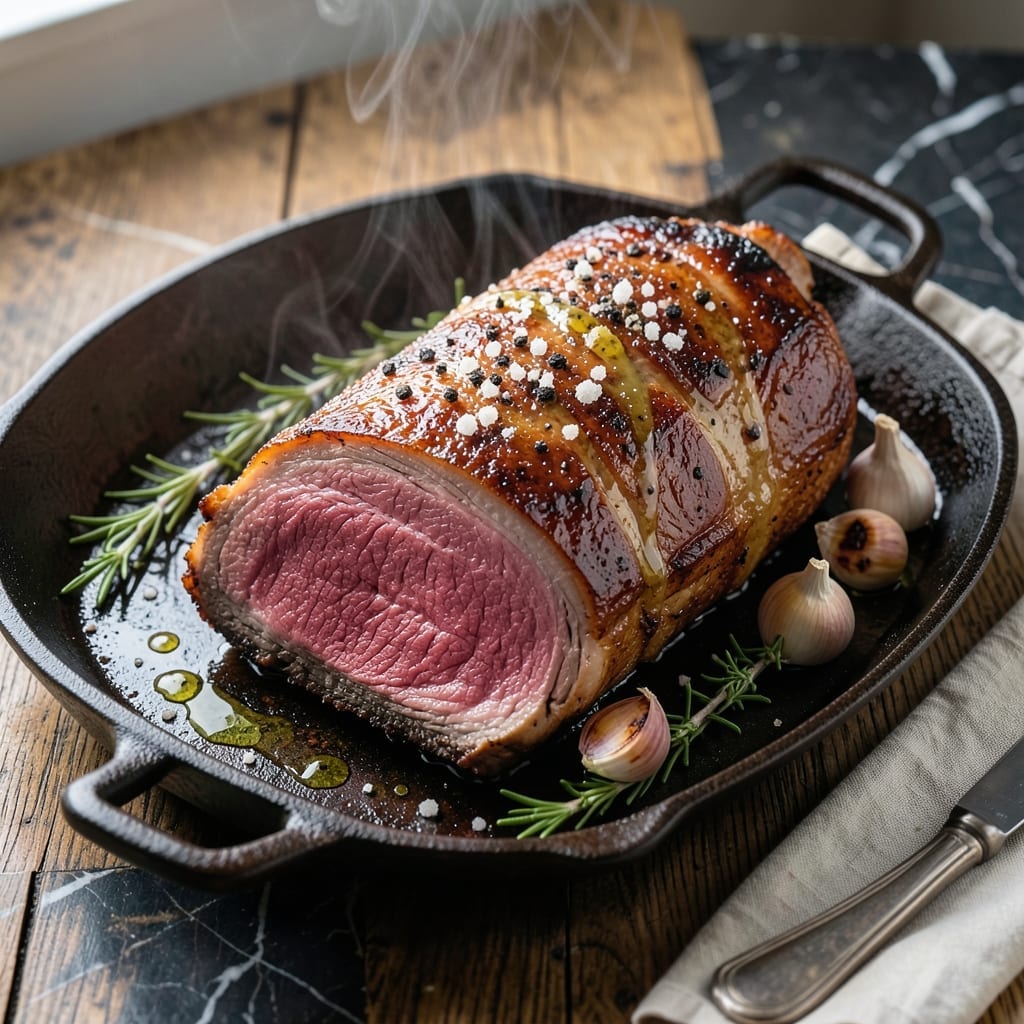
This slow-roasting method at 225 degrees transforms prime rib into something spectacular. The low temperature ensures even cooking from edge to center, guaranteeing juicy results every time.
I developed this technique after years of trial and error, learning that patience is the key to perfect prime rib. The extended cooking time allows the connective tissues to melt slowly, creating tender, flavorful meat.
The result is a roast with a beautiful crust outside and perfectly pink, moist meat inside. This method eliminates the risk of overcooking while delivering restaurant-quality results at home.
Serve this for special occasions or Sunday dinners when you want to impress. The wait is worth it.
Ingredients for Prime Rib Roast Recipe 225 Degrees
Quality cuts and simple seasonings create restaurant-worthy results with this method.
| Ingredient | Amount | Notes |
|---|---|---|
| Prime Rib Roast 🥩 | 5 lb | Bone-in, well-marbled preferred |
| Kosher Salt 🧂 | 2 tbsp | Diamond Crystal brand recommended |
| Freshly Ground Black Pepper 🌶️ | 1 tbsp | Coarse grind preferred |
| Garlic Cloves 🧄 | 6 cloves | Peeled and smashed |
| Fresh Rosemary Sprigs 🌿 | 4 whole | About 6 inches long each |
| Fresh Thyme Sprigs 🍃 | 4 whole | About 6 inches long each |
| Olive Oil 🫒 | ¼ cup | Extra-virgin for richness |
| Unsalted Butter 🧈 | 4 tbsp | Softened to room temperature |
| Dijon Mustard 🟡 | 2 tbsp | Whole grain variety preferred |
| Red Wine 🍷 | 1 cup | Dry variety for deglazing |
| Beef Stock 🥩 | 1 cup | Low-sodium preferred |
| All-Purpose Flour 🌾 | 2 tbsp | For thickening pan sauce |
The prime rib is everything here. USDA Prime grade delivers the best marbling and flavor, though Choice works well too. Source from a trusted butcher or high-end grocer like Whole Foods—ask for the ribeye end (more flavorful than the loin end). Bone-in roasts yield more even cooking and better presentation. Look for vibrant red color with abundant fat streaks throughout the meat.
No fresh rosemary or thyme? Dried herbs at one-third the amount work in a pinch, though fresh provides superior aroma. Out of red wine? Substitute beef broth with a splash of balsamic vinegar. For the butter, European-style (higher fat content) gives better crust formation. The Dijon mustard can be swapped for whole-grain, but avoid yellow mustard—it lacks depth.
Store the roast uncovered in the fridge for 1-2 days before cooking to dry the surface (better crust). Leftovers keep for 4-5 days wrapped tightly. For longer storage, slice and freeze portions for up to 3 months.
Why You’ll Love This Recipe
- Set and Forget: I love how I can pop this in the oven at 225 and walk away while the salt, pepper, garlic, and rosemary work their magic.
- Holiday Hero: This is my go-to for special dinners—impressive enough for guests but simple enough for a Sunday supper.
- Leftovers Luxury: Between us, the sandwiches I make with the leftovers might be even better than the original meal.
Step-by-Step Instructions for Prime Rib Roast 225 Degrees
Master the low-and-slow technique for consistently tender, perfectly cooked prime rib every time.
Step 1: Prepare and Season the Roast
Remove the prime rib roast from the refrigerator 1 hour before cooking to bring it to room temperature. Pat it completely dry with paper towels—this ensures a better sear and seasoning adhesion.
In a small bowl, combine the kosher salt, freshly ground black pepper, olive oil, Dijon mustard, smashed garlic cloves, fresh rosemary sprigs, and fresh thyme sprigs. Rub this mixture all over the roast, pressing firmly to create an even coating. The herbs should cling to the surface, infusing flavor as it roasts.
Step 2: Sear the Roast for a Flavorful Crust
Preheat your oven to 450°F. Place the roast bone-side down in a roasting pan and sear in the oven for 20 minutes. This high-heat step develops a rich, caramelized crust that locks in juices.
After searing, reduce the oven temperature to 225°F. This is the critical transition—low heat ensures even cooking without overcooking the outer layers. The roast should sizzle slightly when removed from the oven, a sign the sear was successful.
Step 3: Slow-Roast to Perfection
Return the roast to the oven and cook at 225°F until the internal temperature reaches 125-130°F for medium-rare. Use a meat thermometer inserted into the thickest part, avoiding the bone. This typically takes 2.5-3 hours for a 5 lb roast.
The low temperature allows the connective tissue to melt slowly, resulting in a juicy, tender result. Baste the roast with its own juices every 45 minutes to enhance flavor and moisture. The exterior should darken gradually but not burn.
Step 4: Rest and Prepare the Pan Sauce
Transfer the roast to a cutting board and tent loosely with foil. Let it rest for 20-30 minutes—this allows the juices to redistribute, ensuring every slice is moist and flavorful.
Place the roasting pan on the stovetop over medium heat. Add the red wine and beef stock, scraping up any browned bits with a wooden spoon. Simmer for 5 minutes, then whisk in the all-purpose flour and unsalted butter until the sauce thickens. Strain before serving.
Step 5: Slice and Serve
Remove the bones and slice the roast against the grain into 1-inch thick slices. The meat should be pink and juicy with a well-browned crust. Serve immediately with the pan sauce spooned over the top.
Each slice should have a perfect gradient from the caramelized exterior to the tender, rosy center. The pan sauce adds a rich, savory finish that complements the roast’s natural flavors.
Pro Tips For Making Prime Rib Roast Recipe 225 Degrees
- Dry the Roast: Pat the prime rib thoroughly dry with paper towels before seasoning—this guarantees a better crust and helps the salt and pepper stick properly.
- Use a Thermometer: I learned this the hard way—pull the roast at 120-125°F internal temp for medium-rare, since it’ll rise another 5-10 degrees while resting.
- Skip the Cold Start: Take the roast out of the fridge 1-2 hours before cooking so it cooks evenly; a cold center means uneven doneness.
- Crush the Garlic: Smash the garlic cloves slightly before scattering them over the roast—it releases more flavor without burning like minced garlic can at low temps.
Health Benefits of prime rib roast recipe 225 degrees
Rich in Protein
Prime rib is an excellent source of high-quality protein, with a 6-ounce serving providing about 40 grams. This supports muscle maintenance and repair, making it ideal for active lifestyles. I love how this dish keeps me energized. 💪
Iron and Zinc Boost
This cut is packed with heme iron and zinc, essential minerals that support blood health and immune function. A single serving delivers about 20% of your daily iron needs, helping prevent fatigue and boost vitality.
B Vitamin Complex
Prime rib contains a full spectrum of B vitamins, including B12, B6, and niacin. These are crucial for energy metabolism and nervous system health. The slow-roasting method preserves these nutrients beautifully.
Healthy Fats
While it’s a richer cut, prime rib provides monounsaturated fats and omega-3 fatty acids that support heart health. The marbling enhances flavor while contributing to a balanced diet in moderation.
Bone-In Benefits
The bone-in version adds calcium and phosphorus to your meal, supporting strong bones and teeth. These minerals leach into the meat during cooking, enhancing both nutrition and taste. 🥩
Low-Carb Option
Naturally carbohydrate-free, this dish fits perfectly into low-carb or keto lifestyles. Pair it with roasted vegetables for a complete, nutrient-dense meal that satisfies without the carbs.
Nutrition Facts
Frequently Asked Questions
How long does it take to cook at this temperature?
At 225°F, expect 2.5-3 hours for a 5 lb roast to reach medium-rare. Use a meat thermometer to check for 125-130°F internally.
Why start with a high-heat sear?
The initial 450°F sear creates a flavorful crust before slow-roasting. This locks in juices while developing rich, caramelized flavors on the exterior.
Can I cook it without a meat thermometer?
Not recommended. The low temperature makes visual cues unreliable. A thermometer ensures perfect doneness and prevents overcooking.
What’s the best way to store leftovers?
Slice and wrap tightly in foil or place in airtight containers. Refrigerate for up to 4-5 days or freeze for 3 months.

- Pudding Recipe With Egg Yolks: Silky Smooth Custard in Minutes - November 3, 2026
- Pudding Pops Recipe Cook and Serve: Silky Frozen Treats Without the Machine - November 3, 2026
- Protein Ice Cream Recipe Blender Xanthan Gum: Ultra Creamy Texture Without the Guilt - November 3, 2026