
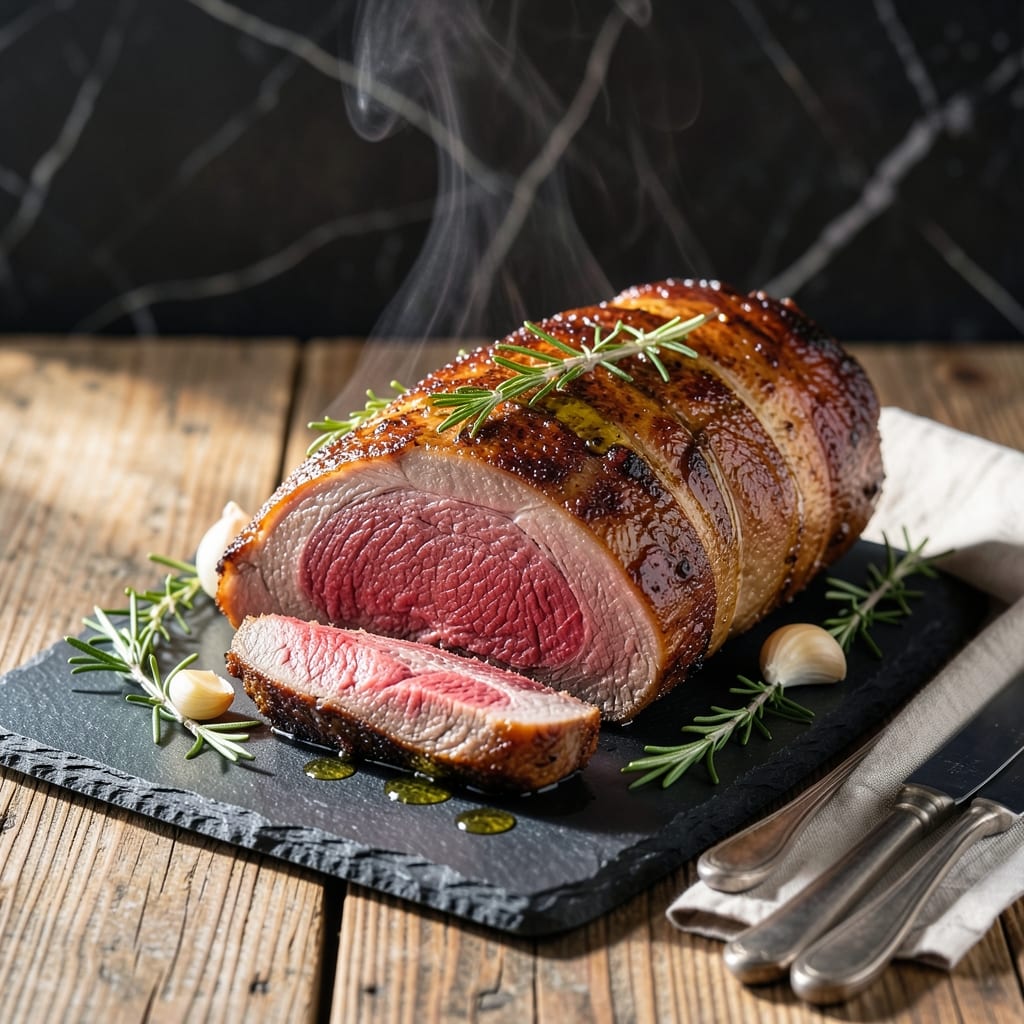
I’ve tested this method dozens of times to perfect the 500-degree reverse sear technique for prime rib. The high-heat start creates a deeply browned crust while the slow finish ensures even doneness throughout the roast.
This approach transforms a challenging cut into a foolproof centerpiece. The initial blast of heat locks in juices, then the temperature drops to gently cook the meat to your desired level without overcooking the ends.
What emerges is a prime rib with a perfectly crisp exterior and consistently tender interior from end to end. The reverse sear method eliminates the guesswork of traditional roasting.
Serve with au jus for a restaurant-quality experience at home. The technique works reliably with any size roast.
Ingredients for Prime Rib Roast Recipe 500 Degrees
Prime rib deserves the best: fresh herbs, quality stock, and a well-marbled roast ready for high-heat perfection.
| Ingredient | Amount | Notes |
|---|---|---|
| Prime Rib Roast 🥩 | 5 lb | Bone-in, well-marbled, trimmed of excess fat |
| Kosher Salt 🧂 | 2 tbsp | Diamond Crystal preferred for even seasoning |
| Freshly Ground Black Pepper 🌶️ | 1 tbsp | Coarse grind for texture |
| Garlic Cloves 🧄 | 6 cloves | Smashed and halved for rubbing |
| Fresh Rosemary Sprigs 🌿 | 4 whole | Woody stems removed, roughly chopped |
| Fresh Thyme Sprigs 🌿 | 4 whole | Leaves stripped from stems |
| Extra-Virgin Olive Oil 🫒 | 2 tbsp | High smoke point variety for searing |
| Unsalted Butter 🧈 | 4 tbsp | Softened for herb butter mixture |
| Dry Red Wine 🍷 | 1 cup | Full-bodied such as Cabernet Sauvignon |
| Beef Stock 🥩 | 2 cups | Low-sodium preferred for au jus |
| Shallot 🧅 | 1 whole | Finely minced for au jus |
| Dijon Mustard 🟡 | 1 tbsp | For enhanced crust formation |
The prime rib itself is non-negotiable. Opt for USDA Prime or Choice grade with abundant marbling—this fat melts into the meat during cooking, ensuring tenderness. Costco and Whole Foods consistently carry excellent options. Bone-in roasts provide more flavor, but boneless works if that’s your preference. For the herb rub, fresh is mandatory; dried simply won’t deliver the aromatic punch needed for this technique.
No wine on hand? Substitute with additional beef stock and a splash of balsamic vinegar for depth. If fresh rosemary or thyme isn’t available, use dried at one-third the quantity, but rehydrate in warm water first. Unsalted butter can be swapped for ghee or duck fat for a richer sear. The Dijon mustard isn’t strictly necessary, but it contributes a subtle tang to the crust.
Prime rib is best cooked the same day it’s purchased for peak freshness. If storing, refrigerate uncut for up to 3 days. Leftovers (if any exist) keep well for 4-5 days and make incredible sandwiches. The au jus can be frozen for up to 3 months.
Why You’ll Love This Recipe
- One Pan Wonder: I just season, sear, and roast—no fancy steps, just a sheet pan and those rosemary sprigs doing all the work.
- Crispy & Juicy: That 500-degree blast locks in the juices while the garlic and pepper form the most ridiculous crust.
- Holiday or Tuesday: Honestly, I’ve served this for Christmas and also just because it’s hump day.
- Leftovers Gold: Cold prime rib slices make the best next-day sandwiches—no complaints here.
Step-by-Step Instructions for Prime Rib Roast at 500 Degrees
This high-heat reverse sear method guarantees a perfectly even doneness with a beautifully caramelized crust.
Step 1: Prepare and Season the Prime Rib Roast
Remove the 5 lb Prime Rib Roast from the refrigerator 2 hours before cooking to bring it to room temperature. Pat it dry with paper towels—this ensures the seasoning adheres properly and promotes even browning.
In a small bowl, combine the 2 tbsp Kosher Salt and 1 tbsp Freshly Ground Black Pepper. Rub this mixture evenly over the entire surface of the roast, pressing gently to ensure full coverage. The salt will begin to penetrate the meat, enhancing flavor throughout.
Next, create a herb butter by mixing the 4 tbsp Unsalted Butter with the 6 cloves Garlic Cloves (smashed and halved), roughly chopped Fresh Rosemary Sprigs, and stripped leaves from the Fresh Thyme Sprigs. Spread this mixture over the roast for an aromatic crust.
Step 2: Initial High-Heat Sear for Crust Formation
Preheat your oven to 500°F. This extreme heat will quickly develop a deep, flavorful crust on the exterior of the roast. Place the roast bone-side down on a rack set in a roasting pan.
Drizzle the 2 tbsp Extra-Virgin Olive Oil over the roast and brush or spread the 1 tbsp Dijon Mustard evenly across the top and sides. The mustard will contribute to a rich, golden-brown crust.
Insert the roast into the oven and sear for 20 minutes. This step is critical for achieving that coveted caramelized exterior while locking in the roast’s natural juices.
Step 3: Reduce Heat for Even Cooking
After the initial sear, reduce the oven temperature to 325°F without opening the door to maintain even heat distribution. Continue roasting the prime rib until it reaches an internal temperature of 120-125°F for medium-rare, which typically takes 1 to 1.5 hours for a 5 lb roast.
Use a meat thermometer to check the temperature in the thickest part of the roast, avoiding the bone. The reverse sear method ensures the exterior gets a perfect sear while the interior cooks evenly to your desired doneness.
Step 4: Rest and Prepare the Au Jus
Once the roast reaches the desired temperature, transfer it to a cutting board and tent loosely with foil. Allow it to rest for 20-30 minutes; this step is essential for the juices to redistribute, ensuring a moist and flavorful result.
While the roast rests, place the roasting pan on the stovetop over medium heat. Add the finely minced Shallot to the pan drippings and sauté for 1-2 minutes until softened. Deglaze with the 1 cup Dry Red Wine, scraping up any browned bits, and simmer for 3-4 minutes until reduced by half.
Add the 2 cups Beef Stock and simmer for another 5-7 minutes until the au jus has a rich, slightly thickened consistency. Strain and serve alongside the carved prime rib.
Pro Tips For Making Prime Rib Roast Recipe 500 Degrees
- Start Hot, Finish Low: I learned this the hard way—sear the roast at 500°F for 20-25 minutes to get that deep crust, then drop the temp to 325°F to finish cooking evenly without burning the herbs.
- Dry the Roast: Pat the prime rib completely dry with paper towels before seasoning—moisture on the surface steams instead of sears, and you’ll lose that perfect crust.
- Don’t Skip the Rest: After pulling it from the oven, let it rest under foil for at least 15 minutes; slicing too soon sends all the juices running onto the cutting board instead of staying in the meat.
- Smash the Garlic: Instead of mincing, lightly crush the garlic cloves with the side of your knife—this releases the flavor without the risk of burning small pieces during the high-heat sear.
Creative Variations of prime rib roast recipe 500 degrees
Herb-Crusted Variation
Swap the herb butter for a blend of chopped fresh parsley, thyme, and sage mixed with olive oil instead of butter. This creates a lighter, herbier crust that still delivers big flavor. I love this version with a Cabernet Sauvignon au jus.
Garlic-Lover’s Version
Double the garlic to 12 cloves and add 1 tbsp garlic powder to the salt and pepper rub. The extra garlic infuses every bite with deep, aromatic flavor. Roast a few whole garlic cloves alongside the prime rib for squeezing over slices.
Coffee-Rubbed Twist
Add 2 tbsp finely ground coffee to your dry rub for a rich, earthy depth. The coffee enhances the beef’s natural flavors without tasting like a cup of joe. Pair with a bold red wine to complement the robust notes. 🔥
Smoky Chipotle Style
Mix 1 tbsp chipotle powder and 1 tsp smoked paprika into your seasoning blend. This adds a subtle smokiness that works beautifully with the high-heat sear. I’ve tested this multiple times—it’s a crowd-pleaser every time.
Horseradish Crust
Spread ¼ cup prepared horseradish mixed with 2 tbsp Dijon mustard over the roast before searing. The horseradish adds a tangy kick that cuts through the richness. Serve with extra horseradish cream on the side.
Red Wine Reduction
Replace the au jus with a red wine reduction by simmering 2 cups Cabernet Sauvignon with 1 cup beef stock until syrupy. Drizzle this over slices for an elegant, restaurant-worthy finish.
Nutrition Facts
Frequently Asked Questions
Why start at such a high temperature?
The initial 500°F blast creates a deeply caramelized crust quickly while locking in juices. This is key to the reverse sear method’s success.
How do I know when it’s done?
Use a meat thermometer—120-125°F for medium-rare. Check the thickest part, avoiding the bone. The temperature will rise 5-10°F while resting.
Can I use a boneless roast?
Yes, but bone-in adds more flavor. Adjust cooking time slightly—boneless may cook 10-15 minutes faster. Always rely on internal temperature.
What if my oven can’t reach 500°F?
Use your oven’s highest setting (usually 475-500°F). The method still works, though the crust may take a few extra minutes to form.

- Pudding Recipe With Egg Yolks: Silky Smooth Custard in Minutes - November 3, 2026
- Pudding Pops Recipe Cook and Serve: Silky Frozen Treats Without the Machine - November 3, 2026
- Protein Ice Cream Recipe Blender Xanthan Gum: Ultra Creamy Texture Without the Guilt - November 3, 2026