
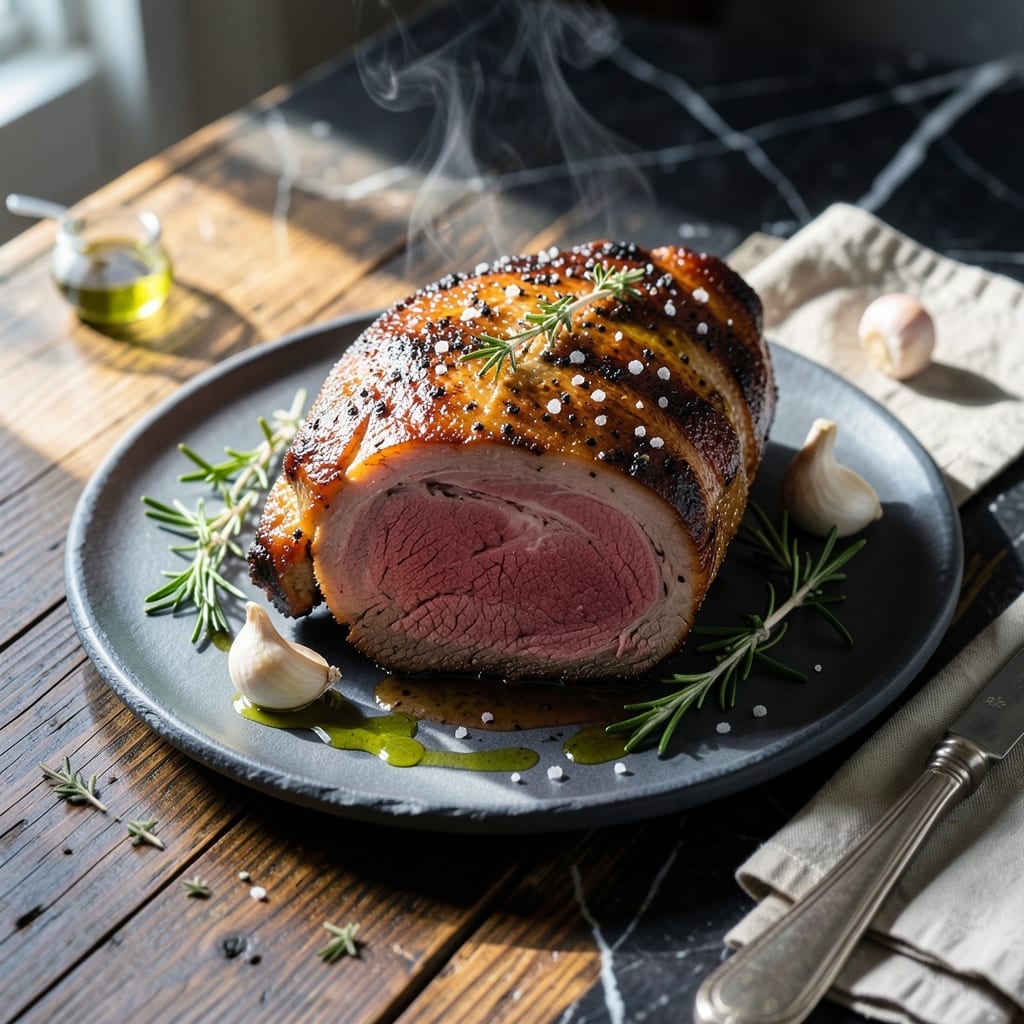
This prime rib roast delivers perfect results for special occasions, with a golden crust and tender, juicy meat throughout. My method ensures a showstopping centerpiece with minimal effort.
I’ve refined this technique to balance simplicity with impressive results. The key is proper seasoning, precise roasting temperatures, and a critical resting period to lock in juices.
The dish pairs beautifully with a bold red wine, like Cabernet Sauvignon, enhancing its rich, savory flavors. Every bite feels like a celebration.
Serve this at your next gathering, and watch it become the star of the table. Holiday meals don’t get more elegant than this.
Ingredients for Prime Rib Roast Recipe Food and Wine
Six pounds of prime rib plus herbs, wine, and a golden crust to remember.
| Ingredient | Amount | Notes |
|---|---|---|
| Prime Rib Roast 🥩 | 5 lb | Bone-in, well-marbled preferred |
| Kosher Salt 🧂 | 2 tbsp | Diamond Crystal for even coating |
| Freshly Ground Black Pepper 🌶️ | 1 tbsp | Coarse grind for texture |
| Garlic Cloves 🧄 | 6 cloves | Smashed, skins removed |
| Fresh Rosemary Sprigs 🌿 | 4 whole | Woody stems removed |
| Fresh Thyme Sprigs 🌿 | 4 whole | Woody stems removed |
| Olive Oil 🫒 | 2 tbsp | Extra-virgin for richness |
| Unsalted Butter 🧈 | 4 tbsp | Softened for herb mixture |
| Dijon Mustard 🟡 | 2 tbsp | For crust binding |
| Cabernet Sauvignon 🍷 | 1 cup | Dry red wine for au jus |
| Beef Stock 🥣 | 2 cups | Low-sodium preferred |
| All-Purpose Flour 🌾 | 2 tbsp | For thickening au jus |
The roast is the star—bone-in ribeye roast from the butcher counter with good marbling is non-negotiable. I always get mine from Whole Foods or Costco (their prime grade is excellent, and the price is right for feeding a crowd). Ask for the chine bone removed if it’s not already—makes carving way easier. The fat cap should be at least an inch thick (that’s where the flavor lives).
No fresh herbs? Dried at one-third the amount works in a pinch, but fresh rosemary and thyme are worth the effort. Swap Cabernet for Merlot or Malbec if that’s what you’ve got open. Out of Dijon? Whole-grain mustard adds great texture. For the beef stock, Better Than Bouillon is my go-to—mix it with hot water and you’re set. Don’t skip the resting time (it’s when the magic happens).
Leftover prime rib makes killer sandwiches—slice thin, pile high. Store in the fridge for up to 5 days, or freeze for 3 months (wrap tightly in foil, then plastic). The au jus can be frozen separately for 2 months.
Why You’ll Love This Recipe
- Set It and Forget: I rub the roast with salt, pepper, garlic, and rosemary, pop it in the oven, and let the oven do the heavy lifting.
- Herb-Crusted Perfection: That crust from the rosemary and garlic? It forms this insane flavor seal that locks in all the juices.
- Holiday Star: This is my Christmas dinner centerpiece every single year without fail.
- Leftovers for Days: One prime rib feeds us for two full meals, and the sandwiches the next day might be even better.
Step-by-Step Instructions for Prime Rib Roast
Here’s my no-fail method for a showstopping centerpiece with an herby crust and rich au jus.
Step 1: Prep and Season the Prime Rib Roast
Take the 5 lb Prime Rib Roast out of the fridge 2 hours before cooking to bring it to room temperature. Pat it completely dry with paper towels—this ensures the best sear. Rub the entire surface with the 2 tbsp Olive Oil, then season generously with the 2 tbsp Kosher Salt and 1 tbsp Freshly Ground Black Pepper.
In a small bowl, mash the 4 tbsp Unsalted Butter with the 2 tbsp Dijon Mustard. Finely chop the leaves from the 4 whole Fresh Rosemary Sprigs and 4 whole Fresh Thyme Sprigs, then mix them into the butter along with the 6 cloves Garlic Cloves, smashed. Spread this herb butter evenly over the roast, pressing it into the meat.
Step 2: Sear for a Crust and Start Roasting
Preheat your oven to 450°F. Place the roast bone-side down in a roasting pan and slide it into the oven. Sear for 20 minutes—this high-heat start creates a deep, flavorful crust. You’ll see the herb butter begin to bubble and brown, filling your kitchen with an incredible aroma.
After 20 minutes, reduce the oven temperature to 325°F. This lower heat allows the roast to cook evenly without burning the exterior. Don’t open the oven door yet; let the temperature stabilize for 5 minutes before proceeding.
Step 3: Roast to Perfection
Continue roasting the prime rib at 325°F until the internal temperature reaches 120-125°F for medium-rare. For a 5 lb roast, this typically takes 1.5 to 2 hours, but start checking at 1.5 hours with a meat thermometer. The thermometer should slide in easily, and the juices should run clear when pierced.
If the top starts to brown too quickly, tent the roast loosely with aluminum foil. The goal is a deep, golden crust without charring. Remember, the temperature will rise another 5-10°F while resting, so pull it out just before it hits your target.
Step 4: Make the Au Jus and Rest
Transfer the roast to a cutting board and tent it with foil. Place the roasting pan on the stovetop over medium heat. Add the 1 cup Cabernet Sauvignon and scrape up all the browned bits with a wooden spoon. Let it simmer for 3-4 minutes until reduced by half.
Sprinkle the 2 tbsp All-Purpose Flour over the drippings and whisk until smooth. Pour in the 2 cups Beef Stock and simmer for 5-7 minutes until the au jus thickens enough to coat the back of a spoon. Strain if desired, then keep warm. Let the roast rest for 20-30 minutes before carving to allow the juices to redistribute.
Step 5: Carve and Serve
To carve, remove the bones first by slicing along them, then cut the roast into 1-inch thick slices. Arrange on a platter and drizzle some of the warm au jus over the top. Serve the remaining au jus on the side for dipping.
Each slice should reveal a perfect pink center with a thick, herby crust. The meat should be tender and juicy, with the rich au jus enhancing every bite. This is the kind of dish that makes holidays unforgettable.
Pro Tips For Making Prime Rib Roast Recipe Food And Wine
- Dry the Roast Overnight: Pat the prime rib completely dry and leave it uncovered in the fridge for 12-24 hours—this guarantees a deeply browned crust and more even cooking.
- Salt Aggressively Early: I learned this the hard way: coat the roast with kosher salt at least 1 hour before cooking (or overnight) so it penetrates beyond the surface.
- Use a Meat Thermometer: Skip guessing and pull the roast at 115-120°F for medium-rare—it’ll rise another 5-10 degrees while resting, and this is the only way to nail it.
- Smash the Garlic: Crush the garlic cloves lightly with the side of your knife before stuffing them into slits in the meat—it releases more flavor without burning.
Creative Variations of This Dish
Herb-Crusted Garlic Butter
Swap the Dijon mustard for whole-grain mustard and add 1 tbsp chopped fresh sage to the herb butter. The nuttier mustard and earthy sage create a more rustic, aromatic crust that complements the beef beautifully. 🌿
Red Wine Au Jus
For deeper flavor, reduce the Cabernet Sauvignon by half before adding the beef stock. Use 1.5 cups total wine for a more concentrated, wine-forward sauce. This pairs especially well with a bold, tannic red wine.
Smoked Paprika Crust
Add 1 tbsp smoked paprika to the salt and pepper rub for a subtle, smoky depth. This variation works perfectly for a more robust, slightly spicy crust that still lets the prime rib shine.
Reverse Sear Method
Start the roast at 225°F until it reaches 110°F internally, then sear at 450°F for 15-20 minutes to finish. This method ensures even cooking and a perfectly pink center from edge to edge. 🔥
Coffee-Rubbed Prime Rib
Mix 2 tbsp finely ground coffee with the salt and pepper for a deep, earthy crust. The coffee enhances the beef’s natural richness without overpowering it. Serve with a bold, dark beer or stout.
Rosemary and Red Pepper
Add 1 tsp crushed red pepper flakes to the herb butter for a subtle kick. The heat from the pepper pairs wonderfully with the rich, savory flavors of the prime rib and au jus.
Nutrition Facts
Frequently Asked Questions
How do I know when it’s done?
Use a meat thermometer to check the internal temperature. For medium-rare, aim for 120-125°F. The temperature will rise 5-10°F while resting after cooking.
Should I cover it while cooking?
No, leave it uncovered to allow the crust to form. If the top browns too quickly, tent loosely with foil for the remaining cooking time.
Can I use a different wine for the au jus?
Yes, any bold red wine like Merlot or Malbec works well. Use what you’re serving with dinner for a cohesive flavor pairing.

- Protein Pudding Recipe With Sugar Free Pudding: High-Protein Creamy Indulgence - November 3, 2026
- Progresso Recipe Starters Creamy Parmesan Basil Cooking Sauce: Rich Herb-Infused Base for Pasta and More - November 3, 2026
- Pudding Recipe With Egg Yolks: Silky Smooth Custard in Minutes - November 3, 2026