
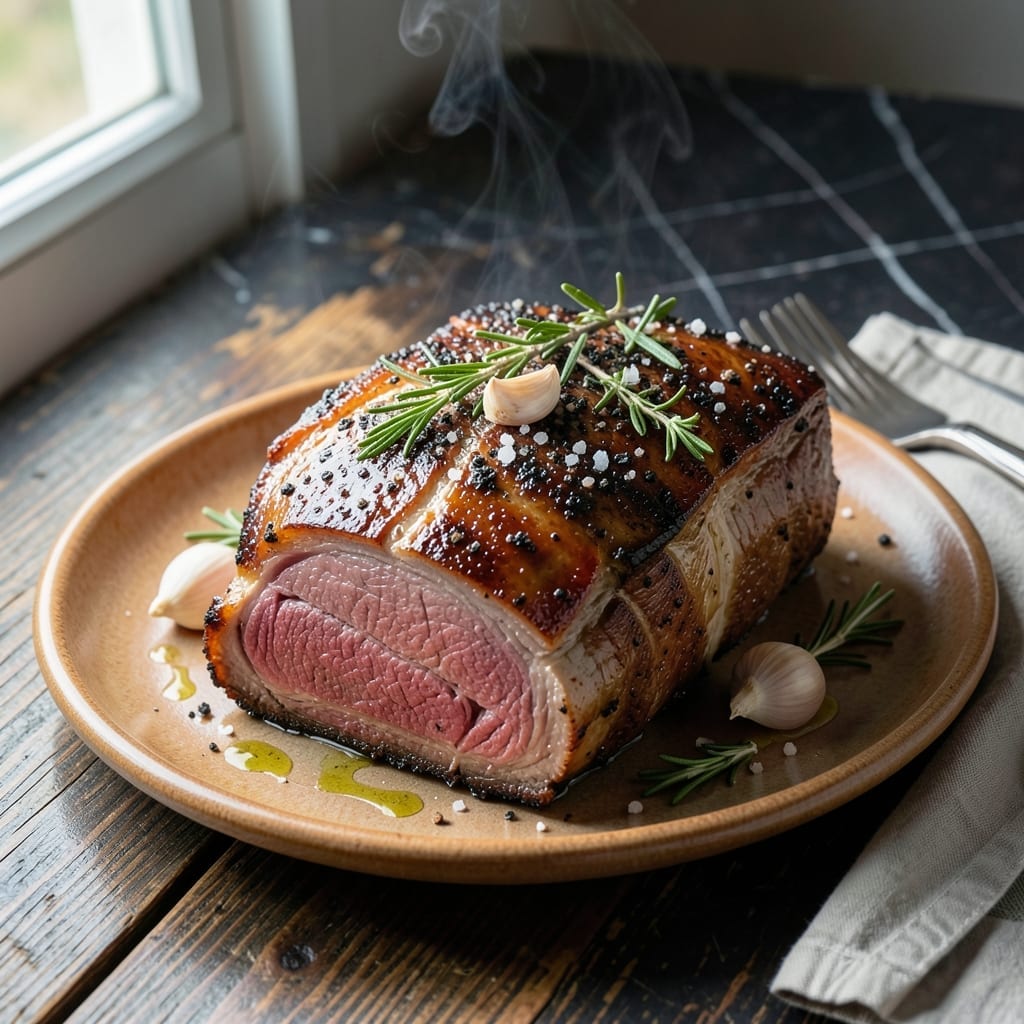
I’ve tested this prime rib method in my tiny Boston kitchen more times than I can count, and the reverse sear technique consistently delivers even doneness from edge to edge. No more overcooked ends or undercooked centers—just perfect, juicy results every time.
Starting with a low oven temperature allows the roast to cook gently, preserving moisture and tenderness. The high-heat finish creates a deeply browned crust that seals in all those rich, beefy flavors. It’s a foolproof way to achieve restaurant-quality prime rib at home.
What you’ll get is a showstopping centerpiece with a crispy exterior and a rosy, tender interior. The aroma alone will have everyone gathering around the table before it’s even out of the oven.
Serve it with au jus and your favorite sides for a meal that feels special enough for holidays but simple enough for Sunday dinner.
Ingredients for Prime Rib Roast Recipe High Temperature
Prime rib deserves the best ingredients for that perfect crust and tender interior.
| Ingredient | Amount | Notes |
|---|---|---|
| Prime Rib Roast 🥩 | 5 lb | Bone-in, well-marbled preferred |
| Kosher Salt 🧂 | 2 tbsp | Diamond Crystal brand recommended |
| Coarse Black Pepper 🌶️ | 1 tbsp | Freshly cracked preferred |
| Garlic Cloves 🧄 | 6 cloves | Smashed, peel left on |
| Fresh Rosemary Sprigs 🌿 | 4 sprigs | Stems intact for roasting |
| Fresh Thyme Sprigs 🍃 | 4 sprigs | Stems intact for roasting |
| Extra-Virgin Olive Oil 🫒 | 2 tbsp | High smoke point variety |
| Unsalted Butter 🧈 | 4 tbsp | Softened for herb mixture |
| Red Wine 🍷 | 1 cup | Dry variety like Cabernet |
| Beef Stock 🥩 | 2 cups | Low-sodium preferred |
| All-Purpose Flour 🌾 | 1 tbsp | For thickening au jus |
| Dijon Mustard 🟡 | 1 tbsp | For herb crust |
The prime rib is everything here. Look for USDA Prime grade if your budget allows— Choice works fine too, but avoid Select. Bone-in roasts (like a standing rib roast) give more flavor and easier carving. I get mine from Whole Foods or a trusted local butcher. Ask for the end cut if you want more marbling (that’s the good fat). The weight matters—5 pounds serves 6 with leftovers.
No red wine? Substitute extra beef stock plus 1 tbsp balsamic vinegar. Fresh herbs are ideal but dried work at one-third the amount—just rehydrate them in a splash of warm water first. If you can’t find unsalted butter, rinse salted butter under cold water to remove excess salt. The Dijon mustard can be swapped for whole grain mustard (it’ll add a nice texture).
Let the roast rest at room temperature for 2 hours before cooking. Store raw prime rib in the fridge for up to 3 days (wrapped tightly). Leftovers? Slice and freeze for 3 months—perfect for sandwiches later. Always save the bones for stock.
Why You’ll Love This Recipe
- Set It and Forget: The high-heat method does most of the work—just season, sear, and let the oven do its magic.
- Garlic-Rosemary Crust: That golden crust from the garlic and rosemary with the salt and pepper? It’s the reason I make this every holiday.
- Feeds a Celebration: One roast, and suddenly you’re the hero at dinner parties or Sunday suppers.
- Leftovers for Days: I stretch this into sandwiches, tacos, or just cold slices straight from the fridge—no waste, all flavor.
Step-by-Step Instructions for Prime Rib Roast High Temperature
This reverse sear method delivers perfectly even doneness with a beautiful crust every time.
Step 1: Season and Prep the Prime Rib Roast
Pat the 5 lb Prime Rib Roast dry with paper towels—this is crucial for a good crust. Rub it all over with the 2 tbsp Extra-Virgin Olive Oil, then season generously with the 2 tbsp Kosher Salt and 1 tbsp Coarse Black Pepper. I press the seasoning in firmly so it adheres well to the surface.
In a small bowl, mix the softened 4 tbsp Unsalted Butter with the 1 tbsp Dijon Mustard. Finely chop the leaves from 2 sprigs Fresh Rosemary Sprigs and 2 sprigs Fresh Thyme Sprigs, then stir them into the butter mixture along with the 6 cloves Garlic Cloves (smashed). Spread this herb butter evenly over the roast, pressing it into the meat.
Step 2: Slow Roast at Low Temperature
Place the roast bone-side down on a rack in a roasting pan. Insert a meat thermometer into the thickest part of the roast, avoiding the bone. Preheat your oven to 250°F and roast until the internal temperature reaches 110-115°F for medium-rare. This typically takes about 1.5 to 2 hours for a 5 lb roast.
You’ll notice the roast cooks slowly and evenly at this low temperature. The herb butter will melt and baste the meat as it roasts, infusing it with flavor. Keep an eye on the thermometer—this step is all about precision, not time.
Step 3: Sear at High Temperature for the Crust
Once the roast reaches the target internal temperature, remove it from the oven and increase the oven temperature to 450°F. Place the remaining 2 sprigs Fresh Rosemary Sprigs and 2 sprigs Fresh Thyme Sprigs on top of the roast for added aroma.
Return the roast to the oven and sear for 10-15 minutes until the exterior is deeply browned and a crust has formed. The internal temperature should rise to about 125-130°F for medium-rare. Watch closely to avoid overcooking—this step is about developing color and texture, not cooking the meat further.
Step 4: Rest and Make the Au Jus
Transfer the roast to a cutting board and tent loosely with foil. Let it rest for 20-30 minutes—this allows the juices to redistribute, ensuring every slice is moist and flavorful. Meanwhile, place the roasting pan on the stovetop over medium heat.
Add the 1 cup Red Wine to the pan and scrape up all the browned bits with a wooden spoon. Simmer for 3-4 minutes until the wine reduces by half. Stir in the 2 cups Beef Stock and simmer for another 5 minutes. For a thicker sauce, mix the 1 tbsp All-Purpose Flour with a little water, then whisk it into the au jus. Simmer until thickened to your liking.
Step 5: Slice and Serve
After resting, remove the twine (if used) and slice the roast between the ribs into thick slices. Arrange the slices on a platter and pour some of the au jus over the top. Serve the remaining au jus on the side for dipping.
Each slice should have a beautiful crust on the outside and be perfectly pink and juicy on the inside. Serve immediately with your favorite sides and enjoy the fruits of your precision and patience.
Pro Tips For Making Prime Rib Roast Recipe High Temperature
- Crank the Oven: Start at 450°F for 20 minutes to build a deep crust, then drop to 325°F to finish—I learned this the hard way after my first few roasts came out pale and sad.
- Salt Overnight: Rub the prime rib with kosher salt at least 12 hours ahead; it draws out moisture then reabsorbs, making the meat juicier and more flavorful.
- Skip the Cold Roast: Let the prime rib sit at room temperature for 1-2 hours before cooking; throwing a cold roast into a screaming hot oven guarantees uneven cooking.
- Use Fresh Herbs: Fresh rosemary and crushed garlic cloves under the fat cap add way more aroma than dried—sounds simple, but it actually changes the outcome.
Essential Equipment for This Dish
Precision Thermometer
For reverse sear, a reliable instant-read thermometer is non-negotiable. I swear by my ThermoWorks Mark4—it gives accurate readings in 2-3 seconds and handles the 450°F sear without issues. Look for one with a thin probe to minimize holes in your meat.
Leave-in probes like the ThermoWorks Smoke are great for monitoring during the low-temp phase. Just be sure it’s oven-safe to 250°F for the slow roast.
Heavy Roasting Pan
A sturdy stainless steel roasting pan with a rack is essential. I use a 12×16-inch pan from All-Clad—it distributes heat evenly and won’t warp. The rack keeps the roast elevated so air circulates underneath for even cooking.
Avoid glass or ceramic pans—they can’t handle the 450°F sear temperature safely. A half-sheet pan works in a pinch for smaller roasts.
High-Temp Oven Mitts
When you’re moving a 5 lb roast in and out of a 450°F oven, you need serious protection. I use silicone oven mitts rated to 500°F—they give me the grip I need without the bulk of traditional mitts. The OXO Good Grips ones are my go-to.
Wooden Cutting Board
After resting, you’ll need a large wooden cutting board for slicing. I prefer maple or acacia—they’re gentle on knives and stable. Look for one at least 18×12 inches to handle the full roast. Avoid plastic; it can’t handle the hot pan drippings.
My John Boos board has lasted me years. Always place a damp towel underneath to prevent slipping while you carve.
Nutrition Facts
Frequently Asked Questions
What’s the best internal temperature for medium-rare?
For perfect medium-rare, pull the roast at 110-115°F after the low-temp phase. After searing at 450°F, it’ll rise to 125-130°F.
Can I skip the resting time?
Never skip resting! Let it sit for 20-30 minutes so juices redistribute. Slicing too soon means dry meat and a pool of lost flavor.
Why use a reverse sear method?
It ensures even cooking throughout without overcooking the outer layer. The 250°F start and 450°F finish create a perfect crust while keeping the center juicy.
What if I don’t have a meat thermometer?
Guessing leads to overcooked meat. Invest in an instant-read thermometer—it’s the only way to guarantee medium-rare precision.

- Pudding Recipe With Egg Yolks: Silky Smooth Custard in Minutes - November 3, 2026
- Pudding Pops Recipe Cook and Serve: Silky Frozen Treats Without the Machine - November 3, 2026
- Protein Ice Cream Recipe Blender Xanthan Gum: Ultra Creamy Texture Without the Guilt - November 3, 2026