
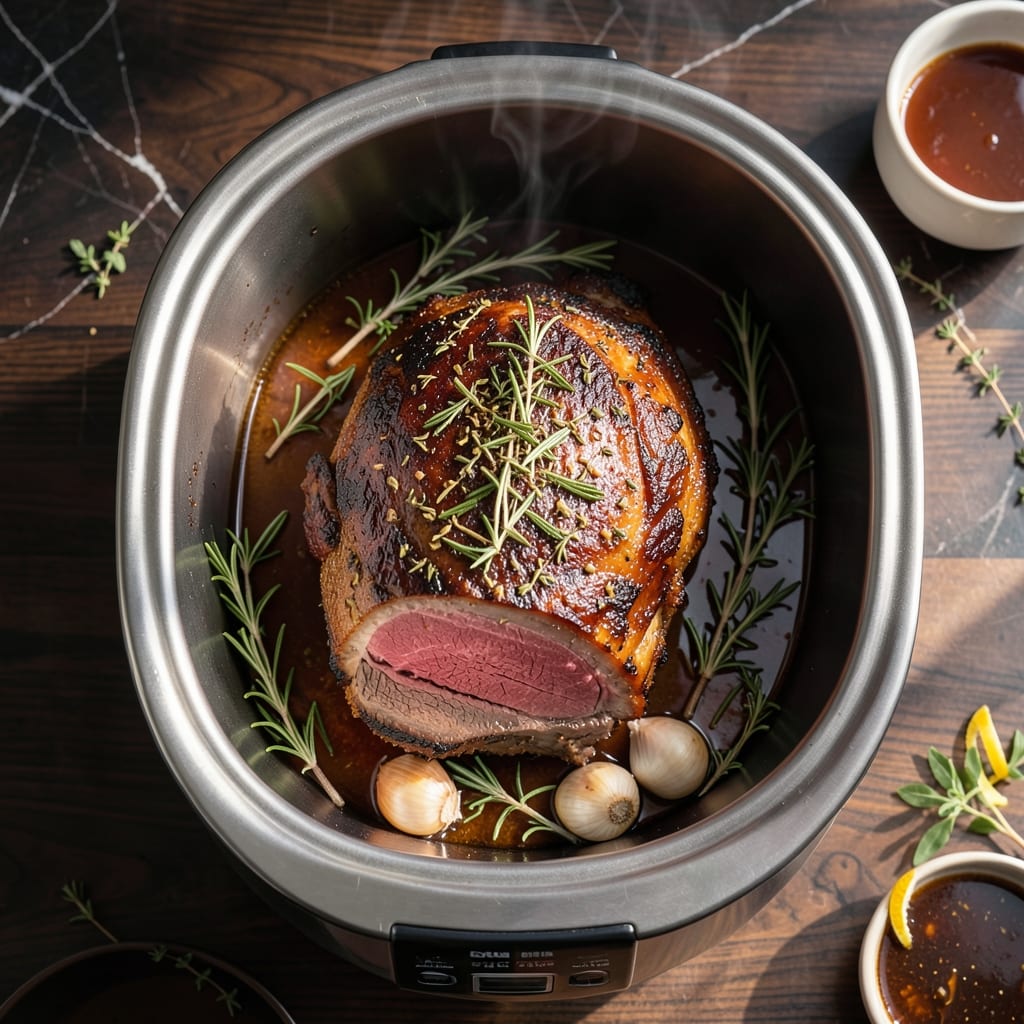
Achieving restaurant-quality prime rib at home is simpler than you think with an electric roaster. This method delivers tender, juicy results with minimal effort and maximum flavor.
The electric roaster provides consistent, even heat that’s ideal for this cut. A simple herb rub enhances the natural beef flavor without overpowering it. The hands-off approach lets you focus on other holiday preparations.
You’ll end up with a perfectly cooked roast that’s crispy on the outside and pink in the center. The meat practically falls apart at the touch of a fork, with every bite bursting with rich, beefy flavor.
This technique works for both small and large gatherings. The results speak for themselves.
Ingredients for Prime Rib Roast Recipe in Electric Roaster
Restaurant-quality prime rib starts with a well-seasoned roast and a few pantry staples for depth.
| Ingredient | Amount | Notes |
|---|---|---|
| Prime Rib Roast 🥩 | 5 lb | Bone-in, well-marbled preferred |
| Kosher Salt 🧂 | 2 tbsp | Diamond Crystal preferred for texture |
| Freshly Ground Black Pepper 🌶️ | 2 tbsp | Coarse grind for crust |
| Garlic Cloves 🧄 | 6 cloves | Minced for herb rub |
| Fresh Rosemary 🌿 | 2 tbsp | Finely chopped, stems discarded |
| Fresh Thyme 🍃 | 2 tbsp | Leaves stripped from stems |
| Olive Oil 🫒 | ¼ cup | Extra-virgin for herb rub |
| Dijon Mustard 🟡 | 2 tbsp | For crust adhesion |
| Beef Broth 🥘 | 1 cup | Low-sodium preferred for pan juices |
| Unsalted Butter 🧈 | ½ cup | For basting, softened |
| Red Wine 🍷 | ½ cup | Dry variety like Cabernet |
| All-Purpose Flour 🌾 | 2 tbsp | For thickening pan juices |
The prime rib is the star—look for USDA Choice or Prime grade at Costco or your local butcher. Ask for the bone-in cut (it adds flavor and makes carving easier). Good marbling is key here—those white fat streaks melt into the meat as it cooks. I always get mine a day early so it can come to room temp before roasting (that’s non-negotiable for even cooking).
No fresh herbs? Dried work at one-third the amount, but fresh really shines here. Swap the red wine for extra beef broth plus a splash of balsamic if needed. The Dijon can be yellow mustard in a pinch, though it’ll be milder. For the butter, ghee adds a nutty depth that’s worth trying. Out of prime rib? A well-marbled ribeye roast is your next best bet.
Leftovers keep beautifully—slice before storing to make sandwiches easy. The roast stays good for 4-5 days in the fridge, or freeze slices for 3 months. The pan juices can be turned into gravy and frozen separately (that’s gold for future meals).
Why You’ll Love This Recipe
- Set and Forget: I pop it in the electric roaster, seasoned with kosher salt and rosemary, and let it do the work while I prep the rest of the meal.
- Herb Crust Perfection: The garlic and rosemary rub forms a crust so flavorful, it makes the prime rib taste like a restaurant-quality dish.
- Holiday Hero: Honestly, it’s my go-to for Christmas dinner—impressive enough for guests but stress-free for me.
- Leftovers for Days: One roast feeds my family for two meals, and the sandwiches the next day? Even better than the first serving.
Step-by-Step Instructions for Prime Rib Roast in Electric Roaster
This hands-off method delivers perfectly even cooking with minimal effort from you.
Step 1: Create the Herb Crust
In a small bowl, combine the 2 tbsp Fresh Rosemary, 2 tbsp Fresh Thyme, 6 cloves Garlic Cloves, 2 tbsp Kosher Salt, and 2 tbsp Freshly Ground Black Pepper. Finely chop everything together to create a uniform herb mixture.
Add the 0.25 cup Olive Oil and 2 tbsp Dijon Mustard to the herb blend and mix thoroughly. This paste will adhere to the roast better than oil alone. I like to let this sit for 10 minutes to let the flavors meld while the roast comes to room temperature.
Step 2: Prep and Season the Prime Rib
Pat the 5 lb Prime Rib Roast dry with paper towels—this ensures the herb crust sticks properly. Place it bone-side down in the electric roaster (this creates a natural rack for even heat circulation).
Rub the herb mixture all over the roast, pressing firmly to create an even coating. Don’t skip the ends—they’ll cook faster and need the protection. Let it sit at room temperature for 30 minutes while you preheat the roaster to 325°F.
Step 3: Roast Low and Slow
Insert a meat thermometer into the thickest part of the roast, avoiding the bone. Cover the roaster and cook undisturbed. For medium-rare, you’re looking at about 15-18 minutes per pound (roughly 1 hour 45 minutes for this size).
Resist the urge to peek—the electric roaster maintains consistent heat, and opening it slows the process. The roast is done when the internal temperature hits 125-130°F for medium-rare. The meat will continue cooking as it rests.
Step 4: Make the Pan Sauce
Transfer the roast to a cutting board and tent loosely with foil. Pour the pan juices from the roaster into a saucepan. Skim off excess fat, leaving about 2 tbsp for flavor.
Place the saucepan over medium heat and whisk in the 2 tbsp All-Purpose Flour. Cook for 1 minute, then slowly add the 1 cup Beef Broth and 0.5 cup Red Wine, whisking constantly. Simmer for 5-7 minutes until thickened, then whisk in the 0.5 cup Unsalted Butter one piece at a time for a glossy finish.
Step 5: Rest and Serve
Let the prime rib rest for at least 20 minutes before carving. This allows the juices to redistribute, ensuring every slice is moist and flavorful. The temperature will rise to about 135-140°F during this time.
Carve between the bones for elegant servings. Drizzle the pan sauce over the top or serve it on the side. The crust should be deeply browned and aromatic, with the herbs forming a delicious outer layer.
Pro Tips For Making Prime Rib Roast Recipe In Electric Roaster
- Preheat the Roaster: Let your electric roaster heat up for at least 20 minutes before adding the prime rib—I learned this the hard way after my first roast came out unevenly cooked.
- Salt Overnight: Rub the prime rib with kosher salt the night before and leave it uncovered in the fridge. It draws out moisture for a better crust and more even seasoning.
- Skip the Cold Start: Always take the roast out of the fridge 1-2 hours before cooking—cold meat in a roaster leads to uneven doneness, no matter how patient you are.
- Use a Meat Thermometer: I was skeptical until I tried it, but checking the internal temp (120-125°F for medium-rare) is the only way to guarantee perfect prime rib without overcooking.
Essential Equipment for This Recipe
Electric Roaster
The foundation of this recipe. I use the Nesco 18-Quart with porcelain lid—it maintains 325°F perfectly and fits a 5 lb roast with room for heat circulation. The domed lid creates a self-basting environment that keeps the meat moist. 💪
Meat Thermometer
Non-negotiable for perfect results. I swear by the ThermoWorks Dot for its accuracy and durability. Insert the probe into the thickest part, avoiding bone. The alarm feature lets you know when it hits 125°F without constantly checking.
Cutting Board
A large, stable surface is essential. My John Boos Maple board has a juice groove that catches all those precious pan drippings. The size (at least 18×12 inches) gives you space to work with a roast this size.
Carving Knife
Invest in a long, sharp knife. I use a Wüsthof 12-inch slicer—it glides through the crust and meat with minimal effort. The thin blade creates clean slices without tearing the beautiful crust you worked so hard to create.
Basting Tools
A silicon basting brush and tongs are your best friends. The brush spreads pan juices evenly, while tongs let you rotate the roast without piercing it. I keep both within reach during the entire cooking process.
Saucepan
For the pan sauce, use a 2-quart saucepan with a heavy bottom to prevent scorching. I prefer All-Clad stainless steel—it distributes heat evenly and makes whisking in the butter a breeze. The sauce comes together in about 7 minutes. 🔥
Nutrition Facts
Frequently Asked Questions
What temperature should I cook it at?
Preheat your electric roaster to 325°F. This moderate temperature ensures even cooking without drying out the exterior. Cook until the internal temperature reaches 125-130°F for medium-rare.
How long should it rest after cooking?
Let it rest for at least 20 minutes before carving. This allows juices to redistribute throughout the meat, ensuring every slice stays moist and flavorful.
Can I use dried herbs instead of fresh?
Yes, use dried herbs at one-third the amount since they’re more concentrated. Fresh herbs provide the best flavor, but dried rosemary and thyme will still work in a pinch.
What’s the best way to store leftovers?
Slice before storing in an airtight container. Leftovers keep in the fridge for 4-5 days or can be frozen for up to 3 months.

- White Jello Shot Recipe: Creamy Vodka Magic in 30 Seconds - November 5, 2026
- Mary Berry’s Boiled Fruit Cake Recipe: Moist Center and Spiced Crust Magic - November 5, 2026
- Atlantic Salmon Recipe: Honey-Dill Pan-Seared With Crispy Skin - November 5, 2026