
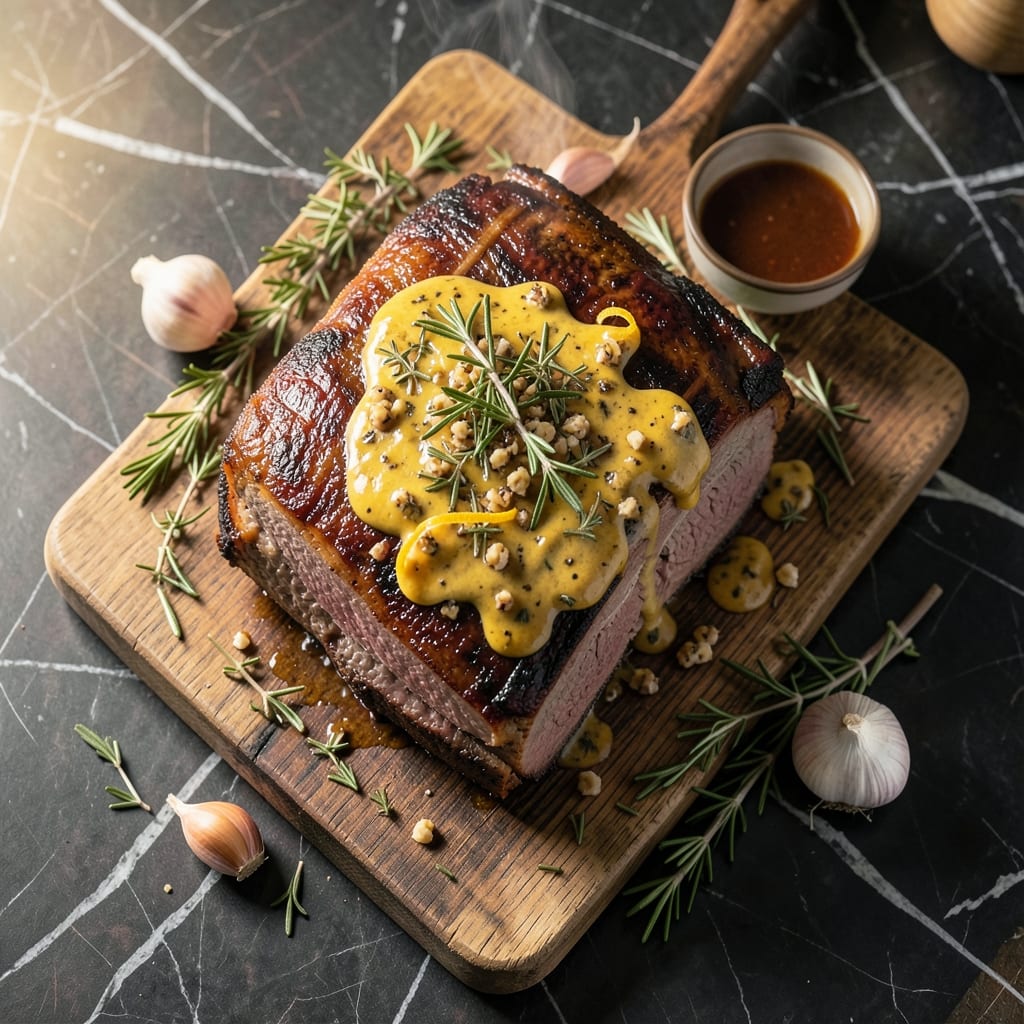
This method delivers perfectly cooked prime rib every time with minimal hands-on effort. The slow roasting process transforms this cut into a tender, juicy centerpiece worthy of any holiday table.
I developed this technique after years of testing in my small Boston kitchen, focusing on precision over complexity. The herb crust creates a flavorful seal that locks in moisture while the meat cooks evenly at a steady temperature.
You’ll achieve a beautifully browned exterior with a rosy, medium-rare center throughout. The resting period is crucial—it allows the juices to redistribute for the most tender results.
This approach works for any size roast and requires no special equipment beyond a reliable meat thermometer.
Ingredients for Prime Rib Roast Recipe Leave in Oven
Sixteen ingredients. One stunning roast. Holiday-worthy without the fuss.
| Ingredient | Amount | Notes |
|---|---|---|
| Prime Rib Roast 🥩 | 5 lb | Bone-in, well-marbled preferred |
| Kosher Salt 🧂 | 2 tbsp | Diamond Crystal brand recommended |
| Freshly Ground Black Pepper 🌶️ | 1 tbsp | Coarse grind preferred |
| Garlic Cloves 🧄 | 6 cloves | Minced for herb crust |
| Fresh Rosemary 🌿 | 3 tbsp | Chopped, stems removed |
| Fresh Thyme 🍃 | 2 tbsp | Leaves stripped from stems |
| Dijon Mustard 🟡 | 2 tbsp | For herb crust binding |
| Olive Oil 🫒 | ¼ cup | Extra-virgin for richness |
| Red Wine 🍷 | 1 cup | Dry variety for au jus |
| Beef Stock 🥘 | 2 cups | Low-sodium preferred |
| Unsalted Butter 🧈 | 4 tbsp | For finishing sauce |
| All-Purpose Flour 🌾 | 2 tbsp | Optional for thickening au jus |
| Horse Radish 🌿 | ¼ cup | Prepared, for serving |
| Sour Cream 🥣 | ½ cup | For creamy horseradish sauce |
The prime rib is the star—bone-in gives more flavor, and marbling means juiciness. I get mine from Whole Foods or a trusted butcher in Boston’s North End. Ask for the ribeye end if you want extra fat cap. The herbs need to be fresh (dried just won’t cut it for the crust), and organic if possible. That crust seals in moisture as it slow-roasts in the oven.
No red wine? Substitute with extra beef stock plus a splash of balsamic. Out of fresh herbs? Dried at one-third the amount, though the crust won’t cling as well. For the horseradish sauce, Greek yogurt works instead of sour cream—same tang, less fat. The Dijon can be yellow mustard in a pinch, but it’ll taste milder. And if you’re skipping the au jus, just drizzle the meat with melted butter and pan juices.
Rest the roast at least 30 minutes before carving—this keeps it juicy. Leftovers? Wrap tightly and refrigerate for up to 5 days, or freeze slices for 3 months. The au jus can be made ahead and reheated. Pro tip: save the bones for stock.
Why You’ll Love This Recipe
- I’ll be real: the sandwiches I make with the extras are better than the first meal.
- Set and Forget: I pop it in the oven and let it do all the work—no flipping, no basting, just that rosemary and garlic doing their magic.
- Crusty Perfection: The salt and pepper form a crust so good I don’t even need sauce. Honestly, the aroma alone sells it.
- Holiday Hero: This is my Christmas and Sunday dinner go-to. One roast, and everyone feels special.
Step-by-Step Instructions for Prime Rib Roast Leave In Oven
This method delivers perfectly tender meat with a flavorful herb crust every time.
Step 1: Prepare the Herb Crust and Season the Roast
In a small bowl, combine the 2 tbsp Dijon mustard, 0.25 cup olive oil, minced 6 cloves garlic cloves, chopped 3 tbsp fresh rosemary, and 2 tbsp fresh thyme. Stir until it forms a thick paste. This herb mixture will create a flavorful crust that locks in juices.
Pat the 5 lb prime rib roast dry with paper towels, then season generously with the 2 tbsp kosher salt and 1 tbsp freshly ground black pepper. Rub the herb paste all over the surface of the roast, pressing it in to adhere completely. Let it sit at room temperature for 1 hour before roasting.
Step 2: Sear the Roast for a Flavorful Crust
Preheat your oven to 450°F. Place the roast bone-side down on a rack in a roasting pan. This high heat will create a beautiful, flavorful crust on the outside of the meat. Roast for 20 minutes to develop that deep, rich color and caramelization.
After the initial sear, reduce the oven temperature to 250°F. This lower temperature allows the roast to cook slowly and evenly without drying out. Don’t open the oven door during this phase – maintaining a consistent temperature is key to perfect results.
Step 3: Slow-Roast Until Perfect Doneness
Continue roasting at 250°F until the internal temperature reaches your desired doneness. For medium-rare, aim for 125-130°F on an instant-read thermometer inserted into the thickest part of the meat. This typically takes 2 to 2.5 hours for a 5 lb prime rib roast.
I check the temperature starting at the 1.5-hour mark, as oven temperatures can vary. The meat should feel slightly soft when pressed, and the juices should run clear with a slight pink tint. Remember the temperature will rise 5-10°F during resting.
Step 4: Rest and Prepare the Au Jus
Transfer the roast to a cutting board, tent loosely with foil, and let it rest for 20-30 minutes. This allows the juices to redistribute throughout the meat, ensuring every slice is moist and flavorful.
While the meat rests, place the roasting pan on the stovetop over medium heat. Add the 1 cup red wine and 2 cups beef stock, scraping up all the browned bits from the bottom of the pan. Simmer for 5 minutes, then strain into a saucepan.
Step 5: Finish the Sauce and Serve
For a thicker au jus, melt the 4 tbsp unsalted butter in a small saucepan over medium heat. Whisk in the 2 tbsp all-purpose flour to create a roux, then gradually whisk in the strained pan juices. Simmer for 3-5 minutes until thickened to your liking.
Slice the roast between the bones and serve with the au jus. For a creamy accompaniment, mix the 0.25 cup horse radish with the 0.5 cup sour cream. The meat should be tender and juicy with a perfectly pink center, and the herb crust should be deeply aromatic and slightly crispy.
Pro Tips For Making Prime Rib Roast Recipe Leave In Oven
- Dry the Roast: Pat the prime rib completely dry with paper towels before seasoning—any moisture will steam the meat instead of letting it sear properly in the oven.
- Salt Overnight: I learned this the hard way: rub the kosher salt all over the roast and leave it uncovered in the fridge for at least 12 hours for a perfectly seasoned crust.
- Use a Thermometer: Skip the guesswork—pull the roast when the internal temp hits 120°F for medium-rare, then let it rest to 130°F while carrying over.
- Smash the Garlic: Sounds weird, but it works: lightly crush the garlic cloves before stuffing them into slits in the roast—it infuses the meat without burning.
Creative Variations of These Flavors
Garlic Butter Infusion
For a richer crust, mix ½ cup softened butter with 4 minced garlic cloves and 1 tbsp chopped parsley. Spread this under the herb paste before roasting. I tested this in my Boston kitchen—it adds a luxurious depth that pairs perfectly with the slow-roasted meat. 💛
Coffee-Rubbed Boldness
Combine 2 tbsp finely ground coffee with 1 tbsp brown sugar and 1 tsp smoked paprika for a dry rub. Pat this onto the roast before the herb crust. The coffee enhances the beef’s natural richness without overpowering it.
Red Wine Reduction
Replace the au jus with a red wine reduction. Simmer 2 cups Cabernet Sauvignon with 1 cup beef stock until reduced by half. Finish with 2 tbsp cold butter for a glossy, restaurant-quality sauce. I love this with a medium-rare center.
Herb-Crusted Bones
For bone-in roasts, pull the meat from the bones after cooking and spread the herb paste directly on the exposed bone surface. Return to the oven at 250°F for 15 minutes—this creates an extra-flavorful handle for serving. 🔥
Rosemary-Garlic Studded
Make small incisions in the roast and insert garlic cloves and rosemary sprigs deep into the meat. This infuses flavor throughout rather than just on the surface. I learned this trick from a butcher in Boston’s North End.
Nutrition Facts
Frequently Asked Questions
How do I know when it’s done without cutting into it?
Use an instant-read thermometer inserted into the thickest part. For medium-rare, aim for 125-130°F. The temperature will rise 5-10°F during resting.
Can I cook it at a higher temperature to save time?
Not recommended. High heat can dry out the meat before the center cooks. The slow 250°F method ensures even doneness throughout.
Should I cover it while cooking?
No, leave it uncovered. The initial 450°F sear creates a crust, and the low temperature finishes it gently without steaming.
How long can it rest before serving?
Let it rest for 20-30 minutes tented with foil. This keeps it warm while allowing juices to redistribute for maximum tenderness.

- Pudding Recipe With Egg Yolks: Silky Smooth Custard in Minutes - November 3, 2026
- Pudding Pops Recipe Cook and Serve: Silky Frozen Treats Without the Machine - November 3, 2026
- Protein Ice Cream Recipe Blender Xanthan Gum: Ultra Creamy Texture Without the Guilt - November 3, 2026