
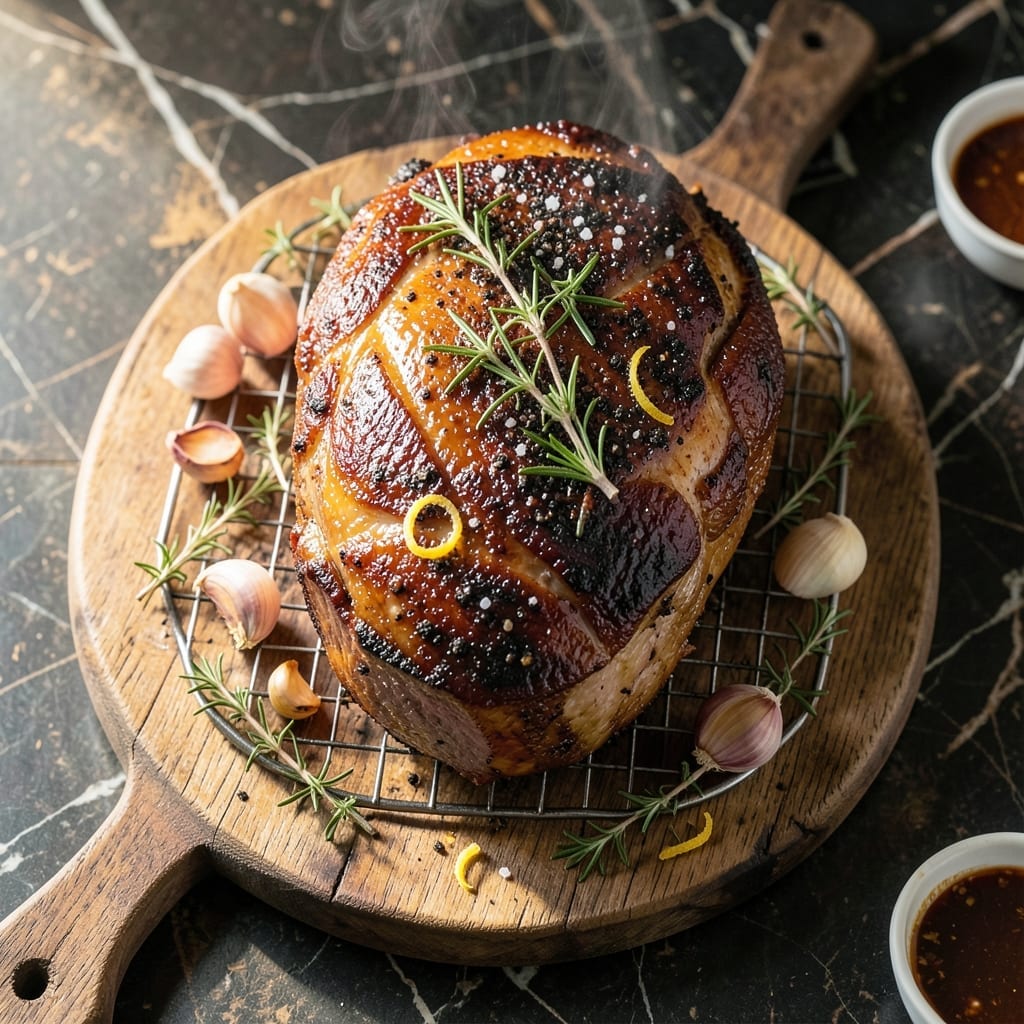
This reverse sear method delivers perfectly even doneness from edge to edge, transforming prime rib into a showstopper without fancy equipment. I developed this approach after too many uneven roasts in my tiny Boston kitchen.
The technique starts with low heat to gently cook the meat, then finishes with a high-heat sear for a golden crust. Turning the oven off midway allows the roast to continue cooking evenly without overcooking the outer layers.
You’ll achieve a tender, juicy result with a beautiful crust, every slice consistent in doneness. This foolproof method works in any home oven, no special tools required.
Serve with au jus or horseradish cream for a restaurant-quality centerpiece that impresses every time.
Ingredients for Prime Rib Roast Recipe Oven Off
These premium ingredients transform prime rib into a restaurant-quality centerpiece with minimal effort.
| Ingredient | Amount | Notes |
|---|---|---|
| Prime Rib Roast 🥩 | 5 lb | Bone-in, ribeye end preferred |
| Kosher Salt 🧂 | 2 tbsp | Diamond Crystal preferred for even seasoning |
| Freshly Ground Black Pepper 🌶️ | 1 tbsp | Coarse grind for crust texture |
| Garlic Cloves 🧄 | 6 cloves | Smashed, not minced |
| Fresh Rosemary Sprigs 🌿 | 4 whole | Woodsy stems removed |
| Fresh Thyme Sprigs 🍃 | 4 whole | Stems intact for infusion |
| Extra-Virgin Olive Oil 🫒 | 2 tbsp | High smoke point variety |
| Dijon Mustard 🟡 | 2 tbsp | For crust adhesion |
| Red Wine 🍷 | 1 cup | Dry Cabernet Sauvignon recommended |
| Beef Stock 🥣 | 2 cups | Low-sodium for reduction control |
| Unsalted Butter 🧈 | 4 tbsp | For au jus finishing |
| Prepared Horseradish 🌿 | ¼ cup | For creamy sauce |
| Sour Cream 🥛 | ½ cup | Full-fat for richness |
The prime rib is the star—opt for USDA Prime or Choice grade with good marbling. Costco and Whole Foods offer excellent options, but your local butcher can provide a custom-cut roast with the fat cap left on (essential for flavor). Bone-in roasts yield more even cooking and better presentation. For the herbs, fresh is non-negotiable—dried simply won’t deliver the aromatic impact required for this technique.
No red wine? Substitute beef broth with 1 tbsp balsamic vinegar for depth. Out of fresh herbs? Use half the amount of dried, but fresh is strongly preferred. For the au jus, a splash of Worcestershire sauce adds complexity. The horseradish cream can be made ahead—prepared horseradish from a jar works perfectly. Just avoid the creamy prepared variety for this application.
The roast can rest at room temperature for 1 hour before cooking. Leftovers keep beautifully—slice thin for sandwiches within 4-5 days, or freeze for 3 months. The au jus and horseradish cream are best used fresh but will hold for 3 days refrigerated.
Why You’ll Love This Recipe
- I’ll be real: the sandwiches I make with the leftovers might be even better than the original meal.
- Set It and Forget: I just season the prime rib with salt, pepper, garlic, and rosemary, then let the oven do the work—no babysitting required.
- Herb-Crusted Heaven: The rosemary and garlic form this insane crust that cracks with every slice, and the meat stays juicy all the way through.
- Holiday Hero: Between us, this is my secret for stress-free dinner parties—looks impressive but takes almost no active effort.
Step-by-Step Instructions for Prime Rib Roast Oven Off
This reverse sear method ensures perfectly even doneness from edge to edge every time.
Step 1: Season and Prepare the Prime Rib Roast
Pat the 5 lb prime rib roast dry with paper towels to ensure a good sear. Combine the 2 tbsp kosher salt and 1 tbsp freshly ground black pepper in a small bowl, then rub this mixture evenly over all surfaces of the roast.
In a separate bowl, mix the 2 tbsp extra-virgin olive oil and 2 tbsp Dijon mustard. Brush this mixture over the entire surface of the roast. This creates an ideal crust and helps the seasoning adhere during cooking.
Place the 6 cloves garlic cloves, 4 whole fresh rosemary sprigs, and 4 whole fresh thyme sprigs around the roast. These aromatics will infuse the meat with flavor as it cooks.
Step 2: Slow Roast in a Low Oven
Preheat your oven to 250°F. Place the prime rib roast on a wire rack set over a baking sheet, with the fat cap facing up. Insert a meat thermometer into the thickest part of the roast, avoiding the bone.
Roast in the preheated oven until the internal temperature reaches 110-115°F for medium-rare, which should take approximately 1.5 to 2 hours. The low and slow cooking method ensures even doneness throughout the roast.
During this time, the meat will develop a beautiful crust while remaining tender and juicy. The aromatics will release their flavors, enhancing the overall taste of the dish.
Step 3: Rest and Prepare the Au Jus
Remove the prime rib roast from the oven and let it rest on the counter for 30 minutes. This resting period allows the juices to redistribute throughout the meat, ensuring a moist and flavorful result.
While the roast rests, place the baking sheet with the drippings on the stovetop over medium heat. Add the 1 cup red wine and 2 cups beef stock, and bring to a simmer. Cook for 5-7 minutes, scraping up any browned bits from the bottom of the pan.
Reduce the heat to low and whisk in the 4 tbsp unsalted butter until the mixture is smooth and slightly thickened. Strain the au jus through a fine-mesh sieve into a gravy boat or serving dish.
Step 4: Sear and Serve
After the resting period, preheat your oven’s broiler to high. Return the prime rib roast to the oven and broil for 3-5 minutes, watching closely to prevent burning. This final sear will create a beautiful, crispy crust on the outside of the roast.
Remove the roast from the oven and let it rest for an additional 10-15 minutes before slicing. This second resting period ensures that the juices remain within the meat, providing a tender and flavorful result.
Combine the 0.25 cup prepared horseradish and 0.5 cup sour cream in a small bowl to create a creamy horseradish sauce. Slice the prime rib roast against the grain and serve with the au jus and horseradish sauce on the side.
Pro Tips For Making Prime Rib Roast Recipe Oven Off
- Salt Overnight: I learned this the hard way—dry-brine the roast with kosher salt at least 12 hours before cooking. It pulls moisture to the surface then reabsorbs it, guaranteeing a juicier prime rib with a better crust.
- Start Hot, Finish Low: Sear it at 450°F for 30 minutes to build that deep brown crust, then drop the oven to 250°F to finish cooking evenly without drying out.
- Skip Cold Meat: Pull the roast from the fridge 2-3 hours before cooking—this ensures even cooking and prevents the outer layer from overcooking while the center catches up.
- Rest Under Foil: After removing from the oven, tent it loosely with foil and let it rest for 30-45 minutes. This keeps it warm while the juices redistribute, so your first slice isn’t a dry, sad disappointment.
Common Mistakes When Making Perfect Results
Skipping the Rest
I learned the hard way in my Boston apartment that resting is non-negotiable. Slicing too soon causes all those beautiful juices to spill onto the cutting board, leaving your roast dry. Give it the full 30 minutes after the oven phase, then another 10-15 minutes post-sear. 💪
Uneven Seasoning
With a cut this expensive, don’t rush the rub. I use Diamond Crystal kosher salt because it disperses evenly. Press the salt and pepper mixture into every crevice, including the bone side. The mustard-oil paste helps it adhere during the long cook.
Wrong Internal Temp
Pull the roast at 110-115°F for perfect medium-rare. It’ll rise another 10-15°F during resting. I use a ThermoWorks probe thermometer – it’s worth every penny for precision. Overcooking this cut is a crime in my Irish-Italian family.
Ignoring the Fat Cap
Always position the fat cap up. This bastes the meat as it cooks, creating that self-basting effect we want. If your roast has uneven fat, ask your butcher to trim it for consistent cooking. I get mine from the local Italian deli – they know exactly what I need.
Overcrowding the Pan
Use a wire rack over a baking sheet for air circulation. This prevents steaming, which would ruin the crust. I line my pan with foil for easy cleanup, but the rack is essential. No rack? Use crumpled foil to elevate the roast.
Skipping the Sear
The final broil creates that restaurant-quality crust. Don’t skip it! Watch closely – at high heat, it only takes 3-5 minutes. My tiny kitchen oven runs hot, so I start checking at 2 minutes. The Maillard reaction here makes all the difference. 🔥
Nutrition Facts
Frequently Asked Questions
Why turn the oven off during cooking?
Turning the oven off midway allows the roast to finish cooking gently in the residual heat. This prevents overcooking the outer layers while ensuring the center reaches the perfect temperature.
Can I use a boneless roast?
Yes, but bone-in is preferred for more even cooking and richer flavor. If using boneless, reduce cooking time by 10-15% and monitor the internal temperature closely to avoid overcooking.
How do I know when it’s done?
Use a meat thermometer—pull the roast at 110-115°F for medium-rare. The temperature will rise another 10-15°F during resting, reaching the ideal 125-130°F.
What if my oven doesn’t hold heat well?
Preheat a baking stone or cast-iron pan in the oven first. This helps retain heat when the oven is turned off, ensuring even cooking throughout the resting phase.

- Pudding Recipe With Egg Yolks: Silky Smooth Custard in Minutes - November 3, 2026
- Pudding Pops Recipe Cook and Serve: Silky Frozen Treats Without the Machine - November 3, 2026
- Protein Ice Cream Recipe Blender Xanthan Gum: Ultra Creamy Texture Without the Guilt - November 3, 2026