
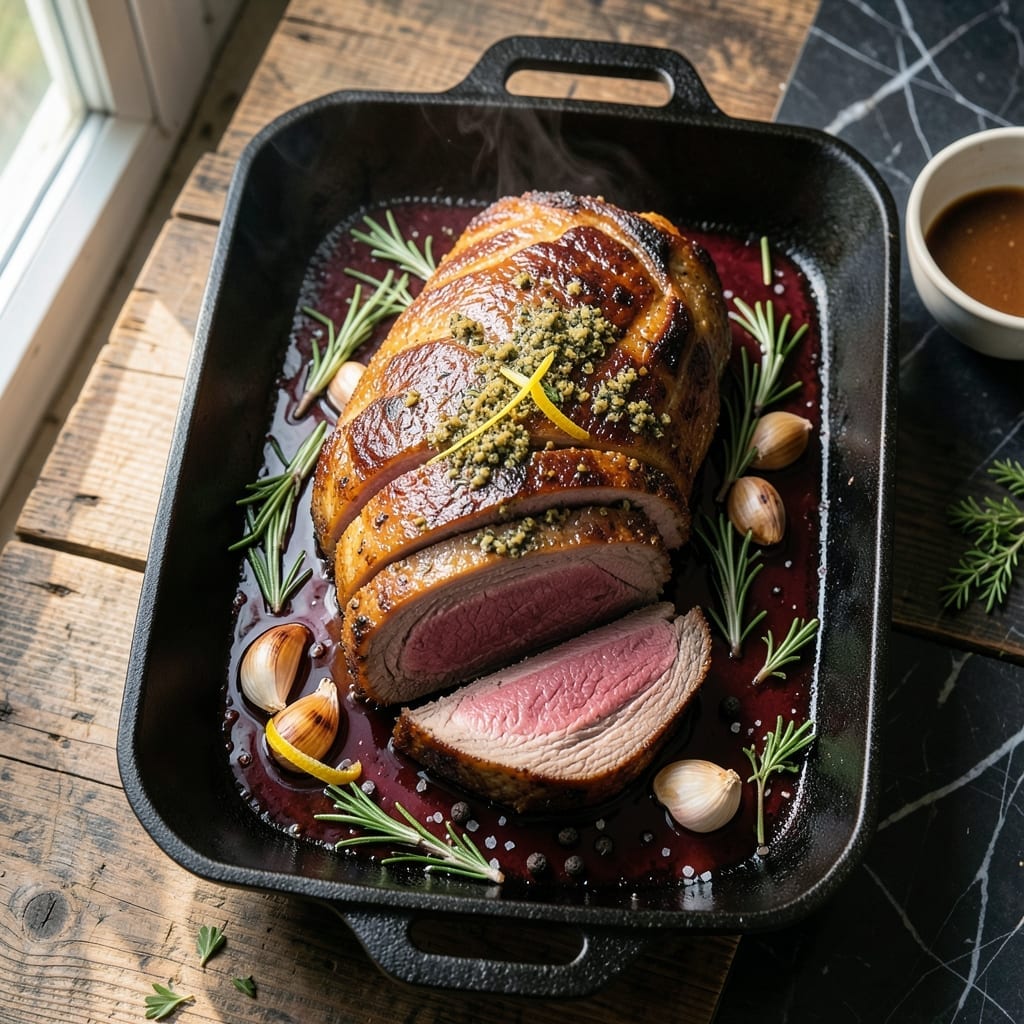
Mastering prime rib in your oven delivers a succulent centerpiece with minimal effort. This method guarantees a perfect medium-rare finish every time.
The rosemary crust creates an aromatic seal that locks in juices, while a simple seasoning blend enhances the beef’s natural richness. Resting is key for ideal sliceability.
Ingredients for Prime Rib Roast Recipe Oven
Quality beef and aromatic herbs create this show-stopping oven-roasted centerpiece with minimal effort required.
| Ingredient | Amount | Notes |
|---|---|---|
| Prime Rib Roast 🥩 | 4 lb | Bone-in, well-marbled preferred |
| Fresh Rosemary 🌿 | 3 tbsp | Finely chopped, stems discarded |
| Garlic Cloves 🧄 | 6 cloves | Minced to paste consistency |
| Kosher Salt 🧂 | 2 tbsp | Diamond Crystal recommended |
| Freshly Ground Black Pepper 🌶️ | 1 ½ tbsp | Coarse grind preferred |
| Olive Oil 🫒 | ¼ cup | Extra-virgin for crust binding |
| Dijon Mustard 🟡 | 2 tbsp | Whole grain acceptable |
| Red Wine 🍷 | ½ cup | Dry variety like Cabernet |
| Beef Stock 🥘 | 1 cup | Low-sodium preferred |
| Unsalted Butter 🧈 | 4 tbsp | Softened for finishing |
| Shallots 🧅 | 2 whole | Finely minced for au jus |
| Thyme Sprigs 🍃 | 4 pieces | Fresh, for infusion |
| Bay Leaves 🌿 | 2 pieces | Dried, for depth |
The prime rib is non-negotiable here. USDA Prime grade delivers superior marbling—Choice works too but avoid Select. Source from a trusted butcher who can provide bone-in, well-marbled cuts. The rosemary should be fresh and vibrant, not the dried stuff from your spice rack. For the red wine, any bold Cabernet or Merlot will work beautifully.
No fresh rosemary? Dried at one-third the amount works, but fresh is ideal. Out of Dijon? Whole-grain mustard adds nice texture. For the wine substitution, beef broth with a splash of balsamic vinegar mimics the acidity. If your roast is boneless, reduce cooking time by about 20%. The butter can be salted in a pinch, but unsalted lets you control the seasoning.
The roast needs to rest 30-45 minutes before slicing—this is critical for juiciness. Store leftovers wrapped tightly in foil for up to 5 days. For longer storage, slice and freeze portions in airtight containers for 3 months (thaw in fridge overnight).
Why You’ll Love This Recipe
- Set It and Forget It: I just rub the prime rib with garlic, rosemary, salt, and pepper, pop it in the oven, and let the heat do the work.
- Melt-in-Your-Mouth Good: That crust from the salt and herbs gives way to the most tender, juicy beef you’ll ever taste.
- Holiday Hero: It’s my go-to for Christmas dinner, but honestly, I’ve made it for Sunday supper too.
- Leftovers for Days: One roast means sandwiches, tacos, or just cold slices straight from the fridge for a week.
Step-by-Step Instructions for Prime Rib Roast Oven
This method ensures a perfectly cooked prime rib with a flavorful rosemary crust every time.
Step 1: Prepare the Rosemary-Garlic Crust
In a small bowl, combine the 3 tbsp Fresh Rosemary, minced 6 cloves Garlic Cloves, 2 tbsp Kosher Salt, 1.5 tbsp Freshly Ground Black Pepper, 0.25 cup Olive Oil, and 2 tbsp Dijon Mustard. Stir until it forms a thick paste. This aromatic blend will create the signature crust.
Pat the 4 lb Prime Rib Roast dry with paper towels to ensure the crust adheres properly. Rub the paste evenly over the entire surface of the roast, pressing gently to help it cling. Let it sit at room temperature for 1 hour before cooking.
Step 2: Sear and Begin Roasting
Preheat your oven to 450°F. Place the roast bone-side down in a roasting pan. This high initial temperature sears the exterior, locking in juices and forming a beautiful crust.
Roast for 20 minutes at this temperature. You’ll see the crust begin to darken and develop a rich, golden-brown color. This step is critical for building flavor and texture.
Step 3: Reduce Heat and Slow Roast
After the initial sear, reduce the oven temperature to 325°F. Insert a meat thermometer into the thickest part of the roast, avoiding the bone. Continue roasting until the internal temperature reaches 120-125°F for medium-rare.
This typically takes 1.5 to 2 hours, depending on your oven. Baste the roast occasionally with the pan drippings to keep the crust moist and flavorful.
Step 4: Prepare the Au Jus
While the roast cooks, prepare the au jus. In a saucepan, combine 2 whole Shallots, 0.5 cup Red Wine, 1 cup Beef Stock, 4 pieces Thyme Sprigs, and 2 pieces Bay Leaves. Simmer over medium heat for 15 minutes until reduced by half.
Strain the mixture into a bowl and whisk in the 4 tbsp Unsalted Butter until smooth and glossy. This rich au jus will complement the roast beautifully.
Step 5: Rest and Serve
Once the roast reaches the desired temperature, transfer it to a cutting board and tent loosely with foil. Let it rest for 15-20 minutes before carving. This allows the juices to redistribute, ensuring every slice is tender and moist.
Carve the roast into thick slices, serving each with a generous spoonful of the au jus. The meat should be pink and juicy with a fragrant, herbaceous crust.
Pro Tips For Making Prime Rib Roast Recipe Oven
- Start High, Finish Low: Sear the prime rib at 450°F for 20 minutes to get a deep crust, then drop to 325°F to finish cooking. I learned this the hard way—skipping the high-heat start leaves you with a pale, sad roast.
- Dry the Roast: Pat the prime rib completely dry with paper towels before seasoning. Sounds weird, but it works: wet meat steams instead of searing, and you’ll lose that crispy exterior everyone loves.
- Skip the Cold Meat: Let the roast sit at room temperature for 1-2 hours before cooking. After burning three batches, I finally figured out cold meat cooks unevenly, leaving you with dry edges and a raw center.
- Rest It Long: Tent the roast with foil and let it rest for 20-30 minutes after cooking. My grandmother swore by this, and she was right: slicing too soon lets all the juices escape onto the cutting board instead of staying in the meat.
Serving Suggestions for This Dish
Plating Perfection
Place a 1-inch thick slice on a warm plate with the bone facing outward for dramatic presentation. Spoon 2 tbsp of au jus around the base, letting it pool slightly. Garnish with a rosemary sprig for color contrast.
Classic Sides
Serve with creamy horseradish sauce on the side—mix ½ cup sour cream with 2 tbsp prepared horseradish and a pinch of salt. Yorkshire puddings soak up the juices beautifully, and roasted garlic mashed potatoes complete the meal. 💛
Wine Pairing
A bold Cabernet Sauvignon with dark fruit notes stands up to the rich beef. For white wine lovers, a buttery Chardonnay from Sonoma works surprisingly well. Serve wines slightly below room temperature for best flavor.
Vegetable Accompaniments
Asparagus spears roasted with olive oil and lemon zest add freshness. Alternatively, creamed spinach with nutmeg offers a comforting contrast. I prefer rainbow carrots glazed with honey and thyme for color.
Bread Options
A crusty sourdough or warm dinner rolls are perfect for mopping up every last bit of au jus. Brush rolls with garlic butter before serving. For special occasions, popovers add an impressive touch. 🔥
Frequently Asked Questions
What internal temperature should I aim for?
For perfect medium-rare, remove the roast at 120-125°F. The temperature will rise 5-10°F during resting. Use a meat thermometer for accuracy.
Do I need to cover the roast while cooking?
No, leave it uncovered to allow the crust to form properly. Covering traps steam, which softens the crust and prevents proper browning.
How do I prevent the ends from overcooking?
Fold a small piece of foil over the bone ends during the last hour. This protects them from direct heat while the center cooks.
Can I use a boneless roast?
Yes, but reduce cooking time by about 20%. Bone-in roasts cook more evenly and add flavor, but boneless works in a pinch.
Nutrition Facts

- Beef Cutlet Recipe Ideas: Crispy Breaded Patties With Bold Seasonings - September 28, 2026
- Bluefin Tuna Recipe Ideas: Sushi-Grade Seared and Sesame-Crusted - September 28, 2026
- Blue Zone Recipe Ideas: Longevity-Boosting Meals for Vibrant Living - September 28, 2026