
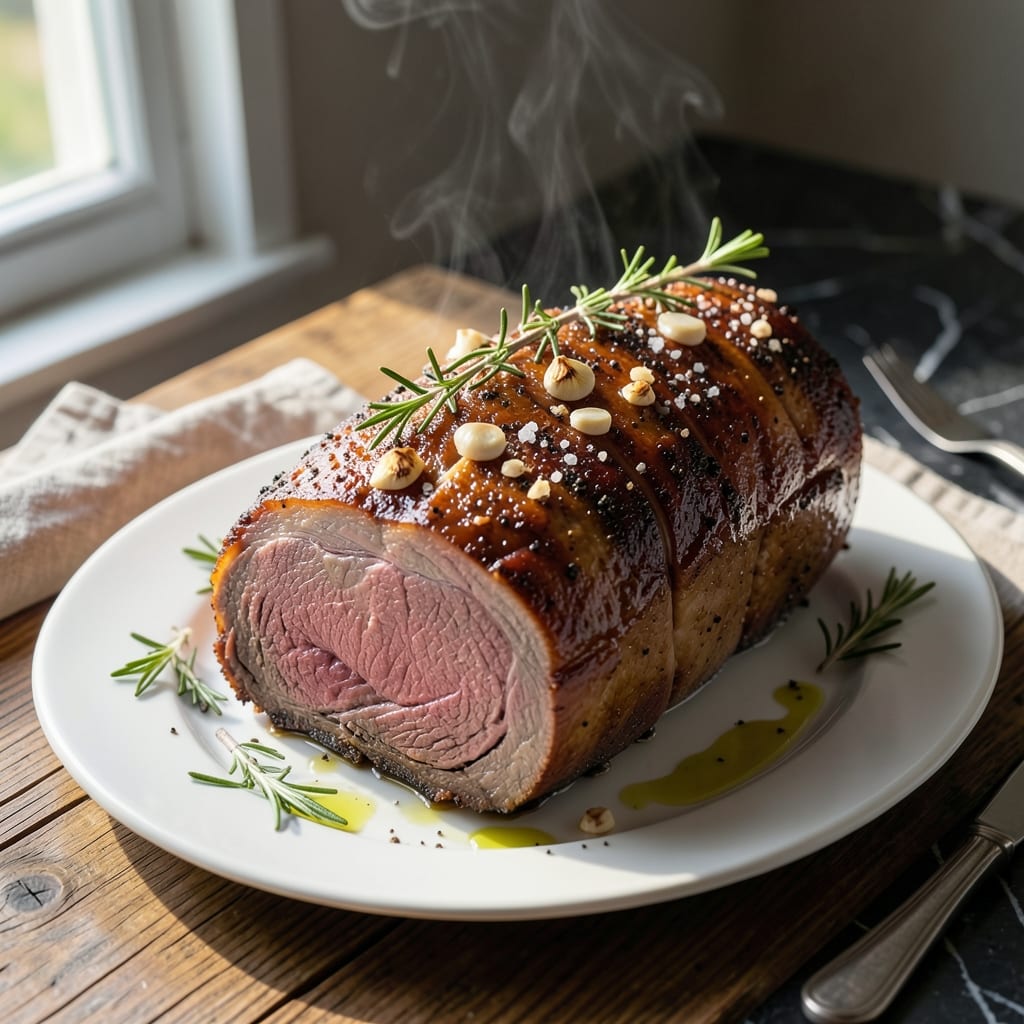
Mastering prime rib requires precision, but the reverse sear method guarantees perfect results every time. This technique transforms a simple roast into a showstopping centerpiece with ideal medium-rare doneness throughout.
I developed this approach after years of trial and error, learning that low-and-slow oven cooking followed by a high-heat sear delivers unmatched tenderness. The temperature control is what sets this apart from traditional methods.
The reverse sear creates an even cook from edge to edge, with a crusty exterior that locks in juices. No more overcooked ends or underdone centers—just consistent, restaurant-quality prime rib.
Serve this to impressed guests who will swear it came from a steakhouse. Here’s how to achieve that perfect medium-rare finish.
Ingredients for Prime Rib Roast Recipe Temp
Eleven ingredients transform a premium cut into that showstopping centerpiece with edge-to-edge perfection.
| Ingredient | Amount | Notes |
|---|---|---|
| Prime Rib Roast 🥩 | 5 lb | Bone-in, well-marbled preferred |
| Kosher Salt 🧂 | 2 tbsp | Diamond Crystal brand recommended |
| Freshly Ground Black Pepper 🌶️ | 2 tsp | Coarse grind preferred |
| Garlic Cloves 🧄 | 6 cloves | Smashed, unpeeled |
| Fresh Rosemary Sprigs 🌿 | 4 whole | Woody stems removed |
| Fresh Thyme Sprigs 🍃 | 4 whole | Woody stems removed |
| Extra-Virgin Olive Oil 🫒 | ¼ cup | High smoke point variety |
| Unsalted Butter 🧈 | 4 tbsp | Room temperature for basting |
| Beef Stock 🥣 | 1 cup | Low-sodium preferred |
| Red Wine 🍷 | ½ cup | Dry, full-bodied variety |
| Dijon Mustard 🟡 | 2 tbsp | For crust enhancement |
| Horse Radish 🌿 | ¼ cup | Prepared, for serving |
The beef is non-negotiable here. USDA Prime grade from a reputable butcher like Whole Foods or Local Harvest delivers the marbling you need. Ask for the ribeye end—it’s more flavorful. If prime isn’t available, Choice grade works but trim excess fat. Bone-in roasts cook more evenly and add depth. Always let it rest at room temp for 2 hours before cooking (don’t skip this).
No beef stock? Low-sodium chicken broth works in a pinch, but beef is ideal. Short on herbs? Dried at one-third the amount, but fresh rosemary and thyme are worth hunting down—they infuse beautifully. Skip the wine? Extra beef stock plus a splash of balsamic mimics the depth. The Dijon mustard is for the crust, so don’t substitute yellow mustard (too mild).
Prime rib reheats surprisingly well. Slice first, then warm in beef stock at 325°F for 10-15 minutes. Keeps in the fridge for 4-5 days, freezes beautifully for 3 months. Always carve against the grain for maximum tenderness.
Why You’ll Love This Recipe
- Set and Forget: I rub the roast with salt, pepper, garlic, and rosemary, pop it in the oven, and let the temperature do the work—no babysitting required.
- Crispy, Juicy Perfection: That crust from the kosher salt and rosemary? It gives way to the most tender, pink center. Honestly, it’s the best part of my Sunday dinners.
- Holiday Showstopper: This is my go-to for Christmas and birthdays. Between us, it looks fancy without the stress.
- Leftovers for Days: One roast feeds us for two meals, and the sandwiches the next day? I’ll be real—they’re even better than the first serving.
Step-by-Step Instructions for Prime Rib Roast
This reverse sear method guarantees a stunning medium-rare result with minimum stress.
Step 1: Season and Prep the Prime Rib Roast
Pat the 5 lb Prime Rib Roast dry with paper towels to ensure a perfect crust. I always remove it from the refrigerator 2 hours before cooking to bring it to room temperature—this promotes even cooking throughout.
Rub the roast all over with the 0.25 cup Extra-Virgin Olive Oil, then season aggressively with the 2 tbsp Kosher Salt and 2 tsp Freshly Ground Black Pepper. The seasoning should form a visible crust on the surface. This is your flavor foundation.
Make small slits in the fat cap and insert the 6 cloves Garlic Cloves, 4 whole Fresh Rosemary Sprigs, and 4 whole Fresh Thyme Sprigs to infuse the meat with aromatic depth as it cooks.
Step 2: Slow Roast in a Low Oven
Preheat your oven to 250°F—this low temperature is key to achieving edge-to-edge medium-rare perfection. Place the roast fat-side up on a rack in a roasting pan. The rack elevates the meat, allowing hot air to circulate for even cooking.
Insert a meat thermometer into the thickest part of the roast, avoiding the bone. Roast until the internal temperature reaches 115-120°F for medium-rare, which typically takes 2 to 2.5 hours for a 5 lb Prime Rib Roast. This slow cook ensures the center comes up to temperature without overcooking the outer layers.
Step 3: Create a Crust with High-Heat Sear
Remove the roast from the oven and increase the temperature to 500°F. While waiting, brush the roast all over with the 2 tbsp Dijon Mustard—this adds a tangy depth to the crust and helps it brown beautifully.
Once the oven reaches temperature, return the roast to the oven for 10-15 minutes to develop a deep, caramelized crust. Watch closely—you want the exterior to turn a rich dark brown but not burn. The internal temperature will rise to about 130°F, perfect for medium-rare.
Step 4: Rest and Prepare the Pan Sauce
Transfer the roast to a cutting board and tent loosely with foil. Let it rest for 20-30 minutes—this allows the juices to redistribute for maximum tenderness. Meanwhile, place the roasting pan on the stovetop over medium-high heat.
Add the 0.5 cup Red Wine to the pan and deglaze, scraping up all the browned bits. Let it reduce by half, then add the 1 cup Beef Stock and 4 tbsp Unsalted Butter. Simmer for 5 minutes until slightly thickened. Strain and serve alongside the roast.
Step 5: Slice and Serve with Horse Radish
Carve the roast into thick slices, cutting between the bones for elegant presentation. Serve immediately with the pan sauce and a dollop of the 0.25 cup Horse Radish on the side. The contrast of the creamy horse radish with the rich beef is incredible.
Pro Tips For Making Prime Rib Roast Recipe Temp
- Rest Before Slicing: Let it rest 15-20 minutes under foil after roasting—I learned this the hard way when my first prime rib bled all its juices onto the cutting board.
- Salt Overnight: Dry-brine the roast with kosher salt at least 12 hours ahead; it seasons deep and gives that perfect crust everyone fights over.
- Skip Cold Meat: Take the roast out of the fridge 2 hours before cooking, or the center stays raw while the ends overcook—yes, even if you’re impatient.
- Use a Probe: A meat thermometer is non-negotiable; pull it at 115°F for medium-rare, because the temp keeps climbing after it leaves the oven.
Pro Cooking Tips for Perfect Results
Perfect Temperature Control
I swear by my ThermoWorks Smoke thermometer for tracking both oven and internal temps. The probe in the thickest part (avoiding bone) gives accurate readings. Aim for 250°F oven temp during the slow roast phase—this is non-negotiable for even cooking. 🌡️
Reverse Sear Timing
For a 5 lb roast, expect 2-2.5 hours at 250°F to hit 115-120°F internal. I learned the hard way that rushing this phase creates uneven doneness. The meat will continue cooking during the sear, so don’t pull it too early.
Crust Development
After removing the roast, crank the oven to 500°F. Brush with 2 tbsp Dijon Mustard before returning it for the final sear. This step takes 10-15 minutes—watch for that perfect dark brown crust without burning.
Resting is Crucial
Let it rest 20-30 minutes under foil before slicing. I use this time to make the pan sauce—it’s the perfect window. Skipping this step means losing precious juices to your cutting board. 💡
Carving Technique
Slice between the bones for beautiful presentation. I use a Wüsthof 12-inch carving knife from our wedding registry. Always cut against the grain for maximum tenderness—this makes every bite melt in your mouth.
Pan Sauce Pro Tip
Deglaze with ½ cup dry red wine first, then add 1 cup beef stock and 4 tbsp butter. Simmer for 5 minutes until slightly thickened. Strain before serving—I learned this from a Portland chef at a cooking class.
Nutrition Facts
Frequently Asked Questions
What internal temperature should I aim for?
For perfect medium-rare, pull the roast at 115-120°F internal. It will rise to 130°F during resting.
How long should it rest before slicing?
Let it rest 20-30 minutes tented with foil. This keeps it juicy and makes carving easier.
Can I use a different oven temperature?
Stick to 250°F for the slow roast. Higher temps risk uneven cooking. The reverse sear needs this precision.
Why does my crust look pale?
Your sear phase may have been too short. Ensure 500°F for 10-15 minutes after brushing with mustard.

- White Jello Shot Recipe: Creamy Vodka Magic in 30 Seconds - November 5, 2026
- Mary Berry’s Boiled Fruit Cake Recipe: Moist Center and Spiced Crust Magic - November 5, 2026
- Atlantic Salmon Recipe: Honey-Dill Pan-Seared With Crispy Skin - November 5, 2026