
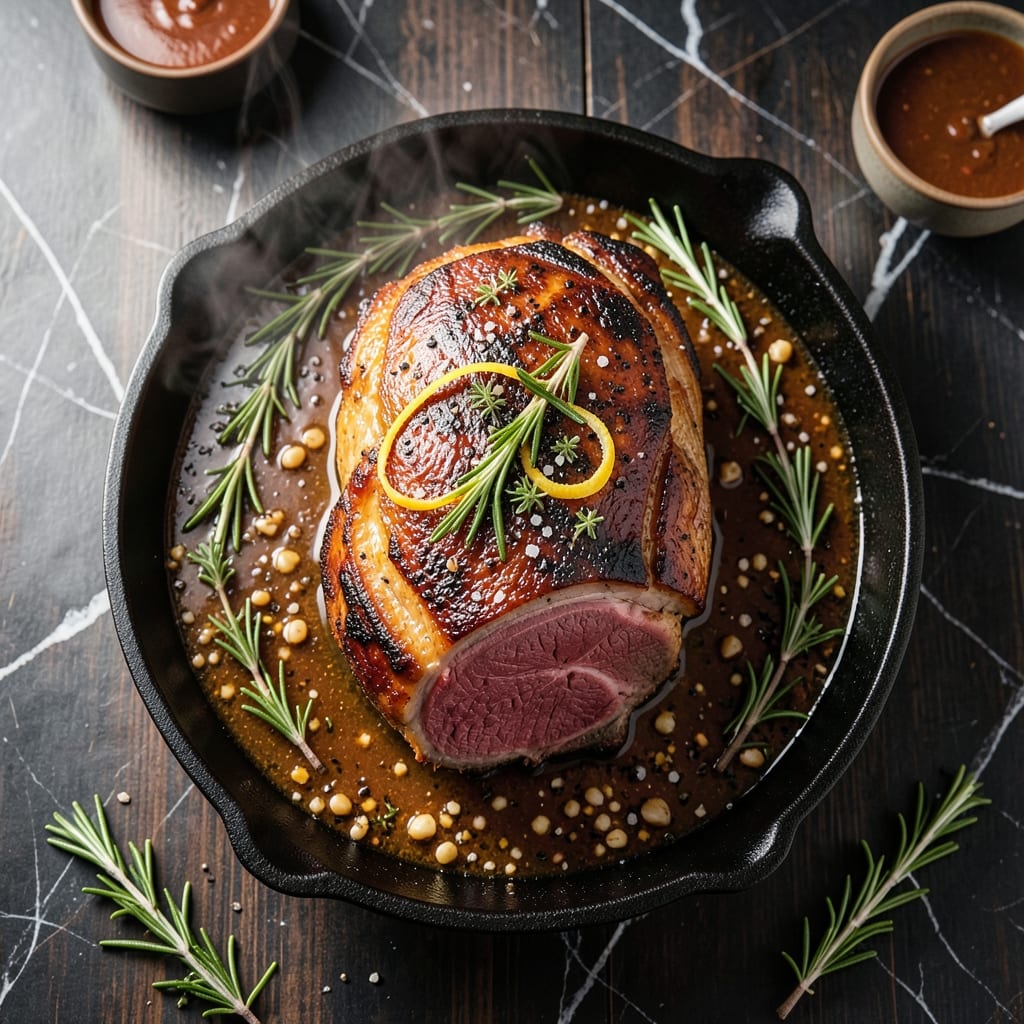
There’s a reason prime rib remains the centerpiece of special occasions—its rich, beefy flavor and tender texture are unmatched. This method delivers perfect results every time with a simple herb rub and slow roasting technique.
I developed this approach after years of trial and error, learning that patience and proper seasoning are key. The rosemary and thyme create an aromatic crust that enhances the beef’s natural richness without overpowering it.
The slow roasting process at a low temperature ensures even cooking from edge to edge, with a beautiful crust on the outside. You’ll be rewarded with juicy, flavorful meat that falls apart at the touch of a fork.
Perfect for holiday dinners or Sunday suppers, this prime rib will impress even the most discerning guests. Here’s how to achieve restaurant-quality results at home.
Ingredients for Prime Rib Roast Recipe Rosemary Thyme
Quality beef and fresh herbs create a showstopping centerpiece for any special meal.
| Ingredient | Amount | Notes |
|---|---|---|
| Prime Rib Roast 🥩 | 5 lb | Bone-in, well-marbled preferred |
| Kosher Salt 🧂 | 2 tbsp | Diamond Crystal or Morton |
| Black Pepper 🌶️ | 2 tsp | Freshly cracked for best flavor |
| Fresh Rosemary 🌿 | 3 tbsp | Chopped, stems discarded |
| Fresh Thyme 🍃 | 3 tbsp | Leaves stripped from stems |
| Garlic Cloves 🧄 | 6 cloves | Minced for herb rub |
| Olive Oil 🫒 | ¼ cup | Extra-virgin for binding rub |
| Unsalted Butter 🧈 | 4 tbsp | Softened, for finishing |
| Red Wine 🍷 | 1 cup | Dry variety like Cabernet |
| Beef Broth 🥣 | 2 cups | Low-sodium preferred for control |
| Yellow Onion 🧅 | 1 whole | Roughly chopped for roasting pan |
| Carrots 🥕 | 3 whole | Peeled, cut into chunks |
| Celery Stalks 🥬 | 2 whole | Cut into large pieces |
The prime rib is everything here. Costco and Whole Foods carry excellent bone-in roasts with good marbling—look for bright red meat with white fat streaks. Ask the butcher for a roast from the small end (more uniform shape). The rosemary and thyme should be fresh (dried won’t give you that aromatic crust), and I always grab extra to garnish the platter.
No red wine? Beef broth with a splash of balsamic vinegar works in a pinch. Swap the butter for olive oil if avoiding dairy. Fresh thyme can be replaced with one-third the amount of dried. The vegetables are flexible—parsnips or potatoes can join the onion, carrot, and celery in the roasting pan for extra flavor.
Rest the roast before carving—this keeps it juicy. Leftovers hold for 4-5 days in the fridge, or freeze slices for 3 months. The au jus from the pan makes incredible gravy or French dip sandwiches the next day.
Why You’ll Love This Recipe
- Hands-Off Cooking: I season it the night before, pop it in the oven, and let the rosemary and thyme do all the work.
- Melt-In-Your-Mouth Good: That crust of kosher salt and fresh herbs gives way to the most tender, juicy prime rib I’ve ever tasted.
- Holiday Showstopper: Between us, this is the dish I serve for Christmas and birthdays—no other main feels as impressive.
- Leftovers for Days: One roast means sandwiches, tacos, and hash for the whole week—my family practically cheers.
Step-by-Step Instructions for Prime Rib Roast with Rosemary and Thyme
This method ensures a perfectly herb-infused roast with a tender interior and flavorful crust.
Step 1: Prepare the Herb Rub
In a small bowl, combine the 2 tbsp kosher salt, 2 tsp black pepper, 3 tbsp fresh rosemary, 3 tbsp fresh thyme, and 6 cloves garlic cloves. Drizzle in the 0.25 cup olive oil and mix thoroughly to create a thick, aromatic paste.
This herb rub forms the foundation of flavor for your roast. The olive oil binds the herbs and spices to the meat while the garlic infuses every bite with its pungent aroma. Work the mixture with the back of a spoon to release the essential oils from the rosemary and thyme.
Step 2: Season and Sear the Prime Rib Roast
Pat the 5 lb prime rib roast dry with paper towels, then rub the herb mixture all over its surface, pressing firmly to adhere. Let the seasoned roast sit at room temperature for 1 hour to allow the flavors to penetrate.
Preheat your oven to 450°F. In a large roasting pan, sear the prime rib on all sides over medium-high heat until deeply browned. This initial sear creates a flavorful crust and locks in the juices for a moist, tender result.
Step 3: Roast with Aromatic Vegetables
Scatter the 1 whole yellow onion, 3 whole carrots, and 2 whole celery stalks in the bottom of the roasting pan. These vegetables will infuse the drippings with additional flavor and create a natural rack for the roast.
Place the seared prime rib bone-side down on top of the vegetables. Pour the 1 cup red wine and 2 cups beef broth into the pan, taking care not to wash off the herb rub. This liquid will baste the roast as it cooks and form the base of a rich au jus.
Step 4: Slow Roast to Perfection
Reduce the oven temperature to 325°F and roast the prime rib for approximately 2 to 2.5 hours, or until the internal temperature reaches 125°F for medium-rare. Use a meat thermometer to check the temperature in the thickest part of the roast, avoiding the bone.
The low and slow cooking method ensures even doneness throughout the roast. Baste the prime rib with the pan juices every 30 minutes to enhance the flavor and keep the surface moist. The aroma of rosemary, thyme, and garlic will fill your kitchen as it roasts.
Step 5: Rest and Serve
Transfer the prime rib to a cutting board and tent loosely with foil. Let it rest for 15-20 minutes before carving. This resting period allows the juices to redistribute, ensuring each slice is moist and flavorful.
While the roast rests, skim the fat from the pan drippings and simmer the remaining liquid on the stovetop for 5 minutes to reduce slightly. Stir in the 4 tbsp unsalted butter to create a velvety au jus for serving. Carve the prime rib into thick slices and serve with the herb-infused sauce.
Pro Tips For Making Prime Rib Roast Recipe Rosemary Thyme
- Dry the Roast: Pat the prime rib completely dry with paper towels before seasoning—this guarantees a better sear and helps the salt and herbs stick where they belong.
- Rest Before Slicing: Give it a solid 20 minutes under foil after roasting, or all those juices you worked for will end up on the cutting board instead of in the meat.
- Use Room-Temp Meat: I learned this the hard way—pull the roast out of the fridge 2 hours before cooking, or you’ll get uneven doneness no matter how carefully you monitor the temperature.
- Crush the Herbs: Bruise the rosemary and thyme lightly with the flat side of your knife to release their oils—sounds small, but it actually changes the outcome of your crust.
Health Benefits of This prime rib roast recipe rosemary thyme
Rich in Protein
This dish delivers a powerful protein punch with about 50 grams per 6-ounce serving. Protein is essential for muscle repair and growth, and prime rib is one of the best sources of this vital nutrient. I always feel satisfied and energized after enjoying a slice. 💪
Iron Boost
Beef is naturally rich in heme iron, the most easily absorbed form. One serving provides about 15% of your daily iron needs. This helps prevent fatigue and supports healthy blood production, which is especially important for growing kids like my Lily.
B Vitamin Powerhouse
Prime rib is packed with B vitamins, particularly B12, which is crucial for nerve function and red blood cell production. A 6-ounce serving provides nearly 100% of your daily B12 requirement. These vitamins help convert food into energy your body can use.
Zinc for Immunity
You’ll get about 40% of your daily zinc needs from a single serving. Zinc is vital for immune function and wound healing. I notice I stay healthier during Portland’s rainy winters when I include beef in my diet regularly.
Healthy Fats
While prime rib contains saturated fats, it also provides heart-healthy monounsaturated fats. The marbling in quality cuts like those from local butchers contributes to both flavor and a balanced fat profile. Enjoy in moderation as part of a varied diet.
Minimal Processing
This recipe uses whole, unprocessed ingredients with no additives or preservatives. The simple herb rub of rosemary and thyme adds flavor without artificial ingredients. It’s a clean, wholesome way to enjoy a special meal with family. ✨
Nutrition Facts
Frequently Asked Questions
What’s the ideal internal temperature for medium-rare?
Remove from oven at 125°F internal temp. It will rise to 130-135°F during resting. Use a meat thermometer for accuracy.
Can I use dried herbs instead of fresh?
Yes, but use 1/3 the amount of dried. Fresh rosemary and thyme provide better flavor, but dried works in a pinch.
How long should it rest before slicing?
Rest for 15-20 minutes after roasting. This lets juices redistribute for the most tender slices. Skip resting and you’ll lose moisture.
What if my roast isn’t browning enough?
Return to 450°F oven for 5-10 minutes at the end. The high heat will crisp the crust. Watch closely to avoid overcooking.

- White Jello Shot Recipe: Creamy Vodka Magic in 30 Seconds - November 5, 2026
- Mary Berry’s Boiled Fruit Cake Recipe: Moist Center and Spiced Crust Magic - November 5, 2026
- Atlantic Salmon Recipe: Honey-Dill Pan-Seared With Crispy Skin - November 5, 2026