
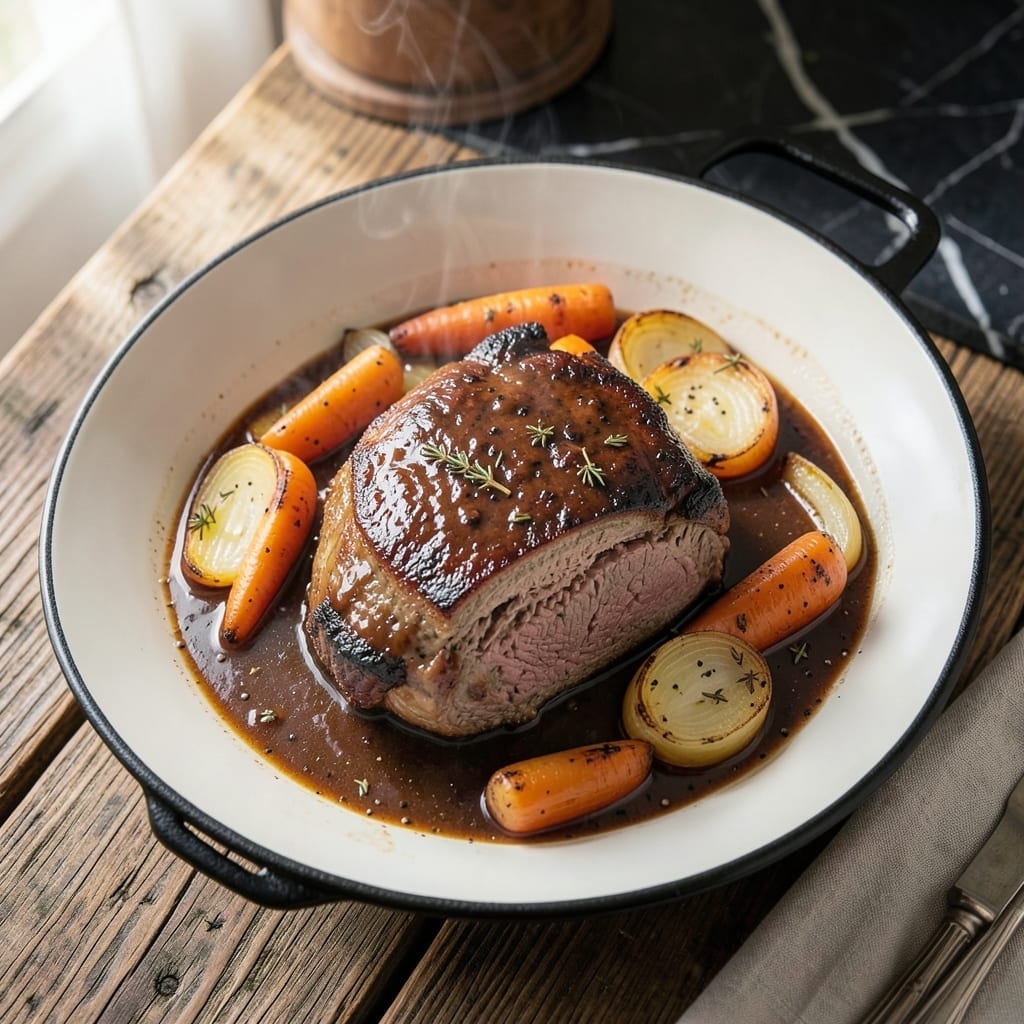
Achieving fork-tender meat with a golden crust requires precise oven control and patience. This method transforms a humble chuck roast into a centerpiece worthy of Sunday dinner.
I developed this technique after countless tests in my Boston apartment kitchen, perfecting the balance between gentle heat and sufficient time. The low oven temperature ensures even cooking without drying out the meat.
The result is fall-apart tender beef with a rich, caramelized exterior. Vegetables soak up the flavorful juices, creating a complete meal in one pot.
This approach delivers consistent results every time, with minimal hands-on effort. The slow cooking process builds layers of flavor that can’t be rushed.
Ingredients for Pot Roast Recipe Oven Temperature
Transform a humble chuck roast into a Sunday dinner centerpiece with these carefully selected ingredients.
| Ingredient | Amount | Notes |
|---|---|---|
| Chuck Roast 🥩 | 3 lb | Well-marbled, boneless preferred |
| Kosher Salt 🧂 | 1 ½ tsp | Diamond Crystal brand preferred |
| Black Pepper 🌶️ | 1 tsp | Freshly ground for best flavor |
| Olive Oil 🫒 | 2 tbsp | Extra-virgin for richness |
| Yellow Onions 🧅 | 2 whole | Medium-sized, quartered |
| Carrots 🥕 | 4 whole | Large, peeled and chopped |
| Celery Stalks 🌿 | 3 whole | Chopped into large pieces |
| Garlic Cloves 🧄 | 6 cloves | Smashed, skin removed |
| Beef Broth 💧 | 2 cups | Low-sodium preferred |
| Red Wine 🍷 | 1 cup | Dry variety like Cabernet |
| Tomato Paste 🍅 | 2 tbsp | Double-concentrated preferred |
| Fresh Thyme Sprigs 🌿 | 4 whole | Optional for aromatics |
| Bay Leaf 🍃 | 2 whole | Dried, for depth |
| All-Purpose Flour 🌾 | 2 tbsp | For thickening gravy |
| Water 💧 | 1 cup | For deglazing pan |
The chuck roast is non-negotiable here—look for well-marbled cuts at Whole Foods or Costco. Fat content is what delivers that fork-tender result after long, slow cooking. Avoid leaner cuts like sirloin tip; they’ll dry out. For the beef broth, Better Than Bouillon makes a rich, concentrated base that’s worth the extra minute to mix up. The red wine adds acidity and depth—a bold Cabernet or Merlot works best, but even a decent table wine will do.
No red wine? Substitute with additional beef broth plus 1 tbsp balsamic vinegar. Fresh thyme not available? Dried thyme at one-third the amount is perfectly acceptable. The tomato paste can be swapped for 1/4 cup crushed tomatoes reduced on the stovetop. For a gluten-free version, use cornstarch instead of flour to thicken the gravy—mix 1 tbsp with 1 tbsp cold water before adding.
Store the chuck roast in the coldest part of your fridge for up to 3 days before cooking. Leftovers keep beautifully, tasting even better the next day. Refrigerate in an airtight container for up to 4 days or freeze for 3 months. The gravy may separate slightly when stored—just whisk it back together before reheating.
Why You’ll Love This Recipe
- Set and Forget: I toss the chuck roast with salt, pepper, and onions, then let the oven do the work for hours.
- Sunday or Wednesday: This pot roast feels special enough for company but unfussy enough for a regular family dinner.
- Leftovers for Days: Honestly, it tastes even better the next day in sandwiches or over mashed potatoes.
Step-by-Step Instructions for Pot Roast
Master the technique for fall-apart tender meat and rich, velvety gravy every time.
Step 1: Sear and Season the Chuck Roast
Pat the 3 lb Chuck Roast dry with paper towels, then season generously on all sides with the 1.5 tsp Kosher Salt and 1 tsp Black Pepper. This ensures a deep, flavorful crust. Heat the 2 tbsp Olive Oil in a Dutch oven over medium-high heat until shimmering.
Sear the roast for 4-5 minutes per side until deeply browned. You’ll know it’s ready to flip when it releases easily from the pan. This step creates the fond that will deepen your gravy’s flavor. Transfer the roast to a plate and set aside.
Step 2: Sauté Aromatics and Deglaze
In the same pot, add the 2 whole Yellow Onions, 4 whole Carrots, and 3 whole Celery Stalks. Cook for 5-6 minutes until the vegetables begin to soften and brown. Add the 6 cloves Garlic Cloves and 2 tbsp Tomato Paste, stirring for 1 minute until fragrant.
Pour in the 1 cup Red Wine, scraping up all the browned bits from the bottom of the pot. This deglazing step is crucial for building layers of flavor. Let the wine reduce by half, about 3-4 minutes, before adding the 2 cups Beef Broth, 4 whole Fresh Thyme Sprigs, and 2 whole Bay Leaf.
Step 3: Braise to Fork-Tender Perfection
Return the seared chuck roast to the pot, nestling it among the vegetables. The liquid should come about halfway up the meat. Cover and transfer to a preheated 325°F oven. Braise for 3 to 3.5 hours, turning the roast halfway through.
You’ll know it’s done when the meat pulls apart easily with a fork and reaches an internal temperature of 195-200°F. The vegetables should be tender and the braising liquid rich and aromatic. Remove the roast and vegetables to a serving platter, covering loosely with foil to keep warm.
Step 4: Create the Gravy and Serve
Strain the braising liquid into a measuring cup, then skim off excess fat. Return 2 cups of the liquid to the pot. Whisk the 2 tbsp All-Purpose Flour with the 1 cup Water until smooth, then slowly pour this slurry into the pot while whisking constantly.
Simmer over medium heat for 5-7 minutes until the gravy thickens enough to coat the back of a spoon. Taste and adjust seasoning with additional salt and pepper if needed. Serve the pot roast sliced or shredded, smothered in the rich gravy with the braised vegetables alongside.
Pro Tips For Making Pot Roast Recipe Oven Temperature
- Start Hot, Finish Low: Sear the chuck roast in a screaming-hot Dutch oven with olive oil to lock in flavor, then drop the oven temp to 300°F for slow, even cooking.
- Salt the Meat Overnight: I learned this the hard way—dry-brining the roast with kosher salt 12-24 hours ahead makes every bite juicier, not just the surface.
- Don’t Crowd the Onions: Spread those yellow onions in a single layer under the roast so they caramelize instead of steam—nobody wants soggy onions.
- Use a Meat Thermometer: Skip the guesswork and pull the pot roast at 195°F internal temp; it’ll be fall-apart tender every time, no overcooking.
Troubleshooting pot roast recipe oven temperature
Tough Meat Issues
If your pot roast turns out tough, the oven temperature was likely too high. Stick to 325°F—any hotter can cause the meat to seize up. Also, ensure you’re using a well-marbled chuck roast and giving it the full 3-3.5 hours to break down properly.
Dry Roast Fix
Dryness usually means insufficient liquid. Add ½ cup more beef broth halfway through cooking if the braising liquid looks low. And always cover the pot tightly—this traps steam, keeping the meat moist. I learned this the hard way during my early Boston kitchen experiments.
Weak Flavor Solutions
Bland results often come from skimping on the sear. Don’t rush the browning step—4-5 minutes per side creates the fond that builds deep flavor. Also, use a bold red wine like Cabernet for deglazing; it adds complexity. 💡
Gravy Problems
If your gravy is too thin, simmer it longer after adding the flour slurry. If it’s too thick, whisk in ¼ cup water at a time. For lumps, strain the gravy or use a hand blender to smooth it out.
Vegetable Troubles
Mushy vegetables usually mean they were cut too small. Keep them in large chunks (halved carrots, quartered onions) so they hold their shape. If they’re undercooked, they likely need more time—add them back to the pot with extra liquid.
Temperature Tips
Always preheat your oven to 325°F before adding the pot. And use an oven thermometer to verify—many home ovens run hot or cold. The internal temperature of the meat should reach 195-200°F for perfect tenderness. ✨
Nutrition Facts
Frequently Asked Questions
What oven temperature works best for tender results?
A steady 325°F delivers perfect tenderness without drying out the meat. This low-and-slow approach breaks down collagen gradually for that fall-apart texture.
Can I cook it at a higher temperature to save time?
Not recommended. Higher heat can make the meat tough and dry. Stick to 325°F for 3-3.5 hours to ensure even cooking and maximum tenderness.
How do I know when it’s done?
The meat should pull apart easily with a fork and reach an internal temperature of 195-200°F. The vegetables will be tender and the braising liquid rich.
Should I cover the pot while cooking?
Always cover tightly with a lid. This traps steam, keeping the meat moist and preventing it from drying out during the long cooking time.

- Protein Pudding Recipe With Sugar Free Pudding: High-Protein Creamy Indulgence - November 3, 2026
- Progresso Recipe Starters Creamy Parmesan Basil Cooking Sauce: Rich Herb-Infused Base for Pasta and More - November 3, 2026
- Pudding Recipe With Egg Yolks: Silky Smooth Custard in Minutes - November 3, 2026