
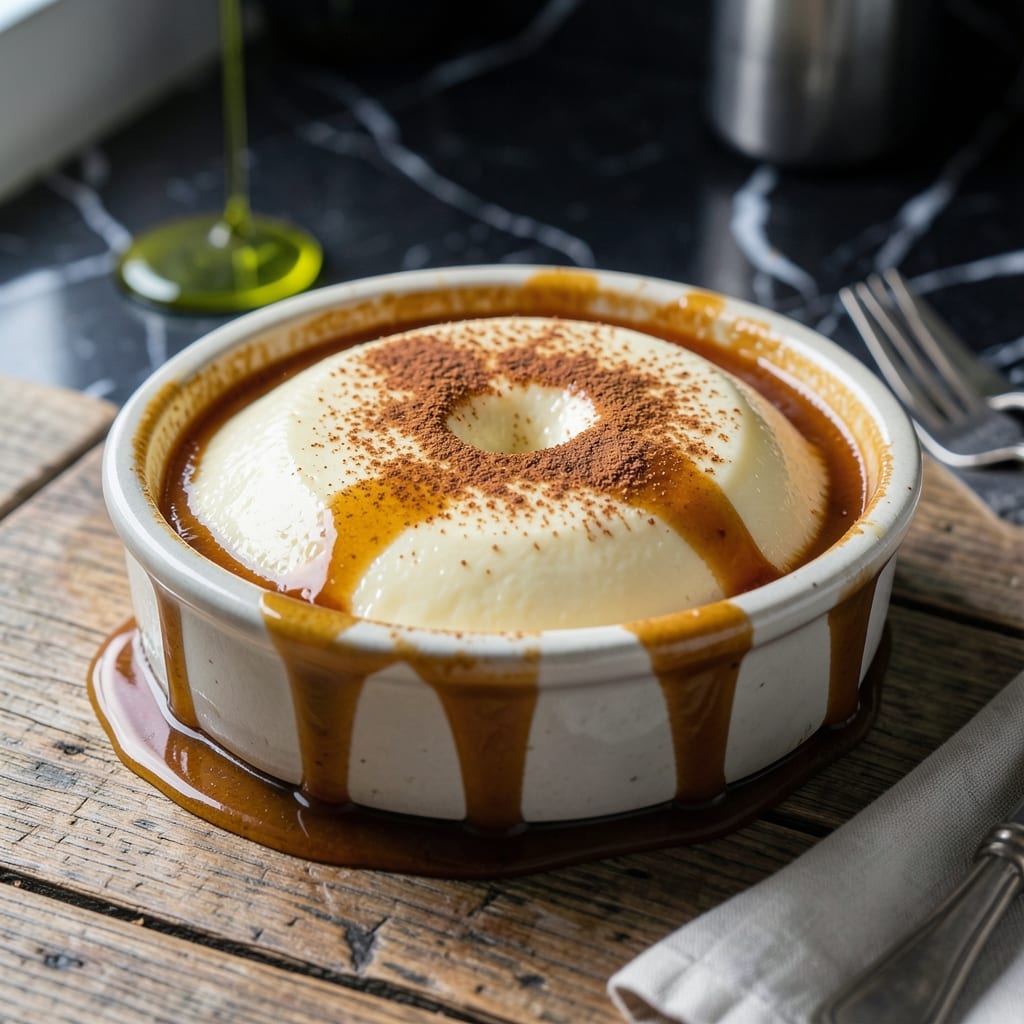
This recipe brings the creamy, caramel-topped tradition of Puerto Rican flan to your kitchen with simple ingredients and time-honored technique. The silky custard and deep amber caramel require just patience and precision.
I developed this version after testing multiple sugar ratios and baking methods. The key is slowly caramelizing the sugar to a rich amber before pouring the custard over it. A water bath ensures even cooking and that signature velvety texture.
What emerges from the oven is a custard so smooth it quivers, topped with a layer of caramel that cracks satisfyingly under a spoon. Each bite delivers the perfect balance of creamy and sweet.
Serve chilled for the full experience. This dessert is worth the wait.
Ingredients for Puerto Rican Flan Recipe Ingredients
Simple ingredients create this silky, caramel-topped custard with rich tradition and velvety texture.
| Ingredient | Amount | Notes |
|---|---|---|
| Granulated Sugar 🍚 | 1 cup | For caramel layer |
| Large Eggs 🥚 | 6 whole | Room temperature preferred |
| Sweetened Condensed Milk 🥛 | 1 can | 14 oz can, full-fat |
| Evaporated Milk 🥛 | 1 can | 12 oz can, full-fat |
| Whole Milk 🥛 | 1 cup | For custard mixture |
| Vanilla Extract 🌿 | 1 tsp | Pure extract preferred |
| Pinch of Salt 🧂 | 1 pinch | Balances sweetness |
| Water 💧 | 2 cups | For water bath |
The sugar caramel is everything here—use standard granulated sugar (organic works too) and cook it to a deep amber, not too dark. I’ve had best results with Domino or C&H brands. The eggs must be at room temperature to blend smoothly into the custard. Full-fat dairy is non-negotiable for that creamy texture; low-fat versions will yield a thin, watery result.
No evaporated milk? Half-and-half at 1:1 ratio works in a pinch, but the texture won’t be as firm. For a dairy-free version (though not traditional), coconut milk can substitute both evaporated and condensed milk. Vanilla beans add depth if you’re feeling fancy—scrape one in place of the extract. Never skip the water bath; it’s the key to even cooking and that signature wobble.
Flan keeps beautifully—store covered in the fridge for up to 5 days. The caramel may weep slightly over time, but it’s still delicious. For serving, run a knife around the edge before inverting onto a plate. Always chill at least 4 hours (overnight is ideal) before serving to set properly.
Why You’ll Love This Recipe
- 5-Minute Mix: I just whisk the eggs, milks, and sugar—no fancy steps, no stress.
- Caramel Magic: That first bite of silky custard with the bittersweet caramel? Worth every minute.
- Feeds a Crowd: One batch makes enough for a family dinner or a potluck dessert.
- Stays Fresh: Honestly, it tastes even better the next day straight from the fridge.
Step-by-Step Instructions for Puerto Rican Flan
Master the art of this creamy custard with precise steps for perfect caramel and silky texture every time.
Step 1: Prepare the Caramel Layer
In a small saucepan over medium heat, melt the 1 cup Granulated Sugar without stirring. Watch closely as it transforms from granular to deep amber liquid, which takes 8-10 minutes. The sugar will clump initially, but resist the urge to stir—swirling the pan occasionally helps even melting.
Once fully melted and golden brown, immediately pour the caramel into a 9-inch round baking dish, tilting to coat the bottom evenly. Work quickly—the caramel hardens fast. Set aside to cool and solidify while you prepare the custard.
Step 2: Blend the Custard Mixture
In a blender, combine the 6 whole Large Eggs, 1 can Sweetened Condensed Milk, 1 can Evaporated Milk, 1 cup Whole Milk, 1 tsp Vanilla Extract, and 1 pinch Pinch of Salt. Blend on medium speed for 1-2 minutes until the mixture is completely smooth and homogeneous.
This blending step is crucial—it aerates the mixture slightly, which contributes to the flan’s signature silky texture. Strain the mixture through a fine-mesh sieve into the caramel-coated dish if you want to eliminate any potential air bubbles or undissolved bits for an ultra-smooth finish.
Step 3: Prepare the Water Bath for Baking
Preheat your oven to 350°F. Place the baking dish with the custard mixture inside a larger roasting pan. Carefully pour 2 cups Water into the roasting pan, surrounding the baking dish—this creates a water bath that ensures gentle, even heat distribution.
The water should come about halfway up the sides of the baking dish. This method prevents the custard from curdling or developing a rubbery texture by maintaining a consistent, moderate temperature. Cover the entire setup loosely with aluminum foil to prevent a skin from forming on top of the flan.
Step 4: Bake to Silky Perfection
Bake in the preheated oven for 50-60 minutes. The flan is done when the center is just set but still slightly jiggly, like gelatin. Insert a knife near the center—it should come out clean with no liquid custard clinging to it.
Avoid overbaking; the custard will continue to set as it cools. The top should be lightly golden with a smooth, glossy surface. Remove from the oven and carefully lift the baking dish out of the water bath, then let it cool to room temperature on a wire rack.
Step 5: Chill and Unmold
Once cooled to room temperature, cover the dish with plastic wrap and refrigerate for at least 4 hours (overnight is ideal). Chilling firms the flan completely, making it easier to unmold and enhancing the flavor as the custard fully sets.
To serve, run a thin knife around the edges of the flan to loosen it. Place a serving plate over the dish and invert quickly and confidently. The caramel sauce will pour out over the flan, creating a glossy, decadent topping. Slice into wedges and serve chilled.
Pro Tips For Making Puerto Rican Flan Recipe Ingredients
- Preheat the Mold: Place your flan mold in a 350°F oven for 5 minutes before adding the caramel—this prevents the sugar from seizing up when the custard hits it. I learned this the hard way after my first three flans stuck like cement.
- Warm the Milks: Gently heat the evaporated and condensed milks together before mixing with eggs. Cold milk can cause the eggs to curdle, and nobody wants lumpy flan.
- Strain the Custard: After whisking the eggs and milks, strain the mixture through a fine-mesh sieve. This removes any stubborn lumps and guarantees a silky texture—my grandmother swore by this, and she was right.
- Use a Water Bath: Bake the flan in a water bath to ensure even cooking. Skip this, and you’ll end up with a dense, rubbery edge and a wobbly center—after ruining two flans, I finally got the message.
Dietary Considerations for This puerto rican flan recipe ingredients
Gluten-Free Friendly
This custard is naturally gluten-free, requiring no special ingredients or modifications. All components—sugar, eggs, dairy—contain no wheat, barley, or rye. David, my official taste-tester, has celiac disease and gives this his full approval.
Vegetarian Status
The recipe fits a vegetarian diet as it contains no meat, poultry, or fish. The eggs and dairy provide complete protein, making it a satisfying meatless dessert. I often serve it after veggie-heavy meals from Austin farmers markets.
Dairy Modifications
For lactose intolerance, substitute lactose-free condensed and evaporated milk. Brands like Eagle Brand offer lactose-free versions. The texture remains identical, and the caramel flavor stays rich and authentic.
Dairy-Free Version
While not traditional, you can make a coconut milk flan using full-fat coconut condensed milk and coconut evaporated milk. The result has a subtle coconut flavor that pairs beautifully with the caramel. 💛
Egg Allergy Warning
This recipe contains 6 large eggs, making it unsuitable for those with egg allergies. Unfortunately, there’s no simple substitution that maintains the custard’s signature texture. Always check labels on canned milks for potential cross-contamination.
Low-Sugar Option
To reduce sugar, replace ½ cup granulated sugar with monk fruit sweetener in the caramel. The custard’s sweetness comes mainly from condensed milk, so this cuts about 30% of the total sugar without sacrificing texture.
Nutrition Facts
Frequently Asked Questions
Can I use brown sugar instead of granulated for the caramel?
Yes, but it will create a deeper, molasses-like flavor. Use light brown sugar for a milder taste. Cook it the same way, but watch closely as it can burn faster.
Why do I need a water bath for baking?
A water bath ensures gentle, even heat, preventing cracks or curdling. The steam keeps the custard moist while it sets to that signature silky texture.
Can I make this ahead of time?
Flan keeps well in the fridge for up to 5 days. In fact, it tastes even better after 24 hours as the flavors meld together.
What if my flan didn’t set properly?
Underbaking is usually the culprit. Next time, bake until the center is just set but still jiggly, then chill for at least 4 hours.

- White Jello Shot Recipe: Creamy Vodka Magic in 30 Seconds - November 5, 2026
- Mary Berry’s Boiled Fruit Cake Recipe: Moist Center and Spiced Crust Magic - November 5, 2026
- Atlantic Salmon Recipe: Honey-Dill Pan-Seared With Crispy Skin - November 5, 2026