
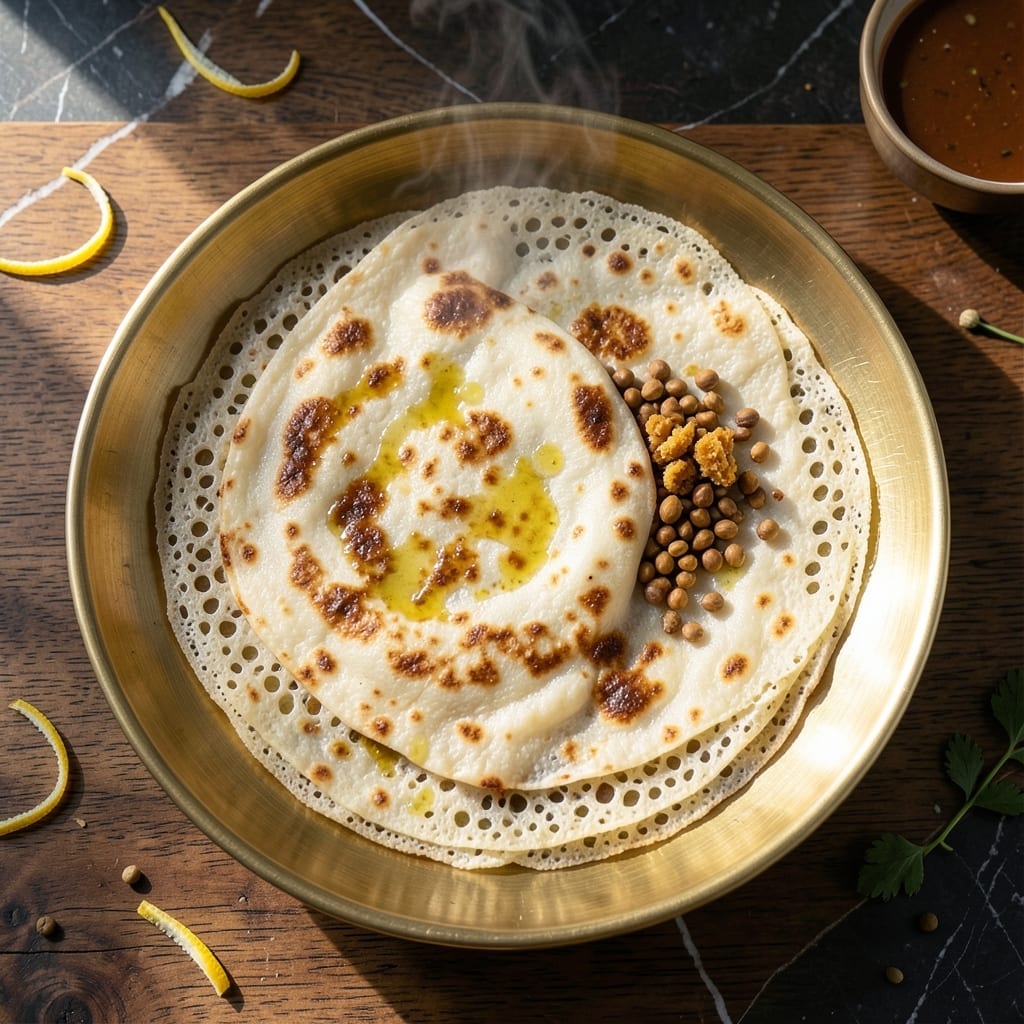
This traditional Tamil Nadu dish transforms simple ingredients into delicate, lacy crepes through fermentation. I first discovered pullattu while researching South Indian breakfast traditions, and its unique texture immediately stood out.
The process requires patience as rice and urad dal ferment overnight, developing the distinctive tang that defines this dish. The batter spreads thin on the griddle, creating crisp edges and a soft center that absorbs flavors beautifully.
What emerges is a dish that’s both light and satisfying, with a subtle sourness that pairs perfectly with coconut chutney or sweet jaggeries. The fermentation step is non-negotiable for achieving authentic taste and texture.
While it demands planning, the hands-on time is minimal. This recipe brings a taste of Tamil Nadu to your kitchen with impressive results.
Ingredients for Pullattu Recipe Vismai Food
Traditional Tamil Nadu ingredients create delicate fermented crepes with authentic tang and texture.
| Ingredient | Amount | Notes |
|---|---|---|
| Raw Rice 🌾 | 2 cups | Short-grain or parboiled preferred |
| Urad Dal 🌱 | ½ cup | Whole black gram, unskinned |
| Fenugreek Seeds 🌿 | ½ tsp | For fermentation aid |
| Water 💧 | 4 cups | For soaking and grinding |
| Salt 🧂 | 1 tsp | Adjust to taste after fermentation |
| Coconut Oil 🥥 | 2 tbsp | For cooking crepes |
| Grated Coconut 🥥 | ¼ cup | Fresh or frozen, optional for chutney |
| Green Chilies 🌶️ | 2 whole | Finely chopped for chutney |
| Cumin Seeds 🌿 | ½ tsp | For chutney tempering |
| Mustard Seeds 🌿 | ½ tsp | For chutney tempering |
| Curry Leaves 🍃 | 8 pieces | Fresh for chutney |
| Jaggery 🍚 | ¼ cup | Grated for sweet accompaniment |
The rice and urad dal are non-negotiable for authenticity. Short-grain or parboiled rice yields the best lacy texture, while whole black gram dal (urad dal) provides the necessary fermentation. Indian grocery stores like Patel Brothers or local South Asian markets will have these. Fenugreek seeds, though small in quantity, are crucial for proper fermentation—don’t skip them.
No urad dal? Split pigeon peas (toor dal) won’t give the same result but can work in a pinch. For the chutney, dried coconut can replace fresh (rehydrate in warm water), and frozen coconut works too (thaw first). Jaggery can be substituted with brown sugar or coconut sugar, but the flavor profile will differ slightly. Fresh curry leaves are ideal but dried can be used at half the quantity.
Fermented batter keeps in the fridge for 2-3 days—the tang will intensify. Cooked crepes are best served immediately but can be reheated briefly on a griddle. Store chutney separately in an airtight container for up to 5 days. Always bring ingredients to room temperature before fermenting for optimal results.
Why You’ll Love This Recipe
- Fuss-Free Ferment: I just soak the rice and dal overnight, blend, and let it ferment—no fancy steps, just time doing the work.
- That Fenugreek Magic: Honestly, the hint of fenugreek in the urad dal batter gives it that subtle bitterness that makes pullattu so addictive.
- Breakfast or Dinner: Here’s what sold me—it works for a quick morning dosa or a hearty dinner with coconut chutney.
- Pennywise Feast: Raw rice and urad dal stretch forever. I’ll be real: this feeds my family for days on a shoestring budget.
Step-by-Step Instructions for Tamil Nadu-Style Fermented Rice Crepes
Master the traditional soaking, grinding, and fermentation process for authentic results.
Step 1: Soak the Rice and Dal Mixture
Combine the 2 cups Raw Rice, 0.5 cup Urad Dal, and 0.5 tsp Fenugreek Seeds in a large bowl. Rinse thoroughly under cold water until the water runs clear, then drain completely. This removes excess starch and ensures a smooth batter.
Add the 4 cups Water and mix well, ensuring all grains are submerged. The fenugreek seeds will aid fermentation, so don’t skip this. Cover and let soak for 6-8 hours or overnight. You’ll notice the rice and dal plump significantly, which is ideal for grinding.
Step 2: Grind to a Smooth Batter
Drain the soaked mixture completely, reserving any excess water. Transfer to a wet grinder or high-speed blender. Grind in batches if needed, adding small amounts of the reserved water as necessary to achieve a smooth, pourable consistency.
The batter should be slightly thicker than heavy cream. I’ve found that grinding for 15-20 minutes yields the best texture. The mixture will heat up during grinding—this is normal. Transfer to a large container, leaving room for expansion.
Step 3: Ferment the Batter
Add the 1 tsp Salt to the batter and mix well. Cover loosely with a clean kitchen towel and let ferment in a warm place for 8-12 hours. In cooler climates, you may need up to 24 hours. The batter should rise and develop a slightly tangy aroma.
You’ll know it’s ready when the surface is bubbly and the volume has increased by about 25%. This fermentation is crucial for that authentic pullattu flavor and digestibility. Stir gently before using.
Step 4: Prepare the Coconut-Jaggery Chutney
In a small pan, heat 1 tbsp Coconut Oil over medium heat. Add the 0.5 tsp Mustard Seeds and let them pop, which should take about 30 seconds. Immediately add the 0.5 tsp Cumin Seeds, 8 pieces Curry Leaves, and 2 whole Green Chilies (finely chopped).
Sauté for 1 minute until the chilies soften. Add the 0.25 cup Grated Coconut and 0.25 cup Jaggery, stirring constantly for 3-4 minutes until the jaggery melts and the mixture thickens slightly. Remove from heat and let cool.
Step 5: Cook the Crepes to Golden Perfection
Heat a non-stick skillet or griddle over medium heat. Lightly grease with some of the remaining 2 tbsp Coconut Oil. Pour a ladle of batter onto the center of the pan, quickly swirling to form a thin, even circle about 6-7 inches in diameter.
Cook undisturbed for 2-3 minutes until the edges lift and the surface appears set with small bubbles. Drizzle a few drops of coconut oil around the edges, then flip and cook for another 1-2 minutes until golden brown spots appear. Serve hot with the coconut-jaggery chutney.
Pro Tips For Making Pullattu Recipe Vismai Food
- Soak Overnight: I learned this the hard way—raw rice and urad dal need a full 8-10 hours in water to soften properly. Anything less and your pullattu will turn out dense instead of light and fluffy.
- Grind in Batches: Sounds tedious, but grinding the soaked dal and rice in small batches with just enough water makes a real difference. Overloading the blender gives you uneven batter, and nobody wants lumpy pullattu.
- Ferment Fully: After grinding, let the batter ferment for at least 6-8 hours in a warm spot. I skip this when I’m in a hurry, but the dish is noticeably better when I don’t—it’s what gives pullattu that tangy, authentic flavor.
- Steam Evenly: Use a deep, heavy-bottomed vessel for steaming and make sure the water doesn’t touch the batter. My grandmother swore by this, and she was right: it guarantees the pullattu cooks through without turning soggy at the bottom.
Best Sauces and Condiments for This pullattu recipe vismai food
Classic Coconut Chutney
This is my go-to pairing for pullattu. Blend ½ cup Grated Coconut with 2 Green Chilies, a pinch of salt, and ¼ cup water until smooth. Temper with ½ tsp Mustard Seeds and ½ tsp Cumin Seeds in 1 tbsp Coconut Oil for that restaurant-style finish. 💫
Sweet Jaggery Syrup
Simmer ½ cup Jaggery with ¼ cup water until dissolved, then add ½ tsp cardamom powder for depth. Drizzle this over hot crepes for a sweet contrast to the tangy batter. The syrup thickens as it cools.
Spicy Tomato Chutney
Sauté 1 tbsp Mustard Seeds, 8 Curry Leaves, and 2 dry Red Chilies in oil. Add 2 chopped Tomatoes and cook until mushy. This tangy-spicy chutney from my Indian deli visits cuts through the crepes beautifully.
Yogurt Dip
Whisk 1 cup plain Yogurt with ½ tsp roasted Cumin powder, salt, and a pinch of Asafoetida. The cool yogurt balances the fermented tang perfectly. I learned this trick from Boston’s Indian grocery owners.
Onion-Tomato Sambar
Temper ½ tsp Mustard Seeds, ½ tsp Urad Dal, and 2 dry Red Chilies. Add 1 chopped Onion, 1 Tomato, and ½ tsp Sambar powder. This thin lentil stew makes a hearty companion.
Nutrition Facts
Frequently Asked Questions
How long does the batter need to ferment?
Ferment in a warm place for 8-12 hours. In cooler climates, allow up to 24 hours for proper rise and tang development.
Can I use a blender instead of a wet grinder?
Yes, a high-speed blender works, but grind in batches for 15-20 minutes to achieve the smooth, pourable consistency needed for thin crepes.
What if my crepes aren’t lacy?
Ensure the batter is thin enough and the griddle is hot at medium heat. Swirl quickly for even spreading. The rice type also matters—use short-grain or parboiled.
How do I store leftover batter?
Refrigerate in an airtight container for up to 2-3 days. The tang will intensify over time, which some prefer. Stir well before using.

- Mary Berry’s Boiled Fruit Cake Recipe: Moist Center and Spiced Crust Magic - November 5, 2026
- Atlantic Salmon Recipe: Honey-Dill Pan-Seared With Crispy Skin - November 5, 2026
- Blaze Pizza Copycat Dough Recipe: Chewy, Airy Crust That Mimics the Original - November 5, 2026