
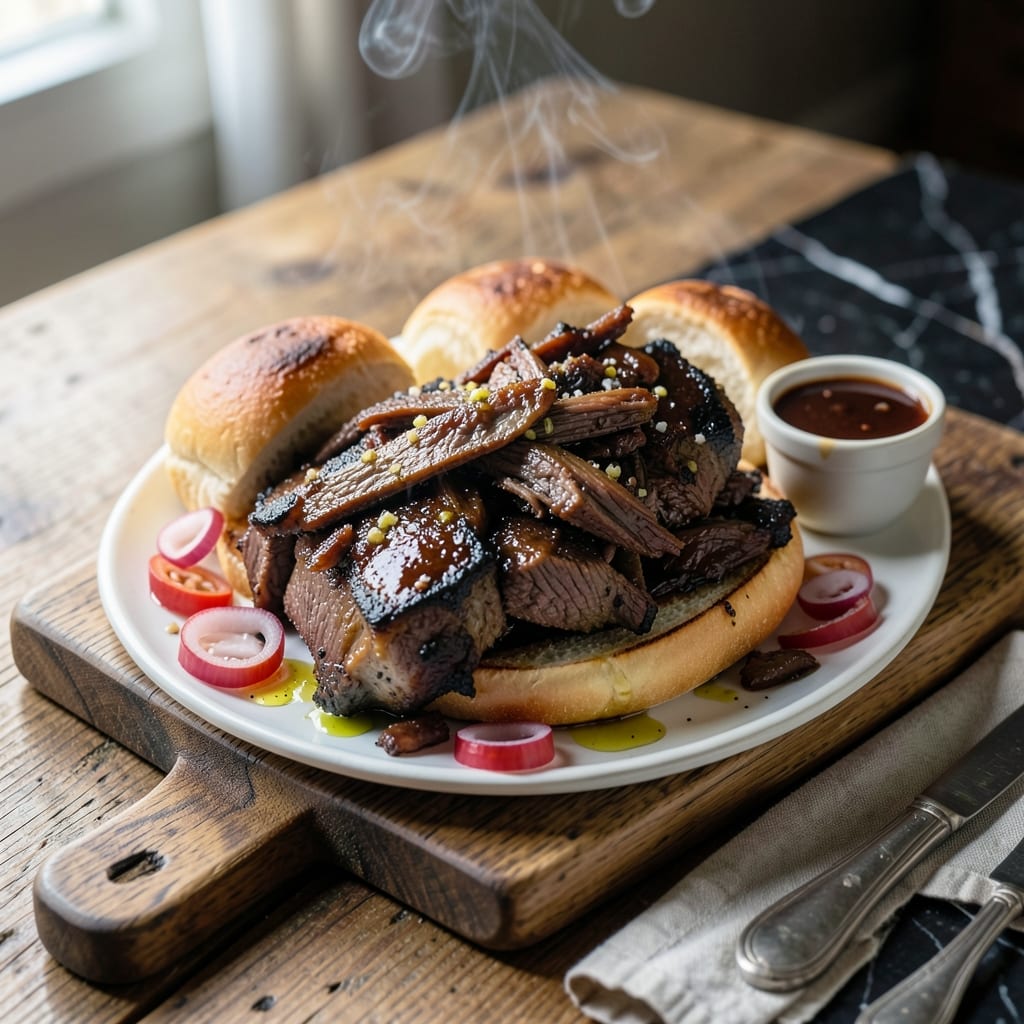
Nothing beats slow-smoked beef that falls apart at the touch of a fork. This method delivers that coveted smoky bark and melt-in-your-mouth texture without fancy equipment.
I’ve tested this on everything from offset smokers to my backyard pellet grill. The key is low and slow—225°F for 8-10 hours lets the collagen break down just right.
What you get is tender pulled beef with a deep mahogany crust, ready for sandwiches, tacos, or straight off the fork. David swears this is the best thing I’ve ever smoked.
Serve it with pickles, slaw, or on a buttery bun. Here’s how to nail it every time.
Ingredients for Pulled Beef Recipe Smoker
Short list. Big flavor. All standard stuff for low-and-slow magic.
| Ingredient | Amount | Notes |
|---|---|---|
| Beef Chuck Roast 🥩 | 4 lb | Well-marbled, boneless |
| Yellow Mustard 🟡 | ¼ cup | For binder rub |
| Brown Sugar 🧈 | ¼ cup | Light or dark variety |
| Kosher Salt 🧂 | 2 tbsp | Diamond Crystal preferred |
| Black Pepper 🌶️ | 2 tbsp | Coarsely ground |
| Garlic Powder 🧄 | 1 tbsp | Not garlic salt |
| Onion Powder 🧅 | 1 tbsp | Fresh ground preferred |
| Smoked Paprika 🌶️ | 1 tbsp | For bark color and flavor |
| Cayenne Pepper 🔥 | ½ tsp | Adjust for heat preference |
| Apple Cider Vinegar 🍏 | ½ cup | For spritzing during cook |
| Hickory Wood Chunks 🪵 | 4 pieces | Or chips for pellet grill |
| Beef Broth 🥫 | 2 cups | Low-sodium preferred |
| Unsalted Butter 🧈 | ½ cup | For finishing |
The beef is everything here. Chuck roast gives you that perfect pull-apart texture—brisket works too but takes longer. Look for good marbling at Costco or your local butcher (the pre-cut cubes save time but cost more). I always grab a roast that’s at least 4 lbs so leftovers are guaranteed. The bark forms best with a dry rub, so don’t skip the sugar and spices.
No hickory? Cherry or apple wood adds a sweeter smoke. Short on time? Pellet grills with a beef blend work great—just keep the temp at 225°F. The vinegar spritz keeps the meat moist (use a cheap spray bottle). If you’re out of brown sugar, white sugar plus molasses gets you close. The butter at the end is non-negotiable though—it’s what makes it shine.
Leftovers keep in the fridge for 4-5 days or freeze for 3 months. Reheat in a slow cooker with a splash of broth. The bark softens when stored, but a quick broil brings it back to life. Always slice against the grain when pulling.
Why You’ll Love This Recipe
- Set It and Forget: The smoker does all the work while I sip my coffee—just rub the chuck roast with mustard, sugar, and spices, then let the low heat work its magic.
- Sweet and Tangy: That yellow mustard and brown sugar crust forms this ridiculously good bark that’s sticky, smoky, and just a little sharp.
- Feeds a Crowd: I made this for my son’s birthday and had enough left for sandwiches, tacos, and a freezer meal—all from one chuck roast.
- Budget Hero: Honestly, a tough cut like chuck becomes fall-apart tender in the smoker, and it costs half what brisket does.
Step-by-Step Instructions for Pulled Beef Smoker
Here’s my proven method for achieving that perfect smoky bark and fall-apart tender beef.
Step 1: Prepare the Beef with a Flavorful Rub
Start by coating the 4 lb beef chuck roast with the 0.25 cup yellow mustard—this acts as a binder for the rub. I like to use a pastry brush to ensure even coverage all over the surface. The mustard won’t add flavor, but it helps the spices stick beautifully.
In a bowl, combine the 0.25 cup brown sugar, 2 tbsp kosher salt, 2 tbsp black pepper, 1 tbsp garlic powder, 1 tbsp onion powder, 1 tbsp smoked paprika, and 0.5 tsp cayenne pepper. Press this mixture firmly onto the mustard-coated roast, covering every inch. Let it sit at room temperature for 30 minutes while you prepare the smoker.
Step 2: Set Up Your Smoker with Hickory Wood
Preheat your smoker to 225°F using the 4 pieces hickory wood chunks. I’ve found hickory gives the perfect balance of smoke flavor without overpowering the beef. Make sure you’re using clean, thin blue smoke—not thick white smoke, which can make the meat bitter.
Once the smoker reaches temperature and the wood is producing that beautiful blue smoke, place the seasoned beef chuck roast directly on the grates, fat-side up. The fat will render down during cooking, basting the meat and adding incredible flavor. Close the lid and let the smoker do its work—resist the urge to peek for at least 2 hours.
Step 3: Spritz and Smoke to Perfection
After 3 hours of smoking, begin spritzing the beef every 45-60 minutes with the 0.5 cup apple cider vinegar. This keeps the surface moist and helps develop that beautiful dark bark we’re after. I use a simple spray bottle for this—just fill it with the vinegar and give the beef a light misting all over.
Continue smoking until the internal temperature reaches 195-203°F and the beef probes tender like butter. This usually takes 8-10 hours total, depending on your smoker’s consistency. When it’s done, the beef should have a dark, crusty exterior and pull apart easily with a fork.
Step 4: Rest and Shred with Finishing Touch
Carefully remove the beef from the smoker and wrap it tightly in butcher paper or foil. Let it rest for at least 1 hour—this allows the juices to redistribute and the collagen to fully break down. I like to place it in a cooler with towels to keep it warm during this rest.
After resting, transfer the beef to a large bowl or cutting board. Shred it using two forks or meat claws, discarding any large fat chunks. Pour the 2 cups beef broth over the shredded beef and add the 0.5 cup unsalted butter, mixing everything together. This final step adds moisture and richness that takes your pulled beef to the next level. Serve immediately on buns or over mashed potatoes.
Pro Tips For Making Pulled Beef Recipe Smoker
- Low and Slow Wins: Smoke at 225°F and give it 8-10 hours—any higher and the chuck roast turns tough instead of fall-apart tender. I learned this the hard way after pulling dry beef at 275°F.
- Rub it Right: Coat the chuck roast with yellow mustard before the brown sugar rub—it sticks better and forms a killer bark. Sounds weird, but it works.
- Don’t Rush the Rest: Let the pulled beef rest in a foil pan for at least 30 minutes after smoking—it reabsorbs the juices. Skip this and you’ll be left with a dry, sad pile of meat.
- Skip the Lean Cuts: Chuck roast is non-negotiable here; leaner cuts like sirloin just don’t have enough fat to stay moist through the long smoke. I was skeptical until I tried it.
Essential Equipment for pulled beef recipe smoker
Smoker Essentials
For pulled beef, I rely on my Weber Smokey Mountain—it maintains 225°F perfectly for those long cooks. David swears by his Traeger Pro 780 pellet grill for set-it-and-forget-it convenience. Either works, but offset smokers need more attention. 🌡️
Temperature Control
A dual-probe thermometer is non-negotiable. I use the ThermoWorks Smoke to track both smoker temp and internal meat temp. Cheaper options like Taylor Precision work too, but avoid single-probe models.
Wood and Fuel
Hickory chunks give that classic beef smoke flavor, but cherry wood adds sweetness. For charcoal, Royal Oak lump burns clean and hot. Always keep extra fuel nearby—8-10 hour cooks go through a lot.
Spritzing Tools
A simple spray bottle from the dollar store works for the apple cider vinegar spritz. I keep a second bottle with water to tame any flare-ups. The vinegar keeps the bark from drying out during the long smoke.
Pro tip: Use a food-grade silicone brush to mop on extra sauce if you’re feeling fancy.
Resting Setup
After smoking, wrap the beef in pink butcher paper (not foil) and rest in a cooler with towels. This keeps it warm for 1-2 hours while the juices redistribute. I learned this trick working at a BBQ joint in Asheville.
Nutrition Facts
Frequently Asked Questions
What cut works best for smoking?
Chuck roast is ideal for pulled beef due to its marbling and connective tissue. Brisket also works but requires 12-14 hours at 225°F. Avoid lean cuts like sirloin—they’ll dry out.
How do I know when it’s done?
Use a probe thermometer: it’s ready at 195-203°F internal temp. The meat should pull apart like butter when tested with a fork. Don’t rely on time alone—size and smoker vary.
Can I skip the resting step?
Never skip resting! Let it rest wrapped for at least 1 hour to redistribute juices. Slicing too soon causes dry, tough meat. A cooler with towels keeps it warm perfectly.

- White Jello Shot Recipe: Creamy Vodka Magic in 30 Seconds - November 5, 2026
- Mary Berry’s Boiled Fruit Cake Recipe: Moist Center and Spiced Crust Magic - November 5, 2026
- Atlantic Salmon Recipe: Honey-Dill Pan-Seared With Crispy Skin - November 5, 2026