
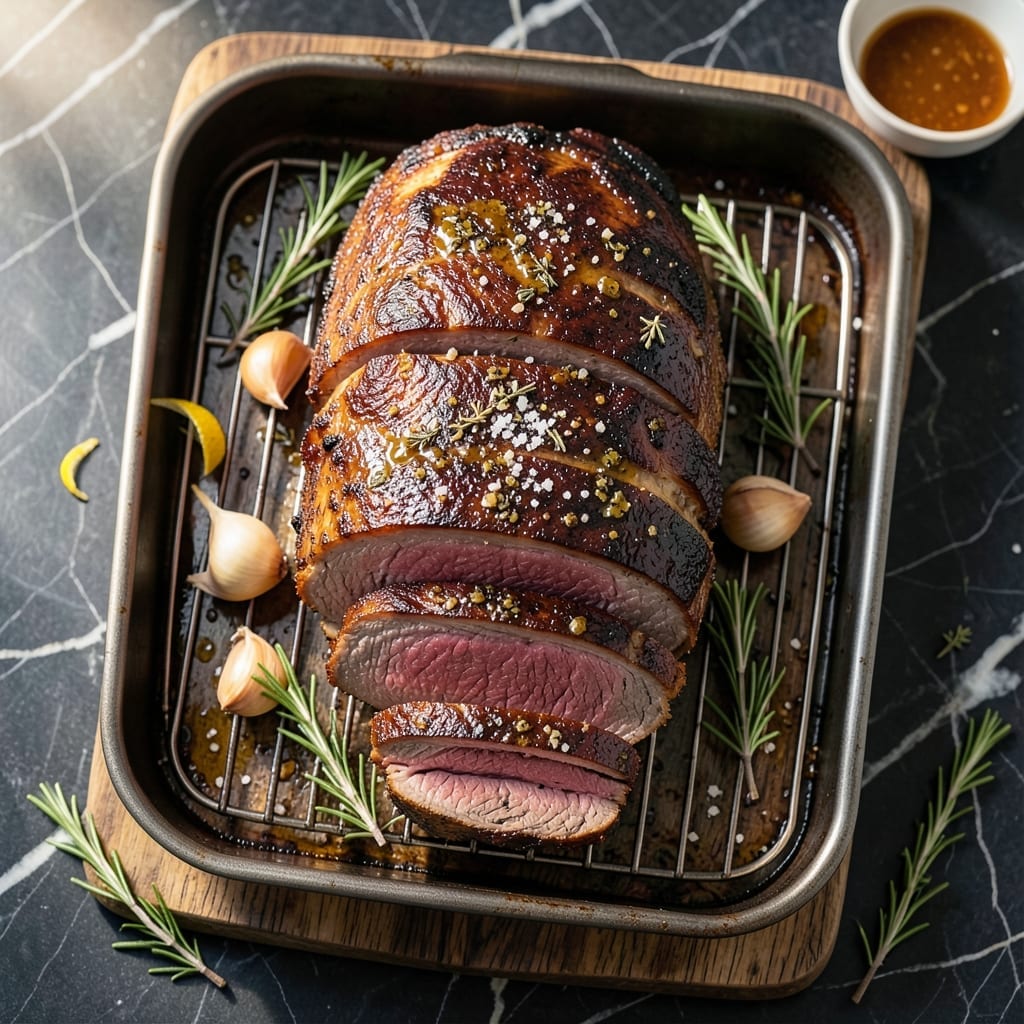
Achieving perfect pink prime rib at home is simpler than most realize. This method relies on low, steady heat to transform a tough cut into a tender, juicy centerpiece.
Roasting at 200 degrees allows the meat to cook evenly without drying out. The result is a crust so flavorful and meat so tender, it rivals any steakhouse.
What you get is a showstopping roast with a deep, caramelized exterior and a rosy, moist interior. The slow approach ensures every slice delivers consistent doneness from edge to edge.
This technique works for any size roast and requires minimal hands-on time. Here is how to master it in your own kitchen.
Ingredients for Prime Rib Roast Recipe 200 Degrees
A bone-in roast and pantry staples create this slow-roasted centerpiece with minimal effort.
| Ingredient | Amount | Notes |
|---|---|---|
| Prime Rib Roast 🥩 | 5 lb | Bone-in, well-marbled preferred |
| Kosher Salt 🧂 | 2 tbsp | Diamond Crystal or Morton preferred |
| Freshly Ground Black Pepper 🌶️ | 2 tsp | Coarse grind for crust |
| Garlic Cloves 🧄 | 6 cloves | Minced into paste |
| Fresh Rosemary 🌿 | 4 sprigs | Leaves stripped and chopped |
| Fresh Thyme 🍃 | 4 sprigs | Leaves stripped and chopped |
| Olive Oil 🫒 | ¼ cup | For herb paste |
| Dijon Mustard 🟡 | 2 tbsp | For crust binding |
| Red Wine 🍷 | 1 cup | Dry variety for au jus |
| Beef Stock 🥩 | 2 cups | Low-sodium preferred |
| Unsalted Butter 🧈 | ½ cup | For herb butter finish |
| All-Purpose Flour 🌾 | 2 tbsp | For thickening au jus |
The prime rib itself is non-negotiable—bone-in, well-marbled cuts from a trusted butcher like Whole Foods or a local meat shop deliver the best results. Look for a roast with bright red color and abundant fat streaking. The kosher salt matters here; Diamond Crystal is the professional standard for its clean flavor and even distribution. For the herbs, fresh is essential—dried won’t give you that vibrant crust.
No red wine for au jus? Beef broth with a splash of balsamic vinegar works in a pinch. Fresh out of rosemary? Dried rosemary at one-third the amount can substitute, though fresh delivers superior aroma. The Dijon mustard can be swapped for whole-grain mustard if that’s what you have on hand. For the beef stock, Better Than Bouillon makes a solid concentrate that’s widely available.
The roast can rest at room temperature for up to 2 hours before cooking, which actually improves texture. Leftovers (if any exist) keep beautifully in the fridge for 4-5 days. The au jus freezes well for 3 months—perfect for quick pan sauces later.
Why You’ll Love This Recipe
- Set and Forget: That 200-degree oven means I can pop it in, walk away for hours, and come back to a perfectly tender roast with zero stress.
- Garlic-Rosemary Crust: The combo of fresh rosemary and crushed garlic forms a crust so flavorful I don’t even need a fancy sauce.
- Feeds the Whole Gang: Honestly, this one prime rib roast stretches to feed a crowd with enough leftovers for sandwiches the next day.
- Budget Luxury: I get that fancy, restaurant-quality taste at home without paying steakhouse prices for each serving.
Step-by-Step Instructions for Prime Rib Roast at 200 Degrees
This method delivers perfectly even cooking with a beautiful crust and rosy pink center every time.
Step 1: Prepare the Herb Paste and Season the Roast
Combine the 0.25 cup olive oil, 6 cloves garlic cloves, chopped leaves from 4 sprigs fresh rosemary, and chopped leaves from 4 sprigs fresh thyme in a small bowl. Mash into a paste with the back of a spoon.
Pat the 5 lb prime rib roast completely dry with paper towels. Rub the herb paste all over the surface of the roast, pressing it into the meat. Then generously season with 2 tbsp kosher salt and 2 tsp freshly ground black pepper.
Finally, brush the entire roast with 2 tbsp Dijon mustard to help create a beautiful crust. This paste will infuse flavor and create a stunning exterior as it roasts.
Step 2: Slow-Roast at Low Temperature
Place the seasoned roast on a rack in a roasting pan, bone side down. Insert a meat thermometer into the thickest part of the roast, avoiding the bone. Roast uncovered in a preheated 200°F oven.
This low and slow method ensures even cooking from edge to edge. Plan for approximately 30-35 minutes per pound for medium-rare, but rely on the thermometer rather than time. The roast is done when the internal temperature reaches 120-125°F for medium-rare.
You’ll notice the exterior developing a beautiful golden-brown crust while the interior remains perfectly pink throughout.
Step 3: Create the Au Jus
Transfer the roast to a cutting board and tent loosely with foil to rest. Place the roasting pan on the stovetop over medium heat. Add 1 cup red wine and scrape up all the browned bits from the bottom of the pan.
Simmer for 2-3 minutes until the wine reduces by half. Then add 2 cups beef stock and bring to a gentle simmer. The liquid should be rich and flavorful from all the roast’s drippings.
Step 4: Thicken and Finish the Sauce
In a small bowl, mix 2 tbsp all-purpose flour with 2 tablespoons of the hot au jus to create a slurry. Whisk this back into the pan and simmer for 2-3 minutes until the sauce thickens enough to coat the back of a spoon.
Remove from heat and stir in 0.5 cup unsalted butter, one tablespoon at a time, until fully melted and incorporated. This creates a rich, velvety sauce with incredible depth of flavor. Strain if desired for a smoother texture.
The sauce should have a beautiful sheen and be thick enough to cling to the sliced meat without being heavy.
Step 5: Slice and Serve
After resting for 15-20 minutes, the internal temperature will rise to about 130-135°F for perfect medium-rare. Carve the roast by slicing between the bones for elegant portions.
Arrange the slices on a platter and spoon some of the warm au jus over the top. Serve the remaining sauce on the side for dipping. Each slice should reveal that perfect pink center with a flavorful crust, ready to impress your guests.
Pro Tips For Making Prime Rib Roast Recipe 200 Degrees
- Dry the Roast: Pat the prime rib completely dry with paper towels before seasoning—this guarantees a better crust at 200 degrees. I learned this the hard way after my first roast came out steamed instead of seared.
- Use a Thermometer: Skip guessing and invest in a meat thermometer. At 200 degrees, the temp rises slowly, so pulling it at 120-125°F for medium-rare is the only way to avoid overcooking.
- Smash the Garlic: Crush the garlic cloves lightly before rubbing them on the roast—it releases more flavor without the risk of burning. Sounds weird, but it works.
- Rest Before Slicing: Give the roast a solid 15-20 minutes under foil after it comes out. This lets the juices redistribute, and I was skeptical until I tried it—now I never skip it.
Make-Ahead Tips for This prime rib roast recipe 200 degrees
Overnight Seasoning
I always season my prime rib the night before cooking. This gives the kosher salt and herb paste time to deeply penetrate the meat. Simply prepare your roast as directed, wrap it loosely in plastic, and refrigerate for 8-12 hours. 💡
Room Temperature Start
Remove your seasoned roast from the fridge 2-3 hours before cooking. This allows the meat to come to room temperature, ensuring more even cooking. I place mine on a rack in the roasting pan during this time to let air circulate.
Prep the Au Jus Base
You can measure and prep all au jus ingredients in advance. Combine your 1 cup red wine and 2 cups beef stock in a container and refrigerate. This saves crucial minutes when you’re ready to make the sauce after roasting.
Herb Butter Ready
Mix your 0.5 cup unsalted butter with any leftover herb paste from seasoning the roast. Roll this into a log in parchment paper and refrigerate. Slice off pats to melt over the carved prime rib when serving for an extra flavor boost.
Oven Prep
Before bed, I set my oven to preheat to 200°F and place the roasting pan inside. This ensures the oven reaches temperature exactly when I’m ready to cook in the morning. Just
Resting Space
Clear space on your counter for the roast to rest after cooking. I lay out a large cutting board and have foil ready to tent over the meat. This 15-20 minute rest is crucial for juicy slices, so have everything prepared in advance.
Nutrition Facts
Frequently Asked Questions
How long should I rest the meat before slicing?
Let it rest for 15-20 minutes after removing from the oven. This allows juices to redistribute for maximum moisture. Skipping this step can result in dry slices.
Can I use a boneless cut instead?
Yes, but bone-in provides more flavor and helps maintain shape during cooking. For boneless, reduce cooking time slightly and use a thermometer to check doneness at 120-125°F.
What if my oven doesn’t go as low as 200°F?
Set it to the lowest temperature possible, likely 225°F. Expect slightly faster cooking—start checking internal temperature about 30 minutes earlier than the recipe suggests.
Why is the temperature so low?
This method ensures even cooking from edge to edge. Higher heat can create a temperature gradient, leaving edges overdone while the center remains undercooked.

- White Jello Shot Recipe: Creamy Vodka Magic in 30 Seconds - November 5, 2026
- Mary Berry’s Boiled Fruit Cake Recipe: Moist Center and Spiced Crust Magic - November 5, 2026
- Atlantic Salmon Recipe: Honey-Dill Pan-Seared With Crispy Skin - November 5, 2026