
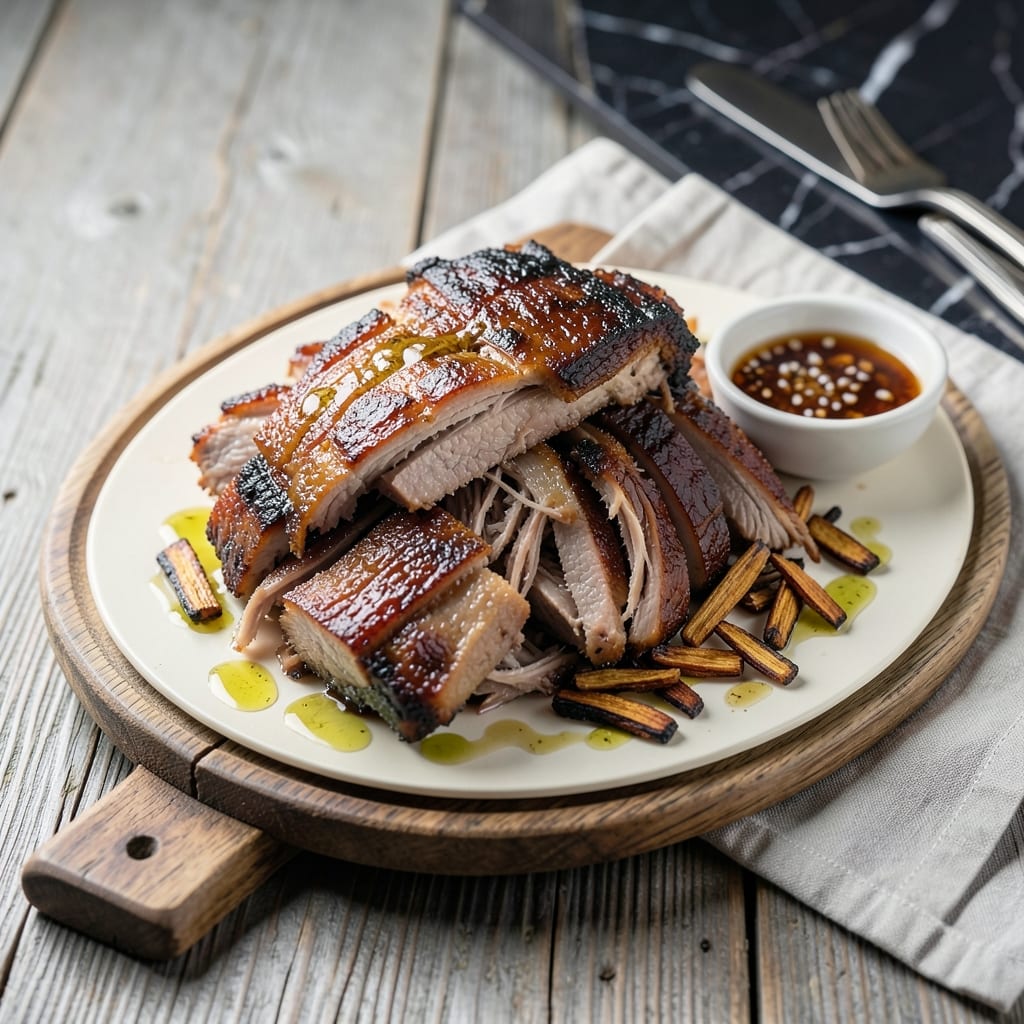
I developed this brining method after years of testing to ensure juicy pulled pork every time. The oak-infused brine penetrates the meat deeply, locking in moisture for the long smoking process.
This technique works for any cut, but pork shoulder responds best. The brine adds subtle smokiness while enhancing the meat’s natural flavors, resulting in tender, flavorful pulled pork.
After brining, the pork smokes low and slow until it reaches the perfect internal temperature. The result is meat that shreds effortlessly with a rich, complex flavor profile.
Whether you’re feeding a crowd or meal prepping, this method delivers consistent, juicy results that will impress even the most discerning barbecue enthusiasts.
Ingredients for Pulled Pork Brine Recipe for Smoking
Oak-infused brine transforms pork shoulder into tender, smoky pulled pork with deep flavor.
| Ingredient | Amount | Notes |
|---|---|---|
| Pork Shoulder 🐖 | 4 lb | Bone-in preferred for moisture |
| Water 💧 | 4 cups | Filtered or distilled |
| Kosher Salt 🧂 | ¾ cup | Diamond Crystal preferred |
| Brown Sugar 🍚 | ½ cup | Light or dark variety |
| Apple Cider Vinegar 🍏 | ½ cup | For acidity balance |
| Oak Wood Chips 🪵 | 1 cup | For smoke infusion |
| Black Peppercorns 🌶️ | 1 tbsp | Whole, lightly crushed |
| Garlic Cloves 🧄 | 6 cloves | Smashed for maximum flavor |
| Bay Leaves 🌿 | 4 whole | Dried, whole leaves |
| Juniper Berries 🫒 | 1 tbsp | Optional for depth |
| Yellow Mustard Seeds 🌿 | 1 tbsp | For subtle tang |
| Red Pepper Flakes 🌶️ | 1 tsp | Adjust to spice preference |
The pork shoulder is critical—bone-in cuts retain moisture better during smoking. Source from a reputable butcher or Whole Foods for consistent quality. Diamond Crystal kosher salt is ideal for its clean flavor and even dissolution. Oak wood chips should be food-grade and untreated. Most specialty barbecue shops or Home Depot carry them in the grilling section.
No pork shoulder? Pork butt works identically (it’s the same cut, just different labeling). Short on brown sugar? White sugar plus molasses mimics the depth. Skip the oak chips? Hickory or apple wood offer different smoke profiles. Apple cider vinegar can be replaced with white vinegar in a pinch, though the flavor will be sharper.
The brine keeps refrigerated for 1 week—ideal for prepping ahead. Smoked pork stores in the fridge for 4-5 days or freezes for 3 months. Always brine in a non-reactive container (glass or food-grade plastic) to avoid metallic flavors.
Why You’ll Love This Recipe
- Set and Forget: I mix the brine the night before, toss in the pork shoulder, and let the smoker do the work.
- Sweet and Tangy: The brown sugar caramelizes while the apple cider vinegar cuts through the richness—every bite’s balanced.
- Feeds a Crowd: One pork shoulder makes enough for sandwiches, tacos, and leftovers that taste even better the next day.
- Budget Friendly: Pork shoulder is affordable, and this brine uses pantry staples I always have on hand.
Step-by-Step Instructions for Pulled Pork Brine for Smoking
This method ensures maximum moisture retention and deep flavor penetration for your creation.
Step 1: Prepare the Brine Base with Water and Salt
In a large pot, combine the 4 cups Water with the 0.75 cup Kosher Salt. I use Diamond Crystal for its clean flavor and consistent results. Place the pot over medium-high heat and stir until the salt dissolves completely—this should take 2-3 minutes.
You’ll see the water become slightly cloudy as the salt integrates. Don’t let it boil; you just need the salt fully dissolved to create a proper brine solution. This concentrated base will ensure even seasoning throughout the pork.
Step 2: Incorporate Sweet and Acidic Elements
Add the 0.5 cup Brown Sugar and 0.5 cup Apple Cider Vinegar to the pot. Stir constantly until the sugar dissolves completely, which takes about 1-2 minutes. The vinegar provides the acidity needed to tenderize the meat, while the sugar adds depth and balances the saltiness.
Watch for the mixture to become smooth and slightly syrupy. The vinegar’s sharp aroma will mellow as it heats. This combination creates the perfect environment for breaking down proteins while keeping the pork juicy during the long smoking process.
Step 3: Infuse with Aromatics and Spices
Add the 1 tbsp Black Peppercorns, 6 cloves Garlic Cloves, 4 whole Bay Leaves, 1 tbsp Juniper Berries, 1 tbsp Yellow Mustard Seeds, and 1 tsp Red Pepper Flakes to the brine. Lightly crush the peppercorns and juniper berries to release their essential oils.
Reduce heat to low and let the mixture simmer for 5 minutes to allow the spices to infuse. You’ll notice the garlic becoming fragrant and the peppercorns releasing their aromatic qualities. This step ensures every bite of your final dish carries complex, layered flavors.
Step 4: Cool and Submerge the Pork Shoulder
Remove the brine from heat and let it cool to room temperature—this takes about 30-45 minutes. It’s crucial to wait until completely cool before adding the pork to prevent cooking it prematurely. I like to speed this up by placing the pot in an ice bath, stirring occasionally.
Once cooled, submerge the 4 lb Pork Shoulder completely in the brine. Use a plate or weight to keep it under the liquid if necessary. The pork should be fully immersed for 12-24 hours in the refrigerator to achieve optimal flavor and moisture retention.
The brine will turn slightly pink as it works its way into the meat. This visual change confirms the brine is penetrating properly, setting the stage for incredibly juicy results after smoking with the 1 cup Oak Wood Chips.
Pro Tips For Making Pulled Pork Brine Recipe For Smoking
- Brine Overnight: I learned this the hard way—soak that pork shoulder in the salt, sugar, and vinegar mix for at least 12 hours, or the flavors won’t penetrate deep enough to matter.
- Use Warm Water: Dissolve the kosher salt and brown sugar in warm water first—cold water just leaves you with a grainy, uneven brine.
- Skip the Over-Salting: Stick to 1 cup of kosher salt per gallon of water; any more and your pulled pork will taste like a salt lick.
- Add Vinegar Last: Stir in the apple cider vinegar after the salt and sugar dissolve, or it’ll slow down the process and leave your brine weak.
Dietary Considerations for pulled pork brine recipe for smoking
Gluten-Free Naturally
This brined pulled pork is inherently gluten-free since the recipe contains no wheat, barley, or rye. All ingredients—from the 4 lb Pork Shoulder to the 0.75 cup Kosher Salt—are naturally free from gluten. Just ensure your spices are pure and unadulterated.
Low-Carb Friendly
The brine adds minimal carbs, with only 0.5 cup Brown Sugar in the entire 4 cups of liquid. Most of the sugar stays in the brine, not the meat. For stricter keto, you can reduce the brown sugar by half without affecting the texture.
Dairy-Free by Design
No dairy products are used in this recipe, making it safe for those with lactose intolerance. The Apple Cider Vinegar and spices provide all the flavor you need. Even the smoking process with Oak Wood Chips remains completely dairy-free.
Sodium Considerations
With 0.75 cup Kosher Salt in the brine, this recipe is higher in sodium. To reduce, cut the salt by 25% and increase brining time to 24 hours. I often rinse the pork briefly after brining to remove excess surface salt. 💡
Allergen Awareness
The primary allergens to watch are the Yellow Mustard Seeds and Juniper Berries. For mustard allergies, omit the seeds entirely. For berry allergies, skip the juniper. Always check spice labels for cross-contamination warnings.
Paleo Adaptations
To make this paleo-friendly, replace the 0.5 cup Brown Sugar with coconut sugar or honey. Ensure your Kosher Salt has no additives. The rest of the ingredients are already paleo-compliant.
Nutrition Facts
Frequently Asked Questions
How long should I brine the pork?
Brine the pork for 12-24 hours in the refrigerator. This timeframe allows the flavors to penetrate deeply while keeping the meat tender. Longer brining can make the texture mushy.
Can I reuse the brine for another batch?
No, never reuse brine. It can contain harmful bacteria after raw meat has been submerged. Always discard used brine and make a fresh batch for safety.
What if I don’t have oak wood chips?
Hickory or apple wood chips work well as substitutes. Each imparts a different smoke profile—hickory is stronger, while apple is sweeter and milder.
Should I rinse the pork after brining?
Rinsing is optional but can remove excess surface salt. If you do rinse, pat the pork dry thoroughly before smoking to help the bark form properly.

- White Jello Shot Recipe: Creamy Vodka Magic in 30 Seconds - November 5, 2026
- Mary Berry’s Boiled Fruit Cake Recipe: Moist Center and Spiced Crust Magic - November 5, 2026
- Atlantic Salmon Recipe: Honey-Dill Pan-Seared With Crispy Skin - November 5, 2026