
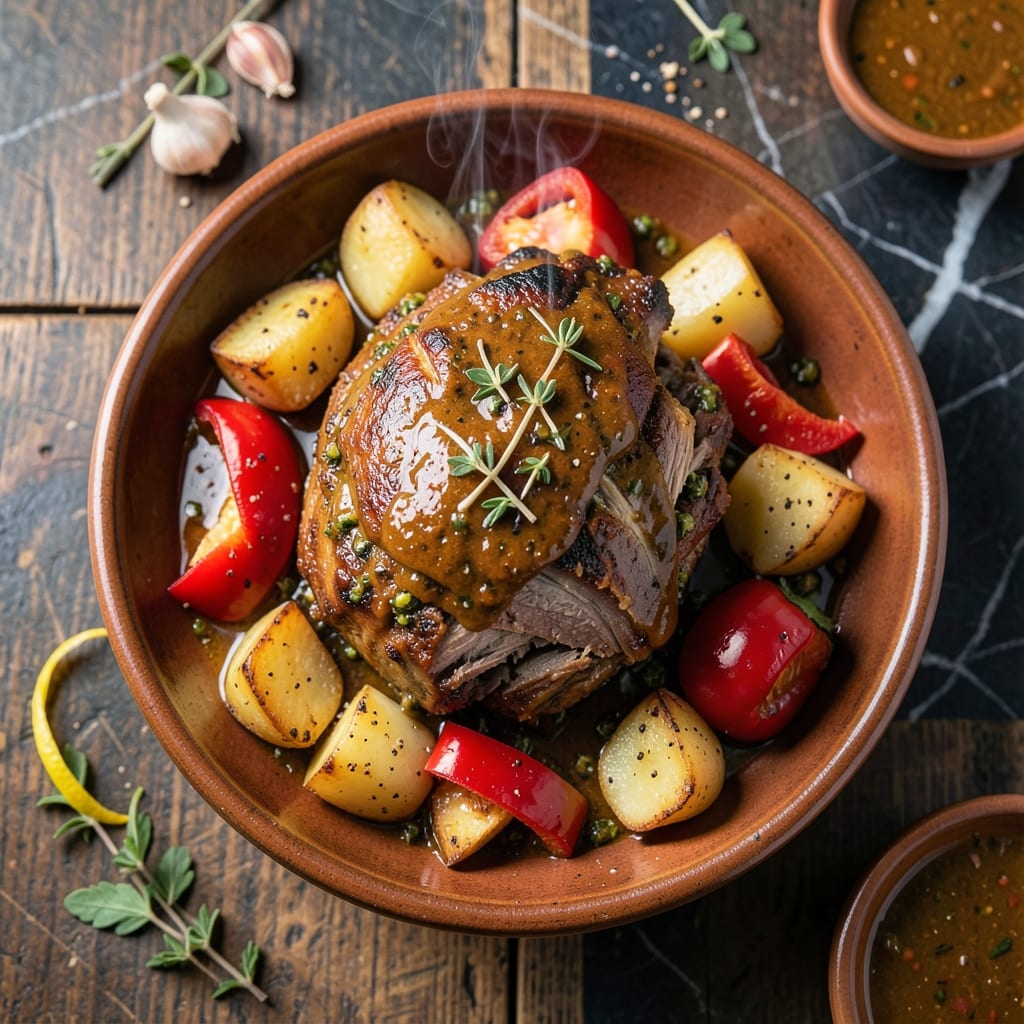
This oven-roasted pork shoulder delivers the tender, flavorful results of traditional Puerto Rican cooking with minimal hands-on time. The secret lies in a long, slow roast that transforms tough cuts into fall-apart meat.
I’ve perfected this method using classic adobo and sofrito for an authentic taste that fills your kitchen with irresistible aromas. The pork absorbs every bit of the bold seasoning, creating a dish that’s rich and deeply satisfying.
What emerges is succulent, slow-roasted pork with a crisp exterior and juicy interior, ready to serve over rice or in sandwiches. The oven does most of the work, ensuring consistent results every time.
This recipe stays true to Puerto Rican flavors while keeping the process simple and foolproof. Let’s get started.
Ingredients for Puerto Rican Pork Shoulder Recipe Oven
Rich, slow-roasted pork shoulder elevated by bold Puerto Rican sofrito and adobo seasoning.
| Ingredient | Amount | Notes |
|---|---|---|
| Pork Shoulder 🥩 | 4 lb | Bone-in preferred for flavor |
| Adobo Seasoning 🌶️ | 3 tbsp | Puerto Rican blend preferred |
| Sofrito 🧅 | ¾ cup | Homemade or store-bought |
| Garlic Cloves 🧄 | 8 cloves | Minced for maximum flavor |
| Dried Oregano 🍃 | 1 tbsp | Fresh is acceptable too |
| Ground Black Pepper 🌶️ | 2 tsp | Freshly ground preferred |
| Ground Cumin 🌿 | 1 tsp | Toasted for depth |
| Olive Oil 🫒 | ¼ cup | Extra-virgin for richness |
| White Vinegar 💧 | 2 tbsp | Balances richness of pork |
| Bay Leaves 🌿 | 2 whole | Removed before serving |
| Green Olives 🫒 | ½ cup | Pitted, sliced for garnish |
| Fresh Cilantro 🌿 | ¼ cup | Chopped for garnish |
| Kosher Salt 🧂 | 2 tsp | Adjust to taste |
| Lime Juice 🍋 | 2 tbsp | Freshly squeezed |
The pork shoulder is non-negotiable for authentic texture—bone-in gives richer flavor and keeps the meat juicy during the long roast. Costco and Sam’s Club often carry pre-portioned cuts. For adobo, Goya or Badia brands are widely available and deliver that signature Puerto Rican taste. Sofrito is the soul of this dish—homemade is ideal, but Goya’s frozen sofrito (the good stuff, not the pre-shredded kind) works in a pinch.
No adobo seasoning? Mix equal parts garlic powder, onion powder, and oregano with a pinch of black pepper and salt. Sofrito can be approximated with blended bell peppers, onions, and cilantro—not quite the same, but close. Pork shoulder can be swapped for pork butt (they’re often sold together). Fresh oregano is fine at half the amount of dried. Skip the vinegar if you’re sensitive to acidity—just add a squeeze of lime at the end.
This tastes even better the next day once the flavors meld. Store in an airtight container for up to 4 days in the fridge or 3 months frozen. Reheat gently in a skillet with a splash of water to keep it moist. The sofrito and adobo can be prepped 1 week ahead and stored separately.
Why You’ll Love This Recipe
- Set It and Forget: I rub the pork shoulder with adobo and oregano, pop it in the oven, and let the heat do the work while I do anything else.
- Flavor Bomb: The sofrito and garlic cloves melt into the meat, giving every bite that rich, authentic Puerto Rican taste.
- Feeds the Crew: One pork shoulder serves my whole family with leftovers, and it’s just as good in tacos the next day.
- Budget Hero: Honestly, pork shoulder is cheap, and a little goes a long way—this recipe stretches my grocery dollars without skimping on flavor.
Step-by-Step Instructions for Puerto Rican Pork Shoulder
Here’s the method for achieving fall-off-the-bone tenderness with rich, authentic flavor.
Step 1: Create the Marinade and Season the Pork
In a bowl, combine the 0.75 cup Sofrito, minced 8 cloves Garlic Cloves, 1 tbsp Dried Oregano, 2 tsp Ground Black Pepper, 1 tsp Ground Cumin, 0.25 cup Olive Oil, 2 tbsp White Vinegar, 2 tsp Kosher Salt, and 2 tbsp Lime Juice. This aromatic blend forms the flavor foundation of the dish.
Place the 4 lb Pork Shoulder in a large roasting pan and rub it generously with the marinade, making sure to coat all surfaces. Then sprinkle the 3 tbsp Adobo Seasoning evenly over the pork, pressing it into the meat so it adheres well. Add the 2 whole Bay Leaves to the pan, tucking them around the pork.
Step 2: Marinate for Maximum Flavor Penetration
Cover the pan tightly with plastic wrap or aluminum foil and refrigerate for at least 2 hours, or preferably overnight. This extended marination allows the bold flavors of the sofrito, garlic, and spices to deeply penetrate the pork, ensuring every bite is infused with Authentic Puerto Rican taste.
I always recommend the full overnight marinade for the most tender and flavorful result. If you’re short on time, even 4 hours will make a noticeable difference in the depth of flavor and moisture retention during cooking.
Step 3: Slow-Roast to Perfection
Preheat your oven to 325°F. This low temperature is crucial for breaking down the connective tissue in the pork shoulder without drying it out. Uncover the pork and pour any accumulated marinade over the top.
Roast the pork uncovered for 3.5 to 4 hours, basting it with the pan juices every 45-60 minutes. You’ll know it’s done when the meat is fork-tender and easily pulls apart with a gentle tug. The internal temperature should reach at least 195°F for that perfect shredding texture.
Step 4: Rest and Prepare for Serving
Remove the pork from the oven and discard the bay leaves. Let the meat rest in the pan for 15-20 minutes before serving. This resting period allows the juices to redistribute throughout the meat, ensuring it stays moist when shredded.
While the pork rests, slice the 0.5 cup Green Olives and chop the 0.25 cup Fresh Cilantro for garnish. Shred the pork using two forks, mixing the tender meat with some of the flavorful pan juices. Serve the pork topped with the sliced green olives and fresh cilantro for a bright, fresh finish.
Pro Tips For Making Puerto Rican Pork Shoulder Recipe Oven
- Sear the Shoulder: I learned this the hard way—browning the pork shoulder in a hot pan before it goes in the oven adds a depth of flavor that skipping this step just can’t match. About 3-4 minutes per side in a little oil is all it takes.
- Blend Fresh Sofrito: Store-bought sofrito works in a pinch, but blending fresh peppers, cilantro, and garlic with a little olive oil makes a real difference in brightness. I was skeptical until I tried it.
- Don’t Rush the Oregano: Rub the dried oregano into the adobo seasoning with your fingers before applying it—this releases the oils and guarantees the flavor sticks to the meat. Sounds weird, but it works.
- Cover for Tenderness: After the initial sear, cover the pork shoulder with foil or a lid for the first 2-3 hours in the oven. This locks in moisture so it doesn’t dry out before it gets fall-apart tender.
Essential Equipment for puerto rican pork shoulder recipe oven
Roasting Pan Essentials
Invest in a heavy-duty roasting pan with a rack—mine is 12×16 inches from All-Clad. The rack lifts the pork, allowing heat to circulate evenly and creating that coveted crispy exterior. I found mine at New Seasons Market and it’s been my go-to for years. ⚡
Meat Thermometer
A reliable instant-read thermometer is non-negotiable for perfect results. I use the ThermoWorks ThermoPop—it gives accurate readings in 3-4 seconds. This ensures you hit that sweet 195°F internal temp for fall-apart tenderness.
Mixing Bowls
For your marinade, a large mixing bowl with a pouring spout makes combining ingredients effortless. I prefer stainless steel from Cuisinox—it’s durable and won’t absorb odors. The spout helps distribute the marinade evenly over the pork.
Basting Tools
A silicon basting brush or turkey baster is essential for keeping the pork moist during the long roast. I use my OXO silicone brush every 45-60 minutes to baste with those flavorful pan juices.
Serving Dishes
For serving, a large shallow platter works beautifully to showcase the shredded pork. I love my handmade ceramic platter from the Portland farmers market—it keeps the meat warm while adding rustic charm to the presentation.
Knives and Cutting
A sharp 8-inch chef’s knife and cutting board are crucial for prepping your garnishes. I use a Wüsthof knife and a bamboo board from our local kitchen store. They make quick work of the cilantro and olives. 💪
Nutrition Facts
Frequently Asked Questions
What’s the ideal internal temperature?
Aim for 195°F for perfect shredding texture. This ensures connective tissue breaks down completely. Use a meat thermometer for accuracy.
Can I use a different cut of pork?
Pork butt works as a substitute, though shoulder is traditional. Both have enough fat for slow roasting. Avoid lean cuts like tenderloin.
How long should I marinate?
Overnight is best for deep flavor, but 2-4 hours works in a pinch. The longer it marinates, the more tender and flavorful it becomes.
How do I keep it from drying out?
Baste every 45-60 minutes with pan juices. Also, don’t skip the resting time after cooking.

- White Jello Shot Recipe: Creamy Vodka Magic in 30 Seconds - November 5, 2026
- Mary Berry’s Boiled Fruit Cake Recipe: Moist Center and Spiced Crust Magic - November 5, 2026
- Atlantic Salmon Recipe: Honey-Dill Pan-Seared With Crispy Skin - November 5, 2026