
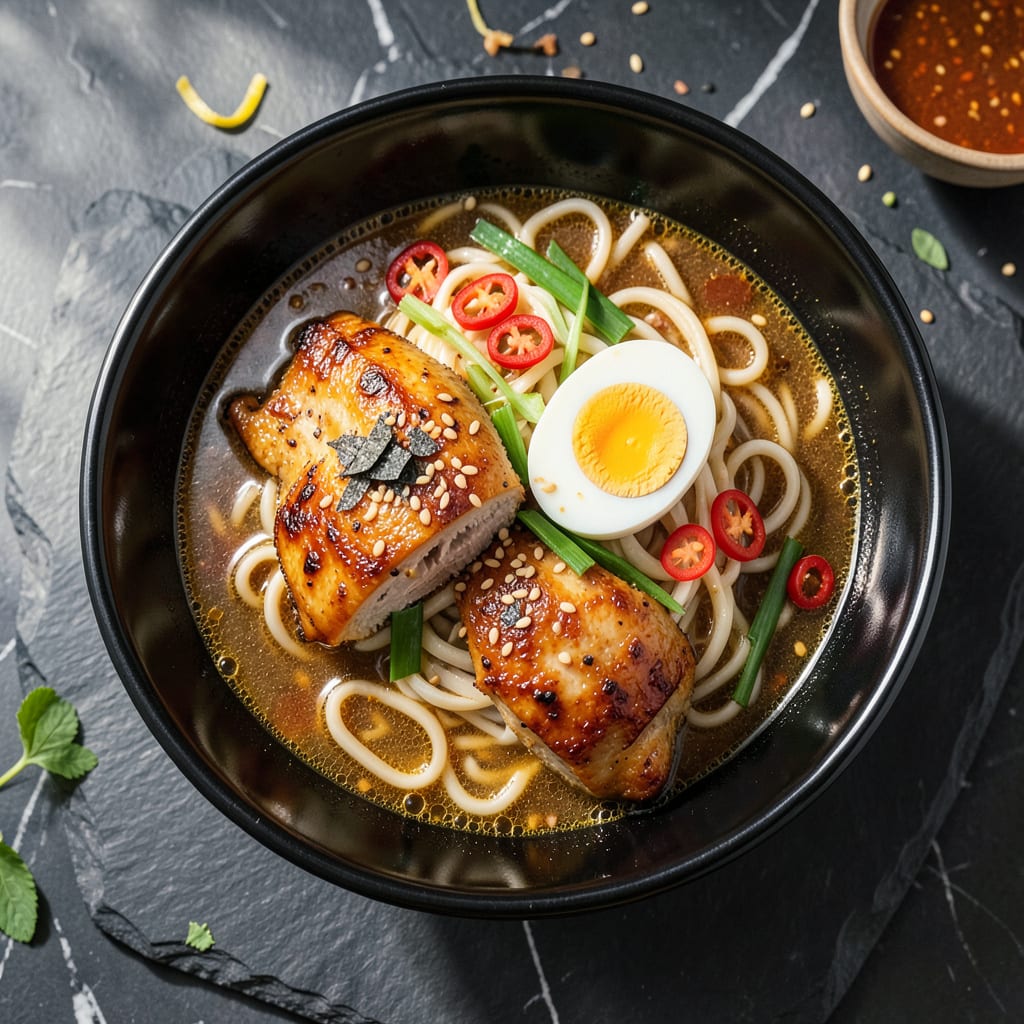
Combine 2 tablespoons garlic powder, 1 tablespoon each of onion powder and ginger, 1 teaspoon each of salt, black pepper, and paprika, plus ½ teaspoon MSG for umami. Mix thoroughly and store in an airtight container for instant ramen chicken flavor.
This blend captures the soul of Japanese ramen shops by balancing aromatic warmth with savory depth. 🔥 The garlic and onion powders create a robust base, while ginger adds subtle heat that lingers. What makes this special is the MSG—it amplifies natural flavors without overpowering, mimicking the rich broths simmered for hours in professional kitchens.
I love how versatile this mix becomes once prepared. A single batch transforms not just ramen but also works as a dry rub for wings, a popcorn seasoning, or even stirred into mayonnaise for sandwiches. The key is freshness: store it in a cool, dark place to preserve the spices’ potency for up to 3 months. ✨
💡 In This Article
- Key Ingredients That Define Ramen Chicken Seasoning
- 5 Creative Ways to Use Homemade Ramen Chicken Seasoning
Key Ingredients That Define Ramen Chicken Seasoning
The magic starts with garlic powder—it delivers concentrated allium depth without moisture. At 2 tablespoons, it creates that signature ramen-shop aroma when hydrated. Unlike fresh garlic, powder disperses evenly and won’t clump in broth. The onion powder (1 tablespoon) adds sweetness that caramelizes slightly during cooking, mimicking slow-cooked broth complexity. 🔥
Ground ginger (1 tablespoon) introduces warmth that’s subtly spicy, not overpowering. It activates differently than fresh ginger—powdered form releases its oils immediately when wet, creating instant aroma. The MSG (½ teaspoon) is non-negotiable for authentic umami; it binds to taste receptors 15x more effectively than salt alone, amplifying chicken flavor without adding sodium overload. ✨
Salt (1 teaspoon) isn’t just for seasoning—it regulates how other flavors release. Black pepper (1 teaspoon) adds piquant contrast, while paprika (1 teaspoon) contributes color and mild sweetness. Traditional Japanese versions often include white pepper for cleaner heat, but Western adaptations favor black for its familiar bite. The ratio ensures no single note dominates. 🌟
What sets this apart is the synergy: garlic and onion create maillard reaction potential, ginger bridges sweet/savory, while MSG and salt form an umami-sodium matrix. This mimics professional ramen’s layered broths but in instant form. Store-bought packets can’t replicate this balance because they use anti-caking agents that dull flavors over time. 💫
For authenticity, toast the spices lightly (300°F for 5 minutes) before mixing. This awakens volatile oils that would otherwise stay dormant. The difference is noticeable—untreated spices taste flat, while toasted ones bloom when hit with hot water. Even the paprika’s color deepens, hinting at the flavor transformation. ⚡
Pro tip: If avoiding MSG, substitute 1 teaspoon nutritional yeast for umami, but expect 30% less intensity. The sodium content here (~2,300mg per batch) is intentional—ramen broths typically contain 1,500-2,500mg per bowl to achieve that crave-worthy saltiness that makes you take another sip. 💛

- Beyond Burger Recipe Ideas: Plant-Based Creativity for Every Meal - September 28, 2026
- BBQ Bison Recipe Steaks: Smoky Grill Mastery with Bold Flavor - September 28, 2026
- Chicken Breast Recipe Tender: Brine-Soaked Juiciness Without Overcooking - September 28, 2026