
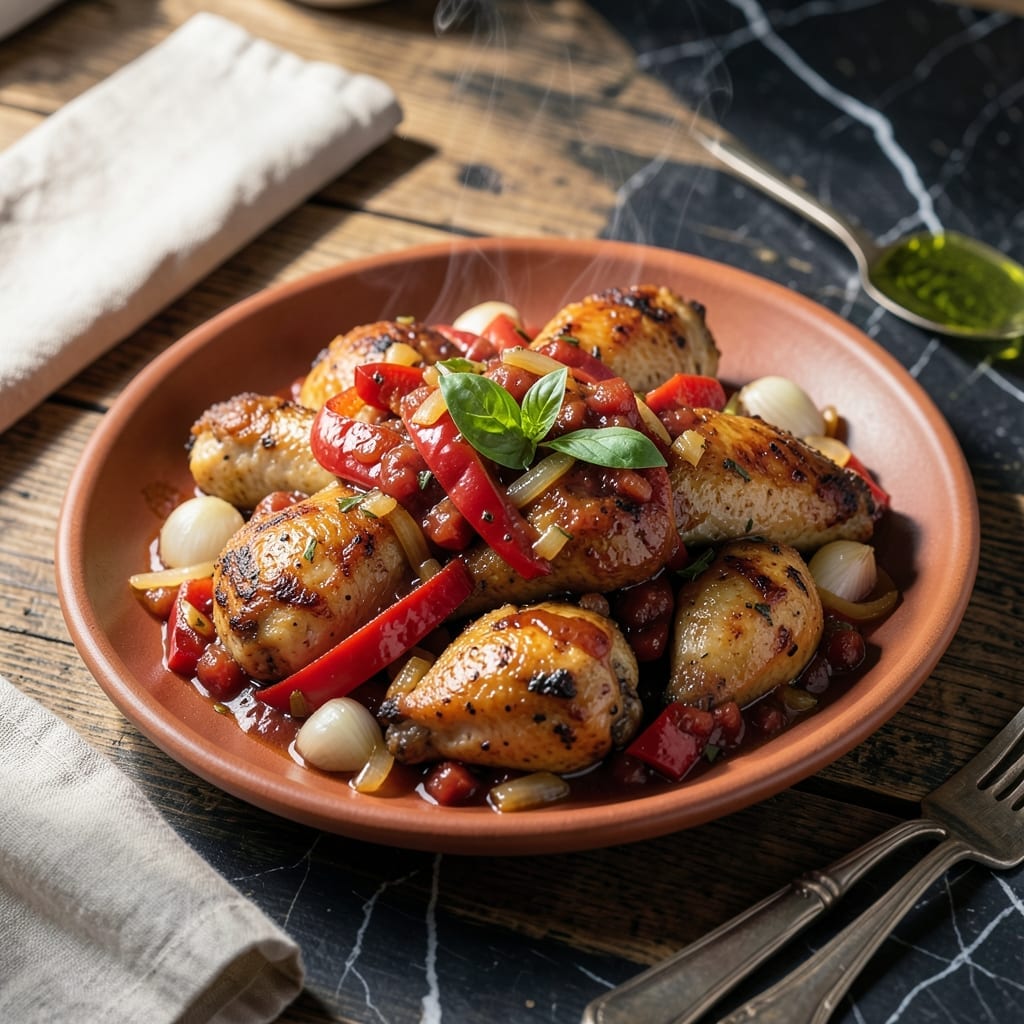
This hunter-style stew captures the essence of traditional Italian cooking with its rich, herb-infused tomato sauce and tender chicken.
I developed this recipe to replicate Rao’s signature approach, focusing on slow cooking to build layers of flavor. The dish comes together with simple ingredients but delivers restaurant-quality results every time.
The key is allowing the chicken to braise in the aromatic sauce until it falls off the bone. Fresh herbs and a touch of red wine create depth that distinguishes this from ordinary cacciatore.
What emerges is a hearty, rustic meal that fills the kitchen with an irresistible aroma. Serve with crusty bread to soak up every last bit of the flavorful sauce.
Ingredients for Rao’s Chicken Cacciatore
Rich, aromatic ingredients transform into a rustic, restaurant-quality hunter-style stew.
| Ingredient | Amount | Notes |
|---|---|---|
| Chicken Thighs 🍗 | 2 lb | Bone-in, skin-on preferred |
| Chicken Drumsticks 🍗 | 1 lb | Bone-in, skin-on |
| Olive Oil 🫒 | ¼ cup | Extra-virgin for richness |
| Yellow Onion 🧅 | 1 whole | Medium, finely chopped |
| Garlic Cloves 🧄 | 6 cloves | Minced for sauce |
| Red Bell Pepper 🌶️ | 1 whole | Diced into 1-inch pieces |
| Canned Crushed Tomatoes 🍅 | 28 oz | San Marzano preferred |
| Tomato Paste 🍅 | 2 tbsp | For depth of flavor |
| Dry Red Wine 🍷 | ½ cup | Cabernet or Chianti |
| Chicken Stock 🥣 | 1 cup | Low-sodium preferred |
| Fresh Rosemary 🌿 | 2 tbsp | Chopped, stems removed |
| Fresh Basil 🌿 | ½ cup | Loosely packed leaves |
| Dried Oregano 🍃 | 1 tsp | Mediterranean variety |
| Kosher Salt 🧂 | 1 ½ tsp | Diamond Crystal preferred |
| Black Pepper 🌶️ | 1 tsp | Freshly ground |
The chicken is the foundation here. Bone-in, skin-on thighs and drumsticks deliver the most flavor and stay juicy during the long braise. Look for pieces with good marbling—this ensures tenderness. Most supermarkets carry quality chicken, but Whole Foods or a local butcher offer superior options if you’re aiming for Rao’s-level quality. Don’t trim the skin; it renders into the sauce.
No red wine? Substitute with additional chicken stock and 1 tbsp balsamic vinegar for acidity. Fresh herbs are ideal, but dried at one-third the amount works in a pinch. For the tomatoes, San Marzano cans are worth the splurge—they’re sweeter and less acidic. If you can’t find crushed, whole tomatoes hand-crushed will do. The bell pepper can be swapped for mushrooms if preferred.
This stew reheats beautifully—flavors deepen overnight. Store in the fridge for up to 4 days or freeze for 3 months. Always use airtight containers to preserve freshness. The sauce thickens as it cools, so thin with a splash of water when reheating.
Why You’ll Love This Recipe
- One Pan Wonder: I love that this comes together in a single skillet—just brown the thighs and drumsticks, then let the onions and garlic work their magic.
- Garlic-Infused Comfort: The smell of garlic cloves sizzling in olive oil with those tender chicken pieces? That’s the kind of flavor that makes me close my eyes with the first bite.
- Weeknight Hero: Between us, this is my go-to for busy evenings when I need something hearty but don’t want to fuss over multiple pots.
- Budget-Friendly Feast: Chicken thighs and drumsticks are always affordable, and this recipe stretches them into a meal that feels way more indulgent than the cost.
Step-by-Step Instructions for Chicken Cacciatore
This method delivers rich, rustic flavor with tender chicken and a deeply aromatic sauce.
Step 1: Brown the Chicken to Build Flavor
Heat the 0.25 cup olive oil in a large Dutch oven over medium-high heat. Season the 2 lb chicken thighs and 1 lb chicken drumsticks with 1.5 tsp kosher salt and 1 tsp black pepper.
Working in batches, add the chicken skin-side down and cook undisturbed for 6-8 minutes until the skin is deep golden brown. Flip and cook for another 4-5 minutes until browned on all sides. Transfer to a plate and set aside.
This browning step creates the fond that will deepen the sauce’s flavor. Don’t rush—proper browning ensures rich, complex taste in every bite.
Step 2: Sauté the Aromatics for Depth
In the same pot, add the 1 whole yellow onion (finely chopped) and cook over medium heat for 5 minutes until softened and translucent. Stir in the 1 whole red bell pepper (diced) and cook for 3-4 minutes until slightly tender.
Add the 6 cloves garlic cloves (minced) and cook for 30 seconds until fragrant. Stir in the 2 tbsp tomato paste and cook for 1-2 minutes to caramelize slightly. This step builds the base for the sauce’s rich, savory profile.
The mixture should turn a deeper red and smell intensely aromatic—this is your cue to proceed.
Step 3: Deglaze and Simmer for Richness
Pour in the 0.5 cup dry red wine and scrape up all the browned bits from the bottom of the pot. Let it simmer for 2-3 minutes until the liquid reduces by half.
Add the 28 oz canned crushed tomatoes, 1 cup chicken stock, 2 tbsp fresh rosemary (chopped), 1 tsp dried oregano, and 0.5 cup fresh basil (torn). Stir to combine and return the chicken to the pot, skin-side up.
Bring to a gentle simmer, then reduce heat to low. Cover and cook for 30-35 minutes until the chicken is fork-tender and the sauce has thickened slightly.
Step 4: Finish and Adjust for Serving
Uncover and simmer for an additional 5-10 minutes to allow the sauce to reduce further and the flavors to meld. Taste and adjust seasoning if needed—though the initial salt and pepper should be sufficient.
The sauce should coat the back of a spoon, and the chicken should pull away from the bone effortlessly. Remove from heat and let rest for 5 minutes before serving.
Garnish with additional fresh basil if desired. This dish is best served hot, with the sauce soaking into crusty bread or over pasta.
Pro Tips For Making Rao’S Chicken Cacciatore
- Brown the Chicken Well: Get the thighs and drumsticks deeply browned in the olive oil first—this builds the rich foundation flavor Rao’s version is known for. I learned this the hard way when my first attempt tasted flat.
- Slice Onions Thin: Cut the yellow onion paper-thin so it practically melts into the sauce. After burning three batches with chunky onions, I finally figured out the texture matters just as much as the flavor.
- Skip the Overcrowding: Cook the chicken in batches if needed—crowding the pan steams the meat instead of searing it. Sounds obvious, but I was skeptical until I tried it and saw the difference.
- Mince Garlic Fine: Finely mince the garlic cloves so they distribute evenly and don’t burn. My grandmother swore by this, and she was right: big pieces can turn bitter and ruin the sauce.
Storing and Reheating This Dish
Refrigerator Storage
Let your cacciatore cool for no more than 2 hours before transferring to airtight containers. I use glass containers with locking lids to prevent leaks. Store at 40°F or below for up to 4 days. The flavors deepen overnight as the herbs meld. ❄️
Freezer Storage
This dish freezes beautifully for up to 3 months without losing quality. Portion into freezer-safe bags or containers, leaving 1 inch of headspace for expansion. Squeeze out excess air to prevent freezer burn. Label with the date for easy tracking.
Stovetop Reheating
My preferred method: transfer to a heavy-bottomed pot and heat over medium-low heat for 10-15 minutes, stirring occasionally. Add ¼ cup water or chicken stock to loosen the sauce if needed. Taste and adjust seasoning before serving. 🔥
Microwave Reheating
For quick meals, microwave individual portions covered with a damp paper towel. Use 70% power for 2-3 minutes, stir, then continue in 1-minute intervals until reaching 165°F. The sauce may thicken—thin with a splash of water if necessary.
Make-Ahead Tip
This stew tastes even better the next day. Prepare it fully, cool, and refrigerate overnight. The chicken absorbs more flavor, and the sauce thickens. Reheat gently to maintain the chicken’s tenderness—it’s worth the wait!
Nutrition Facts
Frequently Asked Questions
Can I use chicken breasts instead of thighs?
Thighs stay juicier, but breasts work if cooked 20-25 minutes only. Overcooking makes them dry. For best results, brine breasts in saltwater for 30 minutes before cooking.
What can I substitute for red wine?
Use ½ cup chicken stock plus 1 tbsp balsamic vinegar for similar depth. White wine works too, though it’s less traditional. Non-alcoholic? Try ½ cup tomato juice with extra herbs.
Why is my sauce too watery?
Uncover and simmer for 10-15 minutes to thicken. If still thin, mix 1 tbsp cornstarch with water, stir in, and cook for 2 minutes. Avoid over-reducing or it’ll taste overly concentrated.

- BBQ Sausage Recipe Oven: Smoky Depth Without the Grill - September 28, 2026
- BBQ Chicken Bowl Recipe Rice: Smoky Sweetness Over Fluffy Grains - September 28, 2026
- Beef Cutlet Recipe Ideas: Crispy Breaded Patties With Bold Seasonings - September 28, 2026