
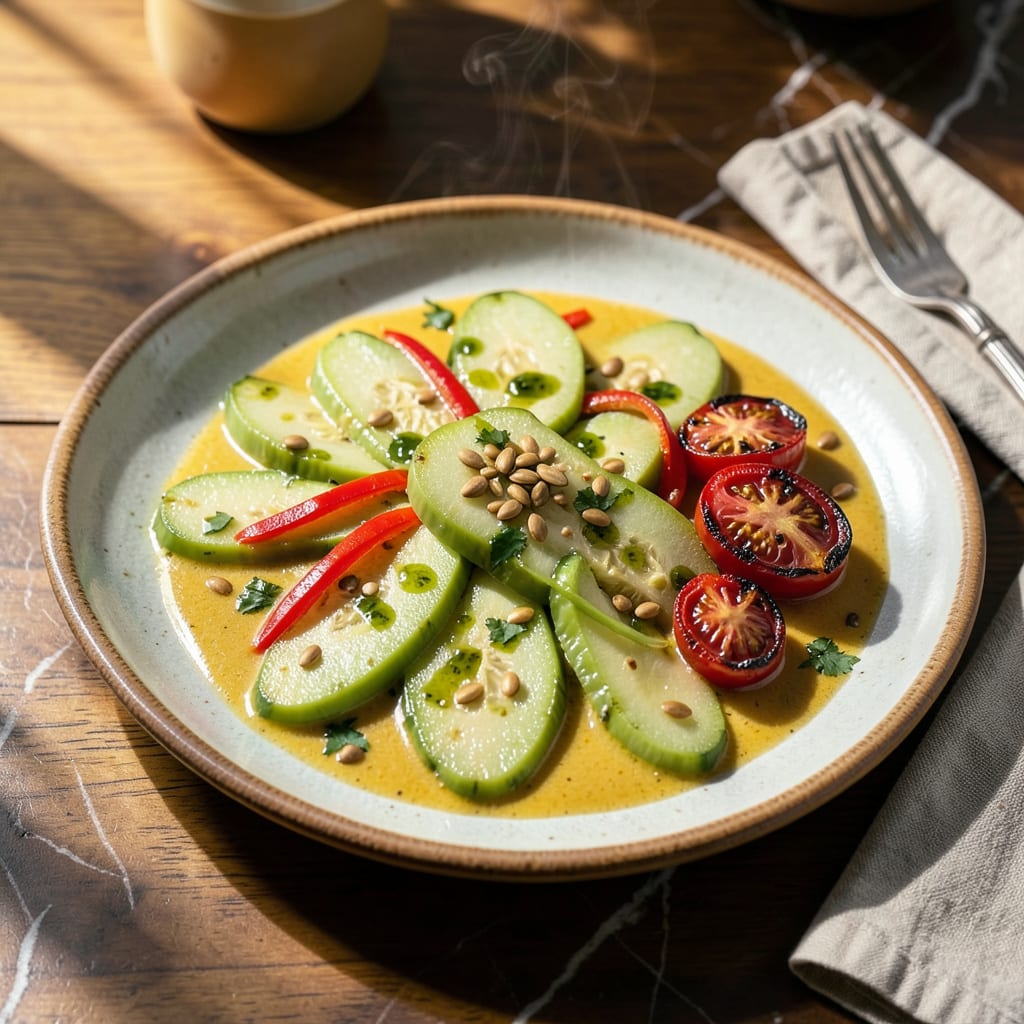
Chayote squash shines when sautéed with garlic and butter until tender, or roasted with olive oil, salt, and herbs at 400°F for 20-25 minutes. Its mild, cucumber-like flavor pairs well with lime, chili, or Parmesan for a quick, versatile side dish.
This underrated vegetable transforms effortlessly from crisp to silky depending on how you prepare it. 🔥 When raw, it adds a refreshing crunch to salads, while cooking unlocks its ability to soak up bold flavors—think smoky cumin in Mexican dishes or bright citrus in Asian-inspired stir-fries. What I love most is its adaptability: it can mimic potatoes in creamy mashes or stand in for zucchini in quick sautés, all while keeping prep time under 10 minutes.
The secret to its versatility lies in its high water content and delicate cell structure. Unlike denser squashes, chayote cooks evenly and quickly, making it perfect for weeknight meals when you need something fast yet flavorful. ✨
💡 In This Article
- Why Chayote Squash Works in Both Raw and Cooked Dishes
- 5 Simple Chayote Squash Recipe Variations to Try
Why Chayote Squash Works in Both Raw and Cooked Dishes
Chayote’s magic starts with its cellular structure. Unlike dense winter squashes, its thin cell walls and high water content (94% moisture) create that signature crispness when raw. 💫 The water is stored in large vacuoles that burst during cooking, transforming the texture from crunchy to silky in just 5-7 minutes of heat exposure.
This rapid softening makes it ideal for quick sautés or stir-fries where timing matters.
The flavor science is equally fascinating. Chayote contains minimal volatile compounds compared to strong-flavored vegetables, giving it that neutral base. When raw, its taste resembles a cross between cucumber and green apple due to trace amounts of malic acid.
Cooking activates Maillard reactions with its natural sugars, developing subtle nutty notes that pair perfectly with garlic, butter, or chili. The transformation happens at temperatures above 285°F, which is why roasting at 400°F works so well.
Water content plays a dual role in cooking methods. In stir-fries, the rapid heat causes surface caramelization while the interior stays slightly crisp. For roasting, the moisture creates steam inside the squash, effectively poaching the flesh from within. This is why you’ll notice roasted chayote stays juicy rather than drying out like other vegetables.
The key is cutting uniform 1-inch pieces for even cooking.
Here’s what most cooks miss: chayote’s pectin content. When raw, this soluble fiber gives it structure, but heat breaks it down into a creamy texture—perfect for mashes. Unlike potatoes that need butter for creaminess, chayote’s natural pectin creates that velvety mouthfeel with just a splash of cooking liquid.
For best results, cook until fork-tender but still holding shape (15-20 minutes for mashes).
The neutral flavor profile comes from its low sulfur compounds (unlike onions or cabbage) and minimal terpenes (unlike herbs). This makes it a flavor sponge—absorbing marinades, dressings, and spices beautifully. In Mexican cuisine, it soaks up lime and chili; in Asian dishes, it carries soy and ginger flavors without competition.
The absorption happens at a cellular level as the water content dilutes and distributes seasonings evenly throughout the flesh.
For raw applications, the trick is using it immediately after cutting. Exposure to air causes enzymatic browning (like apples) due to polyphenol oxidase. A quick toss in citrus juice prevents this while enhancing its natural freshness.
The crisp texture holds up for 2-3 days in the fridge when stored properly in an airtight container with paper towels to absorb excess moisture. ✨

- BBQ Sausage Recipe Oven: Smoky Depth Without the Grill - September 28, 2026
- BBQ Chicken Bowl Recipe Rice: Smoky Sweetness Over Fluffy Grains - September 28, 2026
- Beef Cutlet Recipe Ideas: Crispy Breaded Patties With Bold Seasonings - September 28, 2026