
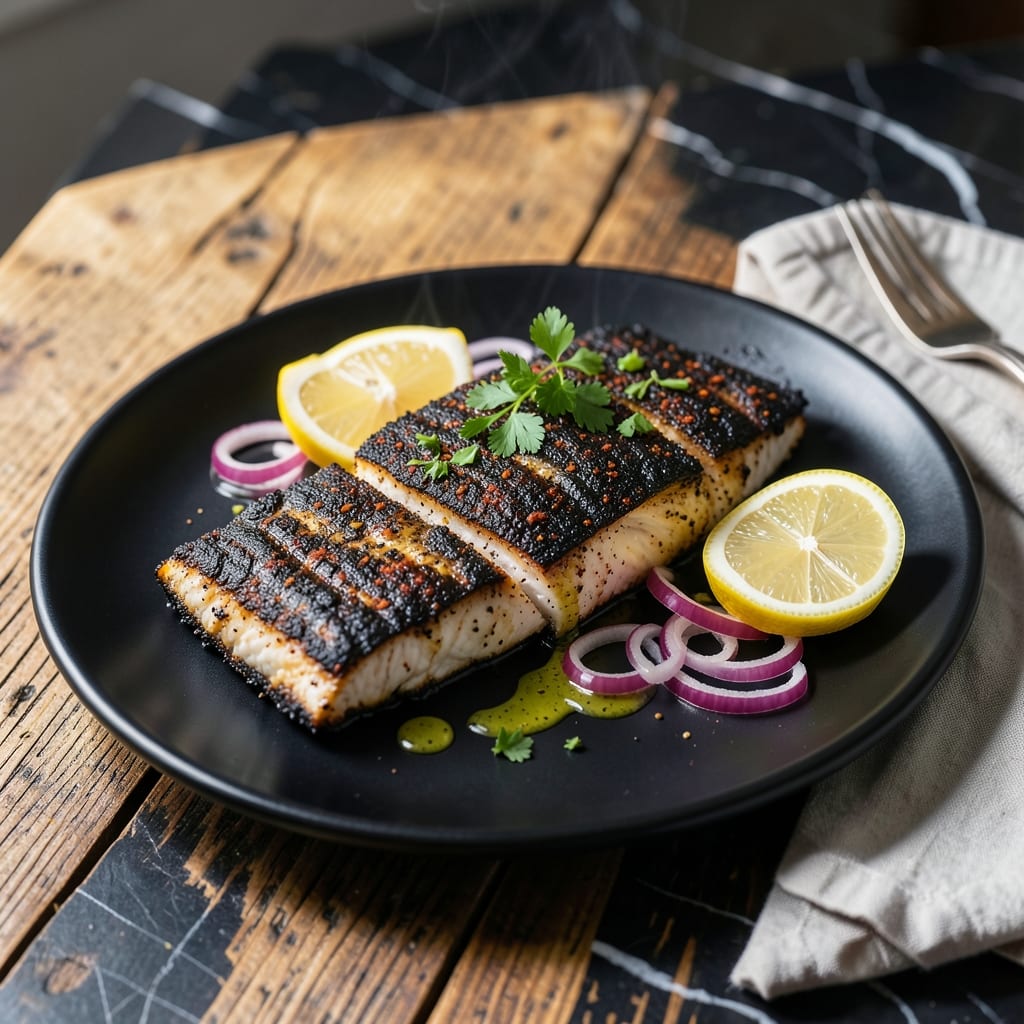
Blackening catfish at home delivers the bold, smoky flavors of a New Orleans kitchen with minimal effort. This classic technique creates a spice-crusted exterior that locks in moisture while developing a deeply seasoned crust.
The secret lies in a well-balanced blackening spice blend and a screaming hot cast iron skillet. A 10-minute sear transforms simple catfish fillets into a dish with complex, layered spices and a perfect char.
You’ll achieve tender fish inside with a dark, aromatic crust outside—exactly what makes this Cajun preparation so beloved. The spices toast as they cook, releasing fragrances that fill your kitchen.
Serve immediately for the best texture. This method stays true to the traditional preparation while being completely approachable for home cooks.
Ingredients for Recipe for Blackened Catfish
Simple catfish fillets transformed by a bold spice blend and hot cast iron skillet.
| Ingredient | Amount | Notes |
|---|---|---|
| Catfish Fillets 🐟 | 1 ½ lb | Skinless, about 1-inch thick |
| Paprika 🌶️ | 2 tbsp | Sweet or smoked variety |
| Garlic Powder 🧄 | 1 tbsp | Freshly ground preferred |
| Onion Powder 🧅 | 1 tbsp | Fine grain for even coating |
| Dried Thyme 🌿 | 2 tsp | Rubbed between fingers to release oils |
| Dried Oregano 🍃 | 2 tsp | Mexican oregano if available |
| Cayenne Pepper 🔥 | 1 ½ tsp | Adjust for heat preference |
| Ground Black Pepper 🌶️ | 1 ½ tsp | Freshly ground for best flavor |
| Kosher Salt 🧂 | 1 tbsp | Diamond Crystal preferred |
| Unsalted Butter 🧈 | 4 tbsp | Melted for dipping fillets |
| Vegetable Oil 🫒 | 2 tbsp | High smoke point for searing |
| Lemon Wedges 🍋 | 4 slices | For serving and brightness |
The catfish is central here. Wild-caught fillets from a trusted seafood counter (like Whole Foods or a local fishmonger) ensure the best texture and flavor. Aim for fillets about 1-inch thick—they hold up to the high heat without drying out. For the spices, Penzeys or a bulk bin section offers the freshest options. Paprika and cayenne should smell vibrant, not dusty.
No catfish? Red snapper or tilapia work well, though the flavor will be milder. Short on spices? Cajun seasoning at half the amount can substitute for the blend, but make your own if possible—it’s more balanced. The butter is non-negotiable for authentic flavor, but ghee works in a pinch. Avoid pre-shredded anything; whole spices toast better.
The spice blend stays fresh for 6 months in a dark cabinet. Cooked catfish is best served immediately, but leftovers keep 2-3 days in the fridge. Reheat gently to preserve the crust. Always use a well-ventilated kitchen when blackening—it gets smoky.
Why You’ll Love This Recipe
- One Pan Magic: I just toss the catfish with paprika, garlic, and thyme, then sear—no fancy prep, no mess.
- Smoky, Spicy Bite: That blackened crust from the paprika and garlic? Ridiculously good with every bite.
- Weeknight Hero: Honestly, it’s my go-to when I need dinner fast but still want bold flavor.
- Budget Winner: Catfish fillets are affordable, and a little spice mix goes a long way for multiple meals.
Step-by-Step Instructions for Blackened Catfish
Master this technique and you’ll achieve a perfectly charred crust with tender, flaky fish every time.
Step 1: Prepare the Catfish and Seasoning Blend
Pat the 1.5 lb Catfish Fillets thoroughly dry with paper towels—this is crucial for the spice rub to adhere properly and create that signature blackened crust. Any moisture left on the surface will cause the spices to steam rather than sear.
In a shallow bowl, combine the 2 tbsp Paprika, 1 tbsp Garlic Powder, 1 tbsp Onion Powder, 2 tsp Dried Thyme, 2 tsp Dried Oregano, 1.5 tsp Cayenne Pepper, 1.5 tsp Ground Black Pepper, and 1 tbsp Kosher Salt. Whisk until fully blended—this ensures even distribution of flavors on each fillet.
Step 2: Coat the Fillets and Preheat the Skillet
Dredge each catfish fillet in the spice mixture, pressing firmly to create an even, thick coating on all sides. I like to shake off any excess gently—you want a solid layer, but not so much that it falls off during cooking. Place the seasoned fillets on a plate and let them sit for 5 minutes to allow the spices to adhere better.
While the fillets rest, place a heavy skillet (cast iron works best) over high heat and add the 2 tbsp Vegetable Oil. Heat until the oil is shimmering but not smoking—this takes about 3-4 minutes. The oil must be extremely hot to achieve the proper sear without steaming the fish.
Step 3: Sear the Catfish to Blackened Perfection
Carefully place the fillets in the hot skillet, working in batches if necessary to avoid crowding. Cook for 3-4 minutes per side until the crust is deeply browned and slightly charred. Resist the urge to move the fillets around—this ensures an even, uninterrupted sear.
You’ll see smoke rising from the pan, and the spices will create a fragrant aroma. This is normal. The fillets are done when they flake easily with a fork and the internal temperature reaches 145°F. Transfer the cooked fillets to a warm plate.
Step 4: Finish with Butter and Serve
Melt the 4 tbsp Unsalted Butter in the same skillet over low heat, scraping up any browned bits from the bottom. These bits add an extra layer of flavor to the finished dish.
Drizzle the melted butter over the catfish fillets and serve immediately with the 4 slices Lemon Wedges on the side. The acidity from the lemon balances the richness of the butter and the boldness of the spices. Serve with additional lemon wedges if desired.
Pro Tips For Making Recipe For Blackened Catfish
- Crank the Heat: Use a screaming-hot cast iron skillet—medium-high won’t cut it. I learned this the hard way when my first few batches came out pale and sad instead of that signature dark crust.
- Pat Dry First: Press the catfish fillets between paper towels to remove every bit of moisture. Even a little dampness steams the spice rub right off, and nobody wants flavorless fish.
- Don’t Overcrowd: Cook in batches if needed—crowding the pan drops the temperature fast, turning your blackened catfish into a soggy mess. Two fillets at a time max in a 12-inch skillet.
- Bloom the Spices: Toast the paprika, garlic powder, and onion powder in the dry skillet for 30 seconds before adding oil. Sounds weird, but it wakes up the flavors and makes the rub cling better to the fish.
Regional Styles of This Recipe
New Orleans Classic
In the heart of Louisiana, blackened catfish is a staple that showcases the bold, spicy flavors of Cajun cuisine. The traditional method uses a cast iron skillet heated to high heat to create that signature charred crust. I always use a Lodge cast iron for even heat distribution.
Texas Gulf Coast
Along the Texas coast, the dish takes on a slightly smokier profile with the addition of mesquite wood chips to the cooking process. The catfish is often served with a side of creamy coleslaw to balance the heat. I’ve found that adding 1 tsp smoked paprika to the spice blend mimics this regional twist beautifully.
Mississippi Delta Style
The Delta version leans into a wetter blackening technique, brushing the fillets with melted butter before coating them in the spice blend. This creates a richer, slightly crispier exterior. I like to use Plugrá butter for its high fat content and clean flavor. 🔥
Florida Keys Adaptation
In the Keys, the dish often incorporates tropical flavors like key lime juice and cilantro in the finishing butter. The catfish is sometimes swapped for local grouper or snapper, but the technique remains the same. A squeeze of lime at the end brightens the spices perfectly.
Midwest Fusion
Up north, some cooks add a touch of maple syrup to the spice blend for a sweet-heat balance that appeals to broader palates. I’ve experimented with 1 tsp dark brown sugar in the rub, and it adds a subtle caramelized note to the crust. This version pairs well with a cold local IPA. 💫
Nutrition Facts
Frequently Asked Questions
What’s the best pan for cooking?
A heavy cast iron skillet works best for even heat distribution and creating that signature char. Avoid nonstick pans as they can’t withstand the required high heat.
Can I use frozen catfish?
Yes, but thaw it completely in the fridge overnight first. Pat it very dry before seasoning to ensure proper crust formation. Never cook from frozen.
How do I prevent the spices from burning?
Use high smoke point oil and keep the heat at medium-high rather than max. The spices should toast, not burn—watch for dark brown, not black.
Why is my fish sticking to the pan?
The pan wasn’t hot enough or the fish wasn’t dry before seasoning. Heat the oil until shimmering and ensure fillets are thoroughly patted dry.

- Chicken Breast Recipe Tender: Brine-Soaked Juiciness Without Overcooking - September 28, 2026
- Baked Chicken Recipe for Acid Reflux: Gentle Flavors for Sensitive Stomachs - September 28, 2026
- BBQ Lamb Rack Recipe Grill: Smoky Herb-Crusted Chops in Minutes - September 28, 2026