
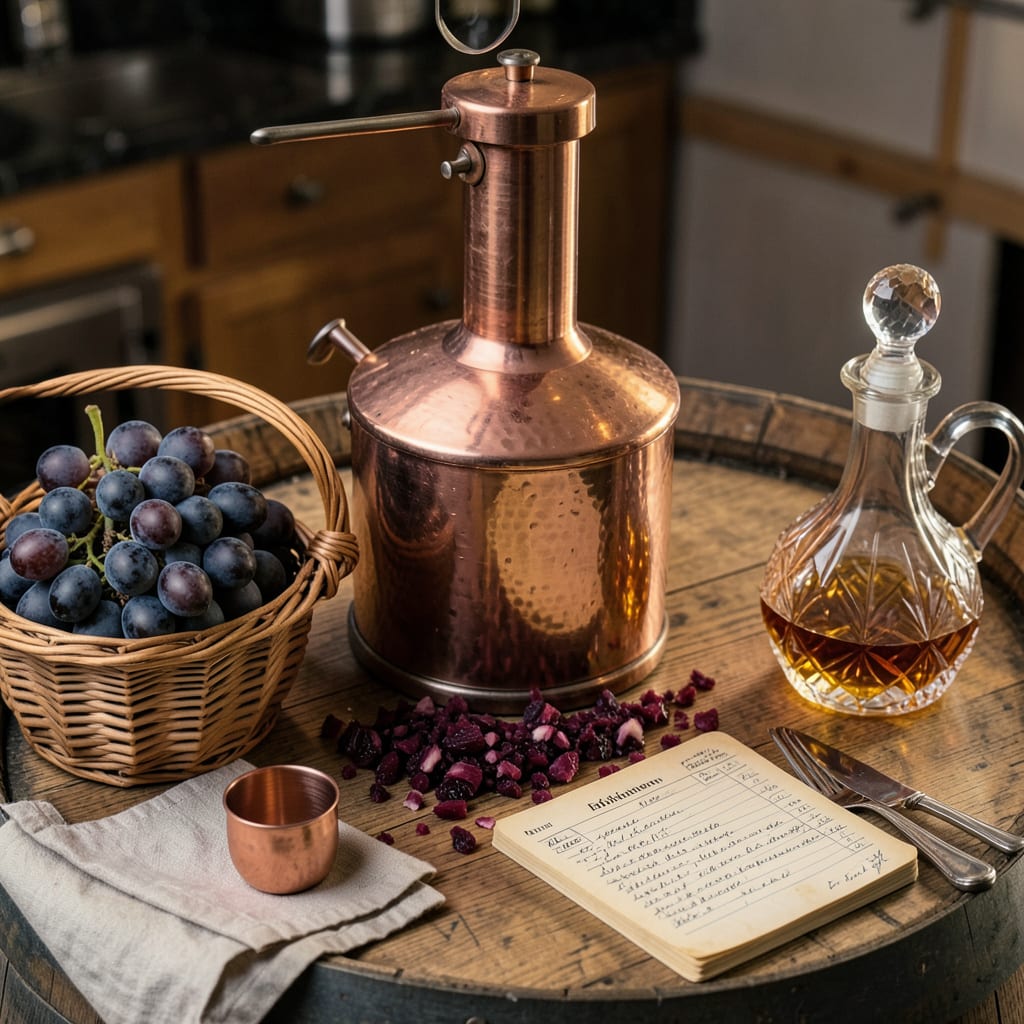
Homemade brandy starts with fermented fruit juice (traditionally grapes), distilled in a pot still, then aged in oak barrels for 2-5 years. The process requires patience but yields a smooth, aromatic spirit with rich caramel and vanilla notes.
The transformation from fruit to brandy is where science meets tradition. 🔥 I’ve found that the fermentation stage—where natural sugars convert to alcohol—sets the foundation for flavor complexity. The copper in pot stills isn’t just for show; it chemically reacts with sulfur compounds, creating that signature smoothness. What most beginners overlook is how barrel char levels (light vs heavy toast) dramatically alter the final profile, from subtle spice to bold smokiness.
This isn’t a weekend project—it’s a craft that rewards precision. The distillation temperature window (173°F–195°F) separates the “hearts” (the good stuff) from harsh “heads” and “tails.” Even the oak choice matters: American white oak imparts vanilla, while French oak leans toward spice. I always recommend starting with small batches to perfect your technique before scaling up. ✨
💡 In This Article
- Step-by-Step Brandy Distillation Process Explained
- Essential Equipment and Ingredients for Homemade Brandy
Step-by-Step Brandy Distillation Process Explained
The magic begins with fermentation, where fruit sugars transform into alcohol through yeast action. For grapes, the ideal starting sugar content is 22-25° Brix (measured with a refractometer), producing a “wash” with 8-12% ABV after 7-14 days. The key here is temperature control—70-75°F prevents stress on yeast while allowing complete sugar conversion.
I’ve found that Concord grapes or late-harvest Riesling varieties work best for their natural sugar density. 🔥
Distillation is where science shines. A copper pot still isn’t just traditional—it’s functional. Copper reacts with sulfur compounds (like hydrogen sulfide) to create copper sulfate, which removes harsh “rotten egg” aromas. The distillation happens in three phases: “heads” (first 5-10%, contains methanol—discard), “hearts” (next 60-70%, your brandy base), and “tails” (last 20-30%, fusel oils—discard).
The sweet spot for collecting hearts is when the vapor temperature stabilizes at 178-185°F—this is where the cleanest alcohol comes through. ✨
Aging transforms raw spirit into brandy. Oak barrels contribute three critical elements: tannins (structure), lignin (vanilla/caramel notes), and hemicellulose (sweetness). The char level matters—light toast (#1) gives delicate spice, while heavy toast (#4) adds bold smokiness.
For small batches, I recommend 5-gallon barrels with medium toast; they offer 10x more surface contact than standard barrels, accelerating aging. The spirit should enter the barrel at 110-120 proof (55-60% ABV) for optimal extraction. 💫
Time and environment complete the process. Brandy ages best in consistent 55-65°F with 60-70% humidity—too dry and the barrels leak; too damp and mold grows. The “angel’s share” (evaporation loss) is about 2-4% per year, concentrating flavors.
I’ve noticed that brandy aged in smaller barrels develops faster due to increased wood contact—2 years in a 5-gallon barrel ≈ 4 years in a 53-gallon barrel. The real test? When the harsh alcohol burn mellows into a warm, lingering finish with notes of dried fruit and spice. ⚡
Here’s what most beginners miss: the “marriage” period after aging. After barrel aging, brandy needs 3-6 months in glass to harmonize flavors. This is when the volatile compounds settle and the spirit becomes truly smooth.
I always blend batches from different barrels (even in small quantities) to create complexity—think of it like composing a symphony where each barrel is an instrument. The final proof should land at 80-100 proof (40-50% ABV) for ideal drinkability. 🌟
Pro tip: Track your process meticulously. Note fermentation temps, distillation cuts, and aging conditions. Small variables—a 5°F difference in distillation or different oak sources—create dramatically different results. The best brandies I’ve made came from patience and attention to these scientific details, not just following steps blindly. 💛

- BBQ Sausage Recipe Oven: Smoky Depth Without the Grill - September 28, 2026
- BBQ Chicken Bowl Recipe Rice: Smoky Sweetness Over Fluffy Grains - September 28, 2026
- Beef Cutlet Recipe Ideas: Crispy Breaded Patties With Bold Seasonings - September 28, 2026