
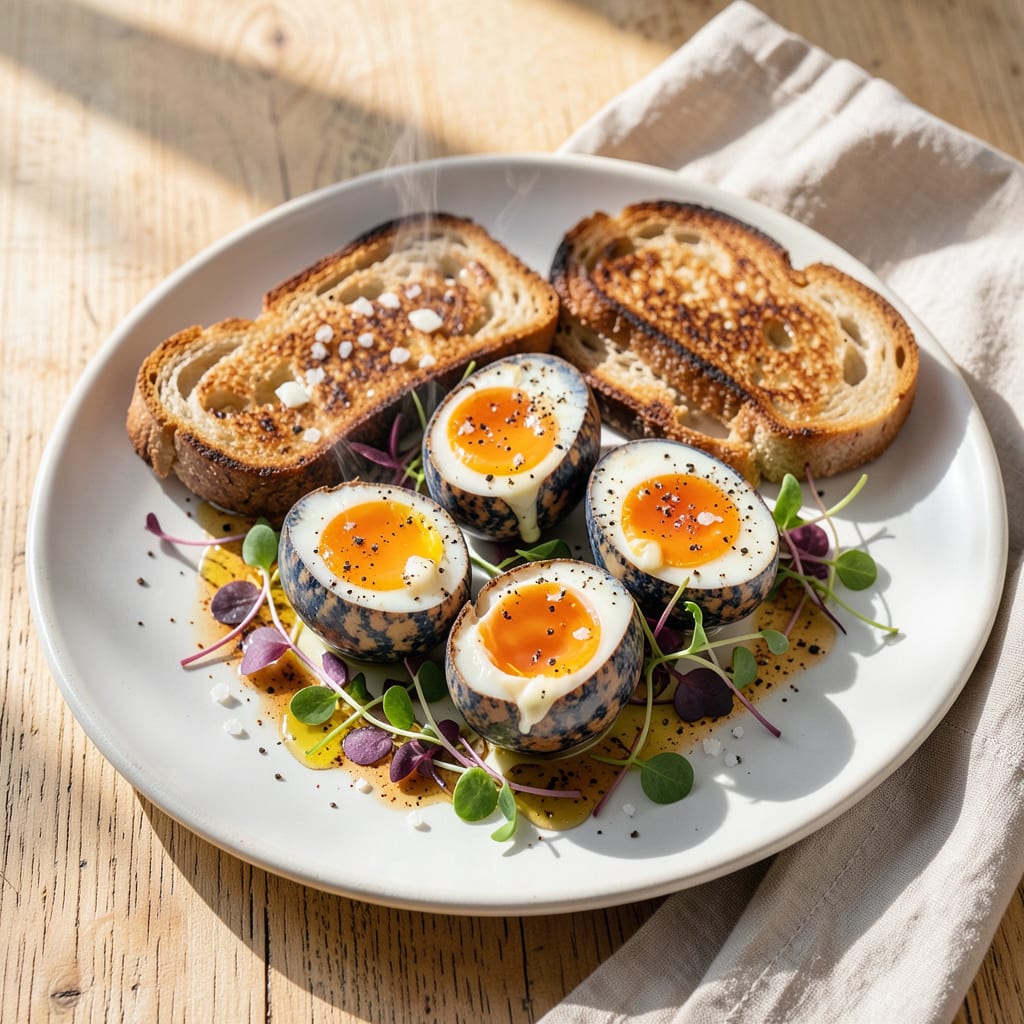
Duck eggs shine in rich, custardy dishes like quiches or carbonara thanks to their higher fat content. Try them scrambled with butter, baked into fluffy soufflés, or even pickled for a tangy snack. Their larger yolks make pastries extra tender and golden.
I love working with duck eggs because their richer composition transforms ordinary recipes into something extraordinary. The higher protein and fat content means baked goods rise better and stay moist longer, while savory dishes develop a deeper, creamier texture. 🌟 For example, a simple omelet becomes restaurant-worthy with duck eggs—they create that perfect balance of fluffiness and richness that chicken eggs often struggle to achieve.
What’s fascinating is how their thicker whites hold up better in delicate preparations like meringues or custards. I’ve found they whip to stiffer peaks faster, giving you more control over textures. Plus, their larger yolks add vibrant color to sauces and doughs, making everything look as good as it tastes.
💡 In This Article
- Why Duck Eggs Elevate Classic Recipes
- 5 Easy Duck Egg Recipes for Every Meal
Why Duck Eggs Elevate Classic Recipes
The secret lies in their nutritional composition. Duck eggs contain about 30% more fat and 20% more protein than chicken eggs, with yolks that are nearly 50% larger. This extra fat creates richer emulsions in sauces like hollandaise, while the additional protein strengthens gluten networks in baked goods. The result?
Cakes rise higher, cookies stay chewier, and custards set with velvety smoothness. 🌟
What really sets them apart is their thicker albumen (egg white) structure. Duck egg whites contain more ovomucin protein, which gives them superior whipping power—meringues hold peaks better and soufflés maintain loft longer. The yolks’ deeper orange color comes from higher carotenoid levels, adding both visual appeal and subtle sweetness to dishes.
When baked into brioche or challah, they create that coveted golden crust with tender crumb.
For custard-based recipes like crème brûlée or ice cream, duck eggs are game-changers. Their higher lecithin content creates stabler emulsions that resist curdling at high temperatures. I’ve found custards made with duck eggs can withstand 5-10°F higher baking temps without breaking, giving you more forgiveness in the kitchen.
The texture difference is noticeable—silkier with a lingering richness on the palate.
Even simple preparations benefit dramatically. Scrambled duck eggs cooked low and slow develop a creamy consistency that chicken eggs can’t match, thanks to their higher phospholipid content. These fats create microscopic emulsions as they cook, trapping moisture for that perfect soft curd.
The flavor is more pronounced too—slightly gamier with umami undertones that pair beautifully with aged cheeses or smoked meats.
Consider these key advantages when substituting:
- Baking: Use 1 duck egg = 1.5 chicken eggs for optimal rise
- Frying: Whites set faster at 325°F due to higher protein
- Custards: Reduce sugar by 10%—duck eggs are naturally sweeter
The thicker shells (requiring a bit more force to crack) actually protect the contents better, reducing the risk of contamination. This makes them ideal for longer storage—properly refrigerated duck eggs can last 6-8 weeks versus 4-5 for chicken eggs. Their alkaline pH (around 9.5) also inhibits bacterial growth more effectively. ✨

- BBQ Sausage Recipe Oven: Smoky Depth Without the Grill - September 28, 2026
- BBQ Chicken Bowl Recipe Rice: Smoky Sweetness Over Fluffy Grains - September 28, 2026
- Beef Cutlet Recipe Ideas: Crispy Breaded Patties With Bold Seasonings - September 28, 2026