
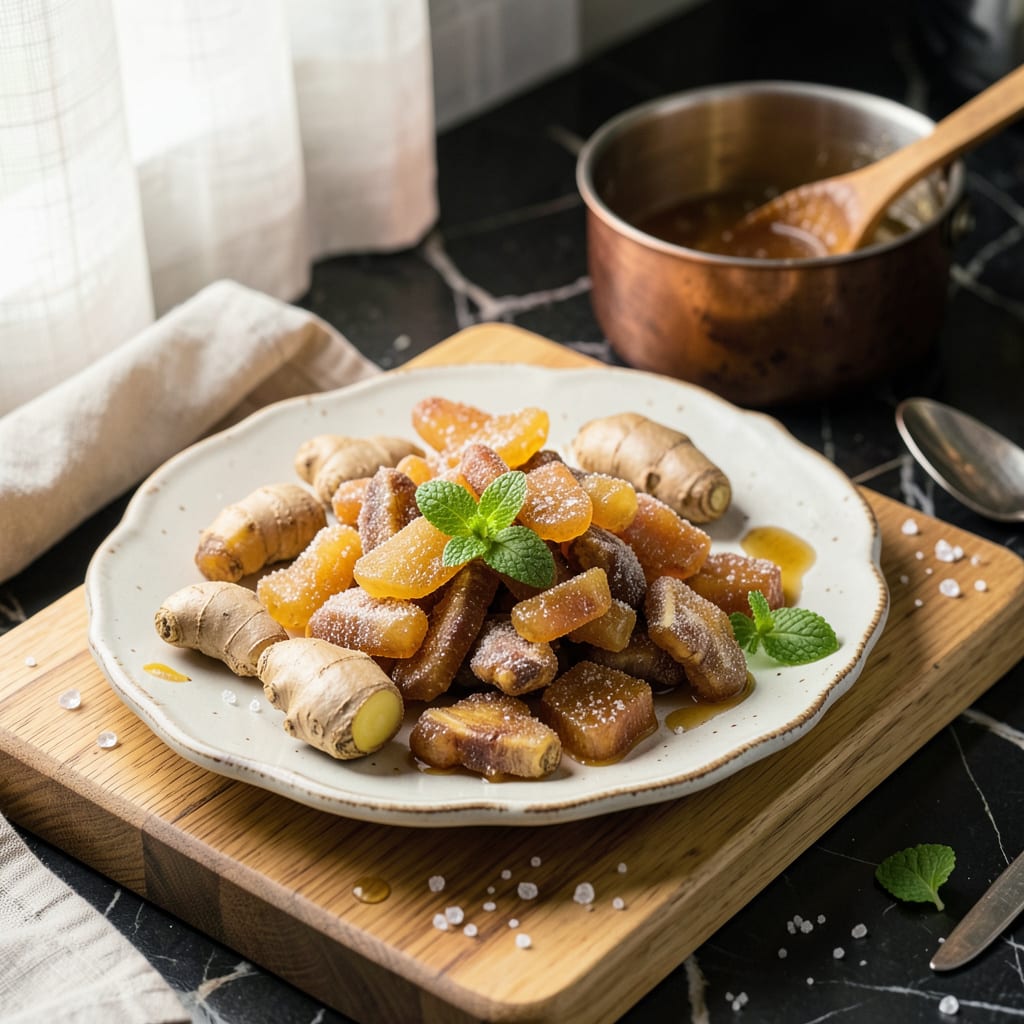
Make crystallized ginger by simmering fresh ginger slices in sugar syrup until tender, then coating them in granulated sugar. Dry for 1-2 hours to achieve a sweet, chewy texture with a sugary crust.
This method transforms raw ginger’s fiery bite into a candy-like treat through simple kitchen science. The syrup gently softens the ginger while infusing it with sweetness, and the final sugar coating creates that signature sparkly exterior. 🔥 I love how the drying step is crucial—it prevents stickiness while locking in the perfect balance of spicy warmth and sugary crunch. For best results, use young ginger (it’s less fibrous) and maintain a steady low simmer to avoid burning the syrup.
💡 In This Article
- How Sugar Transforms Fresh Ginger Into Crystallized Treats
- Best Uses for Homemade Crystallized Ginger in Recipes
How Sugar Transforms Fresh Ginger Into Crystallized Treats
The magic happens through osmosis when ginger meets sugar syrup. Fresh ginger contains about 80% water, and the concentrated syrup (typically 2:1 sugar-to-water ratio) creates a hypertonic environment. This causes water molecules to rush out of the ginger cells, replacing them with sugar molecules.
The process gradually softens the ginger’s fibrous structure while infusing it with sweetness. 🔥
Temperature control is everything during the simmering phase. At 220-230°F, the syrup remains in the “thread stage” of sugar cooking—thick enough to coat but not so hot it caramelizes. Thin ginger slices (1/16-inch) will candify in 45-60 minutes, while thicker pieces (1/8-inch) may need 90+ minutes.
The goal is translucent edges with just a hint of resistance when pierced with a fork.
After draining, the sugar coating isn’t just decorative—it’s functional. Granulated sugar draws out any remaining surface moisture, creating that signature crunchy exterior. The drying process at room temperature (68-72°F) for 1-2 hours allows the sugar to recrystallize properly. Skipping this step leaves you with sticky, clumpy ginger instead of separate, sparkling pieces.
Young ginger works best because its thinner skin and lower fiber content absorb syrup more evenly. The natural pectin in ginger helps create that perfect chewy texture—similar to how it works in jams. For extra shine, some chefs use superfine sugar for the final coating, as its smaller crystals adhere better than regular granulated sugar.
✨
Here’s what most recipes don’t tell you: the leftover ginger-infused syrup is liquid gold. Strain and reduce it further to create ginger simple syrup for cocktails or drizzle over desserts. The syrup carries all the ginger’s spicy notes but with a complex sweetness that develops during the candying process.
The science behind the texture transformation is fascinating. As the ginger cools, the sugar inside the cells recrystallizes into smaller granules than the outer coating. This creates that perfect contrast between the soft, spicy center and the crunchy exterior—what food scientists call a “dual-texture confection.”

- BBQ Sausage Recipe Oven: Smoky Depth Without the Grill - September 28, 2026
- BBQ Chicken Bowl Recipe Rice: Smoky Sweetness Over Fluffy Grains - September 28, 2026
- Beef Cutlet Recipe Ideas: Crispy Breaded Patties With Bold Seasonings - September 28, 2026