
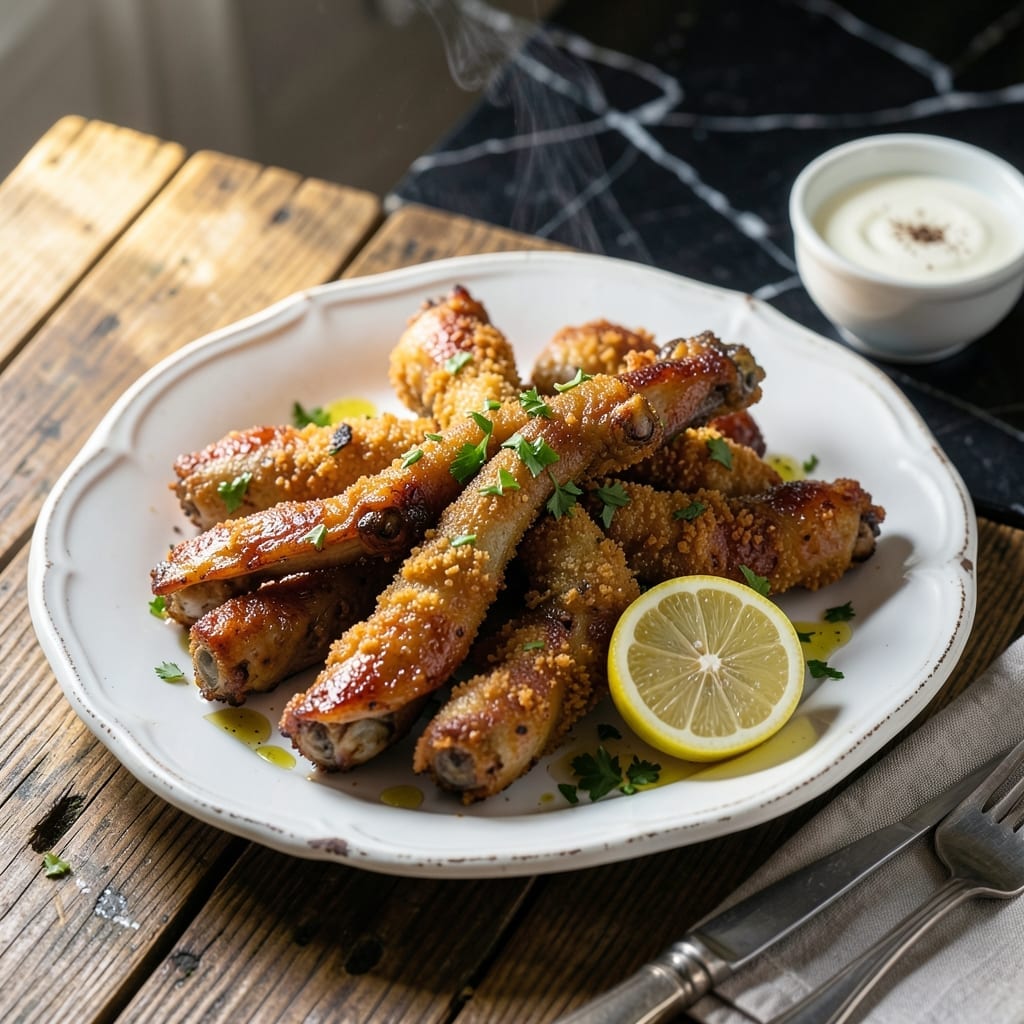
I’ve refined this Southern-style preparation to achieve crispy, golden-brown frog legs that rival any classic dish. The key lies in a simple but precise breading technique paired with the right cooking temperature.
The process starts with a quick soak in buttermilk, which tenderizes the meat and ensures the coating adheres perfectly. A light, seasoned flour mixture then creates a delicate crust that shatters with every bite.
Pan-frying at the ideal heat guarantees an even crunch without overcooking the delicate meat inside. The result is a dish that’s both nostalgic and elevated, with a texture that’s as satisfying as it is authentic.
Serve hot with lemon wedges or a creamy dipping sauce to balance the richness. This method delivers on its promise every time.
Ingredients for Recipe for Frog Legs
Southern staples create that signature crispy, golden crust on this classic delicacy.
| Ingredient | Amount | Notes |
|---|---|---|
| Frog Legs 🐸 | 2 lb | Fresh or thawed, patted dry |
| Buttermilk 🥛 | 2 cups | Full-fat for best results |
| All-Purpose Flour 🌾 | 2 cups | Plus extra for dredging |
| Cornstarch 🌾 | ½ cup | For extra crispiness |
| Salt 🧂 | 2 tsp | Divided, Diamond Crystal preferred |
| Black Pepper 🌶️ | 1 tsp | Freshly ground |
| Paprika 🌶️ | 1 tsp | Sweet or smoked variety |
| Garlic Powder 🧄 | 1 tsp | For depth of flavor |
| Cayenne Pepper 🔥 | ½ tsp | Adjust to heat preference |
| Vegetable Oil 🫒 | 1 ½ cups | For frying, high smoke point |
| Lemon 🍋 | 1 whole | Cut into wedges for serving |
| Large Eggs 🥚 | 2 whole | Beaten for egg wash |
The frog legs are the star—source from specialty seafood markets or reputable online suppliers for the freshest quality. Buttermilk is non-negotiable for that authentic Southern soak, and full-fat version provides the best adhesion for the breading. The flour should be standard all-purpose, but if you’re aiming for extra crispiness, White Lily is the gold standard in Southern kitchens.
No buttermilk on hand? Milk with a tablespoon of vinegar or lemon juice works in a pinch. For a gluten-free version, swap the all-purpose flour for a 1:1 gluten-free blend. Cayenne can be omitted for a milder dish, but the paprika is essential for that classic Southern flavor profile. Freshly ground black pepper makes a noticeable difference over pre-ground.
Frog legs should be cooked immediately after breading for best results. Leftovers (if any exist) keep in the fridge for 2 days, though they’re best enjoyed fresh. Reheat in a 350°F oven for 10-12 minutes to restore some crispiness.
Why You’ll Love This Recipe
- 20-Minute Frying: I can get these frog legs golden and crispy faster than my kids can set the table. Honestly, it’s just a quick soak in buttermilk, a dredge in flour, and into the pan.
- Crunch Meets Tenderness: That cornstarch in the coating gives an insane crunch while the meat stays juicy. I’ll be real: first bite had me closing my eyes.
- Impresses Guests: Between us, these taste like fancy restaurant fare but cost less than chicken. My in-laws still talk about the time I served them.
- Budget Stretcher: A pound of frog legs feeds four with leftovers for my lunch the next day. And the ingredients? Probably already in your pantry.
Step-by-Step Instructions for Southern-Style Frog Legs
Master the technique for achieving that signature golden, crispy coating that defines this dish.
Step 1: Marinate the Frog Legs in Buttermilk
Begin by patting the 2 lb Frog Legs completely dry with paper towels. This critical step removes excess moisture that could prevent the coating from adhering properly. I recommend placing them on a wire rack over a baking sheet to allow air circulation on all sides.
In a large bowl, pour the 2 cups Buttermilk and submerge the frog legs completely. Cover and refrigerate for at least 2 hours, though I prefer an overnight marination for maximum tenderness and flavor penetration. The buttermilk’s acidity breaks down proteins while adding a subtle tang that complements the final dish.
Step 2: Prepare the Seasoned Dredging Mixture
In a shallow dish, whisk together the 2 cups All-Purpose Flour, 0.5 cup Cornstarch, 2 tsp Salt, 1 tsp Black Pepper, 1 tsp Paprika, 1 tsp Garlic Powder, and 0.5 tsp Cayenne Pepper until thoroughly combined. The cornstarch is essential—it creates that ultra-crispy texture that distinguishes this preparation.
For best results, let the mixture sit for 5 minutes before using. This allows the spices to distribute evenly and the cornstarch to fully incorporate with the flour. The mixture should look uniformly speckled with the spices, not clumped or separated.
Step 3: Create the Egg Wash and Double-Dredge
Beat the 2 whole Large Eggs in a separate shallow dish until the yolks and whites are fully homogenous. This egg wash acts as the adhesive that helps the dredging mixture cling to the frog legs during frying.
Remove the frog legs from the buttermilk, letting excess drip off, then dredge each piece in the flour mixture, pressing gently to ensure full coverage. Dip in the egg wash, then dredge again in the flour mixture. Place the coated legs on a wire rack for 10 minutes to allow the coating to set—this prevents it from sliding off during frying.
Step 4: Fry to Golden Perfection
In a deep, heavy-bottomed skillet, heat the 1.5 cups Vegetable Oil over medium-high heat until it reaches 350-375°F. Use a deep-fry thermometer for accuracy—the temperature must stay in this range to cook the frog legs through without burning the coating.
Working in batches to avoid crowding, carefully lower the coated frog legs into the hot oil. Fry for 4-5 minutes per side until the coating is deep golden brown and crisp. The frog legs are done when they float and the internal temperature reaches 165°F. Transfer to a paper towel-lined plate to drain excess oil.
Step 5: Serve with Lemon Wedges
While the frog legs are still hot, arrange them on a serving platter. Cut the 1 whole Lemon into wedges and serve alongside. The bright acidity of the lemon cuts through the richness of the fried coating, balancing each bite perfectly.
For the best experience, serve immediately while the coating remains at its peak crispiness. The contrast between the tender meat and the crunchy exterior should be pronounced in every bite, with the spices providing a warm, savory backdrop.
Pro Tips For Making Recipe For Frog Legs
- Soak Overnight: I learned this the hard way—give those frog legs a full 12-hour bath in buttermilk. It tenderizes the meat and washes away any muddy flavor that can linger.
- Double Dredge: Sounds tedious, but it works: dip the legs in flour first, then buttermilk again, then back in flour mixed with cornstarch. That extra layer makes the crust actually stay put.
- Hot Oil Only: After burning three batches, I finally figured out that the oil needs to hit 350°F before the legs go in. Any cooler and you’ll end up with greasy, soggy disappointment.
- Salt the Flour: My grandmother swore by this, and she was right: mix 1 teaspoon of salt into every cup of flour for the dredge. It seasons the crust all the way through, not just on the surface.
Flavor Customization for This Recipe
Spicy Kick
For heat lovers, increase the cayenne pepper to 1 tsp in the dredging mixture. I also add ½ tsp chipotle powder for a smoky depth. The heat builds gradually, balancing the buttermilk’s coolness without overwhelming the dish. 🌶️
Herb-Infused Twist
Stir 1 tbsp dried thyme and 1 tsp dried oregano into your flour mixture. These herbs add a subtle earthiness that complements the frog legs’ natural flavor. I often use Penzeys herbs for their consistent quality and potency.
Cajun Style
Replace the paprika and garlic powder with 2 tbsp Cajun seasoning (I prefer Tony Chachere’s). This creates a bold, complex flavor profile with hints of onion, bell pepper, and celery. The seasoning’s salt content means you can reduce the added salt by half.
Lemon Pepper
Add 1 tbsp lemon zest and an extra ½ tsp black pepper to your dredging mixture. The citrus brightens the dish while the extra pepper adds a sharp contrast. I find this variation particularly refreshing in warmer months.
Cheesy Crunch
Incorporate ½ cup finely grated Parmesan into your flour mixture. The cheese melts slightly during frying, creating an extra crispy, savory crust. Use freshly grated for the best texture—Parmesan from a can won’t melt as well. 💛
Garlic Butter Finish
After frying, toss the hot frog legs in 2 tbsp melted garlic butter. This adds a rich, aromatic layer that takes the dish to the next level. I make my garlic butter with unsalted butter and 3 minced garlic cloves for maximum flavor.
Nutrition Facts
Frequently Asked Questions
How long should I marinate the legs?
Soak them in buttermilk for at least 2 hours, but overnight works best. This tenderizes the meat and ensures the coating sticks perfectly.
What oil works best for frying?
Use a high-smoke-point oil like vegetable or peanut. Heat to 350-375°F for even cooking without burning the crispy crust.
Can I bake them instead of frying?
Yes! Bake at 400°F for 15-20 minutes on a wire rack. The texture won’t be as crispy, but it’s a healthier alternative.
How do I know when they’re done?
They’re ready when the coating is golden brown and the internal temperature hits 165°F. They should float in the oil.

- BBQ Chicken Bowl Recipe Rice: Smoky Sweetness Over Fluffy Grains - September 28, 2026
- Beef Cutlet Recipe Ideas: Crispy Breaded Patties With Bold Seasonings - September 28, 2026
- Bluefin Tuna Recipe Ideas: Sushi-Grade Seared and Sesame-Crusted - September 28, 2026