
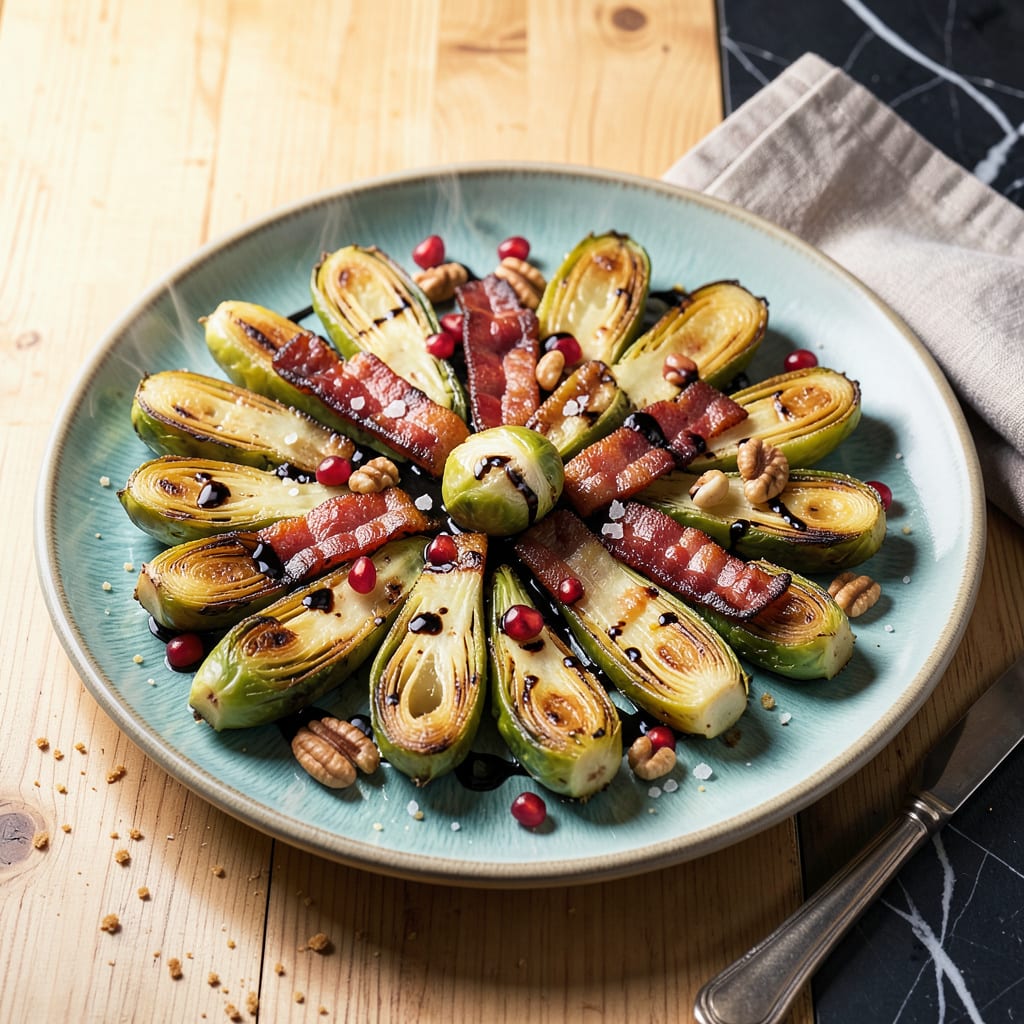
For crispy frozen Brussels sprouts, toss them with olive oil, salt, and pepper, then roast at 425°F for 20-25 minutes until golden. For stovetop, sauté in a hot pan with butter or oil for 8-10 minutes until tender and caramelized.
Frozen Brussels sprouts often get a bad rap, but the right technique unlocks their potential. High-heat roasting works magic by driving off excess moisture, which is especially important for frozen varieties that tend to release water. 🔥 The Maillard reaction kicks in at 425°F, transforming the natural sugars into that coveted crispy, golden exterior. I’ve found this method consistently delivers better results than steaming or boiling, which can leave sprouts soggy and bland.
What’s great about these methods is their versatility. The oven approach gives you hands-off cooking, while stovetop sautéing lets you monitor doneness more closely. Either way, you’re looking for that perfect balance between tender centers and crispy edges. ✨ A quick tip: Don’t overcrowd the pan or baking sheet—this ensures even browning and prevents steaming.
💡 In This Article
- Why Roasting Transforms Frozen Brussels Sprouts
- Flavor Boosters for Frozen Brussels Sprouts Recipes
Why Roasting Transforms Frozen Brussels Sprouts
The secret to perfect frozen Brussels sprouts lies in understanding their moisture content. When frozen, these vegetables develop ice crystals that rupture cell walls, releasing more water during cooking than fresh sprouts. High-heat roasting at 425°F creates an environment where this moisture rapidly evaporates, preventing the soggy texture that plagues boiled or steamed versions.
The dry heat essentially gives the sprouts a second chance at crispiness. 🔥
At this temperature, the Maillard reaction kicks into high gear. This chemical process between amino acids and reducing sugars produces over 100 different flavor compounds, creating that complex, nutty, slightly sweet taste we associate with perfectly browned vegetables. The reaction begins around 285°F but accelerates dramatically at higher temperatures.
For frozen sprouts, this means you’re not just cooking them—you’re chemically transforming their flavor profile while achieving that coveted crunchy exterior.
The texture difference between roasted and boiled sprouts is dramatic. Boiling submits the vegetables to a water bath that leaches out nutrients and dilutes flavor, resulting in a soft, mushy texture. Roasting, by contrast, concentrates flavors through evaporation while creating textural contrast. The outer leaves become crispy and caramelized while the interior remains tender.
This dual texture is what makes roasted Brussels sprouts so satisfying to eat.
Timing matters because frozen sprouts start with a temperature disadvantage. The 20-25 minute roasting window accounts for the time needed to both thaw and cook through. I’ve found that spreading them in a single layer on a preheated baking sheet jumpstarts the process, while tossing halfway through ensures even browning.
The visual cue you’re looking for is deep golden edges with some charred spots—this indicates both proper cooking and maximum flavor development. ✨
What’s fascinating is how this method actually improves upon the natural state of Brussels sprouts. Fresh sprouts contain about 86% water, while frozen ones may release even more moisture during cooking. The roasting process effectively reverses this by driving off excess water, leaving behind a more concentrated vegetable with enhanced natural sweetness.
This is why many people prefer the texture of properly roasted frozen sprouts over fresh ones that haven’t been treated with dry heat.
For comparison, consider that steamed Brussels sprouts retain about 90% of their original moisture, while roasted ones may lose up to 30% of their water content through evaporation. This moisture loss isn’t just about texture—it’s about flavor concentration.
The reduced water content means every bite delivers more of the vegetable’s natural nutrients and sweetness, rather than diluted watery flavor. 💫
The science doesn’t stop at the sprouts themselves. The oil you use plays a crucial role too. At high temperatures, olive oil’s smoke point (375-410°F) means it breaks down slightly, creating additional flavor compounds that complement the Maillard reaction.
This is why a light toss in oil before roasting makes such a dramatic difference compared to cooking them dry.

- BBQ Sausage Recipe Oven: Smoky Depth Without the Grill - September 28, 2026
- BBQ Chicken Bowl Recipe Rice: Smoky Sweetness Over Fluffy Grains - September 28, 2026
- Beef Cutlet Recipe Ideas: Crispy Breaded Patties With Bold Seasonings - September 28, 2026