
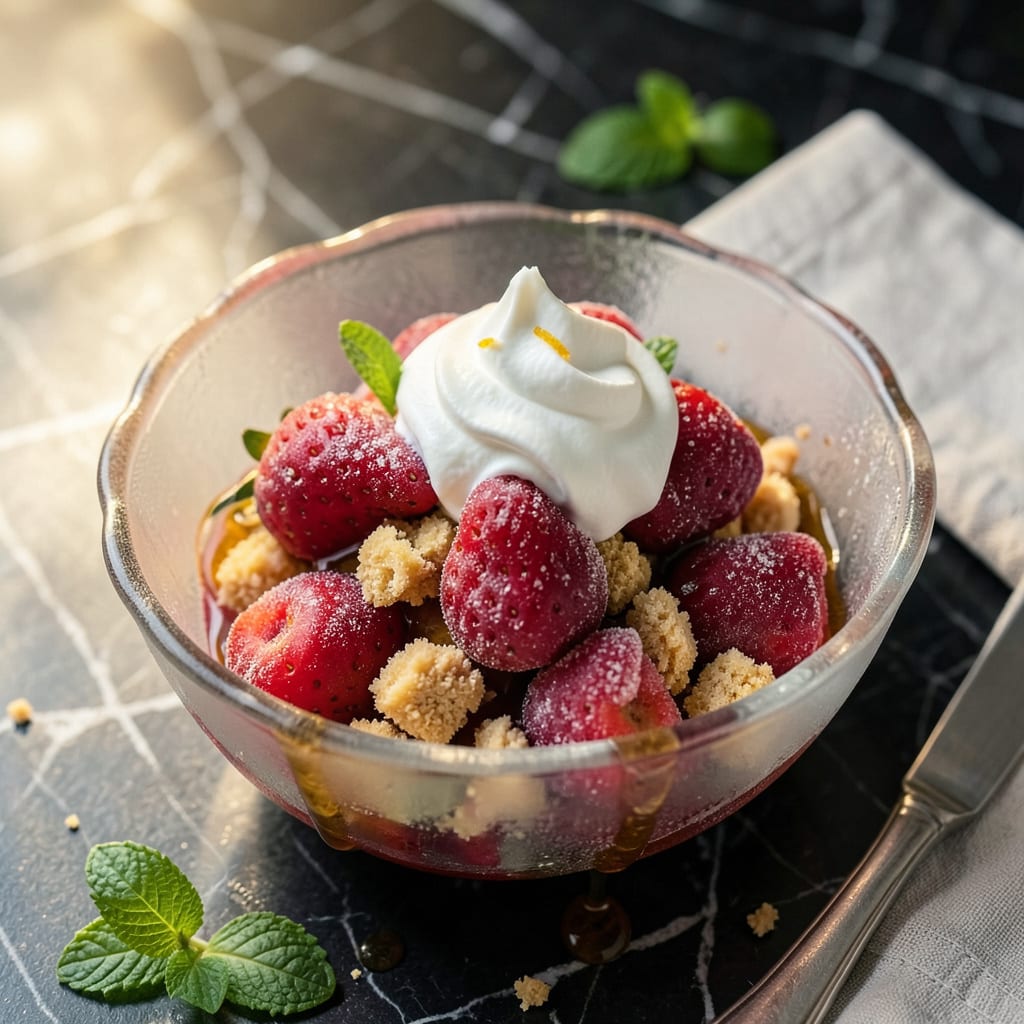
Frozen strawberries work perfectly in smoothies, sorbets, and baked goods like muffins or crisps. Thaw slightly before blending for desserts, or use directly in recipes where texture isn’t critical—like jam or strawberry sauce.
I love using frozen strawberries because they actually become sweeter after freezing—this happens when the cell walls break down, releasing natural sugars. 🔥 This makes them ideal for recipes where you want concentrated flavor without adding extra sugar. For example, they create the creamiest nice cream texture when blended straight from the freezer, and their softness after thawing is perfect for swirling into cheesecake batter or folding into muffin dough.
What’s great is that frozen strawberries eliminate prep work—no washing, hulling, or slicing required. ✨ They’re also more budget-friendly than fresh out-of-season berries, and you’ll never have to worry about them spoiling before you use them. I always keep a bag in my freezer for last-minute desserts when unexpected guests drop by.
💡 In This Article
- Why Frozen Strawberries Work Better in Certain Recipes
- Top 5 No-Fail Desserts Using Frozen Strawberries
Why Frozen Strawberries Work Better in Certain Recipes
When strawberries freeze, their cell walls rupture—this is what transforms their texture and flavor. The ice crystals that form during freezing act like tiny knives, breaking down the plant’s rigid structure. This releases more natural sugars and pectin, making frozen berries taste sweeter and thicker than their fresh counterparts.
🔥 It’s why a smoothie made with frozen strawberries needs no added sugar, while one with fresh might taste tart.
The science gets even more interesting when you apply heat. Frozen strawberries contain about 10-15% more available liquid after thawing because the cell damage prevents them from holding moisture like fresh berries. This makes them ideal for sauces and jams where you want a naturally thick consistency without cooking for hours.
For comparison, fresh strawberries require 20-30 minutes of simmering to break down, while frozen ones soften in just 5-10 minutes.
Baking reveals another advantage: the pre-softened texture of frozen strawberries means they incorporate seamlessly into batters. When I make strawberry muffins, I toss frozen berries directly into the dry ingredients—no thawing needed. The 32°F temperature actually helps prevent overmixing, and as they bake, they release juices that create moist, flavorful pockets.
Fresh strawberries often sink to the bottom or bleed too much color into the dough.
Blending applications show the biggest difference. Frozen strawberries act like built-in ice cubes in smoothies, creating that perfect slushy texture without watering down the flavor. Their lower water content (about 85% compared to fresh berries’ 91%) means you won’t end up with a separated, icy drink.
For sorbets, the pre-broken cell structure gives an instantly creamy texture that fresh berries can’t match without added stabilizers.
The one place fresh berries still win? Raw applications where texture matters, like fruit tarts or salads. But for any recipe involving heat, blending, or baking, frozen strawberries often perform better than fresh. Their concentrated flavor and predictable texture take the guesswork out of cooking times and sweetness levels. ✨
Pro tip: For recipes requiring whole berries (like crisps), partially thaw them for 15-20 minutes at room temperature. This softens them just enough to slice easily while maintaining shape during baking. The slight thaw also helps them release juices more evenly, preventing that unpleasant “berry explosion” that can make fillings too runny.

- BBQ Sausage Recipe Oven: Smoky Depth Without the Grill - September 28, 2026
- BBQ Chicken Bowl Recipe Rice: Smoky Sweetness Over Fluffy Grains - September 28, 2026
- Beef Cutlet Recipe Ideas: Crispy Breaded Patties With Bold Seasonings - September 28, 2026