
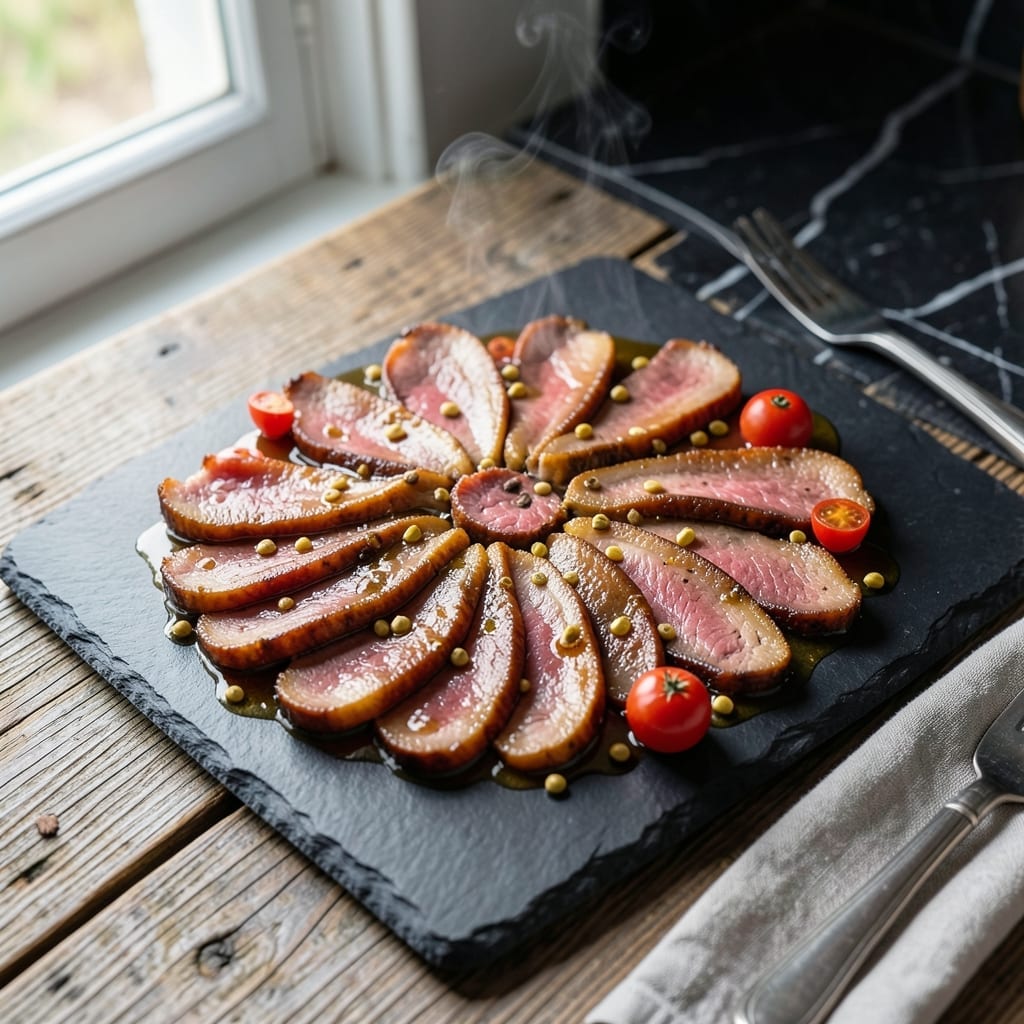
I’ve refined this method for preparing beef tongue to achieve tender, flavorful results every time. The key lies in a slow simmer followed by a carefully balanced brine that transforms the meat into a delicacy worth savoring.
This approach ensures the tongue becomes fork-tender, absorbing the tangy, aromatic notes of the pickling liquid. It’s a process that rewards patience with a final product that’s rich in both texture and taste.
What sets this dish apart is the harmony between the brining process and the natural richness of the beef. The result is a dish that’s as impressive as it is delicious, with each bite offering a perfect balance of flavor.
Perfect for special occasions or when you want to elevate your cooking. Here’s how to make it.
Ingredients for Recipe for Pickled Beef Tongue
A few quality ingredients and time transform beef tongue into a tender, tangy masterpiece.
| Ingredient | Amount | Notes |
|---|---|---|
| Beef Tongue 🥩 | 2 lb | Fresh, trimmed of fat |
| Water 💧 | 4 cups | For brine base |
| White Vinegar 🍶 | 2 cups | 5% acidity preferred |
| Kosher Salt 🧂 | ½ cup | Diamond Crystal brand recommended |
| Brown Sugar 🍚 | ½ cup | Light or dark variety |
| Yellow Mustard Seeds 🌿 | 2 tbsp | Whole for texture |
| Black Peppercorns 🌶️ | 1 tbsp | Whole for infusion |
| Bay Leaves 🍃 | 4 pieces | Dried for aroma |
| Garlic Cloves 🧄 | 6 cloves | Smashed, peeled |
| Red Onion 🧅 | 1 whole | Thinly sliced for brine |
| Apple Cider Vinegar 🍏 | ½ cup | Adds fruity tang |
| Juniper Berries 🌿 | 1 tbsp | Crushed lightly |
| Cloves 🌰 | 6 pieces | Whole for spice |
| Fresh Thyme Sprigs 🌿 | 4 pieces | For herbal notes |
The beef tongue is the star here—ask your butcher for fresh, not frozen, and look for a nice pink color. Local butcher shops or Whole Foods usually carry it. The vinegar is key: Heinz white vinegar is reliable, but any 5% acidity brand works. For the sugar, light brown gives a milder flavor than dark. Don’t skip the mustard seeds; they add that signature crunch to the brine.
No beef tongue? This method works with beef brisket too (just cube it first). Out of white vinegar? Rice vinegar at the same quantity works in a pinch, though it’s milder. Fresh thyme can be swapped for dried at one-third the amount. The juniper berries are worth hunting down at specialty spice stores or online—Penzeys has them.
The tongue can soak in the brine for 3-5 days—the longer, the more flavorful. Store the finished product in the fridge for up to 2 weeks, submerged in the brine. For longer storage, freeze the tongue (without brine) for up to 3 months.
Why You’ll Love This Recipe
- Set and Forget: Mostly hands-off—just simmer, brine, and let the vinegar and brown sugar do their magic overnight.
- Tangy-Sweet Bite: The vinegar’s sharpness balanced with brown sugar gives that addictive pickled punch.
- Party Starter: I slice it thin for charcuterie boards—guests always ask what it is and where to get more.
- Pantry Hero: Beef tongue is cheap, and a single batch fills jars for sandwiches and snacks all week.
Step-by-Step Instructions for Pickled Beef Tongue
This process transforms the beef tongue into a tender, flavorful delicacy through careful brining.
Step 1: Prepare the Beef Tongue for Brining
Rinse the 2 lb Beef Tongue under cold water and pat it dry thoroughly with paper towels. This removes any surface impurities while keeping the natural flavor intact. I always trim off any remaining fat or membranes at this stage to ensure the brine penetrates evenly.
Place the tongue in a large container or pot that will hold it completely submerged. The container must be non-reactive—glass or food-grade plastic works best. This prevents any metallic taste from affecting the final flavor of your creation.
Step 2: Create the Aromatic Brine
In a large saucepan, combine the 4 cups Water, 2 cups White Vinegar, 0.5 cup Kosher Salt, 0.5 cup Brown Sugar, 2 tbsp Yellow Mustard Seeds, 1 tbsp Black Peppercorns, 4 pieces Bay Leaves, 6 cloves Garlic Cloves, 1 whole Red Onion, 0.5 cup Apple Cider Vinegar, 1 tbsp Juniper Berries, 6 pieces Cloves, and 4 pieces Fresh Thyme Sprigs.
Bring the mixture to a boil, stirring just until the salt and sugar dissolve completely. Then remove from heat and let it cool to room temperature. I like to give it a gentle stir occasionally to help distribute the spices. The brine should be fragrant with visible spices suspended throughout.
Step 3: Submerge and Brine the Tongue
Pour the cooled brine over the beef tongue in your container. The tongue must be fully submerged—add a bit more water if needed to cover it completely. I use a small plate or a clean kitchen towel to weigh it down, ensuring no part remains exposed to air.
Cover the container and refrigerate for at least 5 days, but 7 days yields the most tender and flavorful result. Flip the tongue every 24 hours to ensure even brining. You’ll notice the meat becoming firmer as it cures, which is exactly what you want.
Step 4: Cook and Slice the Pickled Tongue
After brining, remove the tongue from the liquid and rinse briefly under cold water to remove excess salt. Place it in a large pot and cover with fresh water. Bring to a boil, then reduce heat to a simmer and cook for 2.5 to 3 hours until the tongue is fork-tender.
Drain and let it cool slightly before peeling off the outer skin—it should come away easily with your fingers or a knife. Slice the tongue against the grain into ¼-inch thick pieces. The meat should be moist and tender with a beautiful pink hue from the brine.
Step 5: Store and Serve
Return the sliced tongue to the strained brine in a clean container. It will keep in the refrigerator for up to 2 weeks. I recommend letting it sit for at least 24 hours before serving to allow the flavors to meld completely.
Serve chilled as part of a charcuterie board, in sandwiches, or as a unique appetizer. The brine’s tangy, spiced complexity pairs wonderfully with the rich, tender meat. Always use clean utensils when removing slices to maintain freshness.
Pro Tips For Making Recipe For Pickled Beef Tongue
- Pre-Salt the Tongue: Brine the tongue in a 5% salt solution (about 1/4 cup kosher salt per quart of water) for 12-24 hours before pickling—I learned this the hard way after my first few batches came out bland.
- Scrape the Skin: After simmering, peel the thick outer skin while the tongue is still warm, then scrape off any remaining bits with a spoon. It’s tedious, but skipping this leaves a chewy, unappetizing texture.
- Simmer, Don’t Boil: Keep the water at a gentle simmer (around 180-190°F) when cooking the tongue—boiling makes it tough, and I ruined a couple early on by rushing it.
- Use Apple Cider Vinegar: Swap half the white vinegar for apple cider vinegar if you have it—My grandmother swore by this, and it adds a subtle depth that plain white vinegar can’t.
Pro Cooking Tips for This Dish
Brine Temperature Control
Always let your brine cool completely to room temperature before adding the tongue. I learned this the hard way—hot brine can partially cook the meat, resulting in a tough texture. A 30-minute rest at room temp after boiling ensures proper cooling without rushing the process. 🌡️
Complete Submersion
Use a food-grade weight or a clean plate to keep the tongue fully submerged in the brine. Even small exposed areas can develop mold or off-flavors. I check daily and adjust the weight if needed to maintain full coverage.
Brining Duration
For the most tender results, brine for the full 7 days. The meat absorbs more flavor and becomes noticeably more tender with each passing day. If you’re short on time, 5 days minimum is acceptable, but the texture won’t be as refined.
Peeling the Skin
After simmering, the outer skin will slip right off—this is the easiest time to remove it. I use a sharp boning knife to start the process, then switch to my fingers for precision. The skin comes away cleanly, revealing the tender meat underneath.
Slicing Technique
Slice against the grain into ¼-inch thick pieces for the most tender bite. Look for the natural muscle fibers running lengthwise and cut perpendicular to them. A long, thin knife like my Wüsthof 8-inch makes clean, even slices effortless. 💡
Brine Reuse
You can reuse the brine for a second batch if it’s still clear and fragrant. I strain and boil it for 5 minutes first to ensure safety, then cool completely before reusing. This works best within 24 hours of the original batch.
Nutrition Facts
Frequently Asked Questions
How long does the tongue need to brine?
Brine for at least 5 days, but 7 days yields the most tender and flavorful result. Flip it daily to ensure even curing.
Can I reuse the pickling brine?
Yes, strain and boil the brine for 5 minutes, then cool completely before reusing. Works best within 24 hours for a second batch.
What if my brine isn’t fully covering the tongue?
Add more cooled water to submerge it completely. Use a food-grade weight or plate to keep it under the liquid.
How do I slice the tongue after cooking?
Slice against the grain into ¼-inch thick pieces after peeling. This ensures the most tender bite.

- BBQ Sausage Recipe Oven: Smoky Depth Without the Grill - September 28, 2026
- BBQ Chicken Bowl Recipe Rice: Smoky Sweetness Over Fluffy Grains - September 28, 2026
- Beef Cutlet Recipe Ideas: Crispy Breaded Patties With Bold Seasonings - September 28, 2026