
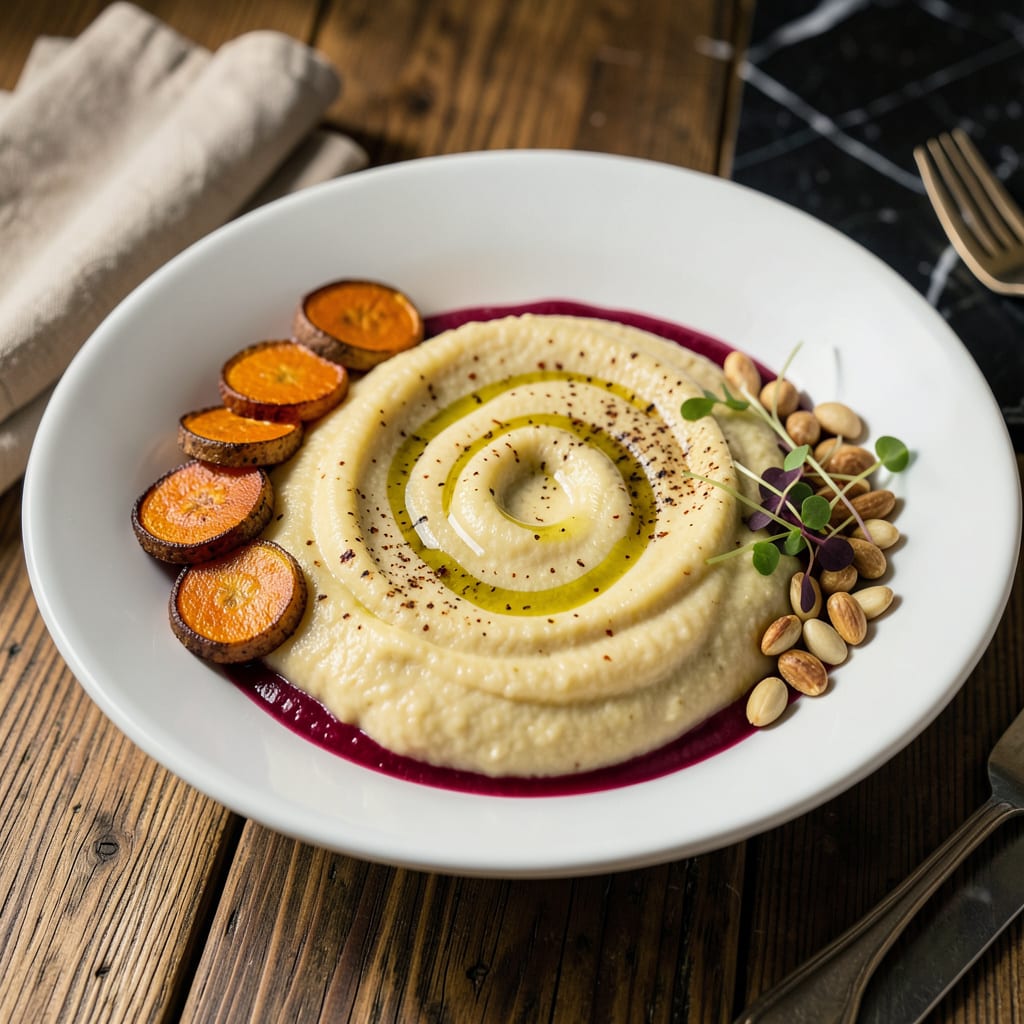
Pureed food starts with cooked vegetables, meats, or legumes blended with liquid (broth, milk, or water) until smooth. Season lightly, adjust thickness with liquid, and strain if needed for a silky texture. Ideal for babies, seniors, or post-surgery diets.
The secret to perfect purees lies in balancing moisture and texture. 🔥 I always recommend starting with well-cooked ingredients—overcooked vegetables or tough meats create grainy results. The liquid you choose (whether it’s vegetable broth for depth or coconut milk for creaminess) dramatically alters the final flavor profile. For medical diets, I suggest using unsalted broths to control sodium intake while maintaining richness.
What many home cooks overlook is the importance of temperature when blending. 💫 Warm ingredients puree more smoothly than cold ones, and adding liquid gradually prevents splattering. My pro tip: Use an immersion blender for soups directly in the pot, but switch to a food processor when you need ultra-smooth textures for medical diets or baby food.
💡 In This Article
- How Texture and Flavor Work in Pureed Recipes
- Top 5 Pureed Food Recipes for Different Dietary Needs
How Texture and Flavor Work in Pureed Recipes
The magic of pureeing happens at the cellular level. When you blend cooked ingredients, you’re breaking down plant cell walls and protein fibers. Vegetables like carrots or sweet potatoes contain pectin that softens when heated, while meats have collagen that converts to gelatin at 160-180°F.
This transformation is why properly cooked ingredients puree more smoothly than raw ones. The heat essentially pre-weakens the cellular structure, requiring less blending time and preserving more nutrients. 🔥
Liquid ratios determine both texture and flavor intensity. A 1:1 ingredient-to-liquid ratio creates a thin puree ideal for feeding tubes, while 2:1 yields a thicker, spoonable consistency. The type of liquid matters too—bone broth adds umami depth, coconut milk contributes sweetness, and vegetable stock keeps flavors clean.
I always recommend adding liquid in ¼-cup increments while blending to avoid over-thinning. The temperature of your liquid affects the final texture: warm liquids (100-120°F) integrate more smoothly than cold. ✨
Blending tools create dramatically different results. An immersion blender works best for soups and larger batches, creating a slightly rustic texture with tiny air pockets. Food processors, with their sharp blades and powerful motors, achieve ultra-smooth results perfect for medical diets.
For baby food, I prefer using a high-speed blender that can process ingredients for 60-90 seconds until completely homogeneous. The friction from these blades can actually heat the puree by 10-15°F, which helps release volatile aroma compounds. 💫
Flavor preservation requires strategic timing. Aromatic compounds in herbs and spices are heat-sensitive—adding fresh basil or cilantro after blending preserves their bright notes. For root vegetables, roasting at 400°F before pureeing develops caramelized sugars that survive the blending process.
Acidic ingredients like lemon juice should always be added last, as they can curdle dairy-based purees if heated. The science here involves pH stability: most purees sit between pH 5-7, where flavors remain balanced. ⚡
Straining makes the difference between good and exceptional purees. A fine-mesh sieve removes fibrous strands from vegetables like asparagus or celery, while a chinois (cone-shaped strainer) creates restaurant-quality silkiness. For medical purees, I recommend pressing through a 1.5mm perforated disk to ensure no particles remain.
The pressure applied during straining affects mouthfeel—gentle pressing preserves air for a lighter texture, while firm pressing creates denser results. This technique is particularly crucial for dysphagia diets where texture consistency can be a safety issue. 🌟
Temperature control during serving enhances both flavor and safety. Purees should be served at 130-140°F for optimal taste perception—cool enough to not burn, warm enough to release aromas. For cold purees (like fruit-based ones), 40°F is ideal to maintain freshness.
The thermal properties of purees mean they cool or warm about 20% faster than solid foods due to increased surface area. This is why I always recommend using a thermometer when reheating medical purees to prevent dangerous hot spots. 💛
Consider these pro techniques for restaurant-quality results:
- Infuse liquids: Simmer broth with garlic or herbs for 15-20 minutes before using
- Layer flavors: Sauté aromatics (onion, celery) before adding main ingredients
- Texture test: Rub a spoonful between fingers—it should feel uniform with no grit
- Color preservation: Blanch green vegetables for 90 seconds to maintain vibrant hue

- BBQ Sausage Recipe Oven: Smoky Depth Without the Grill - September 28, 2026
- BBQ Chicken Bowl Recipe Rice: Smoky Sweetness Over Fluffy Grains - September 28, 2026
- Beef Cutlet Recipe Ideas: Crispy Breaded Patties With Bold Seasonings - September 28, 2026