
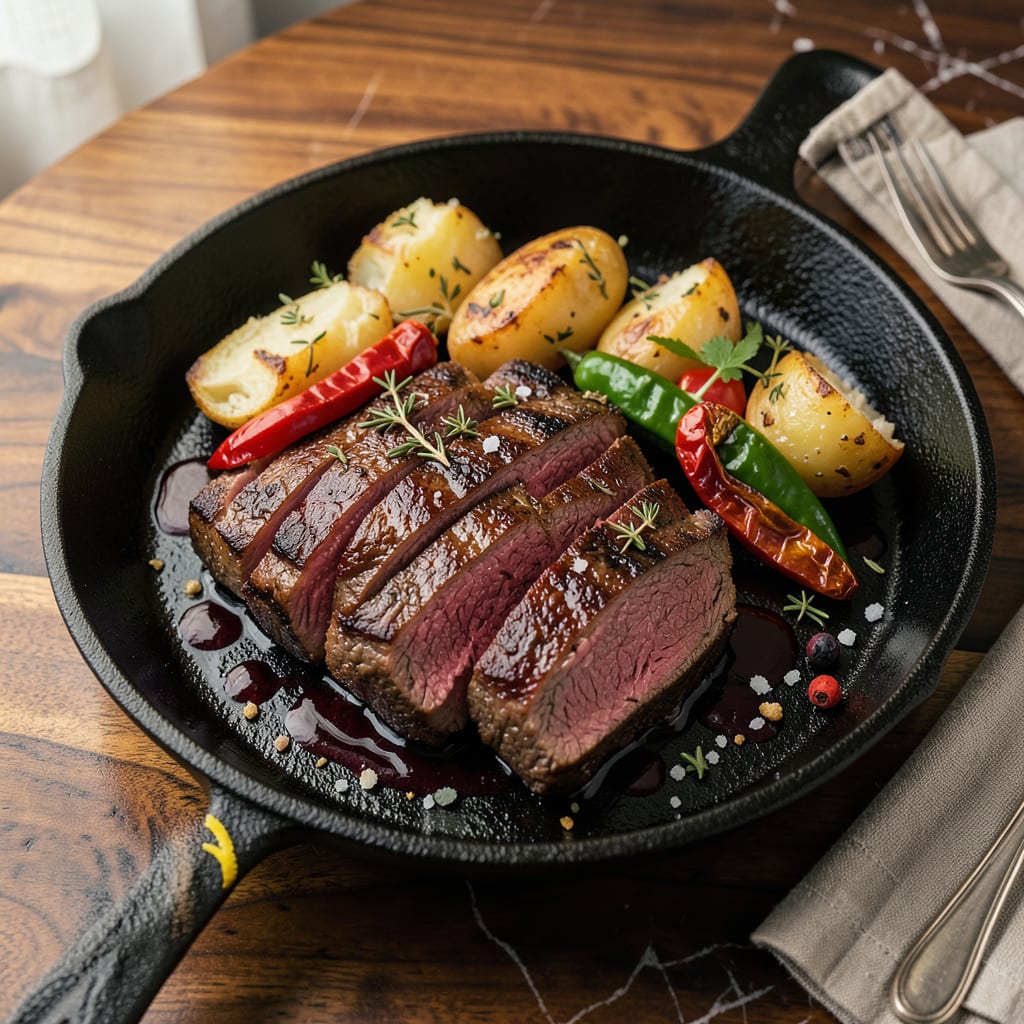
Sirloin tip steak shines when marinated for 4+ hours in garlic, soy sauce, and olive oil, then grilled or seared at high heat (450°F) for 4-6 minutes per side. Rest 10 minutes before slicing against the grain for maximum tenderness.
This lean cut demands extra attention because its low fat content can lead to dryness if not handled properly. The marinade’s acidity breaks down tough muscle fibers, while the high-heat sear creates that coveted crust without overcooking the interior. 🔥 What separates good results from great ones is letting the meat rest—this allows juices to redistribute throughout the steak rather than spilling onto your cutting board.
I’ve found that sirloin tip responds particularly well to bold flavors like smoked paprika or coffee rubs, which complement its beefy intensity. The key is balancing marinating time with cooking temperature—too long in the marinade can make the texture mealy, while insufficient heat won’t develop proper caramelization. ✨
💡 In This Article
- Why Sirloin Tip Steak Needs Special Cooking Techniques
- Best Side Dishes and Wine Pairings for Sirloin Tip
Why Sirloin Tip Steak Needs Special Cooking Techniques
Sirloin tip comes from the round primal, one of the cow’s most active muscle groups. This constant use creates dense muscle fibers with minimal marbling—typically just 2-4% fat compared to ribeye’s 15-20%. Without proper preparation, these tight fibers contract violently when exposed to heat, squeezing out moisture and leaving you with a tough, dry steak.
The solution lies in breaking down these fibers before cooking through either mechanical tenderization (scoring) or chemical processes (marinating).
Marinades work through two key mechanisms. First, acidic components like vinegar or citrus juice (pH 2.5-3.5) weaken the collagen bonds between muscle fibers. Second, enzymes in ingredients like pineapple or ginger actually digest proteins on a molecular level. A 4-hour marinade can increase tenderness by up to 30% while adding flavor depth.
The soy sauce in your marinade also contributes glutamates that enhance umami perception, making each bite taste richer.
High heat (450°F+) creates the Maillard reaction—where amino acids and reducing sugars produce hundreds of new flavor compounds. This happens rapidly on the steak’s surface, forming that coveted crust in just 2-3 minutes. But here’s the catch: the interior temperature rises quickly in lean cuts.
Using an instant-read thermometer to pull the steak at 130°F for medium-rare prevents overcooking while still achieving perfect doneness. The temperature will coast up 5-10°F during resting.
Resting isn’t just tradition—it’s science. When you cook meat, muscle fibers contract and push juices toward the center. Slicing immediately releases about 40% of these juices onto your cutting board. During the 10-minute rest, fibers relax and reabsorb moisture through osmosis. You’ll actually see the steak’s internal temperature stabilize as the juices redistribute.
This is why rested meat feels juicier in your mouth—the moisture stays where it belongs.
The grain direction matters because muscle fibers run parallel in bundles. Cutting with the grain means chewing through long, tough fibers. Slicing against the grain (perpendicular) shortens these fibers to 1-2mm segments, making each bite require 60% less chewing force.
You can identify the grain by looking for the parallel lines on the cooked steak’s surface—they’re most visible after searing.
Pro tip: If you’re working with thicker cuts (1.5″+), consider reverse searing. Start in a 250°F oven until the center reaches 110°F, then finish with a 2-minute sear in a ripping hot pan. This gentle heat rise prevents the exterior from overcooking before the center reaches temperature.
The result is edge-to-edge perfect doneness with that same beautiful crust. 💫

- BBQ Sausage Recipe Oven: Smoky Depth Without the Grill - September 28, 2026
- BBQ Chicken Bowl Recipe Rice: Smoky Sweetness Over Fluffy Grains - September 28, 2026
- Beef Cutlet Recipe Ideas: Crispy Breaded Patties With Bold Seasonings - September 28, 2026