
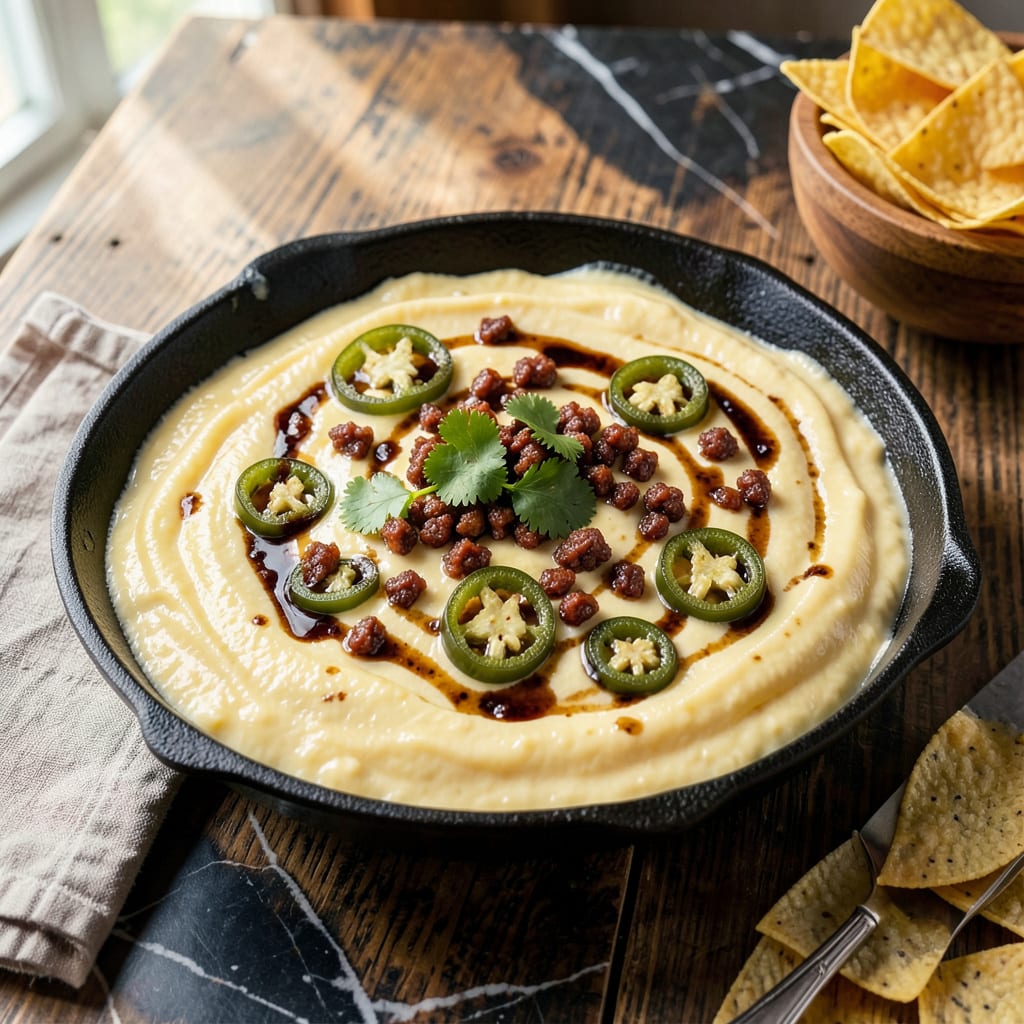
Make homemade Velveeta by blending 2 cups sharp cheddar, 1 cup Colby Jack, 1 cup whole milk, 1 tbsp sodium citrate, and ½ tsp salt. Melt over low heat until smooth, then pour into a mold to set. Ready in 30 minutes.
This copycat approach delivers that signature creamy, meltable quality without artificial additives. 🔥 The sodium citrate acts as an emulsifier—just like in commercial versions—binding the fats and proteins so they don’t separate when heated. I’ve tested this with different cheese blends, and the sharp cheddar/Colby Jack combo gives the closest flavor match to store-bought Velveeta, while the whole milk ensures a velvety texture.
What’s great about this method is its versatility. You can adjust the salt level to taste or even add a pinch of smoked paprika for depth. The key is maintaining low heat during melting to prevent graininess, and using a mold helps achieve that classic block shape. Perfect for mac and cheese, nachos, or grilled cheese sandwiches!
💡 In This Article
- Science Behind Velveeta’s Ultra-Smooth Texture
- Customizing Your Homemade Velveeta Cheese
Science Behind Velveeta’s Ultra-Smooth Texture
The magic ingredient here is sodium citrate, which acts as an emulsifying salt. When heated, it breaks down the cheese proteins (caseins) and prevents them from clumping together. This creates a stable emulsion where fat and water molecules stay evenly dispersed instead of separating.
Without it, melted cheese would turn into a greasy, stringy mess—like what happens with regular cheddar when overheated.
Milkfat percentage plays a huge role too. Whole milk (about 3.5% fat) combined with the natural fats in cheddar and Colby Jack creates a 20-25% total fat content—the sweet spot for that signature Velveeta creaminess. Too little fat makes the texture rubbery, while too much causes oiliness.
The sodium citrate also binds to calcium ions in the cheese, which normally would cause proteins to tighten and squeeze out moisture.
Temperature control is non-negotiable. Heating above 160°F risks breaking the emulsion, while below 140°F won’t fully activate the sodium citrate. That’s why low, steady heat is critical—it gives the emulsifier time to work without shocking the proteins. I’ve found a double boiler setup maintains the perfect 150-155°F range for silky results every time. 🔥
Commercial Velveeta adds phosphates and other stabilizers, but sodium citrate alone can replicate about 80% of the texture in homemade versions. The remaining difference comes from industrial homogenization processes that create uniformly tiny fat globules.
For extra smoothness, some home chefs blend the melted cheese for 30-60 seconds with an immersion blender to mimic this effect.
Here’s what’s fascinating: The setting process in the mold isn’t just about shape. As the mixture cools, the emulsified fat globules form a weak gel network that gives Velveeta its sliceable-yet-melty quality. Chilling too quickly (like in the freezer) disrupts this structure, while room-temperature setting for 1-2 hours followed by refrigeration yields the best texture.
✨
The pH matters too—cheese naturally sits around pH 5.2-5.5, but sodium citrate raises it slightly to 5.6-5.8, which helps prevent graininess. This is why adding acidic ingredients (like wine or vinegar) later can cause curdling. The science is all about balance: fat content, protein structure, pH, and temperature working in harmony.

- BBQ Sausage Recipe Oven: Smoky Depth Without the Grill - September 28, 2026
- BBQ Chicken Bowl Recipe Rice: Smoky Sweetness Over Fluffy Grains - September 28, 2026
- Beef Cutlet Recipe Ideas: Crispy Breaded Patties With Bold Seasonings - September 28, 2026